

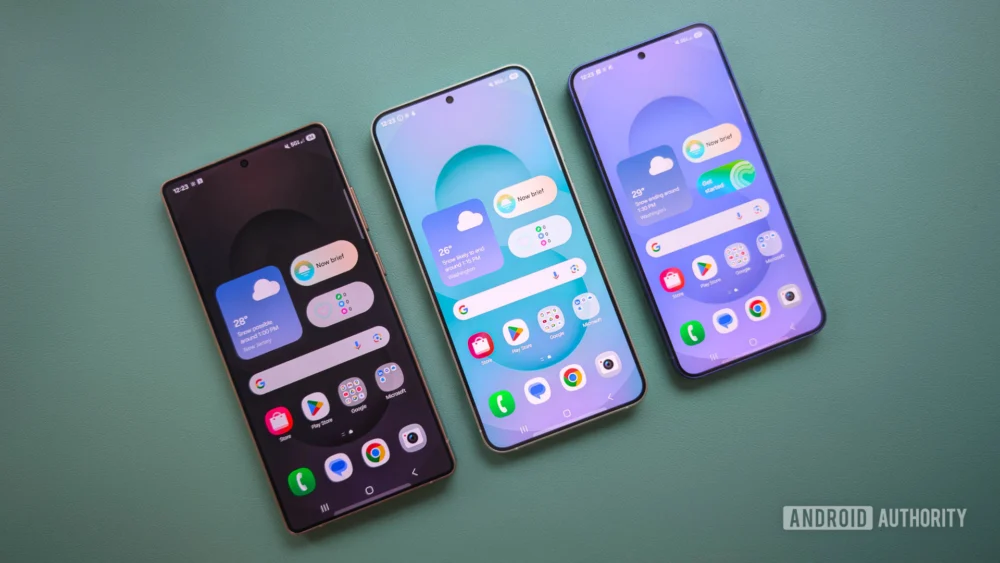
The cadence of flagship smartphone releases has long served as a predictable marker in the technology calendar, dictating consumer upgrade cycles and setting the competitive tone for the ensuing year. For Samsung, the annual "Galaxy Unpacked" event, traditionally held early in the calendar year, signals the formal debut of their flagship Galaxy S series. Initial projections for the forthcoming Galaxy S26 lineup pointed toward a February 25th unveiling, a schedule that, while slightly later than some prior iterations, still maintained the company’s established Q1 dominance. However, the crucial detail that truly impacts consumer anticipation—the date when these highly anticipated devices transition from digital renderings to tangible hardware available for purchase—appears to have been firmly established through recent supply chain and regional reports.
According to intelligence surfacing from European leak channels, specifically reputable sources like Dealabs, the retail availability for the entire Galaxy S26 trilogy is slated to commence on March 11th across the European theatre. Crucially, this report suggests that this specific date is not localized but rather serves as the global general availability benchmark, meaning consumers in key markets outside of Europe should anticipate securing their devices concurrently or very shortly thereafter. This information corroborates the predicted February 25th announcement, establishing a tangible timeframe between the marketing spectacle and the commercial reality.
To place this into context, one must examine the preceding launch cycle. The Galaxy S25 series, for instance, adhered to an aggressive early introduction, unveiling on January 22nd and hitting shelves just over two weeks later on February 7th. The proposed S26 timeline—a February 25th reveal followed by a March 11th street date—suggests a slightly extended window of approximately two and a half weeks between the presentation and customer possession. While seemingly marginal, in the fiercely competitive premium smartphone segment, every week counts. This minor extension could indicate strategic inventory staging, an effort to maximize pre-order conversions before general availability, or perhaps a necessary adjustment to accommodate the integration of potentially more complex or newly validated components, especially those exclusive to the top-tier model.
The strategic implications of this staggered timeline are noteworthy. By pushing the launch slightly later into the year, Samsung positions the S26 series to capitalize on the post-holiday purchasing lull and potentially avoid direct feature-for-feature comparisons against any late-year releases from rivals who might aim for an early Q1 push. Furthermore, the extended pre-order period allows Samsung to build heightened demand and manage initial distribution logistics more smoothly, a critical factor given the scale of their global operations.
Diving into the anticipated hardware differentiation, the technical specifications leaked thus far paint a picture of strategic segmentation across the S26 family, particularly concerning chipset allocation—a long-standing point of contention for Samsung enthusiasts. The flagship Galaxy S26 Ultra is positioned as the technological spearhead, reportedly receiving an exclusive mandate for the yet-to-be-released Qualcomm Snapdragon 8 Elite Gen 5 processor. This singular chipset strategy for the Ultra model suggests Samsung is leveraging its partnership with Qualcomm to differentiate the top-tier experience, likely focusing on sustained peak performance, enhanced AI processing capabilities inherent in the new silicon generation, and optimized thermal management that might prove challenging to integrate across all three models simultaneously.
The Ultra variant is also rumored to feature iterative but meaningful enhancements to its rear camera array, a non-negotiable area for iterative improvement in the premium space. More tangibly, an upgrade to 60W wired charging is anticipated. While this still trails some aggressive Chinese competitors, it represents a significant step up from previous generations and addresses consumer calls for faster top-up speeds, especially when paired with larger batteries that power the Ultra’s expansive display and intensive processing demands.
Conversely, the standard Galaxy S26 and the S26 Plus are reportedly slated for a dual-sourcing strategy regarding their core processing units: either the Snapdragon variant or Samsung’s in-house Exynos chipset, contingent upon the specific geographic market. This regional bifurcation remains a sensitive issue for some consumers, where performance parity between Exynos and Snapdragon versions is continuously scrutinized. The rationale, from a business perspective, is clear: utilizing Exynos in certain territories helps Samsung maximize internal component utilization, hedge against supply chain vulnerabilities associated with a single vendor, and maintain cost efficiencies in markets where regulatory or competitive landscapes favor localized production strategies. However, consumer expectation often demands the globally consistent performance profile associated with the latest Snapdragon flagship silicon.
Battery specifications for the smaller models also show adherence to established capacities. The base S26 is expected to house a 4,300mAh cell, a capacity that must efficiently manage the power demands of its flagship processor, while the S26 Plus is rumored to retain the robust 4,900mAh unit. The longevity performance of these devices will be a crucial benchmark, especially considering the potential for increased power draw from new display technologies or expanded 5G/Wi-Fi capabilities integrated into the S26 platform.
Beyond the foundational hardware, several software and multimedia features are anticipated to debut across the line. The integration of the Advanced Picture and Video (APV) codec support is a significant signal towards Samsung’s commitment to high-fidelity media creation and consumption. This codec, typically associated with higher bitrates and superior color depth, positions the S26 series favorably for users deeply embedded in the mobile content creation ecosystem, particularly those utilizing professional workflows or demanding the highest quality output for sharing on modern platforms.
Furthermore, the rumored introduction of a 24MP shooting option accessible via the Camera Assistant application speaks volumes about Samsung’s evolving software philosophy regarding image processing. Historically, Samsung has leaned heavily on 12MP outputs, often utilizing pixel-binning techniques for superior light capture. Offering a native 24MP mode suggests a refined approach to computational photography, allowing users to capture higher-resolution detail when lighting conditions are favorable, effectively bridging the gap between casual snapshot quality and detailed photography suitable for cropping or large-format printing. This feature underscores a broader industry trend: leveraging software enhancements to provide users with granular control over the final image output, moving beyond simple automatic optimization.
The industry implications of this confirmed launch timeline are substantial. Samsung’s early-year launch sets the competitive benchmark for Android flagships globally. Competitors, including those preparing their own Q1 or Q2 launches, must now calibrate their own marketing, pre-order bonuses, and final pricing strategies against the known launch window of March 11th. Any delay in Samsung’s rollout would have created a vacuum, potentially allowing rivals to capture market share prematurely; conversely, the established date provides a firm target for competitive counter-programming.
Moreover, the chipset dynamic—the Ultra exclusivity of the Snapdragon 8 Elite Gen 5 versus the regional split for the base models—is a significant indicator of the silicon supply landscape for the year. If the Snapdragon 8 Elite Gen 5 proves to be significantly more power-efficient or performance-capable than the Exynos counterpart planned for the S26/S26 Plus, it will likely reinforce the consumer preference for the Ultra model, potentially shifting sales mix projections upwards for the most expensive variant. Analysts will be keenly watching for early benchmark comparisons between the two processor flavors to gauge the extent of this performance gap, which often dictates long-term customer satisfaction in the premium tier.
Looking toward future impact and trends, the Galaxy S26 series is expected to be a significant vehicle for showcasing the next iteration of on-device artificial intelligence features, likely deeply integrated within the operating system framework following the initial push seen with earlier AI-focused launches. The processing power allocated specifically to the Ultra model’s chipset suggests that the most computationally intensive AI tasks—such as complex real-time language processing, advanced photo editing, or sophisticated multitasking management—may be reserved for that tier. This stratification of AI capability by hardware tier is a probable trend moving forward, compelling users who desire the latest software features to invest in the highest-priced models.
The charging speed upgrade to 60W on the Ultra, while not revolutionary, signals a slow but steady normalization of faster charging standards in the premium segment. For years, Samsung maintained a conservative approach to charging speeds, prioritizing battery longevity and thermal stability over raw wattage figures. The move to 60W suggests confidence in their thermal solutions and an acknowledgment that consumers are increasingly expecting charging speeds that mitigate downtime significantly. The slower adoption rate compared to competitors highlights Samsung’s characteristic caution; they prefer proven, stable integration over being first to market with bleeding-edge, potentially unstable, charging technology.
In essence, the confirmed March 11th availability date for the Galaxy S26 series solidifies the start of the 2026 flagship race. It confirms Samsung’s commitment to its established launch rhythm, while the rumored hardware specifications—particularly the chipset strategy and the introduction of enhanced imaging controls like the 24MP capture option—suggest a focus on nuanced refinement rather than radical overhauls. The success of this launch will hinge not just on the initial fanfare of February 25th, but on the sustained real-world performance and the perceived value proposition offered when consumers can finally walk into a store on March 11th. The industry will be watching closely to see if these carefully managed timelines and incremental hardware steps are enough to maintain Samsung’s commanding lead in the global premium smartphone sector against increasingly sophisticated challengers. The next few months will be critical in defining the technological landscape for the year ahead, all anchored by this confirmed street date.