

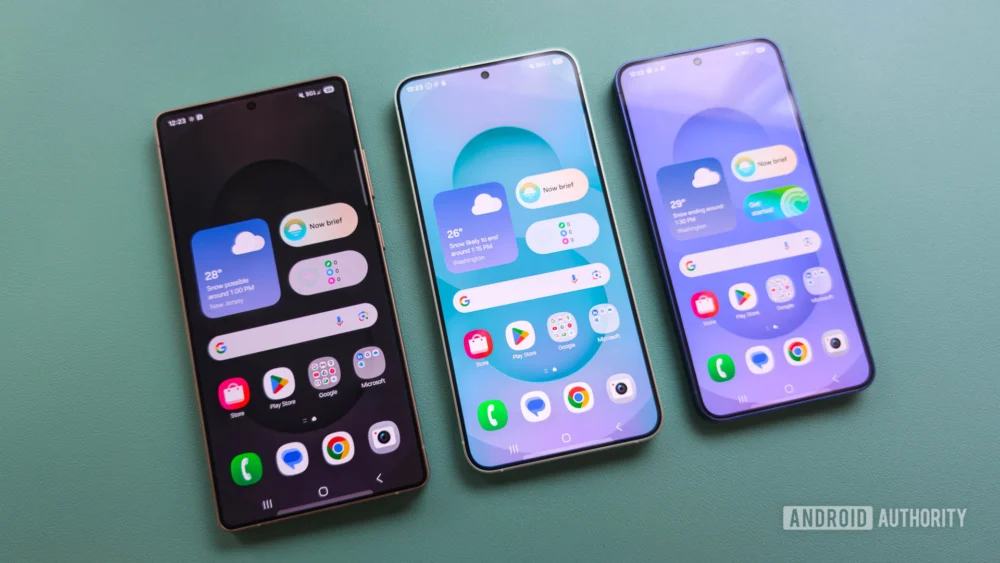
The perennial debate surrounding base storage configurations in premium smartphones appears poised for a significant resolution with the anticipated arrival of the Samsung Galaxy S26 series. For several recent generations, Samsung, the dominant force in the Android ecosystem, has maintained an eyebrow-raising commitment to equipping its entry-level flagship, the standard Galaxy S model, with a mere 128GB of internal storage. This practice, increasingly out of step with market realities and the capabilities of its primary competitors, has long frustrated a segment of its most dedicated user base. However, nascent intelligence filtering through supply chain and regional retail channels suggests that the forthcoming S26 iteration will finally usher in a much-needed standardization, elevating the baseline to 256GB.
This shift is not merely a matter of convenience; it represents a crucial recalibration of expectations in a mobile computing environment increasingly dominated by high-resolution media, sophisticated applications, and advanced computational photography features. The context for this development is rooted in the evolving landscape of smartphone usage. Modern flagship devices are no longer simple communication tools; they function as primary cameras, portable gaming consoles, and comprehensive productivity hubs. High-quality video capture, especially in the professional or prosumer tiers that Samsung aggressively courts, rapidly consumes available space.
The 128GB ceiling, when paired with the operating system overhead, pre-installed applications, and user-generated content, often forces users into a continuous cycle of data management—deleting photos, offloading media to the cloud, or relying on constant external backups. For users investing flagship-level capital into a device like the Galaxy S series, this imposed storage constraint feels distinctly artificial, a cost-saving measure that undermines the premium experience.
Recent indications, originating from reports detailing pre-launch inventory listings from a Finnish retailer, strongly support the narrative of a universal storage baseline increase across the S26 family. Specifically, the base Galaxy S26 model is reportedly slated to debut with options of 256GB and 512GB. This harmonizes the entry point for the base model with the current standard offered by rivals like Apple and leading Chinese manufacturers, who have largely abandoned the 128GB threshold for their premium tiers. While acknowledging that regional variations in retail configurations are possible, corroborating murmurs from industry analysts, such as the assertion from tipster Ice Universe that the S26 would indeed start at 256GB, lend significant weight to this forthcoming parity.
Beyond the base model, the leaked configuration details outline a streamlined, yet robust, storage hierarchy for the entire lineup. The Galaxy S26 Plus is expected to mirror the base model’s new structure, offering 256GB and 512GB configurations. This suggests a strategy to segment the models less on fundamental capacity and more on screen size, battery life, and potentially ancillary features like charging speed or specific connectivity modules.
The true flagship, the Galaxy S26 Ultra, is projected to maintain its position at the apex of storage capability, expanding its availability to include 256GB, 512GB, and a substantial 1TB option. This tiered approach acknowledges the power users and creators who demand maximum onboard storage for intensive tasks, such as high-bitrate video recording or extensive professional application deployment.
The implications of this storage upgrade extend far beyond simple file capacity; they are intrinsically linked to the advanced multimedia capabilities Samsung is reportedly integrating into the S26 generation. One of the most significant rumored enhancements involves video encoding. Reports have indicated Samsung’s intent to implement the Advanced Picture Video (APV) codec, or a similarly high-efficiency, high-quality format. While APV promises superior compression efficiency without sacrificing visual fidelity—meaning users can capture more high-quality footage in the same space—the absolute storage requirement for pro-grade video files remains high. If the S26 series is to truly deliver on professional video workflows, the 128GB starting point would have become an immediate bottleneck, rendering the advanced codec less accessible to the average high-end buyer. By doubling the base storage, Samsung ensures that these new video features are immediately practical, not theoretical hurdles.
From an industry perspective, Samsung’s eventual adoption of 256GB as the floor signifies the maturation of the premium smartphone segment. Storage density on NAND flash chips has improved dramatically, leading to reduced component costs per gigabyte. For years, the industry narrative suggested that maintaining 128GB was a deliberate pricing strategy—a way to anchor the device’s entry price point while encouraging upselling to higher-capacity models. As the cost differential shrinks, the reputational damage associated with offering what is now considered obsolete baseline storage outweighs the marginal profit retention. This move by Samsung effectively signals the end of the 128GB era for mainstream flagships, forcing the rest of the Android mid-range to accelerate their own storage upgrades to maintain aspirational distance.
The color palette detailed in the leak also suggests a subtle refinement in branding strategy. The standard palette across all three models in the Finnish market appears to include Black, White, Cobalt Violet, and Sky Blue. These are reliable, aesthetically safe choices that appeal broadly. However, the mention of additional, potentially exclusive colors for the Ultra—Silver Shadow and Pink Gold, as previously suggested by other sources—points toward Samsung’s ongoing strategy of using unique finishes to differentiate the top-tier model further, often reserving the most compelling or trend-driven shades for direct-to-consumer sales channels, thereby incentivizing purchases through Samsung.com.
Analyzing the broader future impact, the standardization of 256GB storage sets a new competitive benchmark that will likely be replicated across the entire Android 2026 and 2027 flagship cycles. Consumers are becoming increasingly educated on internal specifications, and storage speed (UFS versions) coupled with raw capacity are key metrics in purchasing decisions. Furthermore, the trajectory of mobile operating systems and application ecosystems suggests storage needs will only increase. Features like on-device large language models (LLMs) for AI processing, expansive augmented reality experiences, and persistent cloud-synced local caches demand substantial, high-speed local storage. Settling for 128GB in 2026 would position Samsung’s base device as technologically lagging before it even ships.
This storage elevation is also a vital component of Samsung’s strategy to solidify the perceived value proposition of the entire Galaxy S family against Apple’s iPhone lineup. While Apple has faced similar scrutiny, its user base often exhibits higher tolerance for capacity limitations due to the tight integration of iCloud. Android users, historically more accustomed to expandable storage (though less common in modern flagships) or alternative cloud solutions, demand more generous initial allotments. By matching or exceeding the baseline storage of the competition, Samsung removes a significant point of comparison where they were previously vulnerable.
The shift is also intrinsically tied to memory technology itself. The move to 256GB likely involves leveraging newer, denser, and faster NAND flash memory solutions. This transition often brings concurrent benefits in power efficiency and read/write speeds, further boosting overall device performance beyond just the capacity increase. While the core chipset (likely the next-generation Snapdragon or Exynos silicon) dictates raw speed ceilings, the storage medium is the critical pathway for data access, making the upgrade to 256GB a holistic performance enhancement.
In conclusion, the emerging retail intelligence surrounding the Galaxy S26 series strongly indicates that Samsung is finally retiring the outdated 128GB entry point for its premier line. The anticipated shift to a 256GB minimum across the S26, S26 Plus, and S26 Ultra offers tangible benefits to consumers, aligning the hardware with the demands of modern high-fidelity media creation and consumption. This is a necessary evolution, not just to placate vocal critics, but to ensure the S26 platform can fully leverage the advanced imaging and processing technologies Samsung is integrating into its next generation of flagship hardware. It is a welcome recalibration that underscores a commitment to delivering a truly premium, uncompromised user experience from the moment the box is opened.