

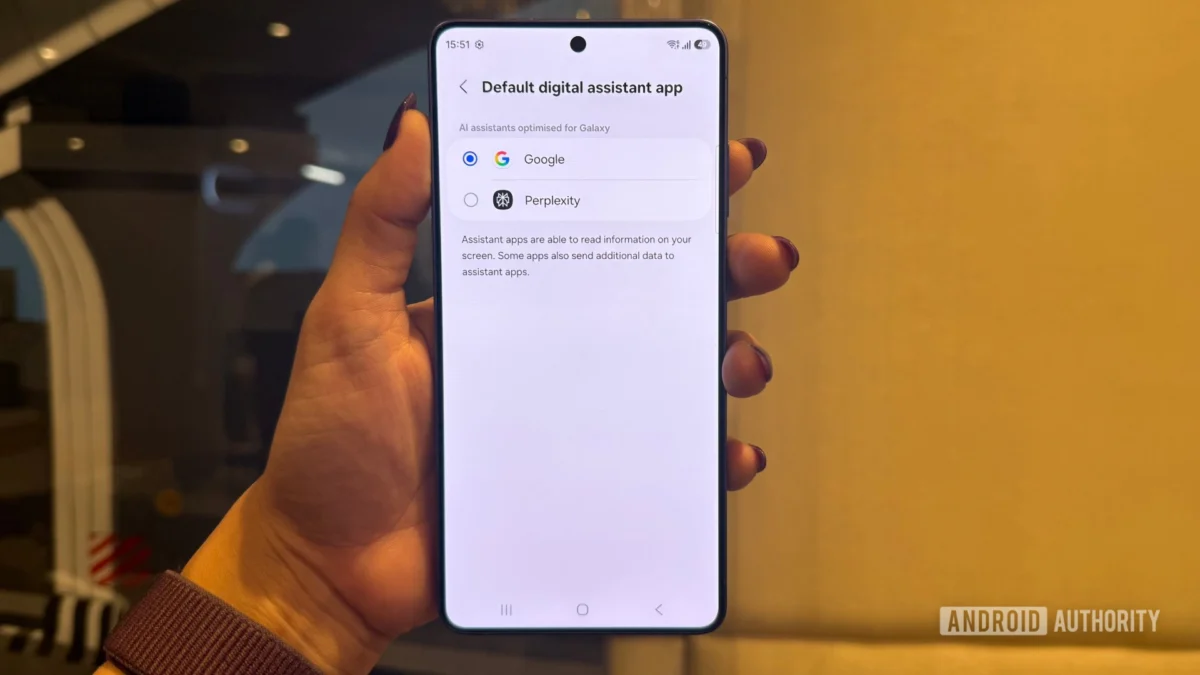
The debut of the Samsung Galaxy S26 series, heralded as a significant leap forward in mobile artificial intelligence integration, has been complicated by a perplexing and rapidly evolving situation concerning its third-party AI assistant partnership with Perplexity. Initially promoted as a cornerstone feature—a genuine multi-agent ecosystem offering users choice beyond the default Google Gemini and Samsung’s own Bixby—the dedicated wake word for Perplexity, "Hey Plex," has seemingly been deactivated or removed from active functionality on the new flagship devices. This abrupt shift, occurring just as the S26 models hit general retail availability, has generated considerable confusion among early adopters and signaled potential friction in the high-stakes race for conversational AI dominance on mobile platforms.
The Context: A Promised Multi-Agent Future
To understand the gravity of this disappearance, one must recall the marketing narrative Samsung carefully constructed around the Galaxy S26. The company positioned the device not merely as a hardware upgrade, but as the first true demonstration of an "AI agent smorgasbord." This vision promised seamless, deep integration where users could fluidly switch between different specialized AI models based on their immediate needs. Gemini was slated for core productivity and search tasks, Bixby would maintain its system-level controls, and Perplexity was positioned as the advanced, web-connected research and answer engine, accessible instantly via its proprietary wake phrase, "Hey Plex." This was a deliberate strategy to counter the monolithic control Google exerts over Android’s AI layer, positioning Samsung as the ultimate curator of user choice in the rapidly expanding generative AI landscape.
The official announcement detailing this expanded Galaxy AI ecosystem, which explicitly mentioned the integration of "Hey Plex" functionality, has since been scrubbed from Samsung’s global newsroom. While archived versions remain accessible, the very act of removing the press release, without an accompanying public correction or clarification, amplifies the sense of instability surrounding the feature’s immediate status.
The User Experience Breakdown and Initial Clues
Reports began surfacing from users who had successfully set up their Galaxy S26 devices, confirming that "Hey Plex" initially functioned as advertised. However, following a subsequent system update, widely identified as the February patch (which also introduced features like the "inactivity restart" mode), the voice activation ceased to respond. Crucially, users noted that the Perplexity application itself was not entirely disabled; the service could still be manually launched via its dedicated side button shortcut, indicating that the underlying API integration might still exist, but the crucial, hands-free voice trigger layer had been stripped away.
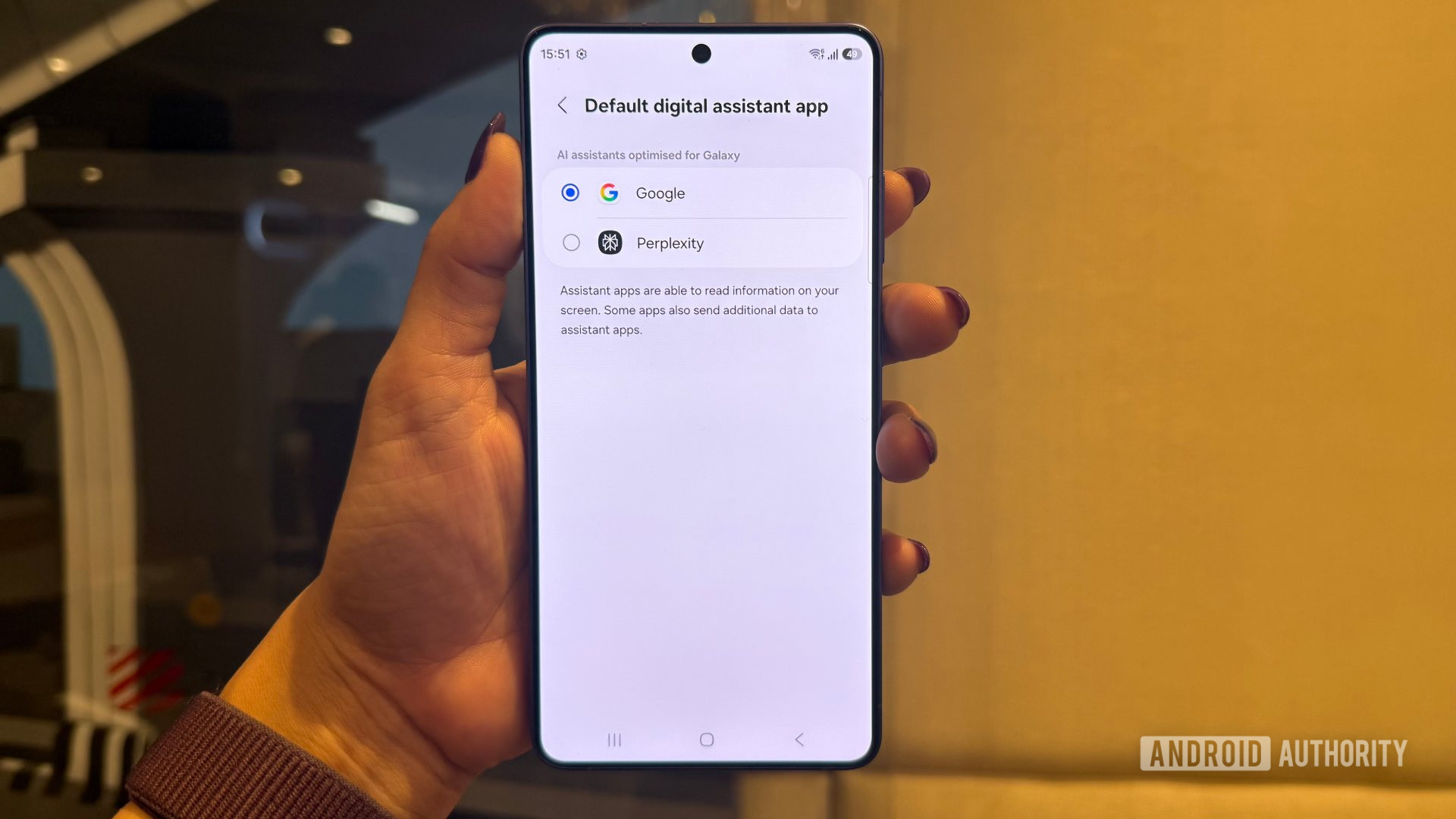
Furthermore, examination of the S26’s voice assistant settings panel revealed an anomaly. Even when Perplexity was manually installed (it was not pre-loaded), it failed to appear in the selection menu where users typically choose between available assistants. This suggests the issue is deeper than a simple application glitch; it points toward a configuration removal at the operating system or core framework level managed by Samsung.
The Wake Word Identity Crisis: A CEO’s Cryptic Intervention
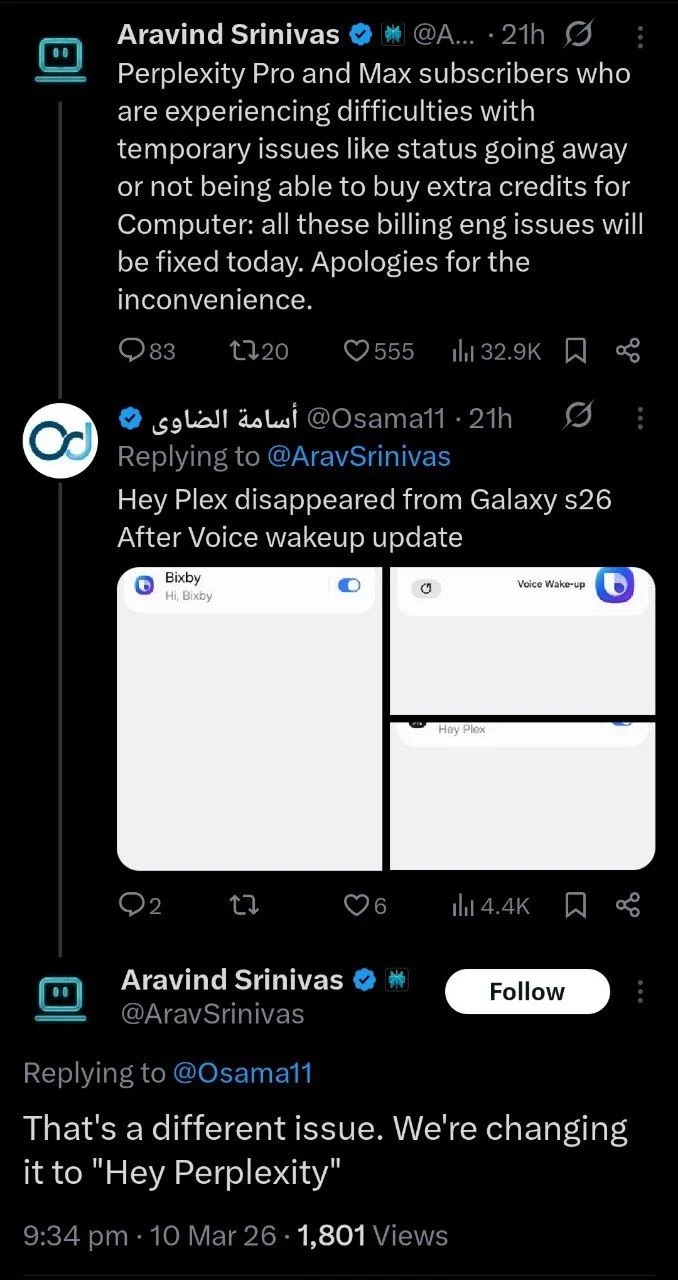
The narrative took a significant turn when Aravind Srinivas, CEO of Perplexity, addressed the growing user frustration on social media. In a direct response to a complaint regarding the S26 functionality, Srinivas indicated that the company was actively engaged in transitioning its primary wake word from the somewhat ambiguous "Hey Plex" to the more explicit and brand-aligned "Hey Perplexity."
While Srinivas did not explicitly state that this transition was the direct cause of the S26 issue, the timing strongly implied a correlation. The transition to a new wake word is not trivial; it requires updates across the device’s low-power listening hardware, the operating system’s voice recognition stack, and the Perplexity application itself. A clumsy rollout, where Samsung’s system was expecting the old phrase while Perplexity was preparing for the new one, could easily result in the observed functional dead zone. However, Srinivas later deleted his clarifying post, an action that introduced further ambiguity and fueled speculation that the internal coordination between Samsung and Perplexity was more fractured than anticipated. The use of "Plex" is inherently problematic, given the existence of the well-established media server software also using that moniker, lending credence to the need for a rebrand, even if the execution was flawed.
Samsung’s Official (and Ambiguous) Response
After a period of intense speculation and direct inquiries, Samsung provided a formal statement regarding the situation. The company framed the removal of the specific voice command as part of an "ongoing product refinement process." The statement carefully delineated the scope of the change:
"The change is part of Samsung’s ongoing product refinement process. It relates only to the activation phrase and cross-app actions across select Samsung apps, and does not affect the availability, integration, or scope of the Perplexity experience on the Galaxy S26 series. Any future feature updates will be communicated if and when available."
This corporate response is a masterclass in strategic ambiguity. On one hand, Samsung attempts to reassure the market that the partnership is intact. They stress that Perplexity remains available and integrated, implying that the core value proposition—access to Perplexity’s advanced AI—has not been abandoned. The manual launch capability supports this claim. On the other hand, the acknowledgment that the "activation phrase" has been altered confirms the disappearance of "Hey Plex."
The critical missing piece is what exactly constitutes the "refinement." Does this mean "Hey Plex" is permanently retired in favor of "Hey Perplexity," requiring a subsequent update to enable the new phrase? Or is this a temporary halt while Samsung re-engineers the system-level hooks that allow Perplexity to perform "cross-app actions" within Samsung’s proprietary applications? The commitment to future communication offers little solace to users expecting a fully functional product at launch.
Industry Implications: The Perils of Open AI Ecosystems
This incident carries significant implications for the broader mobile technology industry, particularly as hardware manufacturers pivot heavily toward AI integration. Samsung’s strategy of promoting a customizable, multi-agent environment is ambitious but inherently complex.
- Integration Fragility: Unlike a vertically integrated system like Apple’s tight control over Siri, or Google’s centralized approach with Gemini on Pixel devices, Samsung is attempting to manage a dynamic relationship between its hardware, its own software layer (One UI), Google’s core Android services, and third-party specialized models. This modularity introduces significant points of failure, especially concerning sensitive features like always-on voice detection (wake words). A slight misalignment in versioning or authentication protocols between Samsung and Perplexity can instantly break the intended user experience.
- Brand Confusion and Liability: The potential shift from "Hey Plex" to "Hey Perplexity" highlights the risk of third-party branding integration. Samsung heavily promoted the "Hey Plex" activation. A quiet pivot by Perplexity—even if logically sound to avoid conflict with the media server software—creates brand dissonance for Samsung’s marketing efforts. If Samsung cannot guarantee the stability of the promised features for the lifespan of the device, consumer trust erodes quickly, especially given the premium price point of the S26 Ultra.
- The Competitive AI Landscape: This situation provides a tactical advantage to competitors who have adopted a more singular focus. Google’s tightly controlled environment on Pixel devices, where Gemini is the default and only integrated conversational agent, avoids these coordination headaches. For Samsung to succeed as the "AI choice curator," the operational execution of these choices must be flawless. Current performance suggests a significant gap between marketing promise and initial product reality.
Expert Analysis: Hardware vs. Software Dependencies
From a technical standpoint, the persistent functionality of Perplexity when summoned manually, contrasted with the failure of the wake word, suggests a failure in the on-device, low-power acoustic model processing. Wake word detection typically runs on a dedicated, ultra-low-power Digital Signal Processor (DSP) or Neural Processing Unit (NPU) to conserve battery life while listening for the specific trigger phrase.
If the transition to "Hey Perplexity" is indeed underway, it implies that the firmware controlling this listening chip—likely updated via the February patch—has either been flashed with the new trigger model or, more likely, had the old "Hey Plex" model removed without a corresponding, fully functional replacement being installed. The system is effectively listening for a phrase it no longer recognizes, or the secure handshake required for Perplexity’s specific trigger is temporarily disabled pending further software integration. Samsung’s vague reference to "cross-app actions" further muddies the water, hinting that the required deep-level operating system permissions for voice commands to initiate tasks outside the Perplexity app itself may also be under review or modification.
Future Trajectory and User Outlook
The resolution of this saga will likely unfold in stages, reflecting the complexity of the underlying issues:
- Immediate Fix (Wake Word Reinstatement): The most likely short-term outcome, driven by consumer backlash, is Samsung rapidly pushing a minor patch that either re-enables "Hey Plex" temporarily or immediately activates the new "Hey Perplexity" wake word across the S26 fleet. This would satisfy the immediate demand for hands-free functionality.
- Deep Integration Rollout: The more significant challenge lies in restoring the promised "cross-app actions." This requires deeper architectural cooperation between Samsung’s Bixby Routines/One UI framework and Perplexity’s integration layer. This type of update is more likely to arrive via a larger, feature-rich update later in the year, rather than a quick hotfix.
- Standardization of AI Choice: This incident will likely force Samsung to establish a more rigorous, transparent protocol for onboarding and managing third-party AI agents. Future marketing materials will need to explicitly detail which features are available at launch and which are dependent on subsequent updates, managing user expectations before the pre-order phase concludes.
Ultimately, the Galaxy S26 remains a powerful device, and Perplexity continues to offer value through manual invocation. However, the sudden, unexplained removal of a headline feature shortly after launch—followed by a confusing corporate statement—serves as a stark reminder that in the era of hyper-fast AI development, the stability of the user experience often lags behind the pace of technological partnership announcements. Consumers are left waiting for the promised "refinement" to conclude before the S26 can truly deliver on its vision of being the most versatile AI smartphone on the market.