

The consumer electronics landscape is frequently dominated by discussions surrounding flagship devices—the folding form factors, the cutting-edge camera arrays, and the bleeding-edge processor announcements that capture headlines. However, true market penetration and sustained revenue streams for major manufacturers like Samsung often reside squarely within the realm of the budget and mid-range segments. It is in this high-volume territory that the Galaxy A-series consistently outperforms, frequently topping global sales charts. This context is crucial as Samsung prepares to unveil the successor to one of its most commercially successful handsets: the Galaxy A17 5G, scheduled to arrive next week alongside a new entry-level tablet, the Galaxy Tab A11+.
The Galaxy A16 5G, the direct predecessor to the newly announced A17, secured the distinction of being the best-selling Android smartphone globally in the last reported quarter, a testament to the enduring consumer demand for affordable, reliable 5G connectivity paired with familiar brand trust. Samsung’s strategy has long been to leverage the sheer volume of A-series sales to offset the lower margins inherent in these price points, effectively creating a broad foundation upon which its premium offerings rest. The official announcement confirming the January availability of the A17 5G and the Tab A11+ underscores a commitment to maintaining this crucial market share as the industry navigates fluctuating economic conditions and evolving component costs.
The Galaxy A17 5G: Iterative Refinement at the $200 Threshold
The Galaxy A17 5G, priced identically to its predecessor at $199.99 MSRP in the US market, presents itself as a measured, incremental update rather than a radical overhaul. This conservative approach is standard for high-volume budget devices where component cost management is paramount. Consumers in this segment prioritize proven reliability, battery life, and network compatibility over revolutionary features.
Key specifications carried over from the A16 5G confirm this strategy. The device retains the Exynos 1330 chipset (at least for US models), a processor that has proven capable of delivering acceptable 5G performance and energy efficiency for everyday tasks. The substantial 5,000 mAh battery capacity, supported by 25W wired charging, remains a cornerstone feature, directly addressing the primary concern of budget users: longevity throughout the day. Furthermore, the 6.7-inch display retains its 90Hz refresh rate, providing a smoother visual experience than the standard 60Hz panels often found at this price point, a small but meaningful quality-of-life improvement.
The most significant tangible upgrade appears to be centered on the camera system. While the primary sensor maintains a 50-megapixel resolution, the integration of new optical image stabilization (OIS) technology represents a notable step up. In budget smartphones, electronic image stabilization (EIS) often struggles in low light or during movement, leading to soft or shaky results. The introduction of OIS suggests a direct effort to enhance video stability and low-light still photography, areas where budget phones traditionally lag significantly behind their flagship counterparts. This subtle hardware refinement could translate into a noticeable real-world performance difference for users relying on the main camera for casual documentation.
Memory Constraints and Industry Headwinds
Where the A17 5G presents a potential point of contention for more demanding budget users is in its memory configuration. The A17 5G is launching in a singular configuration: 4GB of RAM paired with 128GB of internal storage. This mirrors the baseline specification of the A16 5G. Crucially, the previous generation offered optional upgrades to 6GB or 8GB of RAM, along with a 256GB storage tier. The removal of these higher-spec options suggests a calculated decision rooted in current supply chain realities.

Expert analysis points towards persistent global shortages in memory (DRAM and NAND flash) throughout 2026, a trend that has driven up component costs across the entire electronics spectrum. For Samsung, maintaining the $199.99 price point while absorbing these increased costs necessitated simplification of the bill of materials. Limiting the SKU to the 4GB/128GB model streamlines inventory management and manufacturing complexity.
However, this simplification carries implications for user longevity. While 128GB is often sufficient, particularly when augmented by the 2TB microSD card support (a necessary inclusion for this segment), 4GB of RAM is increasingly restrictive. Modern Android operating systems, especially when layered with Samsung’s One UI skin, demand more memory for smooth multitasking and background application retention. As Android 16—the operating system preloaded on the A17 5G—matures, the strain on 4GB of physical memory will become more pronounced. This decision places a temporal ceiling on the device’s practical usability, potentially accelerating the need for an upgrade cycle compared to models offering 6GB or more RAM.
Software Commitment: A Pillar of Value
In a highly competitive segment where hardware specifications often blur together, Samsung continues to leverage its industry-leading software support commitment as a differentiator. The Galaxy A17 5G ships with Android 16, ensuring the device starts on a modern platform. More significantly, Samsung promises an unprecedented six years of both major OS upgrades and corresponding security patches.
This commitment is transformative for the budget segment. Historically, devices priced under $300 received two, perhaps three, major OS updates before being abandoned by manufacturers concerned with minimizing long-term support costs. By guaranteeing six years of support, Samsung is effectively elevating the residual value and expected lifespan of its budget hardware. This addresses consumer fatigue with rapid obsolescence and positions the A17 5G not just as a cheap phone, but as a long-term investment in basic connectivity and security. For carriers and retailers, this longevity also simplifies trade-in programs and reduces the environmental footprint associated with high device turnover.
The Companion Device: Galaxy Tab A11+
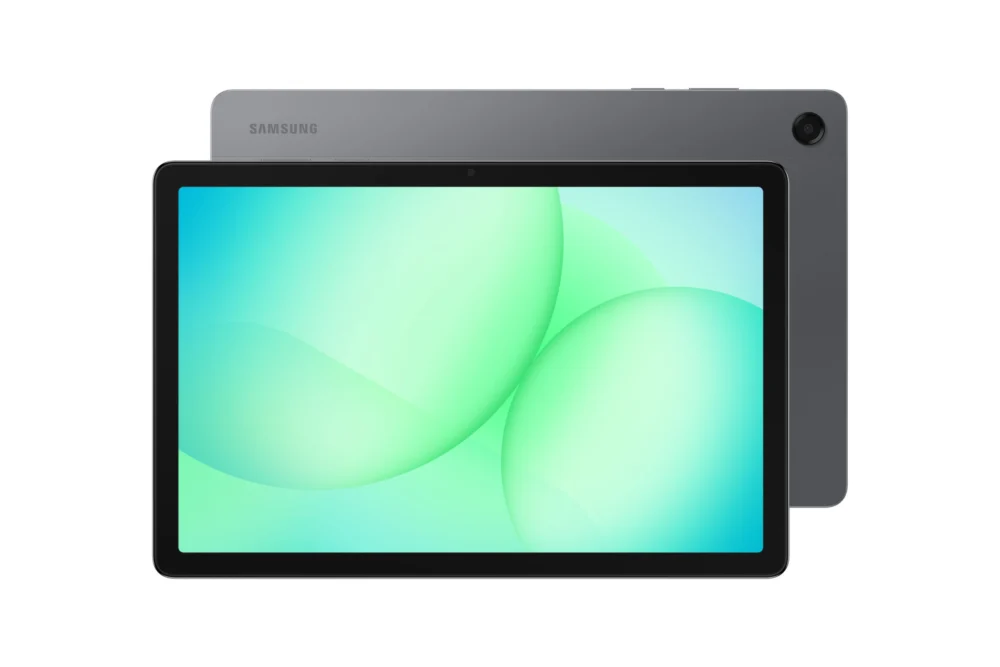
Parallel to the smartphone announcement, Samsung introduced the Galaxy Tab A11+, targeting the entry-level media consumption and casual productivity market, priced starting at $249.99. This device appears designed to complement the A-series phone ecosystem, offering a larger screen experience without encroaching on the mid-range A-series tablets.
The A11+ boasts an 11-inch LCD panel, featuring a 1200p resolution and the 90Hz refresh rate previously seen on the A17 phone. This combination aims to deliver crisp visuals suitable for streaming and web browsing, while the higher refresh rate smooths out animations. The inclusion of quad speakers suggests an emphasis on media immersion, an essential feature for tablet users.
Internally, the tablet utilizes the MediaTek MT8775 chipset, a choice that positions it firmly in the efficient, cost-conscious category. Memory configurations offer more flexibility here than the phone, with options including 6GB or 8GB of RAM. This is a judicious hardware allocation; tablets generally benefit more from higher RAM capacities than budget phones due to the nature of split-screen multitasking and heavier application use (e.g., digital textbooks or light gaming). The tablet also launches with Android 16. Samsung has yet to specify the exact update commitment for the Tab A11+, a detail that will be crucial for analysts tracking the long-term viability of Samsung’s budget tablet strategy.

Industry Implications and Future Trends
The timing and nature of these launches offer several insights into Samsung’s broader strategy for the next fiscal year.
Firstly, the continued reliance on the Exynos 1330 in the US market for the A-series signals a strategic alignment with domestic carrier preferences and established component contracts. While international markets may see variations, this consistency simplifies logistics for major US carriers.
Secondly, the deliberate reduction in configuration options for the A17 5G suggests an industry-wide pivot towards standardization in the budget sector, driven by macroeconomic pressures. Manufacturers are seeking to maximize profitability per unit by eliminating low-volume, high-complexity SKUs. This trend contrasts sharply with the flagship segment, where SKU proliferation (different colors, storage sizes, regional variants) is used to capture niche consumer preferences.
Thirdly, the software support window is perhaps the most significant development. By offering six years of updates on a $200 device, Samsung is setting a new competitive benchmark that rivals, particularly Chinese manufacturers focusing heavily on the sub-$250 space, will struggle to match without significantly altering their own cost structures or sacrificing immediate profitability. This commitment transforms the calculus for budget buyers, shifting the decision from "which phone is cheapest today?" to "which phone offers the best long-term value and security?"
The introduction of the Tab A11+ alongside the A17 5G reinforces the concept of a cohesive, albeit entry-level, Galaxy ecosystem. Consumers entering the Samsung world via the affordable A-series are now presented with a clear pathway to expand their utility through a purpose-built, budget-conscious tablet, fostering greater brand lock-in early in the customer lifecycle.
Anticipation and Market Readiness
The launch dates—January 7th for the Galaxy A17 5G and January 8th for the Galaxy Tab A11+—are strategically timed to capitalize on the post-holiday purchasing cycle, targeting consumers seeking value after potential overspending during the peak season. Carriers are expected to integrate these devices quickly into their subsidized or installment plans, where the low initial MSRP translates into highly attractive monthly payments.
For Samsung, the success of the A17 5G is not merely about unit sales; it is about setting the baseline expectation for what a modern, secure, connected smartphone should cost. If the A17 5G can replicate the sales volume of the A16 5G, despite the RAM limitation, it validates Samsung’s strategy of prioritizing core experiences (battery, display quality, 5G) and, critically, long-term software support, over maximizing raw internal specifications in its most accessible tier. The market will keenly watch the reception to the single RAM configuration, as this single specification may determine whether the A17 5G becomes another record-breaker or a cautionary tale about component constraints. The industry watches closely, as the success of Samsung’s high-volume products often dictates the pace and direction for the entire Android ecosystem.