

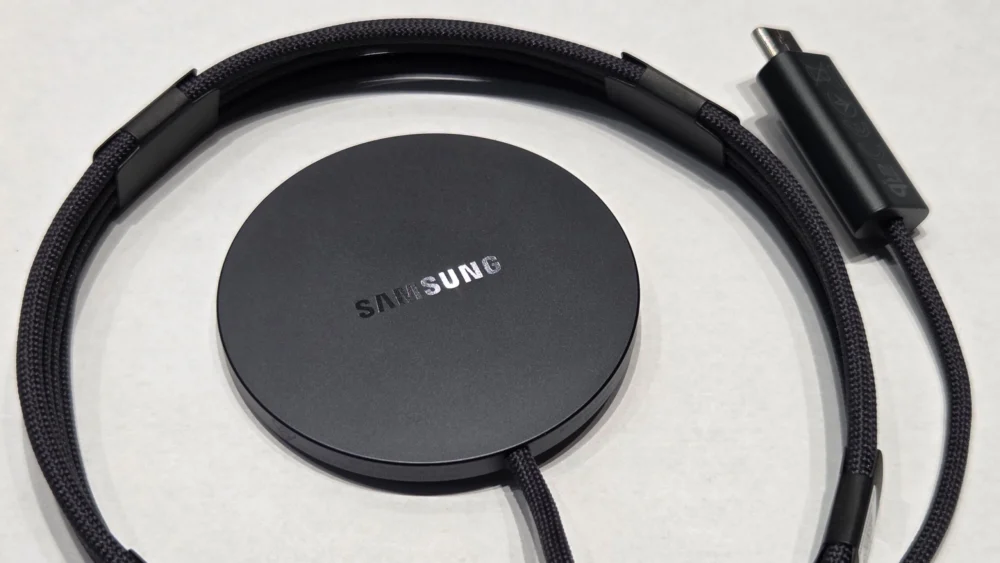
The impending launch of the Samsung Galaxy S26 series, anticipated within the next month, is poised to mark a significant inflection point in the company’s mobile accessory strategy, primarily driven by the expected integration of native Qi2 magnetic alignment technology directly into the new flagship smartphones. This standardization is crucial, as it immediately unlocks compatibility with the burgeoning ecosystem of MagSafe-compatible peripherals already available on the market. However, Samsung is not merely relying on third-party adoption; recent visual evidence confirms the Korean electronics giant is preparing to release its own suite of proprietary magnetic accessories designed to maximize the performance of the S26 lineup. Following earlier glimpses of a forthcoming magnetic power bank, detailed imagery of Samsung’s dedicated magnetic wireless charging pad has now surfaced, signaling a concerted effort to dominate the high-speed, convenient wireless charging segment for its premium devices.
The leaked visuals, obtained through reliable industry channels, showcase an accessory tentatively named the Magnet Wireless Charger, bearing the model designation EP-P2900BBEGWW. This device is specifically engineered to leverage the full potential of the Qi2 standard, offering a theoretical peak power delivery of 25W when paired with the top-tier Galaxy S26 Ultra. This 25W figure represents a notable step up from previous generations of Samsung’s standard wireless charging capabilities, bringing Samsung closer to the peak wired charging speeds that consumers have come to expect from competitor flagships. Concurrently, preliminary information suggests that the standard Galaxy S26 and the S26 Plus models may see their peak wireless charging capped slightly lower, perhaps at 20W, reflecting a tiered approach to power delivery across the product stack, a pattern observed in prior Galaxy releases.
The strategic significance of this accessory extends beyond the immediate S26 launch. Crucially, the backward compatibility inherent in the Qi2 standard means that this 25W charger will also function optimally with certified older Galaxy devices. This includes, but is not limited to, the Galaxy S25 series and potentially foldable devices like the anticipated Galaxy Z Fold 7, provided they adopt the necessary Qi2 hardware. It is important to note, however, that these preceding models might experience power limitations, potentially topping out at the established 15W maximum for non-Ultra devices or for earlier generations not fully optimized for the S26’s higher throughput protocols. This tiered power delivery necessitates careful consumer awareness regarding which device unlocks the full 25W potential.
From a hardware design perspective, the Magnet Wireless Charger exhibits several deliberate engineering choices that enhance user experience and durability. The inclusion of a USB-C port for power input is now industry standard, signaling the continued phasing out of proprietary connector dependence for charging accessories. Furthermore, the attached cable appears to feature a braided construction. In the realm of premium accessories, braided cables are highly valued for their superior resistance to fraying, kinking, and general wear and tear compared to standard plastic sheathing, offering a tangible enhancement in longevity that justifies a higher price point. However, realizing the advertised 25W output requires substantial power input. The accompanying recommendation from Samsung suggests pairing this charging puck with a robust 45W USB Power Delivery (PD) wall adapter. This requirement underscores a critical aspect of modern fast charging: the accessory itself requires significant overhead to facilitate the full transfer speed to the mobile device. Consumers purchasing this charger must factor in the cost and availability of a compatible, high-wattage power brick, which may or may not be bundled with the charger itself or the new smartphones.
The Technological Context: Embracing Qi2 and the Magnetic Ecosystem
The move by Samsung to integrate native magnets—essentially adopting the core functional principle of Apple’s MagSafe—is perhaps the most significant industry implication. For years, while Samsung championed wireless charging through the established Qi standard, the lack of precise alignment often led to inefficiencies, slower charging speeds, and frustrating placement issues where a device might seem placed correctly but be misaligned by a millimeter, resulting in minimal or no charging.
Qi2, governed by the Wireless Power Consortium (WPC), standardizes this magnetic alignment layer, often referred to as Magnetic Power Profile (MPP). This standard ensures perfect coil-to-coil contact every time, which is essential for reliably achieving higher charging speeds like 15W and, in proprietary extensions like Samsung’s expected implementation, potentially pushing beyond that benchmark. By embedding these magnets into the S26 hardware, Samsung is doing more than just improving charging convenience; it is actively legitimizing and participating in a standardized magnetic accessory market that has historically been dominated by one ecosystem.
This strategic shift represents an acknowledgment of user behavior and market reality. Consumers have demonstrated a clear preference for the convenience and reliability of magnetically secured charging pads and mounts. By adopting Qi2, Samsung opens the door for third-party manufacturers to create a vast array of docking stations, car mounts, and charging stands that work flawlessly with the S26, without the need for bulky, often unattractive, external magnetic rings or specialized cases. The Galaxy S26 will simply work with existing and future Qi2-certified gear.
Expert Analysis: Performance Tiers and Brand Loyalty
The differentiation in charging speeds—25W for the Ultra, 20W for the base models—is a calculated move reflecting Samsung’s historical product segmentation. The Ultra variant is positioned as the uncompromising powerhouse, demanding the highest possible performance across all vectors, including battery replenishment. The 25W wireless charge, while still slower than the maximum 45W wired charging rumored for the Ultra, closes a noticeable gap in the wireless sphere.
The necessity of a 45W PD adapter to achieve 25W wireless charging highlights an important principle in power delivery architecture. The charger unit itself, the circuitry managing the magnetic field and power negotiation, requires its own power budget. If the input adapter can only supply 25W, the charger cannot simultaneously provide 25W to the phone and power its own internal components efficiently. Therefore, the 45W recommendation ensures that the accessory has sufficient thermal and electrical headroom to sustain the 25W transfer rate consistently, minimizing thermal throttling on both the charger and the phone, which is crucial for maintaining peak performance over longer charging sessions.
From an expert perspective, the decision to launch proprietary magnetic accessories alongside the S26 signals Samsung’s commitment to controlling the premium user experience, at least initially. While the phones are Qi2 compatible, Samsung’s own charger, the EP-P2900BBEGWW, is likely optimized through deep software integration to guarantee stability, thermal management, and the specific 25W negotiation protocol tailored for the S26 Ultra. This often translates to better long-term reliability compared to third-party alternatives that must adhere to broader WPC specifications. Samsung leverages its recommendation of official accessories as a subtle but effective mechanism for maintaining brand loyalty and ensuring optimal performance perception, a tactic frequently employed by major hardware manufacturers.
Future Impact and Industry Trends
The widespread adoption of Qi2 across the Android landscape, spearheaded by major players like Samsung, signals the effective standardization of magnetic wireless charging. This is expected to drive down the cost of high-quality magnetic charging solutions across the board. As the technology matures and the installed base of Qi2-enabled phones grows, third-party manufacturers will invest more heavily in innovative form factors—think ultra-thin pads, modular charging stations, and integrated desk solutions—that were previously constrained by the imprecise nature of traditional inductive charging.
For the consumer, the future trend points toward a truly seamless charging environment. Imagine walking into a coffee shop or an airport lounge and placing your S26 on any Qi2-enabled surface, confident that it will snap into place perfectly and begin charging rapidly, regardless of whether the surface is branded Samsung, Apple, or a smaller accessory maker. This interoperability, facilitated by the WPC’s standardization efforts, marks a significant maturation of the wireless charging ecosystem, moving it from a novelty to a genuinely practical, daily necessity.
Furthermore, the 25W wireless tier sets a new benchmark for Android flagships. While wired charging speeds continue to escalate toward 100W and beyond, maintaining a high-speed wireless option is crucial for convenience, especially overnight or during brief periods of charging at a desk. The market now has an established expectation that premium wireless charging should approach at least 20W, a threshold that the S26 accessory line is clearly aiming to meet and exceed with the Ultra model.
The durability aspect, represented by the braided cable, suggests a broader industry pivot towards premium build quality for accessories matching the premium price tags of flagship phones. Consumers paying top dollar for their handsets are increasingly scrutinizing the quality of accompanying peripherals, demanding materials and construction that reflect the investment in the primary device. Samsung’s visible commitment to features like braided cables reinforces its position at the high end of the hardware market.
In conclusion, the leaked images of the Magnet Wireless Charger EP-P2900BBEGWW are more than just a teaser for an upcoming product; they are an indicator of Samsung’s full embrace of the magnetic charging standard. This accessory is engineered to be the apex charging solution for the Galaxy S26 Ultra, leveraging 25W power delivery through the precise alignment afforded by Qi2 magnets. While official pricing and availability remain locked behind the forthcoming launch event, the technical specifications—25W peak output, required 45W power brick, USB-C input, and durable braided cable—paint a clear picture of a meticulously designed peripheral intended to set the gold standard for wireless power transfer in the next generation of Samsung mobile computing. The integration of Qi2 is not just an iterative update; it is a foundational infrastructure upgrade that will reshape how users interact with their devices and their charging apparatus for years to come.