

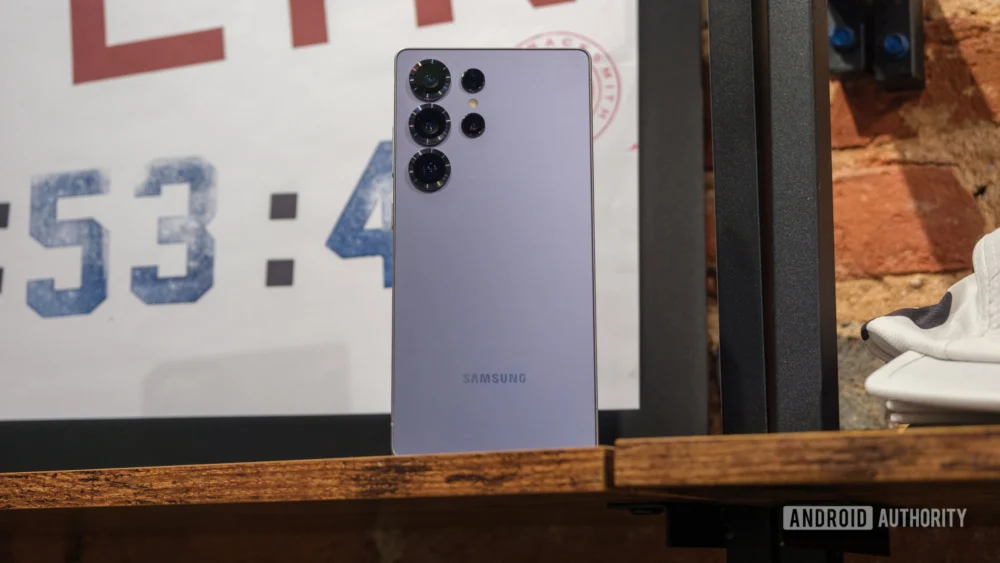
The perennial anticipation surrounding Samsung’s flagship Galaxy S Ultra series continues to build, with pre-release intelligence now offering a more nuanced look at the aesthetic choices awaiting consumers for the forthcoming S26 Ultra. While initial whispers, often derived from component leaks such as SIM card trays, pointed toward a quartet of foundational hues—black, white, blue, and purple—more granular reporting suggests a deliberate strategic expansion in the device’s chromatic offerings. This diversification, corroborated by respected industry observers, indicates that Samsung is positioning the S26 Ultra not just as a technological powerhouse, but as a personalized statement piece designed to capture broader market segments.
The recent influx of color information, stemming from sources tracking early supply chain artifacts, paints a picture of six distinct colorways for the top-tier device. These six options appear to consolidate the previously hinted four and introduce two premium, potentially more exclusive, finishes. The core quartet is expected to feature standard Obsidian Black and Alpine White, catering to traditionalists who favor timeless sophistication. The vibrant additions, which have garnered significant pre-launch attention, are identified as Sky Blue and Cobalt Violet. Cobalt Violet, in particular, is rumored to serve as the device’s primary marketing color, often referred to as the "hero" shade, suggesting Samsung intends to heavily feature this hue in promotional materials to establish a distinct visual identity for the S26 generation.
Further enriching this palette are the rumored additions of Silver Shadow and Pink Gold. Silver Shadow suggests a sophisticated, perhaps brushed or matte, iteration of a light metallic gray, offering an alternative to the standard white that implies subtlety and premium construction. Pink Gold, a hue that has seen intermittent success across previous generations (most recently as ‘Titanium Pinkgold’ on the S25 Ultra), hints at a return to a warmer, more nuanced metallic finish, likely a pale, peachy tone intended to appeal to demographics prioritizing elegance over stark modernity.
This expansion in color options is not merely cosmetic; it reflects a crucial pivot in Samsung’s high-end strategy. For years, Apple has demonstrated the commercial leverage of carefully curated color choices, often using a single, distinct new color to drive significant upgrade cycles in the initial launch window. Samsung, having successfully leveraged the "Titanium" aesthetic in its recent iterations to convey durability and premium materials, is now seemingly doubling down on color as a primary differentiator in a saturated premium smartphone market. By offering six distinct options, including two potentially exclusive shades, Samsung aims to reduce the perceived homogeneity across its flagship line and cater to the increasing consumer demand for personalization.
The context of this color diversification must be viewed against the backdrop of Samsung’s broader product lifecycle management. The current Galaxy S25 Ultra is offered in seven total colorways, three of which are often restricted to direct-to-consumer channels via Samsung.com. This tiered availability strategy—standard colors widely available, premium/exclusive colors reserved for direct purchase—is a proven method for driving traffic to first-party retail channels, thereby maximizing margin and capturing valuable customer data. It is highly probable that the S26 Ultra will replicate or even intensify this model. If Silver Shadow and Pink Gold are designated as exclusive finishes, consumers prioritizing these unique aesthetics will be compelled to order directly from Samsung, bypassing carrier subsidies and third-party retailers in the early rollout phase.
Moreover, the rumored color schemes align remarkably well with leaked digital assets, specifically the purported S26 Ultra wallpapers disseminated late last year. The existence of wallpapers matching these six specific hues—Black, White, Sky Blue, Cobalt Violet, Silver Shadow, and Pink Gold—suggests that the color selection has been finalized internally for some time, moving beyond mere component testing into full marketing preparation. This convergence of component leaks (SIM trays) and software asset leaks (wallpapers) lends significant weight to the reliability of this color forecast.
Implications for the Competitive Landscape and Consumer Psychology
In the fiercely contested premium smartphone arena, where year-over-year hardware innovation often yields diminishing returns in terms of headline-grabbing features, aesthetic presentation becomes an increasingly vital battleground. When processing power, camera sensor size, and display technology converge toward an equilibrium of near-perfection, the superficial—the look and feel—gains disproportionate influence over purchasing decisions, particularly among affluent early adopters.
For Samsung, successfully articulating the narrative around these colors is paramount. Cobalt Violet, if truly the hero color, needs to be intrinsically linked to a perceived technological leap—perhaps subtly referencing new AI capabilities or a refinement in the device’s industrial design language. Silver Shadow appeals to the professional user who values understated luxury, suggesting a focus on the titanium framing that has become central to the Ultra line’s perceived ruggedness.
This strategic emphasis on color also has significant industry implications for accessory manufacturers. The vibrant popularity of specific colors dictates the initial demand for third-party cases, screen protectors, and aesthetic modifications. A strong showing for Cobalt Violet, for instance, will immediately trigger a flood of complementary case designs from major players like OtterBox, Spigen, and Casetify, effectively creating a secondary, parallel market driven entirely by the initial hardware aesthetic decision.
From a consumer psychology perspective, the expanded palette addresses the psychological need for differentiation. In urban environments where high-end devices are ubiquitous, a standard black or white slab can blend into the background. A unique color choice acts as a low-effort signal of status or individuality. The move to six colors demonstrates Samsung’s understanding that the $1,200+ smartphone is as much a fashion accessory as it is a communication tool.
Beyond Aesthetics: Hardware Underpinnings
While the color discussion dominates the early rumor cycle, it is crucial to place these aesthetic choices within the context of the expected foundational hardware upgrades. The S26 Ultra is not expected to rely solely on aesthetics for its premium justification. Rumors strongly suggest a unified chipset strategy globally for the Ultra model, a significant shift from past practices. The anticipated integration of the Snapdragon 8 Elite Gen 5 chipset across all territories is a major technical development. Historically, Samsung has segmented its global market, deploying Qualcomm chips in North America and key Asian markets while utilizing its own Exynos counterparts in Europe and other regions.
A unified Qualcomm deployment in the S26 Ultra suggests several advantages. Firstly, it streamlines manufacturing and supply chains, reducing complexity and potential regional performance discrepancies. Secondly, it allows Samsung to market a singular, consistent performance benchmark globally. If the Snapdragon 8 Elite Gen 5 offers substantial leaps in efficiency, NPU performance (critical for on-device AI), and thermal management over previous generations, then the Ultra model can credibly claim a significant step up in processing capability, justifying the premium pricing and the excitement surrounding its launch.
Conversely, the lesser S26 and S26 Plus models are reportedly still subject to a bifurcated chipset strategy, utilizing either Qualcomm or Exynos depending on the market. This disparity reinforces the Ultra’s positioning as the undisputed flagship—the model receiving the most optimized and globally standardized silicon configuration. This strategic hardware segmentation ensures that the Ultra remains the clear technological leader within the S series lineup.
Anticipated Launch Timeline and Market Positioning
The industry is currently converging on an early 2026 launch window for the S26 series. Publicly unconfirmed announcements aside, the established cadence points toward a major Galaxy Unpacked event scheduled for February. Following this reveal, general availability is projected to commence in March. This timeline positions Samsung perfectly to dominate the first quarter sales figures post-CES and ahead of the traditional spring refresh cycle from competitors.
The S26 Ultra’s launch timing is strategically significant. It arrives after the holiday season wind-down, targeting consumers who held onto their previous devices through the end of the year and are now ready for a significant upgrade. Furthermore, by launching in February, Samsung aims to set the pace for the Android flagship year, forcing competitors to react to its feature set and price positioning throughout the subsequent months.
The persistent focus on color, even at this early stage, underscores the maturity of the premium smartphone market. When core specifications are expected to be incrementally better (faster processing, marginally improved cameras, slightly better battery life), the "feel" and visual appeal of the device become critical decision drivers. The introduction of six specific, named colors—especially the inclusion of the potentially exclusive Silver Shadow and Pink Gold—is a calculated maneuver by Samsung to enhance the perceived value and desirability of the S26 Ultra beyond its internal specifications sheet. It transforms the device from a utility into a carefully curated luxury item, ready to command the highest tier of the mobile hardware market for the coming year. The market awaits the official unveiling, but the preliminary signs suggest Samsung is preparing a visually compelling and strategically diverse offering for its next flagship conqueror.