

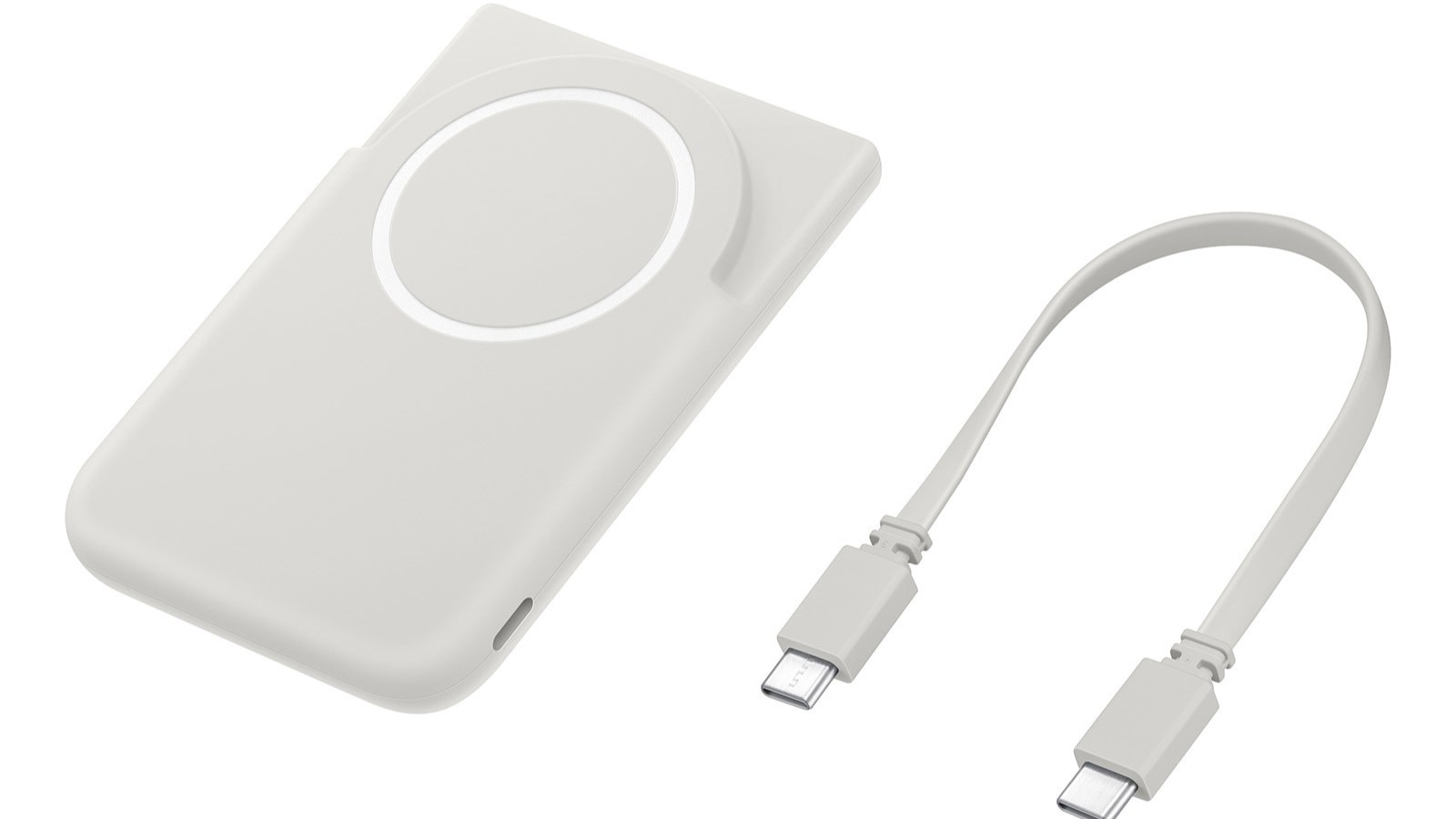
The arrival of the Samsung Galaxy S26 series, heralded by its integration of the next-generation Qi2 wireless charging standard, signaled a significant step forward in mobile power management. However, this technological leap introduced a nuanced compatibility challenge: while the S26 hardware supports the magnetic alignment features inherent to Qi2, the flagship devices themselves lack the necessary embedded magnets for seamless accessory attachment. This omission necessitates the use of specialized magnetic cases to fully leverage the ecosystem’s potential. Addressing this gap directly, Samsung has now introduced its proprietary Qi2 Magnet Wireless Battery Pack, a carefully engineered peripheral designed not just to provide supplementary power but to integrate flawlessly with the S26’s distinctive physical architecture.
This new power bank, priced near the $65 mark, represents more than a simple accessory release; it is a calculated response to the design constraints imposed by contemporary smartphone aesthetics, particularly the increasingly prominent and complex camera modules found on high-end devices. The core value proposition of Qi2—fast, foolproof magnetic alignment for optimized energy transfer—is only fully realized when accessories precisely match the host device’s physical contours. For Samsung, maintaining control over this user experience, especially concerning their flagship line, is paramount.
Decoding the Qi2 Mandate and Samsung’s Strategic Response
The transition to Qi2 is fundamentally rooted in the adoption of the Magnetic Power Profile (MPP), derived heavily from Apple’s MagSafe technology. Qi2 aims to standardize the 15W wireless charging speeds achieved through precise magnetic coupling. Prior to this, standard Qi charging often suffered from misalignment, leading to slower charging or frustrating connection drops. The introduction of a fixed magnetic field ensures that the charging coils are perfectly superimposed, maximizing efficiency and delivering the advertised power output consistently.
The paradox for Samsung users, following the S26 launch, was the lack of native magnetic anchoring on the phone chassis. While the phones could receive 15W Qi2 power, attaching a magnetic battery pack required an intermediary case containing the corresponding magnetic array. Samsung’s new Battery Pack circumvents potential user confusion and accessory incompatibility issues by offering a first-party solution that acknowledges this design decision.
The technical specifications highlight a focus on utility. The unit houses a 5,000mAh cell, offering substantial reserve power capable of delivering a significant charge boost to the S26, crucial for power users. When magnetically attached, the device delivers the full 15W wireless charging performance standard for Qi2. For users prioritizing speed during downtime, the inclusion of a USB-C port supporting up to 25W wired output provides a faster charging alternative for the phone itself.
Engineering Harmony: The Camera Cutout Revelation
The most telling aspect of this accessory, and the key differentiator from generic magnetic power banks, is its physical accommodation of the Galaxy S26’s camera housing. Modern flagship smartphones, including the S26 line, feature substantial, often vertically aligned, camera arrays that protrude significantly from the rear surface. This camera "bump" creates a topographical challenge for flat-backed accessories.
A standard, flat magnetic power bank, even if equipped with the correct Qi2 alignment ring, would invariably clash with the edges of the S26’s camera module. This interference could either prevent the magnets from snapping securely into place, leading to poor coil contact and slow charging, or cause the battery pack to sit awkwardly, potentially stressing the phone’s chassis or obstructing button access.
Samsung’s solution involves an intelligently designed recess or cutout within the magnetic attachment ring itself. This engineering detail ensures that the battery pack settles flush against the phone body, perfectly encircling the raised camera module without touching it. This level of precision suggests that Samsung anticipated the limitations of third-party accessories attempting to adhere to the standardized Qi2 ring placement without accounting for the specific chassis geometry of their flagship. It is a subtle but powerful affirmation of vertical integration in the hardware-accessory relationship.
Ergonomics and Ecosystem Control
Beyond pure charging metrics, Samsung has integrated functionality that enhances the daily usability of the power bank. The inclusion of a foldable kickstand is a strategic move. In an era dominated by video conferencing, media consumption, and short-form content viewing, the ability to prop the phone up in either portrait or landscape orientation while simultaneously replenishing the battery is a significant convenience feature. This transforms the accessory from a simple emergency power source into a functional desktop or travel companion.
The gradual rollout suggests Samsung is managing initial inventory carefully, prioritizing core markets. The availability in a neutral gray finish aligns with the broader aesthetic of the S26 ecosystem. Critically, while optimized for the S26, the accessory remains compatible with any other Qi2-enabled Galaxy device, provided that device utilizes a compatible magnetic case. This maintains backward compatibility within the evolving Qi2 framework, showing a degree of future-proofing.
Industry Implications: The Magnetization of Power
The market implications of Samsung’s targeted accessory launch are significant, particularly in the context of the broader mobile accessory landscape.
1. Solidifying Qi2 Adoption: By releasing a high-profile, first-party accessory that demonstrates the ideal use case for Qi2—seamless, powerful magnetic attachment—Samsung lends credibility and visibility to the new standard. It moves Qi2 beyond a specification sheet entry into a tangible, desirable user benefit.
2. The Case Ecosystem Lock-in: The requirement for a magnetic case remains a point of friction for many consumers. While Apple successfully cultivated a robust ecosystem around MagSafe through early implementation, Android manufacturers adopting Qi2 are navigating this transition later. Samsung’s accessory reinforces the necessity of the case, subtly encouraging users toward cases equipped with the necessary magnetic layers, potentially steering them toward Samsung-branded or certified third-party options. This dynamic solidifies the "case tax" inherent in enjoying magnetic accessories.
3. Design Language Dominance: The precise cutout for the camera module illustrates a proprietary understanding of the S26’s physical design that third-party manufacturers may struggle to replicate perfectly across numerous SKUs. This forces accessory makers to either design around Samsung’s specific hardware contours—a complex task given the rapid iteration of smartphone designs—or risk producing an accessory that appears misaligned or functionally compromised compared to the official offering. This is a classic move by an OEM to maintain premium control over the user experience associated with their flagship hardware.
Expert Analysis: The Balance Between Open Standards and Proprietary Excellence
From a technological standpoint, the development of this power bank highlights a recurring tension in the consumer electronics space: the push for open standards (like Qi2) versus the desire for optimized, proprietary execution. Qi2 provides the common language (the magnetic alignment protocol), but Samsung’s execution provides the dialect—the specific physical manifestation tuned for the S26.
Analysts often observe that while open standards promote competition and lower entry barriers, the best user experiences frequently emerge when the hardware designer controls both the device and the primary accessories. The 5,000mAh capacity, while respectable, is not groundbreaking; the innovation lies in the mechanical engineering of the attachment mechanism. This attention to mechanical integration suggests that for high-performance, aesthetically sensitive functions, proprietary refinement will often supersede generic, one-size-fits-all solutions, even within an ostensibly open standard ecosystem.
Furthermore, the inclusion of a kickstand reflects a growing consumer expectation that power accessories should offer multi-functionality. In the past, portable chargers were purely utilitarian. Today, they are expected to enhance productivity or media consumption capabilities, blurring the lines between power management and device stands.
Future Trajectories in Mobile Power
The trajectory set by the S26 and this accompanying battery pack points toward deeper integration of magnetic power solutions across the entire mobile accessory spectrum. We can anticipate several developments stemming from this trend:
Firstly, the standardization of magnet placement across the Android flagship space, driven by Qi2 compliance, will eventually make third-party magnetic cases more reliable. However, until that standardization fully matures across all manufacturers (especially regarding the exact distance from the camera array), OEM accessories like this Samsung pack will retain a competitive edge in terms of guaranteed fit.
Secondly, the evolution of battery density and form factor will be crucial. While 5,000mAh is adequate now, as phone batteries grow larger and charging demands increase (especially with higher-resolution screens and advanced 5G/6G connectivity), consumers will seek thinner, lighter magnetic solutions that can still deliver a meaningful charge. This will push R&D into solid-state battery technology or advanced cell stacking within the magnetic pack format.
Thirdly, data transfer over magnetic connection could become the next frontier. While current Qi2 focuses on power, the physical proximity established by the magnets could facilitate rapid, short-range data exchange, perhaps for instant file transfers or secure device authentication, effectively turning the battery pack into a multi-protocol hub.
In conclusion, Samsung’s Qi2 Magnet Wireless Battery Pack is a sophisticated piece of accessory engineering that subtly reinforces the company’s control over the high-end user experience. By meticulously designing the physical interface to accommodate the S26’s prominent camera system, Samsung delivers on the promise of Qi2 alignment while simultaneously setting a high bar for accessory integration that generic competitors will find challenging to meet without specific hardware schematics. This launch underscores that in the premium mobile sector, seamless functionality is often found at the precise intersection of open standards and proprietary design finesse. The $65 investment buys not just power, but guaranteed ergonomic compatibility with a complex modern smartphone design.