

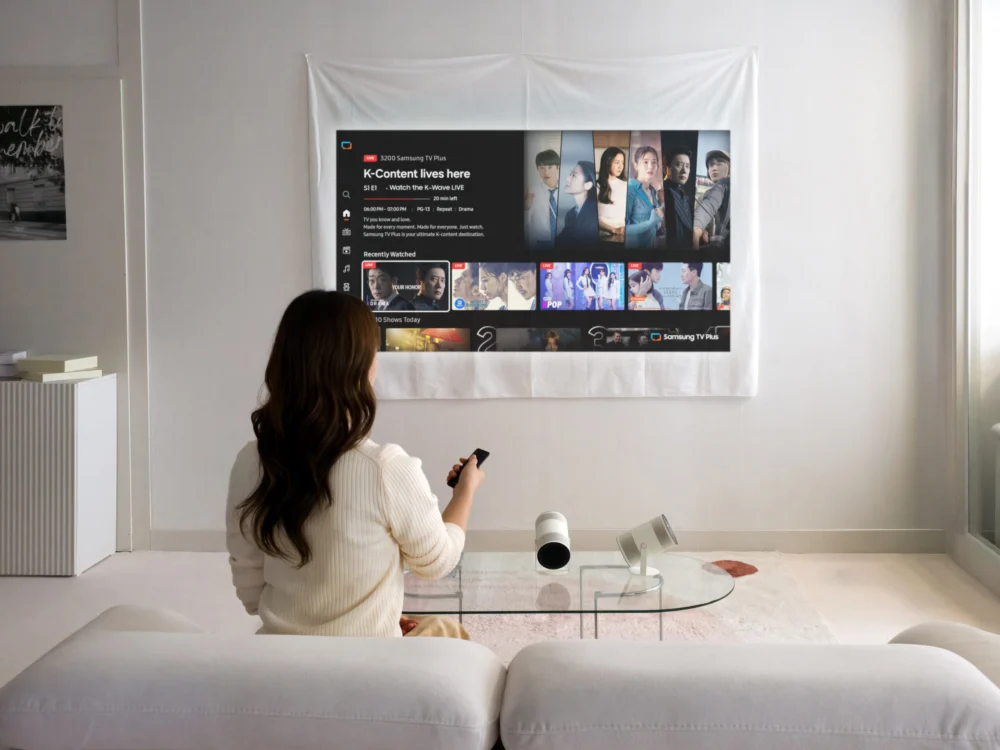
The annual pre-show buzz leading into major technology expos, such as the upcoming CES 2026, often sets the stage for hardware introductions across various consumer electronics sectors. While the spotlight frequently falls on massive television panels or groundbreaking computational devices, the personal entertainment sphere, particularly the rapidly evolving portable projector market, is carving out a significant niche. Samsung, a dominant force in display technology, is strategically positioning its latest iteration, the Freestyle+, not as a radical redesign but as a calculated refinement of its highly successful portable cinema concept. This new iteration, announced ahead of the Las Vegas convention, signals Samsung’s commitment to addressing the primary friction points that have historically defined the limitations of compact projection technology.
The original Freestyle series established a compelling paradigm: a device that blended the functionality of a traditional smart TV interface with the ultimate portability required for modern, flexible living spaces. Its defining physical characteristic—the compact, cylindrical chassis coupled with a versatile 180-degree swiveling stand—remains intact in the Freestyle+. This design philosophy is crucial; it transforms any flat surface—a bedroom ceiling for late-night viewing, a kitchen wall for a quick recipe guide, or an outdoor patio for impromptu movie nights—into a dynamic display area. The inherent ease of deployment, requiring minimal setup beyond plugging it in (or utilizing battery power, depending on the accessory configuration), is what cemented its status as a "fan-favorite." It democratizes large-screen experiences without the footprint or permanence of a traditional home theater setup.
However, the adoption curve for any portable projector is intrinsically linked to two core performance metrics: brightness and setup automation. Previous generations of the Freestyle, while excelling in form factor and smart functionality, often struggled when ambient light was not strictly controlled. This limitation restricted their utility primarily to dark rooms or nighttime use cases. Samsung’s announcement addresses this head-on with the most critical specification upgrade: a substantial leap in illumination power.
The Freestyle+ is now rated at 430 ISO lumens. To put this in context, this represents an almost 87% increase over the predecessor’s typical 230 ISO lumens rating. In the world of pico and portable projectors, where lumen counts are notoriously conservative and often inflated by marketing jargon, the shift to the standardized ISO lumen measurement provides a clearer benchmark for real-world performance. This significant boost in light output is not merely incremental; it directly translates to enhanced usability during daylight hours or in environments where ambient room lighting cannot be entirely suppressed. For consumers using the device in shared living spaces or offices, this brightness upgrade moves the Freestyle+ from being a niche evening gadget to a more viable, all-day visual companion.
Beyond raw light output, the focus of the Freestyle+ refresh lies squarely in refining the user experience through sophisticated automation, a trend now sweeping the entire portable projection industry. Setup friction—the frustration of manually adjusting focus, correcting trapezoidal distortion (keystone), and ensuring the image fits the screen geometry—has long been the Achilles’ heel of consumer projectors. Samsung bundles these enhancements under the proprietary AI OptiScreen banner.
This suite of intelligent features includes persistent real-time autofocus, ensuring image sharpness even if the projector is nudged slightly during operation. More importantly, the enhanced auto keystone correction works dynamically to square the image regardless of the projection angle, even when projecting onto ceilings or angled walls. The inclusion of wall calibration is particularly noteworthy. This feature utilizes the onboard sensors and processing power to analyze the color cast and texture of the projection surface. If projecting onto a pale blue or beige wall, the system can algorithmically adjust the color temperature and contrast profile to neutralize the wall’s hue, delivering a picture that is closer to color-accurate white balance than previous generations could manage. While these features are becoming commonplace across premium portable units from various manufacturers, Samsung’s integration into its established Tizen smart platform suggests a seamless, deeply embedded operational layer.
The software ecosystem remains robust, leveraging the proven Tizen OS. This provides immediate access to the familiar suite of streaming applications, Samsung TV Plus (their ad-supported linear channel service), and crucially, the Samsung Gaming Hub. For the mobile gamer or those seeking a second-screen experience for console gaming without monopolizing the main television, the low-latency performance touted by the Gaming Hub integration is a significant draw. Audio fidelity is maintained through the integrated 360-degree speaker, offering broad sound dispersion suitable for small to medium rooms. Furthermore, the compatibility with Q-Symphony, which allows the projector’s audio to synchronize and augment compatible Samsung soundbars, offers a clear upgrade path for users invested in the Samsung audio ecosystem.
The context for this release is vital for understanding Samsung’s strategic play. The portable projector segment is maturing rapidly. Competitors, ranging from established electronics giants to agile startups focusing purely on battery-powered, high-Lumen DLP or Laser projection, are aggressively vying for market share. The initial success of the Freestyle proved the market demand for a lifestyle-oriented projector—one that prioritizes design and convenience over sheer technical specifications like native 4K resolution (which the Freestyle line typically foregoes in favor of high-quality 1080p or upscale capabilities).
Samsung’s current move is about solidifying leadership in the premium lifestyle sub-segment. They are not attempting to win a specs war against dedicated home theater projectors that cost five times as much. Instead, they are incrementally widening the usability gap between their device and budget alternatives. The primary threat to the Freestyle model has always been perceived underperformance in less-than-ideal lighting. By nearly doubling the effective brightness (as measured by ISO lumens), Samsung is effectively addressing the most common user complaint, thereby increasing the device’s perceived value proposition without drastically altering the manufacturing complexity or industrial design that consumers already favor.
This approach suggests a maturity in product lifecycle management. Instead of launching an entirely new form factor prematurely, the company is maximizing the potential of its current successful chassis. This iterative improvement strategy minimizes R&D risk while allowing the company to gauge market reception to core functional enhancements before committing to a more significant architectural overhaul, perhaps one involving microLED projection or native 4K chips in future iterations.
Looking toward the broader industry implications, the Freestyle+ launch underscores a significant shift in consumer viewing habits. The concept of a fixed "living room TV" is being supplemented, and sometimes replaced, by contextual, on-demand displays. This movement is fueled by remote work, increased digital content consumption across multiple platforms, and a general desire for minimalist aesthetics that eschew large black rectangles dominating wall space when not in use. Projectors, once relegated to dedicated media rooms, are now positioned as flexible furniture accessories.
The emphasis on AI-driven setup tools like AI OptiScreen points to the future trajectory of all display technology. As projection engines become smaller and more powerful, the barrier to entry should decrease, but complexity should not increase. Consumers demand instant gratification; they want to point the device and start viewing immediately. The competitive advantage will increasingly belong to the manufacturers who can best mask the underlying optical and calibration challenges with invisible, effective artificial intelligence. If Samsung’s AI OptiScreen proves genuinely superior to competitor algorithms, it becomes a significant differentiator beyond the hardware specifications.
Regarding future impact, the pricing structure will be the ultimate arbiter of success. Given that the predecessor commanded a premium price point—often hovering near the $800 mark—and the Freestyle+ introduces substantial hardware upgrades (brighter light source, enhanced processing for AI features), a similar or slightly elevated price point seems probable. If Samsung can maintain pricing parity with previous models despite the technical advancements, it represents excellent value. Conversely, if the price pushes significantly higher, it risks alienating segments of the market that are already seeing strong competition from brands offering comparable smart features at lower price points, albeit with lower lumen counts.
The global availability timeline, slated for later in 2026 following the CES showcase, positions the Freestyle+ perfectly for the 2026 purchasing cycle. It allows Samsung to capture early adopters eager for the brightest portable experience before the market floods with CES follow-ups and inevitable mid-year refreshes from rivals.
In essence, the Samsung Freestyle+ is a strategic calibration. It acknowledges the core appeal of the original—the form factor and the smart integration—while aggressively patching its most significant weakness: insufficient brightness for varied environments. By leaning into advanced, automated setup routines, Samsung is aiming to make the portable cinema experience frictionless, potentially broadening the Freestyle’s appeal from tech enthusiasts to the mass market seeking adaptable home entertainment solutions. The coming year will reveal whether these refined screws are enough to tighten their grip on the portable projector throne. The true test will be how effectively the 430 ISO lumens perform under real-world, imperfect living room conditions compared to the promise of the spec sheet.