

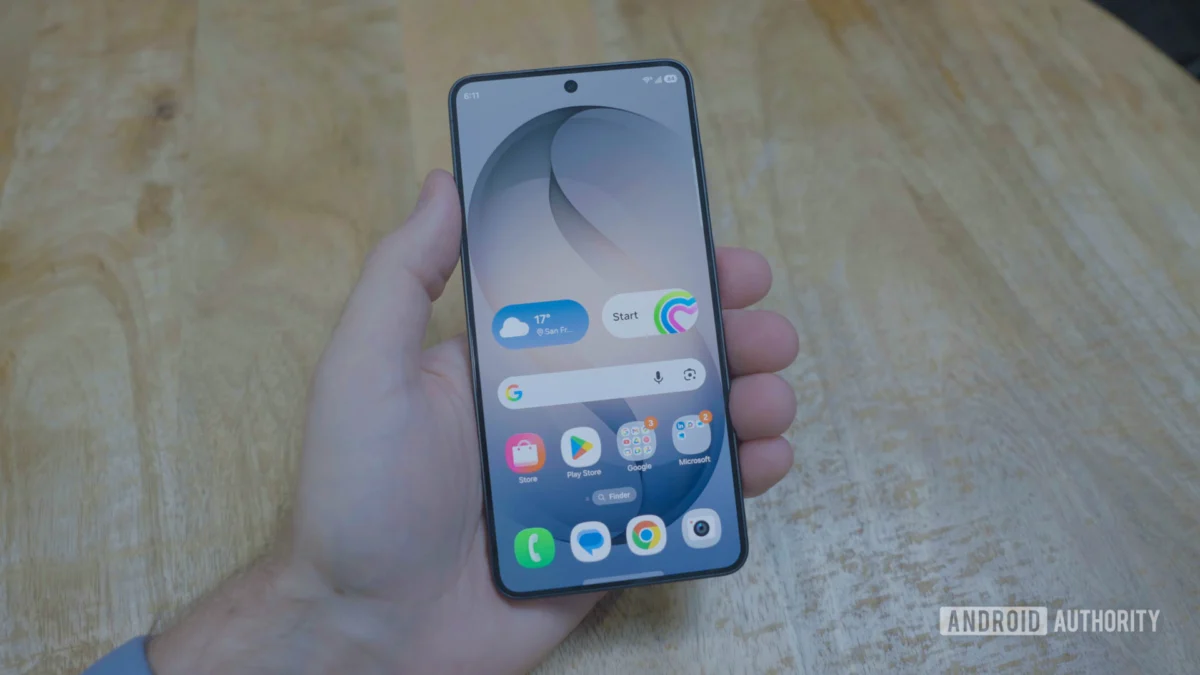
The global rollout of Samsung’s latest Galaxy S26 flagship devices has barely hit its stride, marking the culmination of months of anticipation and record pre-order figures, yet the South Korean behemoth is already pivoting its engineering resources toward the next major software iteration. This aggressive forward planning is underscored by the emergence of internal firmware builds for One UI 9, the company’s proprietary overlay, which is fundamentally built atop the yet-to-be-released Android 17 operating system from Google. This early sighting, initially flagged by industry watchers tracking Samsung’s development servers, signals an accelerated and increasingly synchronized software development cadence between the OEM and its upstream partner.
The discovery of these initial, highly internal test builds—specifically identified by firmware indicators such as ‘BZC5’—on Samsung’s private repositories confirms that the foundational work for the next-generation user experience is officially underway. For a device family that has just hit mass availability, this level of proactive development speaks volumes about the scale and efficiency of Samsung’s software engineering division, which manages updates for hundreds of millions of active devices globally across numerous product tiers.
The Shifting Sands of Software Timelines: A Strategic Realignment
The perceived "earliness" of this development cycle is not accidental; it is the direct result of a deliberate, multi-year strategic realignment by Samsung concerning its Android update philosophy. Historically, there was often a degree of temporal friction where the newest Galaxy S series launched running the current stable Android version, only to receive the subsequent major version update months later, sometimes confusingly launching the next generation of flagships with an OS one step behind the current iteration.
Samsung appears committed to resolving this ambiguity. By aligning its One UI development schedule more tightly with Google’s anticipated Android release roadmap, the company aims to ensure that its flagship hardware—and increasingly, its mid-range and foldable lines—can launch with the latest foundational operating system in place. This closer synchronization mitigates fragmentation issues and allows Samsung to leverage the newest security patches and core feature enhancements from day one, providing a more compelling out-of-the-box experience for premium buyers.
This strategic shift has significant industry implications. For competitors relying on the Android ecosystem, Samsung’s pace sets a de facto standard for timely updates. It pressures other manufacturers to streamline their own proprietary skin integration processes, particularly as Google continues to iterate on core system functionality that OEMs must build upon.
Android 17: The Foundation for One UI 9
While One UI 9 is the focus for Samsung users, its capabilities are intrinsically tethered to the underlying architecture of Android 17. Google typically follows a predictable annual cycle for its core OS releases. Following the customary developer previews and early access programs, Android 17 is expected to see its formal unveiling at the annual Google I/O developer conference, traditionally held around May. A subsequent stable release is then anticipated for the early summer months, likely June.
These timelines suggest that the internal Samsung builds—like the BZC5 variant observed—are currently integrating the features and APIs made available through the Android 17 developer builds. Early internal firmware, by its nature, is rarely feature-complete or aesthetically refined. They are functional frameworks designed to test stability, driver compatibility, and the core integration of the new OS kernel with Samsung’s extensive hardware feature set, including camera pipelines, DeX capabilities, and specialized Knox security modules.
Glimpses of Early Refinement: UI Tweaks and Organizational Changes
Even in these embryonic stages, the testing process has yielded minor but telling indicators of the user interface evolution planned for One UI 9. These initial observations, often shared by dedicated mobile tech analysts monitoring developer chatter, point toward iterative improvements rather than wholesale redesigns—a hallmark of Samsung’s recent One UI strategy.
Reports have highlighted subtle but functional modifications within the Quick Panel, the instantly accessible notification and control center. Specifically, there are mentions of slightly enlarged visual elements for the brightness and volume sliders. In a landscape where accessibility and tactile feedback are increasingly valued, even minor dimensional increases in these frequently used controls can translate into a better physical interaction, especially for users with motor skill variations or when operating devices one-handed.
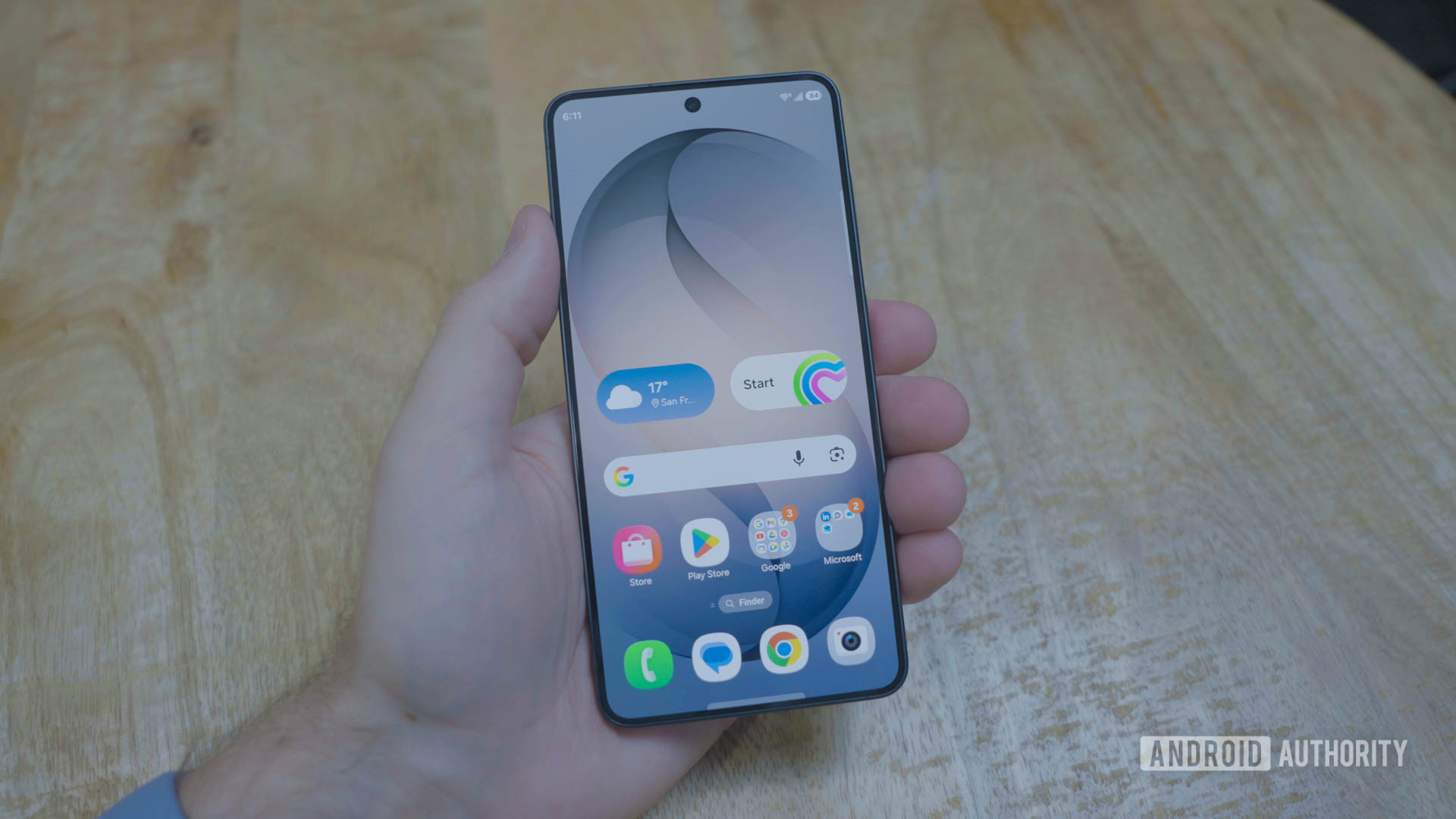
More substantively, there are indications of a structural reorganization within the Settings application. The specific relocation of "Parental Controls" from within the broader "Digital Wellbeing" section to its own dedicated, top-level grouping suggests an effort to elevate the visibility and accessibility of family safety features. This move reflects a growing industry emphasis on digital guardianship tools, moving them from being ancillary features buried under wellness metrics to primary configuration options easily discoverable by all users. This organizational shift signals Samsung’s response to evolving societal needs regarding digital safety, particularly as the user base ages and the complexity of digital life increases.
The Rollout Trajectory: Beta, Flagship Debut, and Mass Deployment
Understanding the development timeline allows for a projection of the deployment schedule for the broader user base. The immediate availability of these internal builds does not translate to immediate public access. The pathway to One UI 9 involves several critical milestones:
- Internal Quality Assurance (QA): The current phase, involving builds like BZC5, is focused on deep system stability and hardware integration testing within Samsung’s own labs.
- Public Beta Initiation: If Samsung adheres to the pattern established in the previous cycle, a public beta program for One UI 9 is likely to commence in late May or early June. This window coincides perfectly with the expected stable release of Android 17 from Google. The beta phase is crucial for collecting real-world performance data across a diverse range of user habits and device conditions that internal testing cannot replicate.
- Pre-Installation on New Foldables: A significant marker in Samsung’s yearly software cycle is the debut of the next generation of its foldable devices. It is highly probable that the Galaxy Z Fold 8 and Galaxy Z Flip 8, typically unveiled in the late summer months (August/September), will be the first devices to ship globally with One UI 9 pre-installed. This strategy allows Samsung to showcase the new software on its cutting-edge form factors, maximizing the marketing impact of the new iteration.
- Stable Deployment to S-Series: Following the foldable launch, the stable, final version of One UI 9 will then commence its rollout to existing flagship hardware, starting most notably with the Galaxy S26 series. Based on prior years, this stable rollout for the S-series typically begins in September or October.
This staggered approach ensures that the most critical new features are tested rigorously on the newest hardware before being pushed to the vast installed base of older Galaxy S, Note (if applicable to the current generation), and A-series devices.
Expert Analysis: The Competitive Edge of Proactive Development
From a competitive analysis standpoint, Samsung’s aggressive development posture concerning One UI 9 underscores its commitment to maintaining leadership in the Android OEM space. The battleground is no longer solely hardware specifications; software experience, update longevity, and security posture are now key differentiators.
By starting development this early, Samsung is effectively maximizing the development runway. This extra lead time is crucial for engineering complex features that rely on deep OS integration, such as advanced AI functionalities (which are increasingly baked into the OS layer), enhanced DeX desktop environments, and refinements to the highly customized camera processing pipelines. Any delay in adopting the new Android foundation directly compresses the time available for these value-added features to be polished.
Furthermore, this early internal testing allows Samsung to potentially influence feedback loops with Google regarding early Android 17 builds. While Google maintains control over the core OS, large OEMs provide vital telemetry on scaling issues, hardware compatibility challenges, and performance bottlenecks, effectively contributing to the final hardening of the base operating system before its public release. This symbiotic relationship is vital for the health of the entire Android ecosystem.
Future Impact: AI Integration and Ecosystem Cohesion
Looking ahead, One UI 9, underpinned by Android 17, is anticipated to be the vehicle for Samsung’s next wave of Galaxy AI integrations. While current models leverage on-device processing alongside cloud-based solutions, the underlying architecture of Android 17 may introduce new standardized frameworks for neural processing units (NPUs) and enhanced memory management protocols better suited for sustained, low-latency on-device machine learning tasks.
We can anticipate that One UI 9 will attempt to make these AI features feel less like an add-on suite and more like native OS functionality—perhaps extending capabilities like advanced contextual awareness, proactive system suggestions, and enhanced background process optimization that rely on continuous learning. The tighter integration with Android 17’s core features will likely focus on privacy-preserving computation, ensuring that sensitive user data processed by these AI models remains localized where feasible.
The evolution of One UI also extends beyond the smartphone itself. As Samsung strives for a more cohesive ecosystem involving Galaxy Watches, Tablets, and Windows PCs via Link to Windows, One UI 9 will inevitably introduce enhanced continuity features. This includes smoother hand-off capabilities, more unified notification mirroring, and potentially standardized APIs for interacting with peripherals across devices running different, yet harmonized, versions of the software.
In conclusion, the internal sightings of One UI 9 on the Galaxy S26 hardware are more than just a minor leak; they represent a critical waypoint in Samsung’s annual software planning. It confirms a strategic commitment to rapid iteration, a tight synchronization with Google’s development schedule, and a focus on refining user interaction and organizational structure ahead of the formal unveiling of Android 17 later this year. The industry watches closely, recognizing that Samsung’s successful deployment of this new software layer will define the premium Android experience for the next twelve months.