

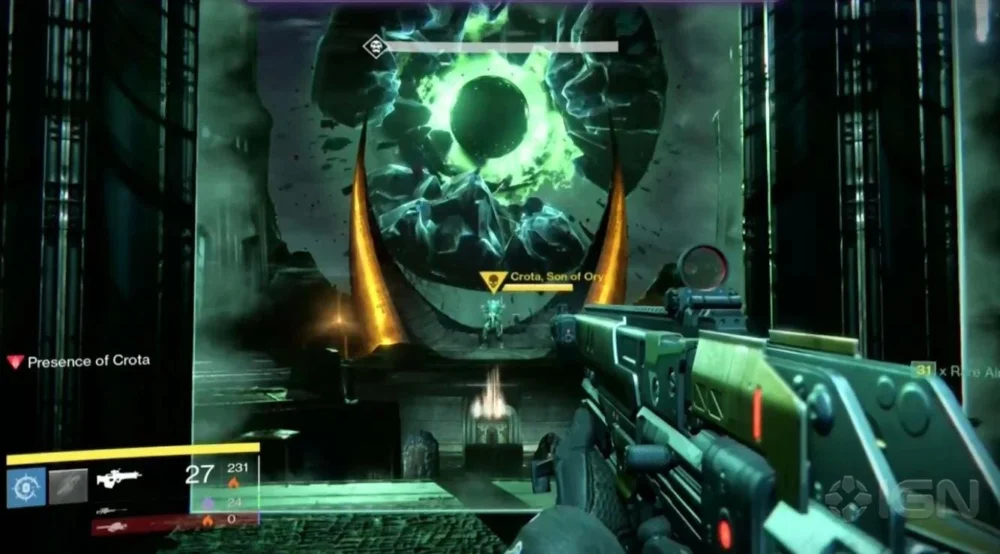
The legend of Crota, Son of Oryx, has haunted the digital halls of the Destiny franchise for over a decade, serving as a foundational pillar of its high-stakes raiding culture. Today, that legacy enters a new and somewhat controversial chapter as the Crota’s End raid makes its debut in Destiny Rising, the mobile-exclusive spin-off developed by NetEase. This release marks the third time the gaming community has been invited to descend into the moon’s depths to confront the Hive Prince, and it brings with it the familiar fanfare of a competitive "World First" raid race. However, as the industry observes this third iteration of a ten-year-old encounter, the move raises significant questions about the sustainability of recycled content, the shifting landscape of mobile gaming, and the long-term health of the Destiny intellectual property.
To understand the weight of this release, one must look back at the origins of the raid in December 2014. Originally launched as the centerpiece of Destiny 1’s first major expansion, The Dark Below, Crota’s End was initially met with a mixture of awe and criticism. While its atmospheric descent into the Stygian Abyss was praised, the raid was notorious for being significantly shorter than its predecessor, the Vault of Glass, and was plagued by "cheeses"—exploits that allowed players to bypass entire encounters. Despite these flaws, the raid became a fan favorite due to its unique sword-bearing mechanics and the high-octane final showdown against a towering, ethereal god.
Fast forward to September 2023, and Bungie reintroduced a meticulously reworked version of the raid into Destiny 2. This "Reprisal" version modernized the encounter, adding complex mechanics that forced players to engage with the environment and each other in ways the original 2014 version never required. It was a masterclass in how to update legacy content for a modern audience. Now, in 2024, the raid has been ported once again, this time to the mobile platform under the stewardship of NetEase.
Destiny Rising represents a curious experiment in the live-service ecosystem. Positioned as a non-canon prequel taking place in an alternate timeline before the events of the mainline games, it features a hero-based system rather than the customizable "Guardian" archetype found in the PC and console versions. This shift to a third-person, gacha-influenced RPG was initially met with skepticism by the hardcore Destiny community. However, upon its initial testing phases, the consensus shifted; many players were surprised by the technical fidelity and the faithfulness of the gunplay, even on a touch-screen interface. Yet, the decision to use Crota’s End as a primary endgame hook suggests a reliance on nostalgia that may be a double-edged sword.

From a development perspective, bringing a raid of this complexity to mobile devices is no small feat. Raiding in Destiny has always been defined by its requirement for six-player coordination, precise timing, and environmental awareness. Translating these elements to a mobile format requires significant UI optimization and perhaps a fundamental flattening of certain mechanical hurdles. The "World First" race occurring today will serve as a litmus test for whether the mobile audience—and the technology itself—can sustain the high-intensity teamwork that defines the Destiny experience. If the race is concluded too quickly, it risks being labeled as "raid-lite"; if it is too punishing, it may alienate the casual mobile demographic that NetEase is clearly courting.
The broader industry implications of this release are tied to the current volatility of the AAA mobile market. In recent years, we have seen several high-profile attempts to bring established shooter franchises to mobile devices meet with untimely ends. Electronic Arts famously shuttered Apex Legends Mobile less than a year after its launch, and Call of Duty: Warzone Mobile has struggled to maintain the monumental momentum of its predecessor, Call of Duty: Mobile. These failures often stem from a disconnect between the expectations of the core fanbase and the monetization strategies inherent to mobile platforms.
Destiny Rising finds itself in a precarious position. While early reports indicated that the game’s gacha mechanics were surprisingly generous compared to industry titans like Genshin Impact or Zenless Zone Zero, more recent data suggests a cooling of interest. Since its launch, playercounts and revenue streams have shown signs of a sharp decline. In the hyper-competitive mobile ecosystem, a game that does not maintain a constant upward trajectory in engagement often finds its development budget slashed or its servers darkened within twenty-four months. By deploying Crota’s End now, NetEase is clearly attempting to inject a dose of "prestige" content into the game to stabilize its user base, but relying on a ten-year-old raid may not be enough to attract new players who have no emotional attachment to the Hive’s lunar fortress.
Furthermore, the timing of this release highlights a widening rift in the Destiny community regarding the management of legacy content. For years, Bungie followed a predictable pattern of porting Destiny 1 content into Destiny 2, a process often referred to as "unvaulting." This allowed the developer to pad out content droughts while giving newer players a chance to experience the franchise’s history. However, this pipeline appears to have dried up. The final remaining raid from the original game, Wrath of the Machine, remains absent from Destiny 2. With Bungie’s recent internal restructuring and a pivot toward a more streamlined "Frontiers" model for Destiny 2’s future, the likelihood of seeing that SIVA-themed raid return to consoles seems increasingly slim. To see Crota’s End reappear on mobile while the mainline game’s legacy content remains stagnant is a point of contention for many long-term fans.
Analyzing the future impact of this release requires looking at the "gachification" of Western IPs. Destiny Rising is not just a port; it is a reimagining of the franchise through the lens of East Asian mobile gaming trends. The game features a roster of pre-defined characters with specific abilities and backstories, a departure from the "blank slate" protagonist of the mainline series. This allows for more targeted monetization through character banners and cosmetic upgrades. If Crota’s End proves successful in this format, it could signal a new era where legacy Western game content is licensed out to mobile specialists to be repurposed as high-end mobile experiences. This creates a secondary revenue stream for the IP holder (Bungie/Sony) while allowing them to focus their primary resources on the "core" experience.

However, there is a psychological threshold for how many times a player can be expected to "conquer" the same content. For a veteran who defeated Crota on the PlayStation 3 in 2014 and again on the PC in 2023, the prospect of doing it a third time on an iPhone might feel less like a new adventure and more like a chore. The "World First" race is an attempt to manufacture urgency and prestige, but it risks feeling hollow if the mechanics are simply a simplified echo of what came before.
Looking ahead, the success or failure of this mobile raid will likely dictate the content roadmap for Destiny Rising throughout 2025. If engagement spikes, we can expect to see more "Greatest Hits" from the Destiny 1 era—perhaps the Vault of Glass or King’s Fall—migrating to the mobile space. If the needle doesn’t move, it may accelerate the game’s transition into a "maintenance mode" phase, a fate that has befallen many ambitious mobile projects that failed to find a sustainable niche.
The mobile gaming market in 2024 is vastly different from the one that existed when Destiny Rising was first rumored years ago. The bar for quality has been raised by titles that offer hundreds of hours of original, high-fidelity content for free. In this climate, a "recycled" raid acts as a double-edged sword: it provides a proven gameplay loop, but it also highlights a lack of original vision for the mobile spin-off. As players descend into the Hellmouth today, they aren’t just fighting a Hive god; they are participating in a high-stakes experiment to see if nostalgia can truly be bottled and sold a third time.
Ultimately, the release of Crota’s End on mobile is a symptom of a larger trend in the gaming industry: the commodification of the "Forever Game." In an era where development costs for new AAA titles are ballooning into the hundreds of millions, publishers are increasingly looking to their back catalogs to fill the gaps. Destiny, with its rich lore and iconic encounters, is prime territory for this strategy. Whether the community embraces this third coming of Crota or views it as a sign of creative exhaustion will depend entirely on how NetEase manages the balance between classic challenge and mobile accessibility. For now, the race is on, the sword is waiting, and the moon remains a place of both wonder and repetitive, calculated business strategy.