

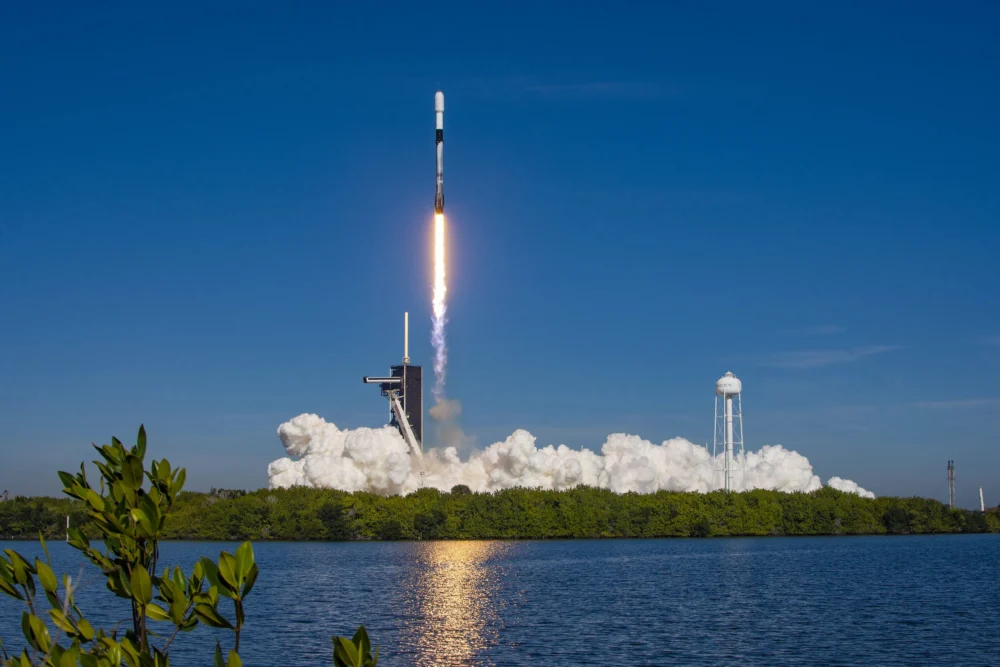
The Federal Communications Commission (FCC) has granted a pivotal authorization to Space Exploration Technologies Corp. (SpaceX), allowing the deployment of an additional 7,500 satellites integral to the company’s ambitious second-generation (Gen2) Starlink constellation. This decision marks a significant regulatory acceleration for the company’s satellite internet project, though it represents only a fraction of the total constellation SpaceX ultimately seeks to deploy. This approval effectively doubles the capacity of the current operational fleet authorized for the company, pushing the total approved satellite count globally to approximately 15,000. Far exceeding a simple numeric increase, this authorization is fundamentally linked to critical technological advancements, including expanded multi-frequency operation and the highly anticipated integration of direct-to-cell connectivity services, profoundly reshaping the competitive dynamics of the burgeoning Low Earth Orbit (LEO) broadband market.
The Strategic Importance of Gen2 Deployment
The current generation of Starlink satellites (V1.0 and V1.5) provided foundational global coverage but were designed primarily for fixed-site broadband access. The transition to the Gen2 architecture, often comprising larger, more capable satellites designated as V2.0 or V2 Mini, is essential for achieving the network density and throughput required to serve millions of simultaneous users and offer mobile services. The 7,500 satellites newly approved are critical building blocks for this expanded infrastructure. These Gen2 platforms boast superior technical specifications, including advanced phased array antennas, significantly higher data capacity per unit, and robust inter-satellite optical links (laser communication) that reduce reliance on ground stations and decrease network latency across long distances.
SpaceX had originally petitioned the FCC for authorization covering a much larger deployment, seeking permission for a constellation numbering nearly 30,000 satellites in various orbital shells. The FCC’s decision to authorize 7,500 units—deferring judgment on the remaining 14,988 proposed Gen2 spacecraft—signals a cautious, phased regulatory approach. This methodology acknowledges the immediate need for network expansion to meet growing consumer demand while maintaining regulatory oversight concerning issues of orbital sustainability and potential interference with competing systems and traditional geostationary (GEO) operators.
The partial approval is not merely a quantitative measure; it enables crucial qualitative network enhancements. Specifically, the FCC clearance explicitly permits the newly launched satellites to utilize five distinct frequency bands. This multi-band capability is essential for managing spectrum congestion, ensuring regulatory compliance across diverse international jurisdictions, and maximizing the efficiency of the network’s high-throughput capability. Utilizing multiple spectrum allocations (including parts of the Ku, Ka, and potentially V-band) allows Starlink to dynamically allocate resources, ensuring robust service quality even in areas of high subscriber density.
Regulatory Timelines and Commitment Mandates
The FCC decision is coupled with stringent deployment deadlines designed to prevent the warehousing of spectrum and orbital slots, a practice where operators secure licenses without deploying assets, thereby blocking competitors. SpaceX is now mandated to adhere to an aggressive deployment schedule for the approved 7,500 Gen2 satellites. Fifty percent of the authorized spacecraft must be successfully launched and operational by December 1, 2028. The remaining fifty percent must be deployed by December 2031. These deadlines impose significant capital expenditure requirements and demand continuous launch cadence reliability, largely dependent on the Starship launch platform achieving routine, reliable, and high-volume orbital flights. Failure to meet these milestones could result in the revocation of authorization for the non-deployed portion of the constellation.
The partial authorization and the imposition of these timelines reflect the FCC’s commitment to fostering competition while managing the finite resources of LEO. Regulators must balance the economic benefits of expanded broadband access with the environmental and safety risks associated with populating LEO with tens of thousands of active satellites. The deferral of the remaining Gen2 authorizations suggests that the Commission is maintaining leverage, allowing time for ongoing technical review, assessment of collision risk mitigation strategies, and the resolution of potential spectrum disputes with incumbent satellite operators and emerging LEO rivals.
The Direct-to-Cell Paradigm Shift
Perhaps the most transformative aspect of this authorization is the explicit regulatory clearance for the Starlink Gen2 satellites to offer direct-to-cell connectivity. This capability allows the satellites to communicate directly with standard, unmodified mobile phones, bypassing the need for traditional terrestrial cellular towers or specialized satellite hardware. This feature leverages advanced satellite payload technology, specifically large phased array antennas that can synthesize wide beams capable of compensating for the lower power transmission of consumer handsets.
The FCC’s ruling distinguishes between domestic and international service provision for this capability. The decision permits Starlink to offer full, standalone direct-to-cell services outside the United States. Domestically, however, the direct-to-cell service is currently limited to "supplemental coverage." This means that in the U.S., Starlink’s cellular connectivity will primarily function as a backup or gap-filler service in areas where traditional terrestrial networks are unavailable, rather than competing directly with existing 5G infrastructure. This nuance likely stems from ongoing spectrum harmonization efforts and regulatory negotiations with major U.S. mobile carriers, such as T-Mobile, which has partnered with SpaceX to integrate Starlink into its service offerings for remote areas.
The global implications of full direct-to-cell service are profound. It promises true universal connectivity, drastically enhancing disaster resilience—as communication networks often fail during natural catastrophes—and providing connectivity to billions in underserved and remote regions of the developing world. This move positions Starlink not just as a broadband provider, but as a critical infrastructure partner for global mobile network operators (MNOs).
Industry Implications and the Race for Orbital Supremacy
The FCC’s approval further solidifies Starlink’s commanding lead in the LEO satellite industry. By securing authorizations for such a vast number of high-throughput satellites, SpaceX establishes a significant first-mover advantage, particularly in securing desirable orbital planes and spectrum allocations.
This regulatory boost intensifies the competitive pressures on Starlink’s primary rivals, most notably Amazon’s Project Kuiper and the UK-based OneWeb (now partially owned by Eutelsat). Project Kuiper, which aims to deploy over 3,200 satellites, is still in its nascent deployment phase, though Amazon has secured launch capacity. OneWeb, having nearly completed its initial deployment of around 600 satellites, focuses primarily on enterprise, government, and backhaul services.
The scale of Starlink’s approved constellation—now totaling 15,000 operational satellites—provides economic and technical advantages that rivals must struggle to match. Scale is crucial for the LEO business model; the high fixed costs of manufacturing, launching, and operating satellites must be amortized over a massive subscriber base. The larger the constellation, the greater the network capacity, which in turn drives down the effective cost per bit of data delivered.
Expert analysis suggests that the regulatory framework surrounding LEO deployment is increasingly becoming a strategic battleground. Companies like SpaceX, through continuous innovation and rapid deployment, compel regulators to make complex decisions quickly. The partial authorization granted by the FCC might be interpreted as a strategy to manage market growth: allowing SpaceX to expand significantly, but holding back the full potential authorization (the remaining 14,988 units) until the industry demonstrates robust compliance with orbital debris mitigation standards and effective spectrum sharing protocols.
Orbital Sustainability and Future Trends
The expansion of the Gen2 constellation raises critical questions regarding space traffic management (STM) and long-term orbital sustainability. The addition of 7,500 larger, more capable satellites significantly increases the density of active objects in LEO, escalating the risk of catastrophic collisions, which could trigger Kessler Syndrome—a cascading chain reaction of debris generation.
SpaceX has consistently championed its debris mitigation efforts, emphasizing that Gen2 satellites are designed for rapid deorbiting at the end of their operational lifespan (typically within five years) and feature autonomous collision avoidance systems. However, the sheer volume of deployments necessitates a global, coordinated regulatory response. International bodies, alongside national regulators like the FCC, are under increasing pressure to standardize requirements for satellite maneuverability, tracking accuracy, and end-of-life disposal mechanisms.
Looking ahead, the successful deployment of the approved Gen2 Starlink tranche will dramatically shift the economics of global communication. The blending of satellite and terrestrial connectivity through direct-to-cell capability foreshadows a future where connectivity is seamless and ubiquitous, regardless of geography. This trend is likely to drive down the cost of global data transfer, fundamentally altering how remote sensing, logistics, disaster response, and rural education are conducted worldwide.
Furthermore, the V-band spectrum, which Starlink has expressed interest in utilizing for future capacity, remains a complex area. Operating in V-band (typically 40–75 GHz) offers immense bandwidth potential but is highly susceptible to atmospheric attenuation, particularly rain fade. Successful deployment across these frequencies will require sophisticated technological solutions and further regulatory harmonization to ensure reliability.
In conclusion, the FCC’s partial authorization for 7,500 Gen2 Starlink satellites is a decisive regulatory endorsement of SpaceX’s technological vision. While the deferral of the remaining constellation demonstrates ongoing regulatory caution regarding orbital density, the immediate approval unlocks key capabilities—multi-frequency operation and direct-to-cell integration—that ensure Starlink will remain the dominant force shaping the future of global broadband infrastructure for the foreseeable future. The next phase of deployment, governed by the 2028 and 2031 deadlines, will be the ultimate test of SpaceX’s manufacturing prowess and launch cadence reliability.