

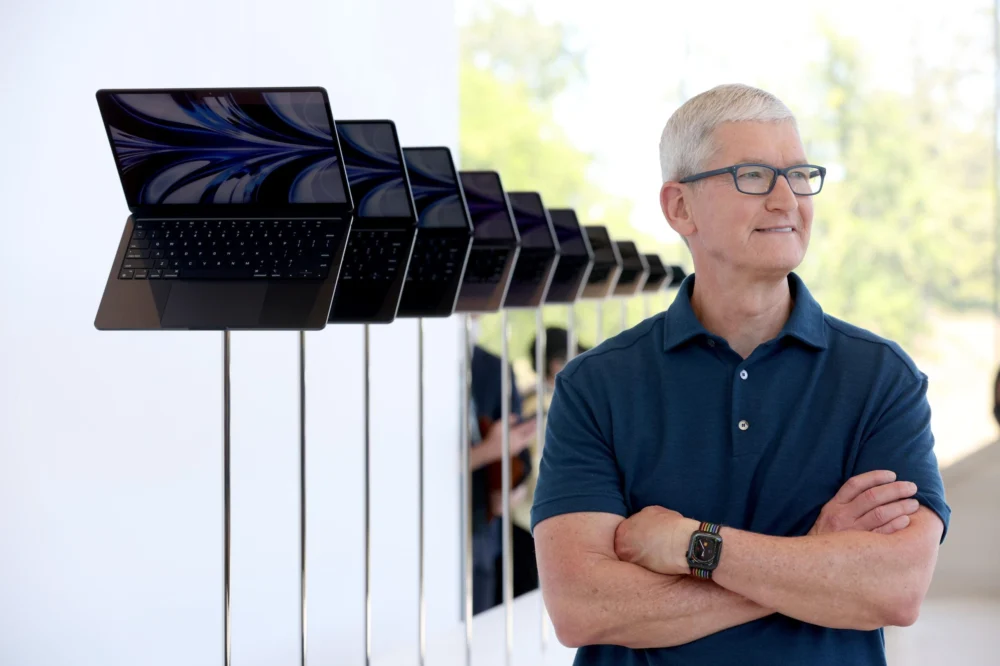
For nearly two decades, the Apple laptop experience has been defined by a specific, almost sacred price floor. Since the transition from the white polycarbonate MacBooks to the aluminum unibody era, the entry point for a "premium" macOS experience has hovered stubbornly around the $999 mark. While the MacBook Air has occasionally dipped into the $899 range for education or during clearance cycles, Apple has largely avoided the race to the bottom that characterized the Windows laptop market during the netbook craze and the subsequent rise of Chromebooks. However, the tech industry is now buzzing with the possibility of a paradigm shift: a 12-inch ultraportable MacBook designed to sit at a $699 price point. While such a device would undoubtedly expand Apple’s market share, it represents a fundamental gamble on the brand’s reputation for "uncompromising" performance.
The genesis of this shift lies in the overwhelming success of Apple Silicon. When the M1 chip debuted in late 2020, it didn’t just improve the Mac; it redefined what was possible in a thin-and-light chassis. By bringing iPhone-style efficiency to the desktop, Apple managed to deliver industry-leading performance-per-watt, effectively rendering the thermal and battery life struggles of the Intel era obsolete. For four years, the M-series chips (M1 through the current M4) have allowed Apple to maintain a unified architecture where even the most affordable MacBook Air shares the same DNA as the high-end MacBook Pro. But to reach the aggressive $699 target rumored for a 2026 release, Apple may be forced to break this architectural unity, creating a two-tier ecosystem that could confuse consumers and developers alike.
The primary mechanism for this cost reduction is expected to be the repurposing of iPhone-class silicon. Industry analysts suggest that instead of an M-series processor, the budget 12-inch MacBook could utilize the A18 Pro chipset, or its successor. On paper, the A18 Pro is a marvel of engineering, powering the iPhone 16 Pro with performance metrics that rival many mid-range laptop CPUs. However, the architectural philosophy of an "A-series" chip differs significantly from an "M-series" chip. Smartphone chips are optimized for "burst" workloads—short, intense tasks like opening an app, processing a photo, or rendering a webpage—followed by immediate cooling periods. macOS, by contrast, is a sustained-workload environment. Users expect to keep dozens of browser tabs open, stream high-definition video, and run background processes simultaneously for hours on end.
Transitioning macOS to a smartphone-derived chip introduces a significant "thermal envelope" challenge. In an iPhone, the A18 Pro is constrained by a tiny chassis with no active cooling. In a 12-inch MacBook, it would have more room to breathe, but it would still lack the memory bandwidth and the core count of its M-series siblings. This creates a potential performance delta that Apple hasn’t seen in years. If the budget MacBook feels significantly "slower" or more prone to "spinning beachballs" during multitasking, it risks diluting the "it just works" aura that has allowed Apple to command a price premium for so long.
Beyond the processor, the "game-changing compromise" extends to the device’s input/output (I/O) capabilities. For years, Thunderbolt has been a cornerstone of the Mac experience, offering high-speed data transfer and versatile docking options. However, Thunderbolt controllers and certification add significant costs to the bill of materials. To hit a $699 price point, Apple may revert to standard USB-C ports with slower data speeds and limited external display support. We could see a return to a single-port design—reminiscent of the original 12-inch Retina MacBook from 2015—or a configuration that restricts users to one external monitor at a lower refresh rate. For a student or a casual user, this might be acceptable, but it creates a "walled garden" within the Mac lineup where the entry-level hardware is intentionally hamstrung to protect the sales of the $1,099 MacBook Air.

This hardware bifurcation also presents a looming headache for the developer community. One of the greatest strengths of the Apple Silicon transition was the "Universal" binary system, which allowed apps to run seamlessly across the entire Mac lineup. If Apple introduces a "Mac-lite" powered by A-series silicon, developers may find themselves targeting two different performance tiers. We could see a future where the Mac App Store features "M-Series Required" badges for professional software like Final Cut Pro, Logic, or advanced AI-driven tools. This fragmentation is exactly what Apple sought to avoid when it moved away from the fragmented Intel configurations of the past. If the entry-level Mac cannot run the full suite of macOS software with acceptable fluidity, it becomes less of a "computer" and more of a "keyboard-equipped iPad," which raises questions about its place in the product matrix.
The competitive landscape makes this move even more delicate. The Windows ecosystem has recently been revitalized by Qualcomm’s Snapdragon X Elite and X Plus chips, which bring ARM-based efficiency to PC laptops. These "Copilot+ PCs" are targeting the very price-to-performance sweet spot that Apple currently dominates. If Apple releases a $699 MacBook that feels underpowered, it may inadvertently drive budget-conscious students and professionals toward Windows machines that offer more "raw" hardware for the money, even if they lack the polish of macOS. Apple’s traditional defense has been that a Mac is an investment that lasts five to seven years. A budget MacBook with limited RAM (potentially starting at 8GB or 12GB) and a smartphone chip might not have the longevity that consumers expect from the brand.
Furthermore, there is the internal competition with the iPad Pro. Apple has spent years trying to convince the world that the iPad Pro is a "computer," equipping it with M-series chips and the sophisticated Magic Keyboard. A $699 MacBook would be significantly cheaper than an 11-inch iPad Pro paired with a keyboard. This creates a cannibalization risk: why would a student buy a $1,000+ iPad setup when they could get a "real" laptop with a file system and a windowing environment for $300 less? Apple must carefully thread the needle to ensure that the 12-inch MacBook fills a gap in the market rather than undermining its own premium tablet sales.
Despite these risks, the strategic upside for Apple is massive. The education market is currently dominated by Chromebooks, which are often viewed as disposable tools rather than aspirational devices. By offering a MacBook at $699, Apple could capture a younger demographic earlier in their professional lives, locking them into the iCloud ecosystem, iMessage, and the App Store. Once a student is accustomed to the macOS workflow, they are far more likely to upgrade to a MacBook Pro or a Mac Studio later in life. In this sense, the budget MacBook isn’t just a product; it’s a customer acquisition tool.
The "12-inch" form factor itself is also a powerful draw. There is a vocal segment of the Apple fanbase that mourns the loss of the original 12-inch MacBook, which was discontinued in 2019. Its extreme portability made it the ultimate travel companion, even if its Intel Core M processor was underwhelming. If Apple can combine that ultra-light design with the efficiency of modern silicon—even "budget" silicon—it will find a ready market among digital nomads and frequent travelers who value weight and size above raw rendering power.
Ultimately, the success of a budget MacBook will depend on how Apple manages the "perception of compromise." If the device is marketed as a "MacBook SE"—a focused, efficient machine for writing, browsing, and light creativity—it could be a runaway success. But if it is perceived as a "Netbook" or a "cheap Mac," it could tarnish the brand’s premium standing. Apple is a company that prides itself on saying "no" to mediocre products. If Tim Cook and his engineering team have found a way to deliver a $699 laptop that still feels like a Mac, it will be one of the most significant pivots in the company’s history. It would signal that the Apple Silicon era has reached such a level of maturity that the company can now afford to democratize its hardware, bringing the "uncompromising" Mac experience to a much wider audience, even if the "uncompromising" part requires a little bit of creative marketing and some very clever engineering. The world will be watching in 2026 to see if Apple can break the $1,000 barrier without breaking the Mac’s soul.