

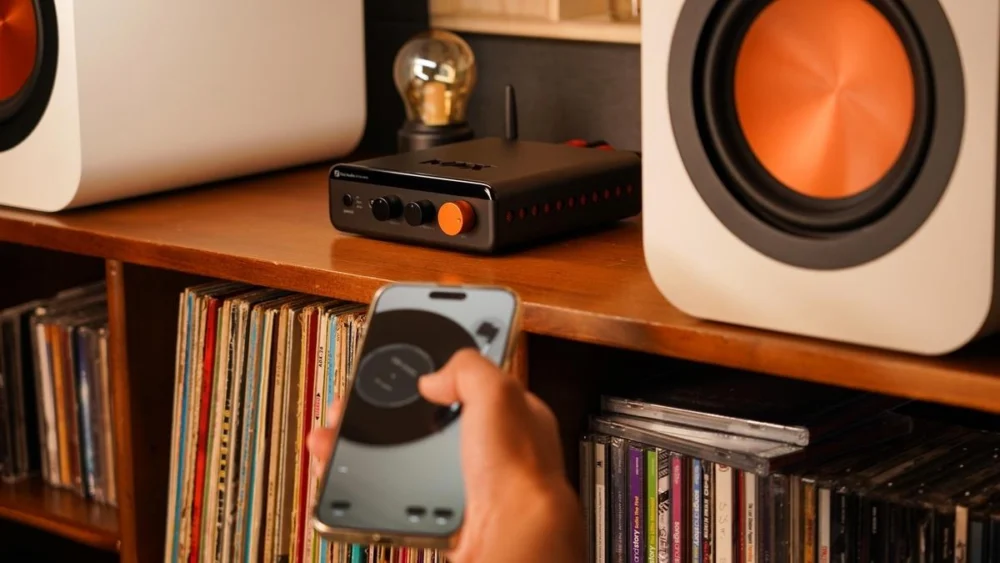
The landscape of high-fidelity audio has undergone a seismic shift over the last decade. The era of the monolithic silver-faced receiver, occupying an entire shelf and generating enough heat to warm a small room, is increasingly being challenged by a new generation of high-efficiency, small-form-factor components. At the forefront of this "desktop revolution" is Fosi Audio, a company that has built a reputation for squeezing audiophile-grade performance into chassis no larger than a hardcover novel. With the release of the BT20A MAX, Fosi Audio is not merely iterating on a successful product line; it is attempting to set a new high-water mark for what is possible in the sub-$300 integrated amplifier market.
The BT20A MAX arrives as the flagship of the company’s most popular series, representing a significant technological leap over its predecessors. While the brand’s earlier entries were often seen as entry-level "gateway" devices for budding enthusiasts, the MAX designation signals a shift toward professional-grade specifications and a more refined listening experience. By combining high-output Class-D amplification with sophisticated digital-to-analog management and advanced thermal engineering, Fosi Audio is positioning this unit as a centerpiece for both desktop workstations and sophisticated 2.1-channel living room setups.
Technical Architecture and the TPA3255 Powerhouse
At the heart of the BT20A MAX lies the Texas Instruments TPA3255, a high-performance Class-D power amplifier chip that has become a darling of the "Chi-Fi" (Chinese Hi-Fi) industry for its exceptional efficiency and low distortion characteristics. In the BT20A MAX, this silicon is pushed to its theoretical limits, delivering a peak power output of 300W per channel into a 4Ω load. For more sustained, critical listening, the unit provides a robust 180W per channel RMS.
However, raw power is only one half of the equation. To ensure that this power translates into musicality rather than mere noise, Fosi has implemented Post-Filter Feedback (PFFB) technology. In traditional Class-D designs, the output filter can sometimes interact with the speaker’s impedance, leading to a non-linear frequency response—often manifesting as a "harsh" or "bright" top end. PFFB corrects this by sampling the signal after it has passed through the output filter, allowing the amplifier to compensate for these variances. The result is a significantly flatter frequency response and ultra-low distortion, ensuring that the amplifier remains neutral regardless of whether it is driving sensitive bookshelf speakers or more demanding floor-standers.
The internal signal path further emphasizes this commitment to purity. The inclusion of ELNA capacitors—components typically found in much more expensive Japanese and European hi-fi gear—provides the necessary reservoir for dynamic peaks, ensuring that sudden orchestral swells or heavy bass hits don’t cause the voltage to sag. Furthermore, the use of independent power supplies for the digital and analog stages minimizes cross-talk and electromagnetic interference, a common pitfall in compact all-in-one designs.
The 2.1 Evolution and System Integration
One of the most significant hurdles for desktop audio enthusiasts is the integration of a subwoofer. Many small amplifiers offer a "sub out" that is merely a full-range signal, forcing the subwoofer’s internal crossover to do all the heavy lifting while the main speakers continue to struggle with low frequencies they weren’t designed to handle. The BT20A MAX addresses this with a selectable 80Hz high-pass filter.
When engaged, this filter rolls off the frequencies below 80Hz from the main speaker outputs. This is a critical feature for high-fidelity listening; by relieving the main bookshelf speakers of the burden of reproducing deep bass, the mid-range becomes clearer, and the speakers can play at higher volumes with less excursion and lower distortion. This allows the dedicated subwoofer to handle the "heavy lifting" of the sub-bass, creating a seamless and more powerful 2.1-channel soundstage.
Connectivity is equally comprehensive. Beyond the dual RCA inputs for traditional analog sources like turntables (via a preamp) or DACs, the BT20A MAX features passive speaker terminals and a dedicated active subwoofer output. This makes it a versatile hub for a variety of use cases, from a high-end computer audio system to a compact TV sound solution that outperforms most soundbars in its price bracket.
Wireless Performance and the Bluetooth 6.0 Frontier
In the modern era, an amplifier is often only as good as its wireless stability. Fosi Audio has spared no expense here, utilizing the Qualcomm QCC3095 chipset. This hardware choice enables support for Bluetooth 6.0, providing a more stable connection with increased range and lower power consumption.

More importantly for the audiophile community, the BT20A MAX supports a comprehensive suite of high-resolution codecs. While standard Bluetooth often compresses audio to a degree that is audible on high-quality speakers, the inclusion of LDAC and aptX Lossless changes the narrative. These codecs allow for the transmission of near-CD or even high-resolution audio over the air, ensuring that streaming from a smartphone or tablet doesn’t result in a loss of detail or "air" in the recording. Whether it is the low-latency requirements of aptX Adaptive or the pure bit-rate of LDAC, the BT20A MAX is equipped to handle the best that modern streaming services like Tidal and Qobuz have to offer.
Thermal Engineering and User Experience
A perennial problem with high-power micro-amplifiers is heat. When you cram 300W of potential output into a chassis that fits in the palm of your hand, thermal throttling is a real risk. Fosi Audio’s solution is an active cooling system featuring a silent fan and a redesigned ventilation architecture. According to the company, this design improves cooling efficiency by 30% compared to passive designs. For the user, this means the amplifier can maintain its peak performance during extended listening sessions without the risk of distortion or hardware failure caused by overheating.
The tactile experience has also been elevated. The BT20A MAX features a motorized analog potentiometer, allowing for precise volume adjustments. The "motorized" aspect is key; it allows the included remote control to physically turn the knob, providing a visual confirmation of volume levels and maintaining the sonic integrity of an analog signal path rather than relying on a digital volume chip that can sometimes bit-strip the audio at lower levels.
For those who enjoy tailoring their sound, the front panel includes bass and treble controls. Recognizing that purists often prefer to hear the music exactly as it was recorded, Fosi has included an EQ bypass mode. This completely removes the tone control circuitry from the signal path, ensuring the shortest, cleanest route from input to output.
Industry Implications and the Democratization of Hi-Fi
The release of the BT20A MAX at a price point of $279.99 is a significant moment for the audio industry. For decades, the "entry fee" for true high-fidelity sound was measured in the thousands of dollars. The rise of companies like Fosi Audio represents a democratization of premium sound. By leveraging global supply chains and focusing on high-performance Class-D architecture, these manufacturers are delivering specifications that were once the exclusive domain of boutique "high-end" brands.
This shift has profound implications for the market. Established legacy brands are now forced to compete not just on heritage, but on measurable performance and value. The BT20A MAX proves that "small" no longer means "weak" and "affordable" no longer means "compromised." It challenges the consumer to rethink the necessity of a full-sized rack of equipment, especially in urban environments where space is at a premium.
Future Trends: Where Does Compact Audio Go Next?
Looking forward, the BT20A MAX sits at the intersection of several growing trends. The first is the "Smart Home" integration. The inclusion of a 12V trigger on the BT20A MAX—a feature usually reserved for high-end separate power amps—allows it to be synced with other devices. When you turn on your streamer or preamp, the Fosi automatically wakes up. This suggests a future where compact Hi-Fi is not just a standalone hobby but a fully integrated part of the automated home.
Secondly, we are seeing a move toward "Sustainability through Efficiency." As global energy standards become more stringent, the high efficiency of Class-D amplification (often exceeding 90%) becomes more attractive than the power-hungry Class-A or Class-AB designs of the past. The BT20A MAX represents a blueprint for the future of the industry: high power, low waste, and a footprint that respects the user’s living space.
Final Thoughts
The Fosi Audio BT20A MAX is more than just a powerful small amplifier; it is a statement of intent. By integrating the TPA3255 chip with PFFB technology, Bluetooth 6.0, and a thoughtful 2.1-channel crossover system, Fosi has created a device that punches far above its weight class. It caters to the veteran audiophile who needs a high-quality secondary system, as well as the newcomer looking to build their first "real" hi-fi setup.
In an industry often criticized for its gatekeeping and astronomical price tags, the BT20A MAX is a refreshing reminder that the pursuit of perfect sound can be both accessible and cutting-edge. As the boundaries between professional audio gear and consumer electronics continue to blur, Fosi Audio’s latest flagship stands as a testament to the power of modern engineering to bring high-fidelity listening to a wider audience than ever before.