

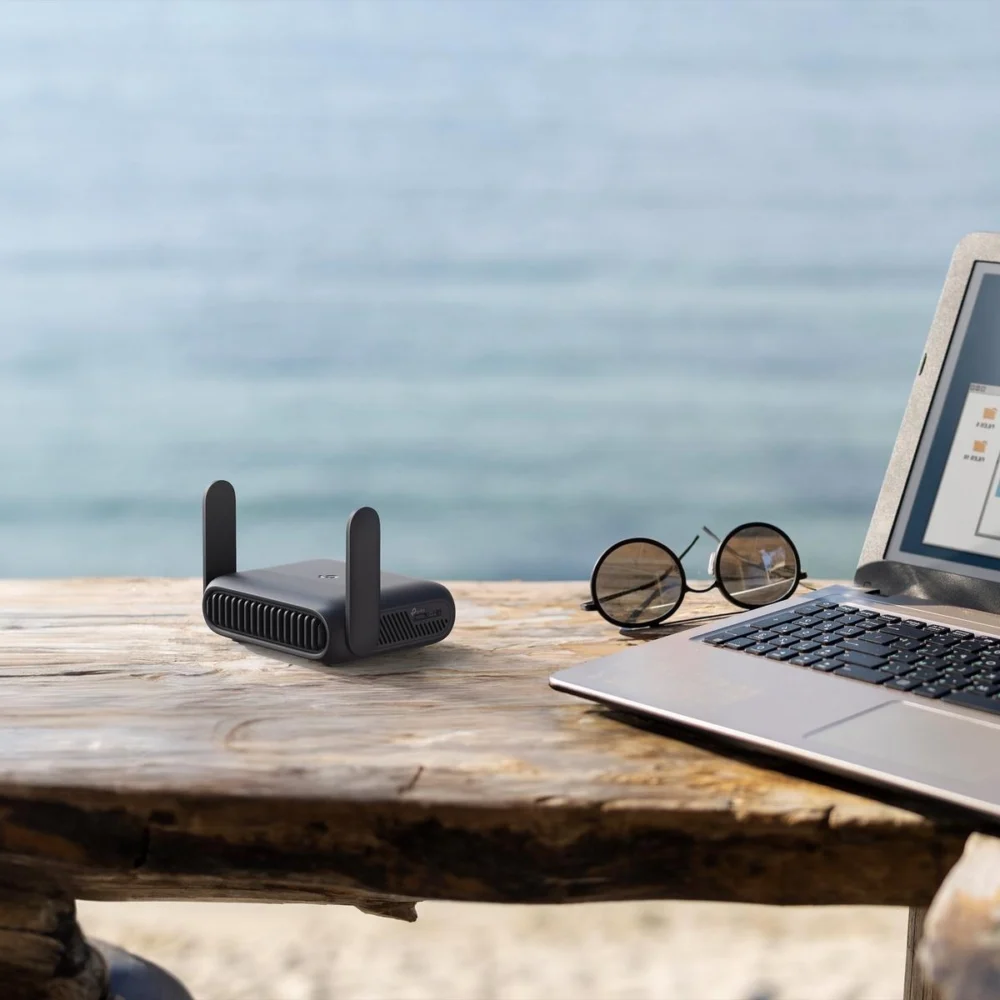
The landscape of global connectivity is undergoing a seismic shift as the boundaries between the traditional office and the remote workspace continue to blur. For the modern professional, the "digital nomad" lifestyle is no longer a niche subculture but a mainstream reality, bringing with it a unique set of technical challenges. Chief among these is the persistent unreliability and insecurity of public Wi-Fi networks found in hotels, airports, and coffee shops. While the world has transitioned to high-bandwidth activities like 4K video conferencing and massive cloud-based data transfers, the infrastructure of hospitality networking has often lagged behind. Enter the TP-Link TL-WR3602BE, a device that signals a new era for mobile networking by bringing the burgeoning Wi-Fi 7 standard into a pocket-sized form factor.
The introduction of the TL-WR3602BE is more than just a hardware refresh; it represents the democratization of cutting-edge wireless standards for users on the move. Historically, travel routers were viewed as secondary devices—compromised tools that offered convenience at the expense of performance. However, by integrating Wi-Fi 7 (802.11be) technology, TP-Link is challenging the notion that portable hardware must be inferior to home-based systems. With theoretical speeds reaching up to 3.6Gbps, this device is designed to bridge the gap between the high-speed fiber connections increasingly available in modern hotels and the wireless devices that need to consume that data.
The Wi-Fi 7 Advantage in a Portable Context
To understand the significance of this release, one must look at what Wi-Fi 7 actually brings to the table. Unlike its predecessors, Wi-Fi 7 is built specifically to handle high-density environments where interference is a major hurdle. This is precisely the environment of a hotel or a crowded airport lounge. The TL-WR3602BE utilizes several key Wi-Fi 7 features to ensure a stable connection.
First is Multi-Link Operation (MLO). Traditional routers force a device to connect to a single band—either 2.4GHz or 5GHz. MLO allows a Wi-Fi 7-enabled client to transmit and receive data across multiple bands simultaneously. For a traveler, this means that if the 5GHz band becomes congested because every guest in the hotel is streaming Netflix, the router can seamlessly shift or aggregate traffic across other available frequencies without dropping the connection.
Second, the inclusion of 4K-QAM (Quadrature Amplitude Modulation) allows for 20% more data to be packed into the same signal compared to the 1024-QAM found in Wi-Fi 6. In practical terms, this translates to faster downloads and smoother streaming, even when the signal strength isn’t at its peak. When combined with OFDMA (Orthogonal Frequency Division Multiple Access), the router can manage up to 90 devices at once, making it an essential hub for families traveling with a plethora of tablets, smartphones, and gaming consoles.
Hardware Engineering for the Modern Nomad
The physical design of the TL-WR3602BE reflects a deep understanding of the traveler’s pain points. Measuring smaller than a standard paperback novel, the device is engineered for maximum portability. Its foldable external antennas are a strategic choice; they can be tucked away for transport to prevent damage but extended during use to provide a significant gain in signal range—a common weakness in smaller, internal-antenna designs.
Power flexibility is another critical feature. The router is powered via a USB-C port, requiring a standard 5V input. This allows users to power the device using existing smartphone chargers, laptop USB ports, or even portable power banks. This "power-agnostic" approach eliminates the need to carry proprietary power bricks, reducing the "cable clutter" that plagues frequent flyers.
Connectivity-wise, the TL-WR3602BE punches well above its weight class. It features a 2.5Gbps WAN port, which is a forward-looking addition. While many hotels still offer basic 100Mbps or 1Gbps Ethernet, the industry is moving toward multi-gigabit infrastructure. Having a 2.5G port ensures that the router will not become a bottleneck as hotel internet speeds improve. Additionally, a 1Gbps LAN port allows for a hardwired connection to a laptop or a Network Attached Storage (NAS) device, while the USB 3.0 port provides the versatility to connect a 4G/5G modem or an external drive for a localized media server.
Security in an Insecure World: The VPN Integration
Perhaps the most compelling argument for the TL-WR3602BE is its robust security suite. Public Wi-Fi is notoriously vulnerable to "Man-in-the-Middle" (MitM) attacks, where malicious actors intercept data transmitted between a device and the router. By using a travel router, a user creates a private, encrypted "bubble" for all their devices.

TP-Link has gone a step further by baking VPN support directly into the hardware. The TL-WR3602BE supports OpenVPN and WireGuard, two of the most secure and efficient protocols available today. Most notably, it features native integration for NordVPN and Surfshark. This allows users to configure their VPN credentials directly within the router’s interface. Once set up, every device connected to the router—including those that don’t natively support VPN apps, like smart TVs or gaming handhelds—is automatically protected by an encrypted tunnel.
This is particularly vital for business travelers who must access sensitive corporate data or for leisure travelers who wish to bypass geographical restrictions on streaming services. The inclusion of a physical, programmable toggle switch on the side of the device allows users to enable or disable the VPN with a single click, providing a tactile layer of control that is often missing from software-based solutions.
Versatility Through Seven Operating Modes
The TL-WR3602BE is designed to be a "Swiss Army knife" of networking. It offers seven distinct operating modes to handle various connectivity scenarios:
- Standard Router Mode: Connects to an Ethernet port in a hotel room to create a private Wi-Fi network.
- Hotspot Mode (WISP): Connects to a public Wi-Fi network and shares that connection with all your devices. This is crucial for avoiding "per-device" fees at hotels or for bypassing captive portals that require a login.
- Smartphone Tethering: Allows the router to use a smartphone’s 4G/5G data via the USB port, turning the router into a powerful mobile hotspot for multiple users.
- Access Point Mode: Turns an existing wired network into a wireless one.
- Range Extender Mode: Boosts the signal of an existing Wi-Fi network.
- Client Mode: Allows wired-only devices to connect to a Wi-Fi network.
- Bridge Mode: Connects two separate network segments.
The Hotspot mode, in particular, serves as a critical security layer. When a traveler logs into a public network through the router, they only have to perform the authentication once. The router then "masks" all downstream devices, keeping them isolated from other users on the public network.
Industry Implications and Market Trends
The launch of the TL-WR3602BE at a $99 price point signals a shift in the competitive landscape. Traditionally, the travel router market was dominated by niche players like GL.iNet, which catered to tech enthusiasts. By bringing a Wi-Fi 7 product to market at an aggressive price, TP-Link is forcing established networking giants to reconsider their portable offerings.
Furthermore, this release highlights the rapid adoption cycle of Wi-Fi 7. While Wi-Fi 6E (which introduced the 6GHz band) was seen by many as a transitional phase, Wi-Fi 7 is being positioned as the long-term standard for the next decade. As the latest generations of iPhones, Samsung Galaxy devices, and Intel-based laptops ship with Wi-Fi 7 chips, the demand for infrastructure that can utilize these chips is skyrocketing.
Expert Analysis: Is Wi-Fi 7 Overkill for Travel?
Critics might argue that Wi-Fi 7 is unnecessary for travel, given that hotel internet speeds rarely exceed 500Mbps. However, this misses the point of the standard. Wi-Fi 7 isn’t just about peak theoretical speed; it is about efficiency and latency. In a crowded environment with hundreds of competing signals, the ability of Wi-Fi 7 to "find the gaps" in the spectrum and maintain a stable link is its true value.
Moreover, as remote work evolves into "remote collaboration," the need for low-latency connections for Zoom, Teams, and virtual desktop infrastructure (VDI) becomes paramount. A travel router that can mitigate the jitter and lag of a poor hotel network is not a luxury; for many, it is a professional necessity.
Future Outlook and Conclusion
Looking forward, we can expect to see further integration of 5G technologies within these portable units. While the TL-WR3602BE relies on external modems for cellular connectivity, the next logical step is a fully integrated Wi-Fi 7 and 5G standalone (SA) travel hub. For now, however, TP-Link has set a high bar for what a mobile networking device should be.
The TL-WR3602BE is a testament to the fact that high-performance networking is no longer tethered to the home or office. By combining the speed of Wi-Fi 7, the security of built-in VPNs, and the versatility of seven operating modes, TP-Link has provided digital nomads with a powerful tool to reclaim their digital sovereignty. At $99, it represents a significant value proposition for anyone whose livelihood depends on staying connected, no matter where in the world they happen to be. As the "work from anywhere" trend continues to mature, devices like this will transition from optional accessories to essential gear in every traveler’s kit.