

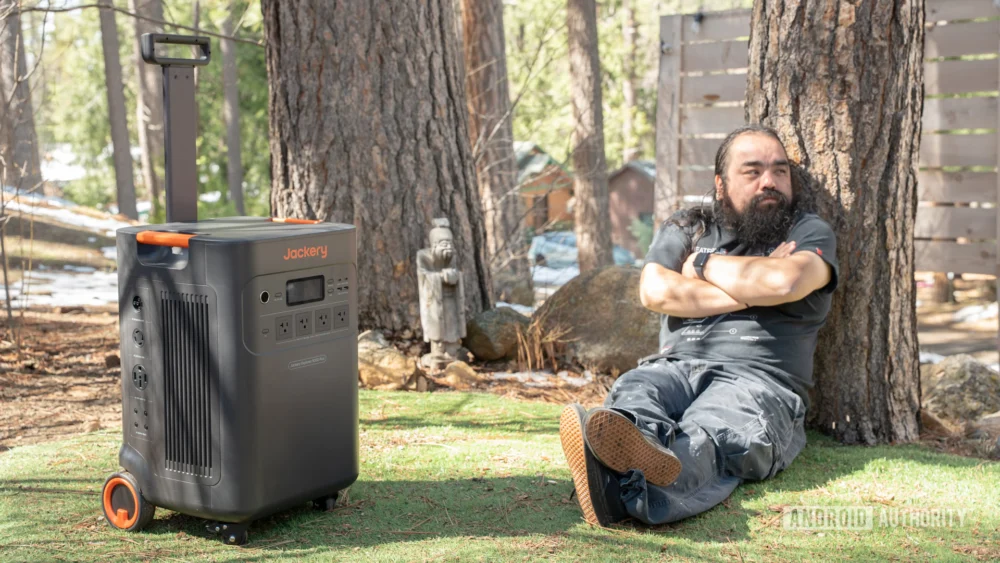
The current promotional window presents an unprecedented opportunity for consumers and prosumers alike: the Jackery Explorer 5000 Plus, a heavyweight contender in the portable power station sector, has plummeted to a historic low price point as part of Jackery’s direct-to-consumer winter sale. This significant markdown, concluding on February 26th, moves the unit from a substantial capital outlay of $4,299 down to an attainable $2,799, representing a $1,500 saving. While the resulting price remains substantial, this level of discount on a unit with such formidable specifications warrants a deeper analysis of its market position and the broader implications for residential energy resilience solutions.
The evolution of portable power stations has transitioned them from niche camping accessories to genuine backup infrastructure components. Early models focused on portability and modest capacity for recreational use. However, devices like the Explorer 5000 Plus squarely target the segment requiring whole-home or extensive off-grid capability. Understanding the context of this pricing maneuver requires appreciating the technological leap these high-capacity units represent.
The Infrastructure of Resilience: Positioning the 5000 Plus
The Jackery Explorer 5000 Plus distinguishes itself primarily through its sheer energy density and power delivery capabilities. Its core specification is a massive 5,040 Watt-hour (Wh) battery capacity. To contextualize this figure, it is not merely an incremental upgrade over mid-range stations; it is designed to sustain critical household loads during extended power interruptions. For instance, this reservoir can power a standard refrigerator for approximately 110 hours—nearly five full days—or keep a modern television operating continuously for around 48 hours. This capacity places it firmly in the realm of a genuine emergency home energy bank, capable of bridging significant gaps until grid power is restored or solar generation becomes sufficient.
Equally important is the unit’s output wattage. Boasting a maximum sustained output of 7,200W, the Explorer 5000 Plus challenges the capability of many entry-level home standby generators. This high output is particularly accessible via specialized high-amperage ports—the NEMA L14-30R AC or NEMA 14-50 ports. These connections are crucial as they allow the unit to interface directly with heavier loads, such as well pumps, central air conditioning units (if appropriately sized), or multiple large kitchen appliances simultaneously. While standard AC outlets are capped at a still-robust 2,400W, the availability of 7,200W peak power through specialized interfaces is what elevates this device from a large battery pack to a true home power backbone.
Furthermore, the integration features speak to its intended application. The support for connection to home wiring via a Transfer Switch transforms it from a portable device into a semi-permanent backup system, offering seamless, automatic power transition. Coupled with an impressive 4,000W solar input capacity, the unit can rapidly replenish its massive reservoir using compatible solar arrays, significantly reducing downtime during prolonged outages—a critical differentiator in real-world disaster preparedness scenarios. The inclusion of 20ms Uninterruptible Power Supply (UPS) functionality further assures that sensitive electronics, servers, and networking gear remain operational without interruption during the brief switchover period when grid power fails.
Industry Implications of Aggressive Pricing
The current $2,799 price point is more than just a seasonal discount; it reflects competitive pressure and maturation within the energy storage industry. When a flagship, high-capacity unit drops nearly 35% below its retail MSRP, it sends a strong signal to the market.
1. Democratization of High Capacity: Historically, energy storage systems of this magnitude—approaching 5kWh—were predominantly found in custom-installed solar battery systems (like the Tesla Powerwall) or very high-end, professional-grade portable units. These traditional solutions often require professional installation, permitting, and significantly higher upfront costs, frequently exceeding $10,000 before installation fees. By making a 5kWh-class, plug-and-play solution accessible at under $3,000, Jackery is significantly lowering the barrier to entry for robust home backup. This directly competes with smaller, lower-capacity power stations by offering vastly superior runtime at a proportionally smaller price increase.
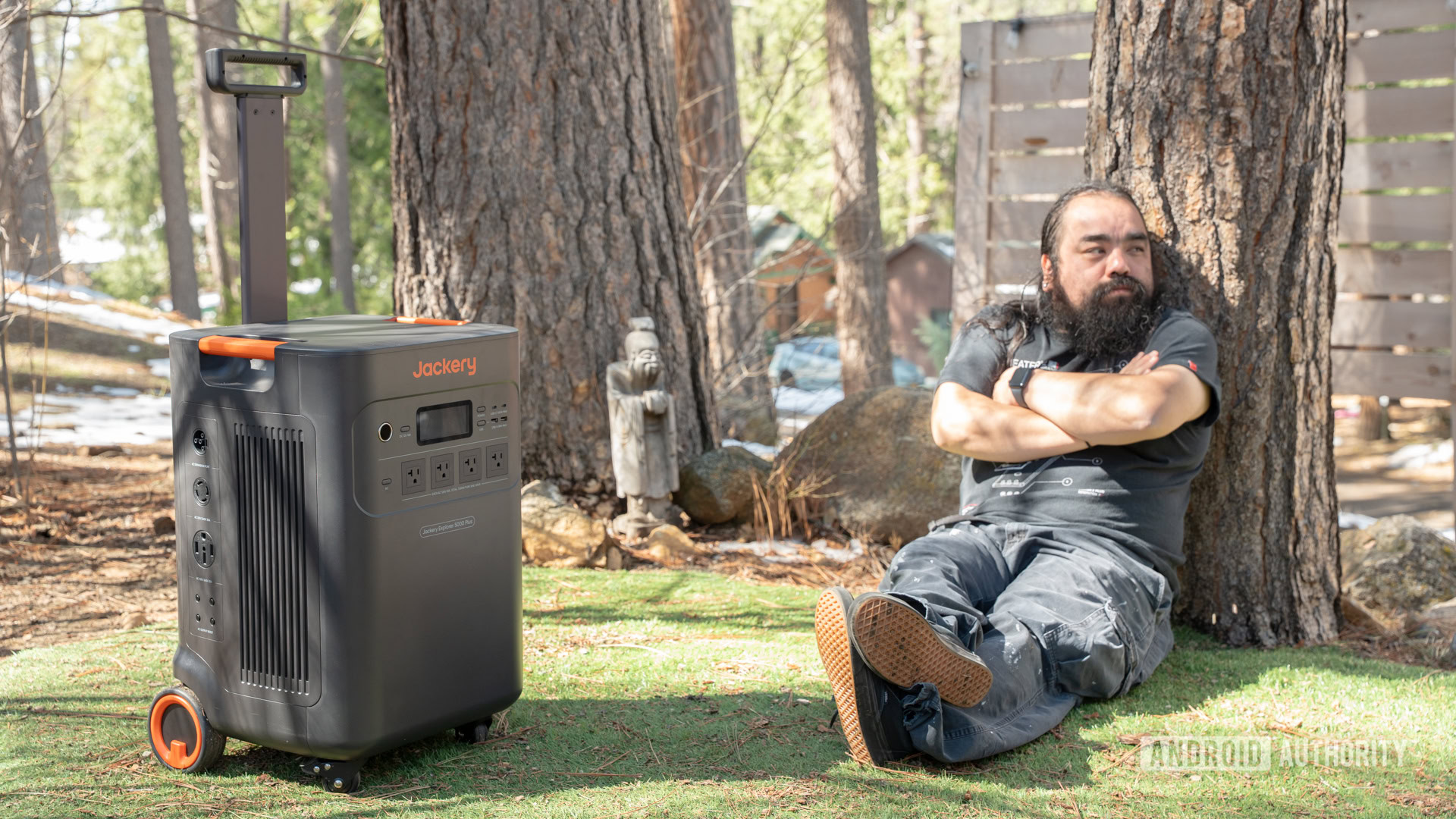
2. Competitive Landscape Intensification: Jackery is operating in a segment increasingly populated by formidable rivals, notably Anker (with its SOLIX line) and Bluetti. The direct comparison often drawn, such as with the Anker SOLIX F3800 Plus, highlights design philosophy differences. While the F3800 Plus might offer comparable core performance, Jackery’s design focus on a slightly shorter form factor, leveraging a lower center of gravity facilitated by integrated wheels and a robust handle, addresses the inherent challenge of moving such a heavy piece of equipment (the 5000 Plus weighs considerably more than its capacity might suggest). Aggressive pricing is a necessary tactic to maintain market share when performance metrics between leading brands are becoming increasingly convergent.
3. Shifting Consumer Expectations: This deal recalibrates consumer expectations regarding price-to-capacity ratios. Consumers are now more educated about LiFePO4 battery technology and capacity ratings. A sub-$3,000 price tag for 5kWh sets a new benchmark. Future product cycles from competitors will need to either match this price for similar capacity or offer significant technological advantages (such as higher power density or faster charging rates) to justify a premium.
Expert Analysis: Technological Considerations
From a technical standpoint, the longevity and efficiency of the Explorer 5000 Plus are key determinants of its long-term value proposition, especially given the initial investment.
Battery Chemistry and Cycle Life: Jackery utilizes Lithium Iron Phosphate (LiFePO4) chemistry. This is the industry standard for high-cycle applications due to its superior thermal stability, enhanced safety profile compared to older Lithium-ion chemistries, and significantly longer lifespan. While the specific cycle count is proprietary or contingent on depth of discharge, LiFePO4 cells typically guarantee 3,000 to 6,000 cycles before degradation below 80% capacity. For a home backup unit used sporadically, this implies a lifespan potentially exceeding a decade of regular, heavy use, making the $2,799 investment a long-term asset rather than a temporary fix.
Inverter Efficiency and Waveform Quality: A critical, often overlooked, specification is the quality of the AC power output. High-quality power stations utilize pure sine wave inverters, which the 5000 Plus employs. This ensures that sensitive electronics—variable speed motors, modern digital appliances, and complex charging circuits—receive clean power that mimics utility grid quality. Inverter efficiency dictates how much of the stored DC energy is actually delivered as usable AC power; top-tier units achieve efficiencies well over 90%, minimizing parasitic losses during discharge.
Expandability as Future-Proofing: The ability to expand the system is a crucial feature for large power stations. The 5000 Plus supports expansion packs. This modularity is paramount. A user might initially purchase the base unit for basic outage coverage but, realizing the potential during a multi-day event, can scale up to 10kWh or more later. This contrasts sharply with fixed-capacity systems where scaling requires purchasing an entirely new unit or parallelizing separate, less integrated systems.

Future Impact and Emerging Trends
The aggressive discounting of the Jackery Explorer 5000 Plus foreshadows several overarching trends in the decentralized energy market:
1. The Rise of the "Prosumer" Device: The market is segmenting rapidly. Low-end devices focus on portability and charging gadgets. High-end devices like the 5000 Plus are becoming "prosumer"—devices used by both professionals (for remote sites, mobile medical applications, or film sets) and sophisticated residential users prioritizing self-sufficiency. As the cost basis for high-density batteries continues to fall, these prosumer devices will become standard home appliances rather than emergency tools.
2. Integration with Smart Grids and Home Automation: Future power stations will not just be passive batteries. They will feature enhanced bidirectional communication capabilities. We anticipate seeing increased integration with smart home energy management systems (HEMS) that can dynamically prioritize which appliances run based on solar input, grid status, and battery level. The 5000 Plus’s existing connectivity features (like EV/RV direct power) hint at this broader integration potential, moving beyond simple outlet provision.
3. Competition from Utility-Scale Technology Miniaturization: As utility-scale battery farms become common, the engineering advancements trickle down. Innovations in thermal management, battery cell management systems (BMS), and power electronics developed for grid stabilization will inevitably make their way into these larger portable units, further driving down costs while simultaneously increasing performance metrics like charging speed and output density.
4. Regulatory Acceptance and Standardization: As these large power stations become integral to home infrastructure (especially with Transfer Switch capabilities), regulatory bodies will need to establish clearer safety and installation standards. The current ease of deployment for the 5000 Plus is a major selling point, but widespread adoption hinges on standardized safety protocols recognized by local electrical codes.
In conclusion, the temporary availability of the Jackery Explorer 5000 Plus at $2,799 represents a significant inflection point. It offers consumers access to infrastructure-level backup capacity—5kWh of stored energy capable of managing significant home loads—at a price point previously reserved for smaller systems or systems requiring complex professional installation. This event is less about a single product sale and more about a market signal: high-capacity, multi-day energy independence is rapidly becoming an accessible consumer product category. Consumers who require substantial, flexible power for extended outages, remote work setups, or off-grid living should view this limited-time offer as a critical window to acquire a best-in-class solution. The remaining time until February 26th is short, but the savings translate into thousands of hours of potential uninterrupted power.