

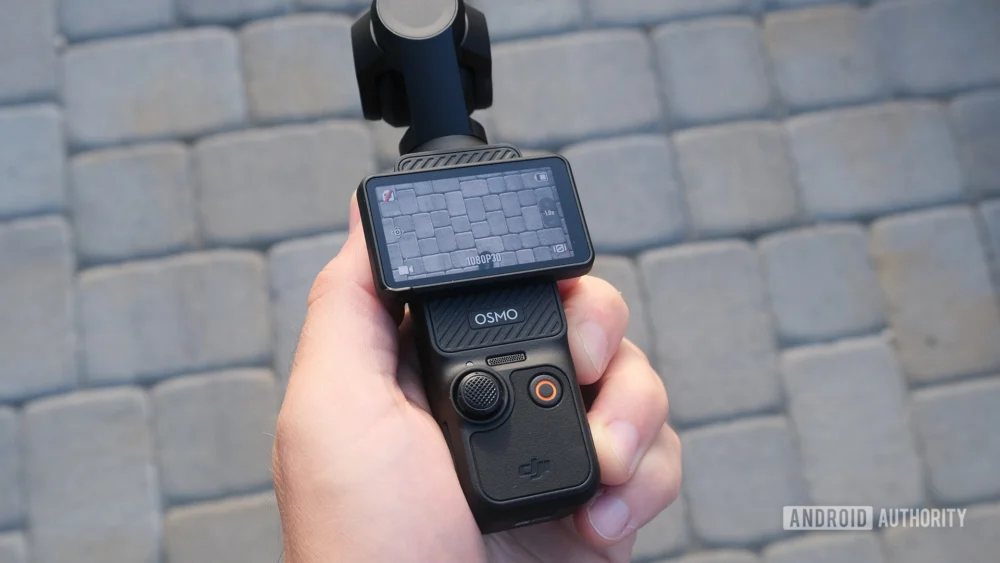
The highly anticipated generational leap in DJI’s line of compact, stabilized cameras, the Osmo Pocket 4, is drawing significantly closer to an official unveiling, evidenced by an unexpected, albeit fleeting, visual confirmation originating from a regional authorized retailer. This recent appearance, captured in a now-removed video shared by a Malaysian dealer, provides tangible evidence of several key hardware refinements that signal DJI’s continued commitment to iterating on its successful pocket-sized gimbal concept. The timing of this leak, coupled with inventory reportedly entering distribution channels, suggests that the market introduction could be imminent, potentially disrupting the end-of-year content creation landscape.
The context surrounding this reveal is noteworthy. The Osmo Pocket series carved out a unique niche, blending the superior stabilization of a motorized gimbal with the portability of a smartphone accessory. The original Osmo Pocket, launched in 2019, was revolutionary—a truly pocketable 3-axis stabilized camera. Its successor, the Osmo Pocket 2 (which effectively replaced the initial "Pocket" nomenclature), cemented this form factor, notably by introducing a larger sensor and a modular magnetic accessory system. The gap between the Pocket 2 and the forthcoming Pocket 4 is considerable, spanning several years of rapid advancement in mobile imaging technology, which places significant pressure on DJI to deliver meaningful upgrades that justify the new iteration.
The visual data extracted from the leaked footage—and subsequently preserved by technology tracking outlets—focuses heavily on the physical design evolution. One of the most immediate observations pertains to the device’s ergonomics. The successor appears to sport a noticeably elongated stem structure compared to its predecessor. This extension is reportedly accompanied by an enhanced grip texture and contouring, a design philosophy that mirrors recent updates seen in DJI’s Osmo Mobile line, such as the Osmo Mobile 6 or 8 stabilization rigs. For creators constantly on the move, improved tactile feedback and a more secure hold directly translate to reduced fatigue and fewer accidental drops—a critical consideration given the precision mechanics housed within the gimbal unit.
Furthermore, the display mechanism remains a critical point of interest. While the physical footprint and apparent size of the articulating screen seem consistent with the previous generation, definitive information regarding resolution or refresh rate improvements remains elusive from this initial visual evidence. However, given the industry trend toward high-fidelity displays even in compact devices, expectations are high for a panel capable of accurately representing high dynamic range footage captured by the upgraded imaging hardware.
Perhaps the most surprising, yet strategically sound, confirmation from the leaked material is the integration—or rather, the optional integration—of an auxiliary LED fill light. This accessory suggests a pivot towards addressing one of the perpetual challenges of small-form-factor cameras: low-light performance and illumination flexibility. In the world of vlogging and quick-capture content, the ability to add a soft, controllable light source without relying on cumbersome external rigging is a significant boon. Crucially, reports indicate this LED module is not standard equipment but rather part of an accessory bundle. This tiered approach allows DJI to maintain a competitive base price point while offering power users an immediate pathway to enhanced production value. From an industry perspective, this mirrors successful strategies employed by action camera manufacturers, where specialized "Creator Combos" drive higher average transaction values while catering to distinct user segments.
The leaked footage also provided a glimpse into computational photography capabilities, specifically highlighting a "Super Photo" mode achieving 33-megapixel output. This figure immediately prompts technical scrutiny. Considering the rumored retention of the established 1-inch CMOS sensor—a cornerstone of the Pocket 2’s image quality—the jump to 33MP suggests two primary possibilities: either a substantial, undocumented upgrade to the sensor’s effective resolution (which would be a significant engineering feat without altering the physical size) or, more plausibly, advanced pixel-binning or multi-shot composite techniques. If it is the latter, combining multiple exposures (perhaps four 8MP frames) into a higher-resolution file, it speaks to an increased reliance on onboard processing power to simulate higher resolution capture, a common technique to enhance detail and dynamic range in consumer electronics.
Diving deeper into the expected technical specifications, the rumored enhancements suggest a targeted performance upgrade across the board. An increase in battery capacity is anticipated, vital for sustaining longer shooting sessions, particularly if the device supports more power-intensive recording modes. The mention of improved subject tracking underscores DJI’s continued investment in its AI-driven stabilization and focus algorithms. Given the prowess exhibited in their drone line, seamless, intelligent subject locking is non-negotiable for a device aimed at solo content creators. Furthermore, the potential inclusion of 240 frames per second (fps) slow-motion recording would place the Pocket 4 squarely against high-end smartphones and dedicated action cameras in terms of cinematic potential, offering creators richer temporal flexibility in post-production.
The existence of two distinct models, the standard Osmo Pocket 4 and a more advanced Pocket 4 Pro (previously noted via FCC filings), complicates the narrative. While the leaked video clearly shows the base model’s features, the distinction between the two variants remains a significant unknown. Historically, DJI differentiates its Pro lines through superior optics (larger apertures, better coatings), more advanced sensors (higher bit depth, native resolution increases), or expanded professional video codecs (like RAW video capture). The Pro model is likely targeted at videographers demanding uncompromising quality and workflow integration, while the standard model aims for the broader consumer and social media market. This segmentation strategy is crucial for DJI to defend its market share against emerging competitors in the compact gimbal space.
The immediate industry implications of this leak are multifaceted. First, it confirms that DJI has not abandoned the pocket gimbal category, a segment that, while niche, serves as a gateway product for many users into the broader DJI ecosystem. Second, the focus on ergonomics and optional lighting suggests DJI is keenly aware of user feedback emphasizing usability over mere specification bumps. In the current content creation economy, how a device feels and how easily it integrates into a workflow often trumps marginal sensor improvements.
For the wider camera industry, the Pocket 4’s imminent launch serves as a barometer for innovation in stabilization technology. If DJI successfully integrates significant power upgrades within the existing footprint, it sets a new benchmark for portable imaging hardware. It forces smartphone manufacturers, who increasingly integrate stabilization hardware and software, to re-evaluate their dedicated camera offerings. The Pocket series excels where smartphones struggle: consistent, high-quality 3-axis mechanical stabilization coupled with dedicated, tactile controls designed for framing.
Analyzing the supply chain clues—the confirmation that inventory is actively being stocked in regional warehouses—suggests a controlled, rapid rollout strategy, typical of DJI’s product launches. This hints at confidence in initial demand projections and a desire to capitalize on pre-holiday spending cycles. This aggressive staging implies that the official announcement and immediate availability window are likely measured in weeks, not months.
Looking toward future trends, the Osmo Pocket 4 is positioned at the intersection of several technological vectors: miniaturization of professional-grade sensors, on-device AI processing for real-time subject recognition and correction, and the growing demand for vertical video optimization. The inclusion of features like the 240fps capture suggests DJI is preparing for a world where high frame rates are the norm, not a premium option. Furthermore, the success of the optional LED light points towards a future where modularity—the ability to quickly customize the device for specific shooting scenarios—will become a dominant design philosophy, moving beyond simple lens adapters to functional lighting and audio integration.
In conclusion, the accidental exposure of the Osmo Pocket 4 through authorized retail channels provides more than just a preview; it offers a strategic roadmap. We are seeing DJI double down on user experience enhancements—better grip, integrated lighting—while simultaneously pushing the envelope on core imaging performance with higher resolution stills and enhanced slow-motion capabilities. The market is clearly on notice, bracing for the arrival of a device that aims to refine the concept of the ultimate pocket filmmaker. The differentiation between the standard and Pro models will ultimately define how deeply this new generation impacts both casual users and seasoned videographers.