

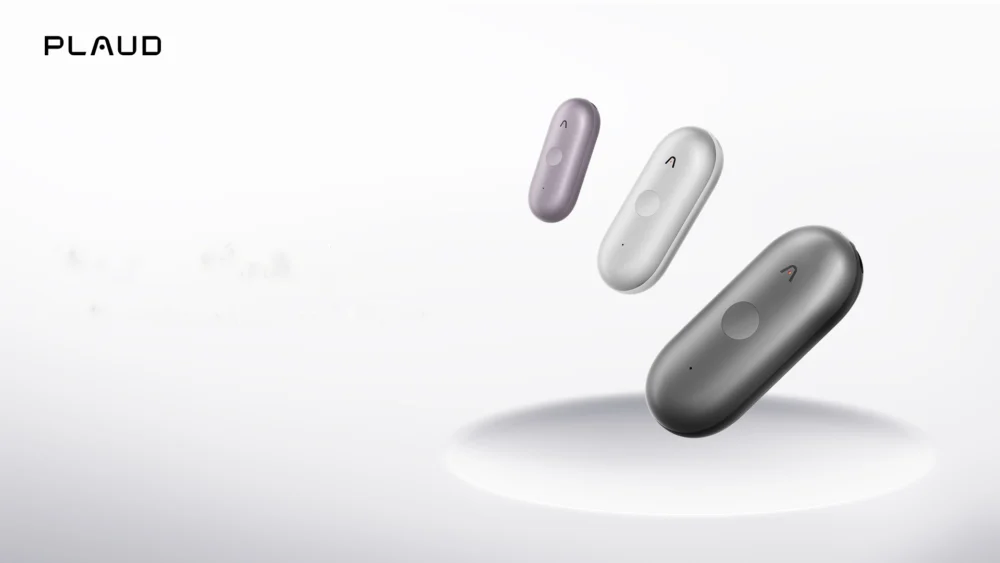
The rapid convergence of sophisticated artificial intelligence models and miniaturized hardware continues to reshape the landscape of personal productivity, a trend dramatically underscored by Plaud’s latest dual-pronged launch. Ahead of the highly anticipated Consumer Electronics Show (CES) in Las Vegas, the hardware manufacturer introduced the Plaude NotePin S, a refined iteration of its successful pin-style notetaker, alongside a critical new desktop software client designed to bridge the documentation gap between physical and virtual professional environments. This strategic release not only solidifies Plaud’s position in the dedicated AI hardware niche but also marks an aggressive move into the burgeoning software market for meeting automation.
The Evolution of Wearable Documentation: NotePin S
The Plaude NotePin S represents the fourth generation of devices from the company, building upon the foundational success of its earlier models which garnered significant praise for their simplicity and effectiveness in capturing spontaneous, real-world conversations. The original pin-styled notetaker, launched in 2024, proved that a dedicated, single-function device optimized for ambient audio capture holds significant appeal, especially for journalists, consultants, and executives frequently engaged in face-to-face interactions.
The $179 NotePin S maintains the core philosophy of its predecessors—discreet, always-ready recording—but introduces key usability enhancements that reflect user feedback and market demands for greater control. Foremost among these is the integration of a dedicated physical button. While the NotePin S is fundamentally an ambient computing tool, this tactile control allows users to instantaneously initiate and cease recording without relying on voice commands or companion app interaction, a crucial feature for maintaining discretion and ensuring timely capture in dynamic settings.
Furthermore, the physical button enables a sophisticated annotation feature: users can tap the device during a live recording to digitally "highlight" a specific moment in the audio timeline. This feature, ported over from the higher-end Plaud Note Pro, is instrumental in streamlining the post-meeting workflow. Instead of wading through a twenty-minute transcription, the user’s subsequent AI summary is anchored by these highlighted timestamps, allowing the large language models (LLMs) processing the audio to prioritize the most critical segments, thus exponentially improving the relevance and accuracy of generated summaries and action items.
The NotePin S is engineered for maximum portability and adaptability. Recognizing that a single mounting solution is insufficient for diverse professional attire and settings, Plaud packages the device with a comprehensive suite of accessories: a traditional clip, a wearable lanyard, a strong magnetic pin for clothing, and even a wristband. This versatility ensures that the device can be worn reliably and discreetly, regardless of whether the user is in a boardroom, a casual café meeting, or traveling between engagements.
Internally, the NotePin S retains the robust specifications that defined the prior generation’s reliability. It features 64GB of non-volatile onboard storage, providing ample space for extensive recordings. Crucially, the device boasts a battery life capable of sustaining 20 hours of continuous recording. Audio fidelity is maintained by two integrated MEMS (Micro-Electro-Mechanical Systems) microphones, optimized to capture clear audio within an operational radius of approximately 9.8 feet (3 meters).
While the NotePin S is designed for the mobile professional, its specifications place it strategically alongside the Plaud Note Pro. The NotePin S sacrifices some of the Note Pro’s extended battery life and recording range for a significantly smaller form factor and enhanced wearability, making it the preferred choice for users prioritizing size and portability over maximum capacity.
A significant enhancement addressing real-world operational concerns is the addition of Apple Find My support. For small, high-value devices intended to be worn or clipped onto various items, loss prevention is paramount. Integrating the Find My network leverages Apple’s vast ecosystem to allow users to locate the NotePin S quickly, reducing friction and anxiety associated with carrying specialized hardware.
The Strategic Leap: Capturing the Hybrid Workspace
Historically, Plaud’s success—evidenced by the sale of over 1.5 million devices—was predicated almost entirely on optimizing the capture and transcription of in-person audio. However, the contemporary professional environment is overwhelmingly hybrid, requiring seamless documentation across both physical and virtual interfaces. Plaud’s launch of a new dedicated desktop client for digital meetings signals a crucial strategic pivot aimed at capturing the massive market share currently dominated by software-first competitors.
The desktop application, initially available for Mac, is designed to directly challenge established AI notetaking platforms such as Fireflies, Fathom, and Granola. These competitors have thrived by integrating directly into virtual meeting ecosystems (Zoom, Microsoft Teams, Google Meet) and automating the transcription process. Plaud’s approach aims to offer a unified, comprehensive documentation platform that handles both external device input (the NotePin S) and internal system audio capture.
The company has engineered the desktop client to intelligently detect when a virtual meeting is active on the user’s system, proactively prompting the user to begin transcription capture. This proactive engagement addresses the common user frustration of forgetting to activate a recording bot at the start of a session.

The technical architecture relies on leveraging system audio APIs to capture the entire meeting stream, which is then fed into Plaud’s proprietary AI engine. The engine not only transcribes the audio with high accuracy but also utilizes large language models to structure the raw text into digestible, actionable notes, summaries, and identified next steps.
Furthermore, Plaud is extending its commitment to multimodal input to the desktop environment. Last year, the company introduced the ability for users to append images and typed notes directly into the transcription stream via its mobile application. This functionality is now integrated into the desktop client. For example, a user discussing a slide deck during a virtual meeting can capture a screenshot or type a quick thought directly alongside the corresponding segment of the meeting audio and transcription, creating a richer, contextually complete meeting record that goes far beyond simple linear text. This feature elevates Plaud’s offering above many rivals that focus exclusively on audio-to-text conversion.
Industry Implications and Expert Analysis
Plaud’s dual launch reflects a mature understanding of the evolving AI hardware market. While much media attention has focused on ambitious, general-purpose AI companions—devices aiming to replace or severely diminish the role of the smartphone—Plaud has successfully carved out a profitable niche by focusing on single-purpose utility.
The success of selling over 1.5 million dedicated notetaking devices demonstrates a clear market appetite for specialized, reliable AI tools that solve a specific pain point (documentation fatigue) without the complexity, latency, or battery constraints associated with more generalized AI pins.
The Economics of Transcription: Plaud operates on a freemium model for its AI processing capabilities. Users of the NotePin S receive 300 minutes of transcription per month for free. This is a crucial element of the business strategy. The hardware sale provides upfront revenue, while the monthly transcription allowance acts as a gateway drug to a subscription model. Since 300 minutes (five hours) is often insufficient for active professionals, particularly those leveraging both the NotePin S and the new desktop client, Plaud successfully converts power users into recurring revenue streams, ensuring the long-term viability of their backend AI infrastructure.
Competitive Dynamics in AI Notetaking: The expansion into the desktop market is less about innovation and more about necessary parity and ecosystem defense. The virtual meeting transcription space is fiercely competitive and often commoditized. Plaud’s advantage here is the seamless integration between its physical hardware (for analog meetings) and its software (for digital meetings). This unified ecosystem approach allows users to manage all their professional documentation—whether captured via a physical pin during a lunch meeting or via the desktop app during a global conference call—within a single, consistent platform. This end-to-end management capability provides a compelling value proposition that pure software players cannot easily match.
The inclusion of advanced features like multimodal input (integrating visual and typed data) is critical for enterprise adoption. In complex professional environments, meeting documentation often requires linking verbal discussions to visual data (charts, diagrams, presentations). By enabling users to capture these disparate inputs simultaneously, Plaud is positioning itself not just as a transcriber, but as an intelligent knowledge management system.
Future Impact and Trends in Ambient Documentation
The trend Plaud is exploiting is the move toward "ambient documentation"—the notion that recording, transcribing, and summarizing critical information should happen passively and continuously, requiring minimal user intervention. This shifts the cognitive load of memory and note-taking entirely onto the AI system.
The Convergence of Hardware and Software: Plaud’s current trajectory suggests a future where the line between its hardware and software offering will become increasingly blurred. The desktop client is essential for capitalizing on the rise of remote and hybrid work, but the true disruptive potential lies in how the data collected from both sources is synthesized. Future iterations of Plaud’s AI will need to offer deeper contextual understanding, potentially integrating with third-party productivity suites (CRMs, project management tools) to automatically assign tasks or update project statuses based on captured meeting transcripts.
The Enterprise Frontier: While Plaud has found success with individual users, the next major growth vector is likely the enterprise sector. Companies are increasingly seeking solutions to formalize and institutionalize knowledge captured in meetings. Plaud’s ability to offer a secure, dedicated recording device (which addresses compliance concerns better than relying solely on personal smartphones) combined with a robust software backend capable of centralized document management makes it an attractive candidate for organizational deployment. Security enhancements, such as end-to-end encryption for stored transcripts and advanced user permission controls within the desktop client, will be paramount for penetrating this market.
Looking Beyond Transcription: The immediate future of AI notetakers extends beyond simple transcription and summarization. The expectation is moving toward real-time synthesis and interpretation. Imagine an update where the NotePin S, while recording a live conversation, can process the audio and display immediate, relevant contextual information (pulled from prior meeting notes or user-defined databases) on a connected mobile device. Such a capability transforms the device from a mere recorder into a real-time cognitive assistant.
Plaud’s decision to launch the NotePin S and the dedicated desktop client simultaneously ahead of CES demonstrates a comprehensive strategy: maintain leadership in the specialized wearable hardware segment while aggressively entering the high-stakes virtual documentation software arena. By offering a complete ecosystem solution for both physical and virtual meetings, Plaud is positioning itself to be an indispensable tool for the modern, constantly connected professional, driving the next phase of productivity automation.