

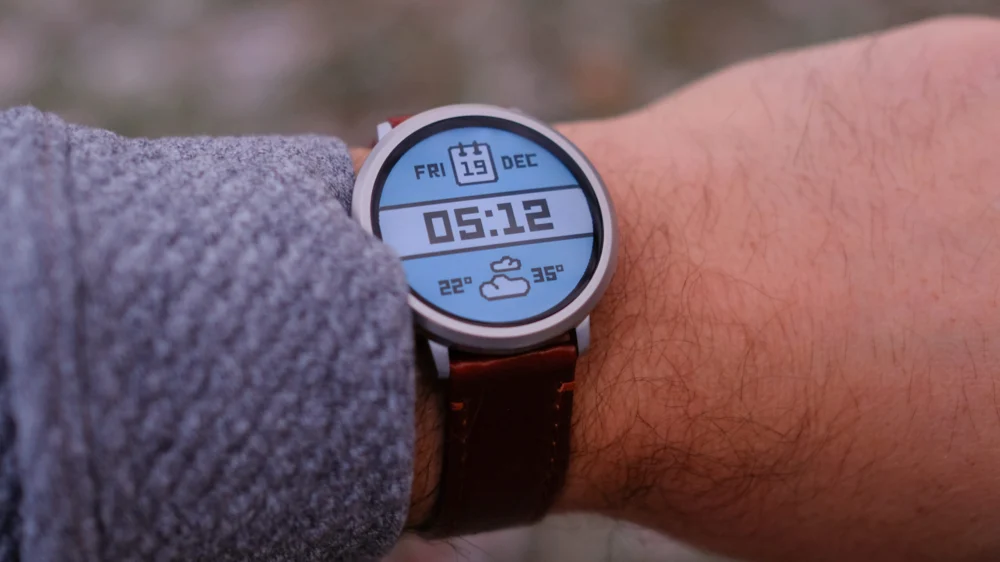
The narrative arc of Pebble, the pioneering smartwatch brand that catalyzed an entire industry before its eventual acquisition and dissolution, continues its surprising resurgence. Following a landmark 2025 that saw the introduction of the Pebble 2 Duo and the Pebble Time 2—reintroductions spearheaded by former CEO Eric Migicovsky—the momentum has not stalled. Barely into the second day of 2026, Migicovsky has unveiled a third entrant into this rejuvenated lineup: the Pebble Round 2. This device is explicitly engineered to be the spiritual successor to the 2015 Pebble Time Round, a device beloved for its aesthetics but ultimately hampered by technological limitations of its era. A close inspection reveals that the Round 2 is not merely a nostalgic reissue; it represents a targeted refinement, systematically addressing the two most significant pain points that plagued its circular predecessor.
The original Pebble Time Round, lauded for bringing a fashionable, thin profile to the nascent smartwatch market, was critically undermined by its display technology and subsequent battery constraints. The Pebble Round 2 appears to tackle these issues head-on, positioning itself as a device that honors the original design ethos while delivering modern usability standards.
The most immediate and impactful upgrade resides in the display architecture. The first-generation Time Round featured a compact 1-inch screen, a specification that, while contributing to its slender form factor, often felt constrained for detailed notifications or watch face complexity. The Pebble Round 2 escalates this to a 1.3-inch panel. While a mere 0.3-inch expansion might seem statistically modest, the visual impact, particularly when juxtaposed against the Time Round, is transformative. This expansion is achieved through a drastic reduction in the display bezels—a common industry trend that the original Round could not fully capitalize on. By slimming the surrounding frame, Pebble has managed to increase the usable screen real estate significantly without ballooning the overall case dimensions, a crucial balancing act for any design-focused wearable.
Beyond mere size, the quality of the visual experience has seen a substantial leap. The Round 2 boasts a resolution of 260 x 260 pixels, effectively doubling the pixel density of the original. In the context of e-paper displays, where clarity and crispness are paramount for mimicking traditional watch aesthetics, this increased sharpness translates to significantly cleaner text rendering and more detailed graphical elements. Furthermore, the integration of optical bonding is a critical engineering refinement. Optical bonding physically fuses the display layer to the protective cover glass, eliminating the tiny air gap present in earlier iterations. This technical enhancement directly addresses viewing angle limitations, a known issue where the screen’s legibility could degrade when viewed off-axis. For a device intended to be glanced at quickly in various lighting conditions, improved viewing angles are a practical necessity, not a luxury feature.
The second monumental flaw corrected in the Round 2 is the Achilles’ heel of nearly all early smartwatches: battery endurance. The original Pebble Time Round famously struggled to push past two days of active use. Migicovsky projects that the Pebble Round 2 will deliver between 10 and 14 days of power per charge. This dramatic extension is attributed largely to the adoption of newer, more energy-efficient Bluetooth standards and optimized power management across the e-paper display refresh cycles. While this 10-to-14-day window falls short of the advertised 30-day stamina boasted by the more rectangular Pebble 2 Duo and Time 2 models—which likely benefit from larger internal volumes accommodating bigger cells—it remains an extraordinary achievement for a device prioritizing thinness and a circular profile. This longevity aligns Pebble firmly in the ‘smartwatch’ category, differentiating it from the daily charging requirement endemic to high-powered, full-color AMOLED competitors.
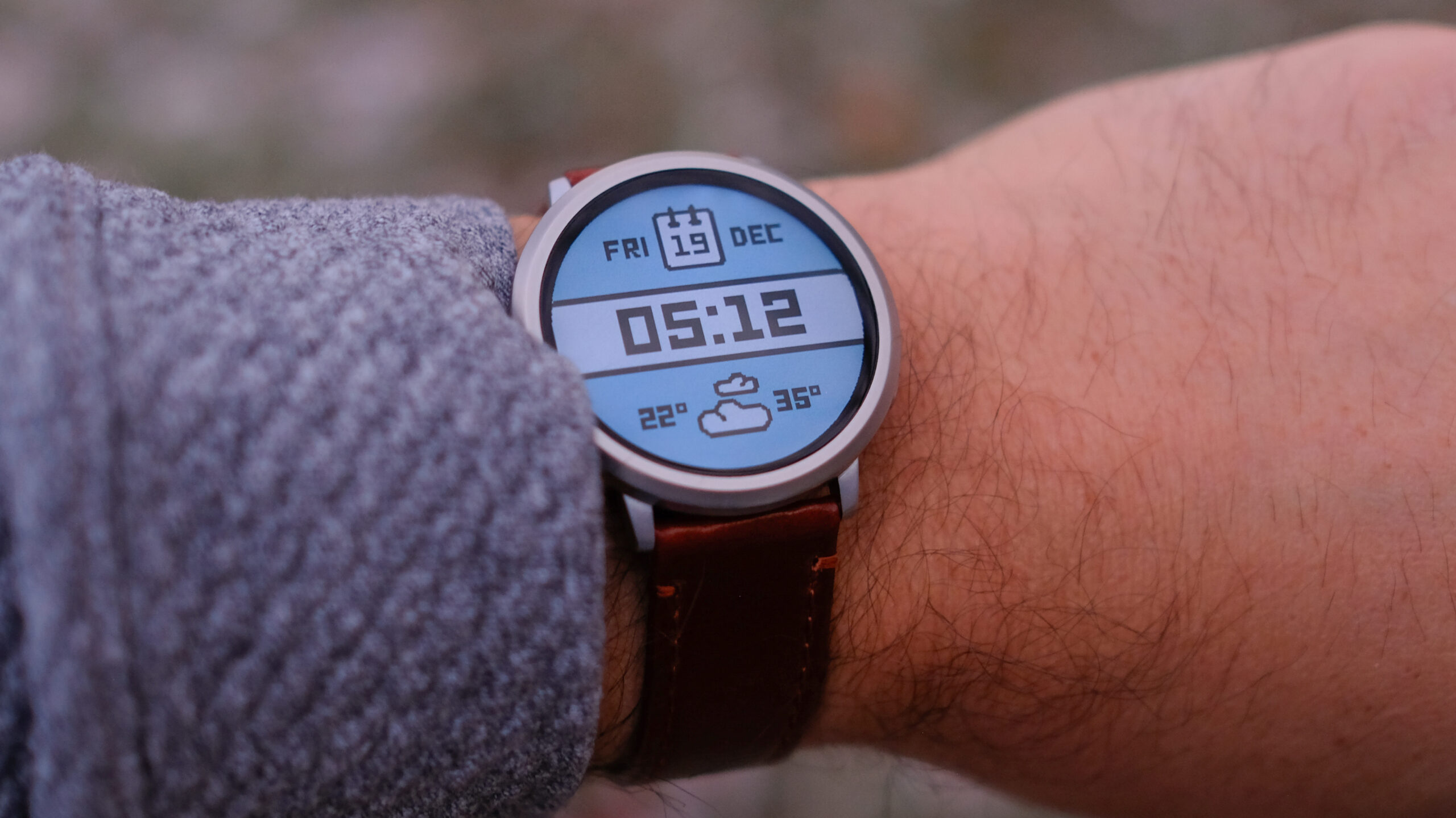
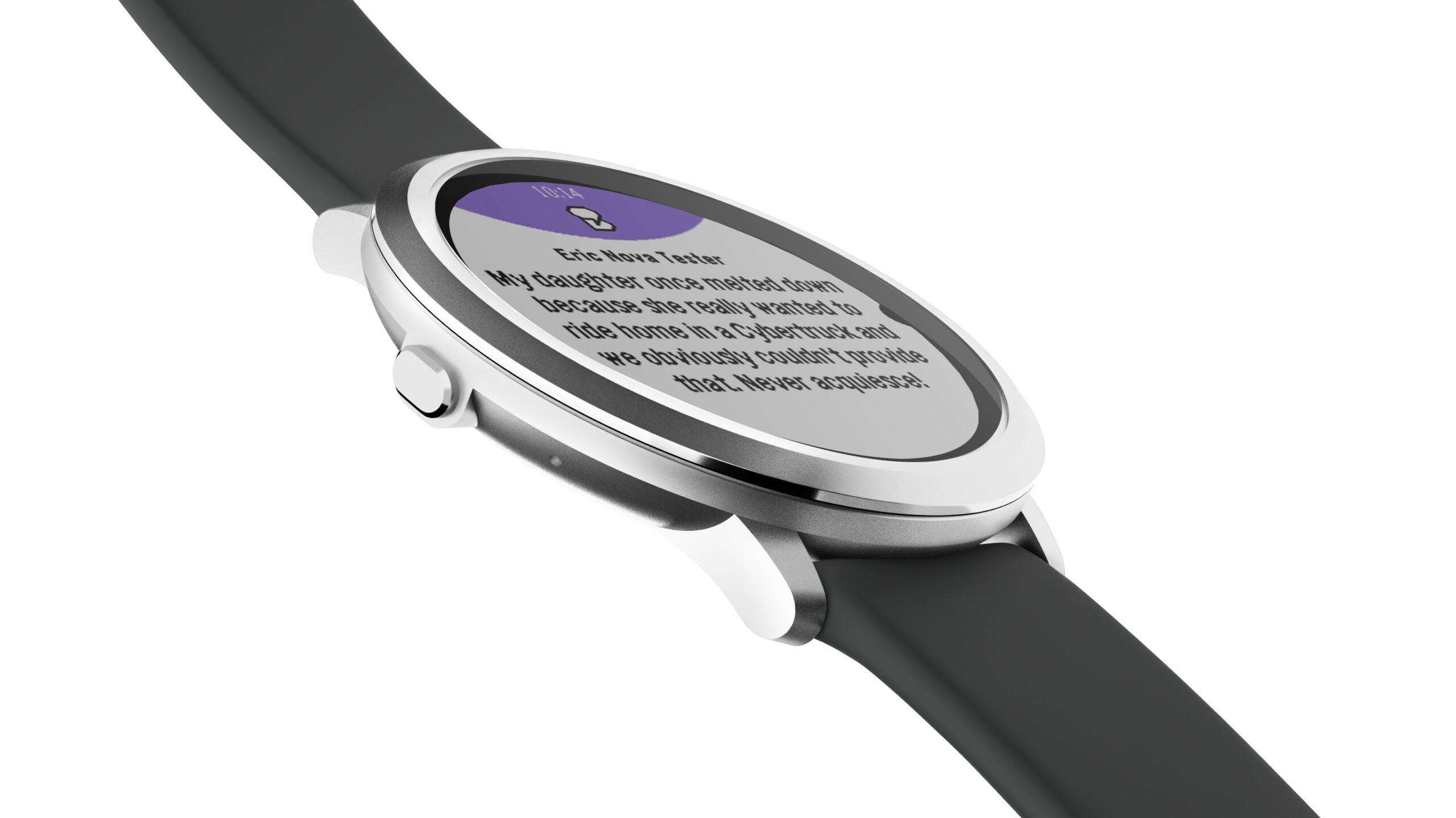
The physical chassis of the Pebble Round 2 maintains the aesthetic integrity of its ancestor, retaining the classic stainless steel construction, the tactile appeal of the four-button navigation system, and the iconic e-paper screen technology. The thickness has only marginally increased to 8.1mm, a negligible bump of 0.7mm over the original. To put this into perspective within the contemporary market landscape, the Round 2 is remarkably svelte when compared to current flagship models: the Pixel Watch 4 (12.3mm), the OnePlus Watch 3 (11.7mm), and the Garmin Venu 4 (12mm) are all significantly bulkier. This deliberate commitment to a slim profile underscores Pebble’s enduring philosophy: a wearable should complement an outfit, not dominate the wrist.
Functionally, the Round 2 incorporates much of the feature set introduced across the wider 2025 Pebble portfolio. This includes baseline health metrics such as step and sleep tracking, an integrated compass, and dual microphones (suggesting future voice command capabilities or enhanced notification handling). Water resistance is rated at 30 meters, adequate for incidental exposure but maintaining a focus on daily wear rather than intensive aquatic sports. However, it is essential to note the deliberate omissions when comparing it to its sibling, the Pebble Time 2. The Round 2 notably lacks both a dedicated heart rate monitor and a speaker. This strategic feature paring suggests a clear segmentation: the Round 2 is positioned as the premium, style-focused communication and notification device, while the Time 2 serves as the more comprehensive fitness tracker and smart assistant hub.
The availability structure reflects a calculated market rollout. The Pebble Round 2 is offered in two case sizes—20mm and 14mm—to cater to varied wrist aesthetics, and is available in traditional black, silver, and a gold finish. Priced at $199 for pre-order, with shipping slated to commence in May, the pricing positions it as an affordable alternative to high-end smartwatches while commanding a premium over budget trackers. Furthermore, the company’s policy allowing existing Pebble Time 2 pre-order holders to seamlessly switch to the Round 2, with appropriate credit adjustments, demonstrates a commitment to customer satisfaction and acknowledges the competitive allure of the newly unveiled circular option.
Industry Implications: The Return of the E-Ink Niche
The reintroduction of the Pebble brand, particularly with iterative, improved hardware like the Round 2, carries significant implications for the broader wearable technology sector. For years, the high-end smartwatch market has been dominated by OLED/AMOLED displays, driving innovation primarily toward color vibrancy, high refresh rates, and integrated health sensors (ECG, SpO2, advanced optical HR). This has inadvertently created a substantial vacuum in the "long-life, ambient information" segment.
Pebble, through its sustained commitment to e-paper technology, is effectively re-validating the core value proposition that attracted early adopters: longevity and glanceability. In an era where consumers are experiencing "battery anxiety" from devices requiring daily charging, the 10-to-14-day endurance of the Round 2 serves as a powerful counter-narrative. This strategy is not about competing with the feature density of a $400+ Apple Watch or Galaxy Watch; it is about owning the niche of reliable, stylish, multi-week wearables.
This move forces established players to acknowledge that not all consumers prioritize a vibrant, full-color computing experience on their wrist. The Round 2’s focus on aesthetic integration (via the thin, round design) and endurance suggests a market segment that values notification management, timekeeping, and minimalist interaction over intensive app usage or detailed fitness tracking. If the Pebble revival proves successful, it could spur competitors, including established players like Garmin or even niche players like Withings, to further refine their own monochrome or low-power display offerings, focusing R&D less on display brightness and more on firmware efficiency and connectivity protocols.
Expert Analysis: The Strategic Value of Feature Segmentation
The decision to omit the heart rate monitor and speaker from the Round 2, while retaining them in the Time 2, is a masterclass in product segmentation for a resurrected brand operating with constrained resources. In the original Pebble era, feature bloat often led to compromises in battery life and increased thickness. By segmenting the Round 2 as the ‘Style and Stamina’ model and the Time 2 as the ‘Health and Communication’ model, Migicovsky ensures that neither device is saddled with the power drain associated with continuous optical heart rate monitoring or the physical space required for a robust speaker array.
The Round 2 benefits directly from this triage: the 10-to-14-day battery life is a direct consequence of opting out of power-hungry sensors. Furthermore, the improved display resolution and optical bonding suggest an investment in user interface quality, recognizing that users who prefer the round format are often driven by the traditional watch aesthetic. This is a mature approach to product development, contrasting sharply with the often-overstuffed specifications sheets common in the mid-2020s tech cycle. The Round 2 is a refinement of form factor rather than an expansion of function, which is precisely what the Time Round’s devotees desired.
Future Impact and Emerging Trends
The success of the Pebble Round 2 will be a crucial barometer for the viability of ‘legacy tech revival’ in the current hardware landscape. Its impact extends beyond Pebble itself, hinting at future trends:
- The Rise of Specialized Wearables: As the generalized smartwatch market matures, consumers will increasingly seek devices optimized for specific use cases. The Round 2 champions low-power, high-durability communication. Future competitors might launch "Digital Detox" watches or "Adventure Timers" based on this segmentation principle.
- E-Ink Maturation: Continued investment in e-paper technology, driven by companies like Pebble, pushes manufacturers to improve refresh rates and color depth (though the Round 2 remains monochrome). If battery life expectations continue to rise, e-ink or similar reflective display technologies will become increasingly attractive for secondary or specialized smart devices, reducing reliance on energy-intensive backlights.
- Form Factor Dominance: The preference for a round watch face is deeply ingrained in horological culture. The fact that Pebble is revisiting the Round form factor, rather than sticking solely to the rectangular Pebble 2 design, confirms that aesthetics remain a primary driver for a significant segment of the market, particularly for devices worn daily in professional or formal settings where bulky, square devices can feel out of place.
The technical upgrades—especially the optically bonded, high-resolution 1.3-inch screen—are indicative of modern manufacturing capabilities being retroactively applied to classic designs. This suggests a trend where high-quality component sourcing can breathe new life into beloved, albeit outdated, industrial designs, allowing nostalgia to be coupled with genuine technological improvement rather than just superficial cosmetic updates. For the discerning user seeking the elegant compromise between analog aesthetics and essential digital connectivity, the Pebble Round 2 appears to be the most compelling offering in the rejuvenated lineup, finally delivering the promise of its 2015 ancestor without the crippling endurance penalty. The anticipation surrounding its May shipment date will undoubtedly reveal whether this calculated refinement can capture the attention of both returning evangelists and new consumers weary of constant charging cycles.