

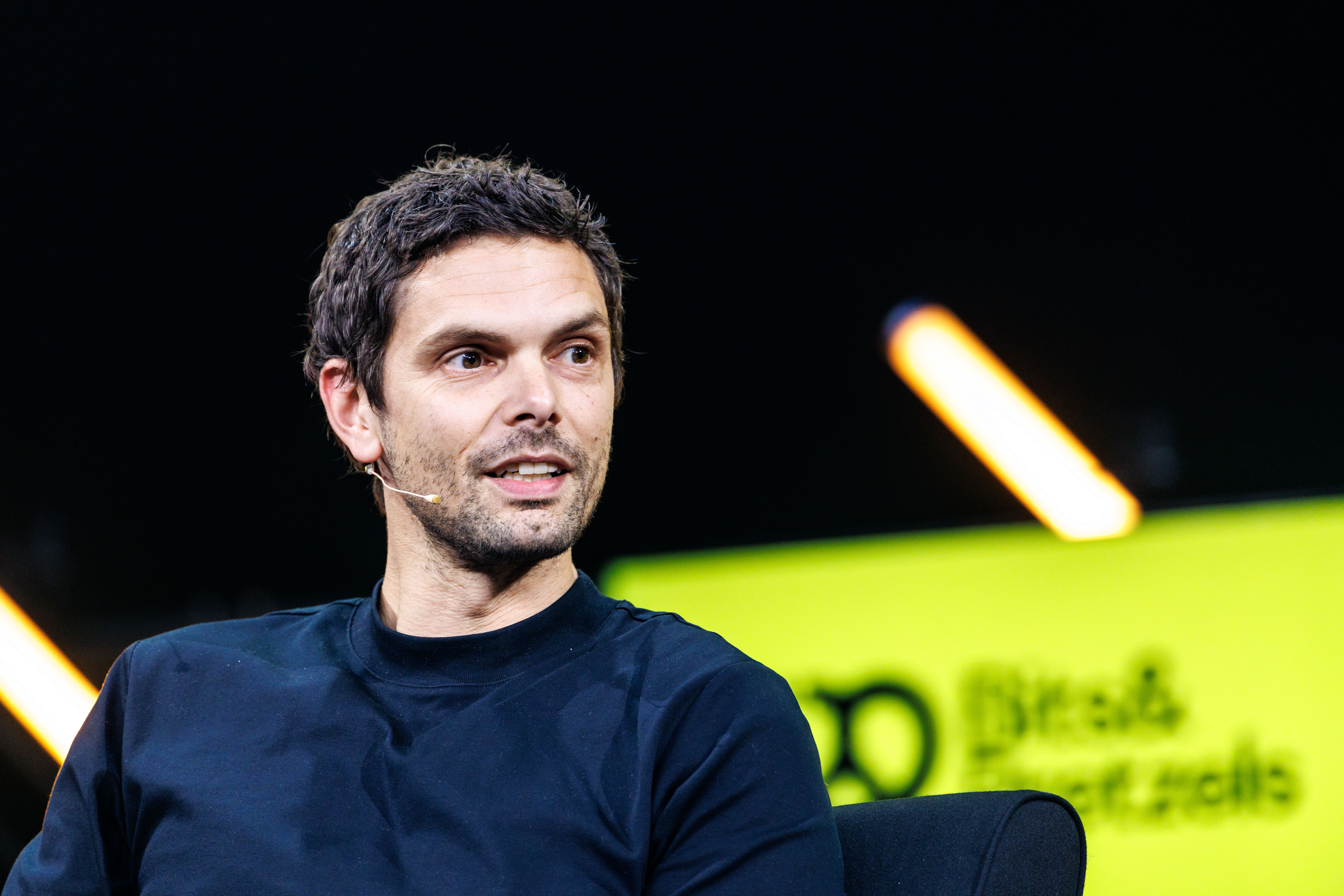
The trajectory of successful tech entrepreneurs often follows a predictable arc: build, scale, exit, and then perhaps transition into the quiet life of venture capital or philanthropy. Peter Sarlin, the Finnish visionary who spearheaded Silo AI, is deviating from that script. Just eighteen months after the blockbuster $665 million acquisition of Silo AI by semiconductor giant AMD—a deal that stood as one of the largest private AI exits in European history—Sarlin has stepped down from his executive role at AMD Silo AI. Rather than retreating from the front lines, he is doubling down on the next great frontier of computation. His latest vehicle, QuTwo, represents an ambitious attempt to bridge the widening gap between today’s generative AI craze and the impending, albeit still maturing, era of quantum computing.
Currently operating under the radar but backed by significant institutional weight, QuTwo is being positioned not merely as a research laboratory, but as a commercial "orchestration" engine. Funded by Sarlin’s own family office, PostScriptum, the startup arrives at a critical juncture. While the global tech industry remains obsessed with Large Language Models (LLMs) and the massive GPU clusters required to train them, a quiet consensus is forming among experts: classical silicon is hitting a wall. The energy demands of modern AI are becoming unsustainable, and the complexity of the problems enterprises wish to solve—from global logistics to molecular discovery—is outstripping the linear processing power of even the most advanced classical chips.
The Problem of the "Efficiency Wall"
To understand why QuTwo is necessary, one must understand the bottleneck facing modern artificial intelligence. We are currently in an era of "brute force" AI. To make models smarter, we have traditionally made them larger, feeding them more data and more electricity. However, the law of diminishing returns is beginning to take hold. Sarlin’s thesis, and the foundation of QuTwo, is that AI is hitting an efficiency wall. As enterprises move beyond simple chatbots and into complex, real-time decision-making agents, the computational overhead becomes a prohibitive cost.
Quantum computing has long been hailed as the "deus ex machina" for this dilemma. By utilizing the principles of superposition and entanglement, quantum processors can theoretically perform certain calculations exponentially faster than classical computers. Yet, the "Quantum Winter" or the "Quantum Gap"—the period between theoretical promise and practical, error-corrected hardware—remains a challenge. Many enterprises are hesitant to invest in quantum because the hardware is not yet "production-ready" for general tasks.
QuTwo’s strategic masterstroke is its refusal to wait. By positioning itself as an AI company rather than a hardware manufacturer, the startup is building what it calls "QuTwo OS." This is an orchestration layer designed to allow enterprises to run AI workloads across a hybrid environment. It effectively acts as a smart router, determining which parts of a problem should stay on classical CPUs and GPUs and which parts can be offloaded to quantum processors or, crucially, "quantum-inspired" simulators.
The Bridge: Quantum-Inspired Computing
One of the most compelling aspects of QuTwo’s approach is its utilization of quantum-inspired computing. This is a middle-ground technology that uses classical hardware to run algorithms designed with quantum logic. By simulating the way a quantum computer explores multiple solutions simultaneously, these algorithms can find "global minimums" in complex datasets far more efficiently than standard classical approaches.
For a massive enterprise, this offers a "no-regrets" path to modernization. By adopting QuTwo OS, a company can begin optimizing its AI workloads today using quantum-inspired logic on their existing cloud infrastructure. When true, fault-tolerant quantum hardware eventually reaches maturity, the transition will be a matter of switching a digital toggle rather than a total architectural overhaul. This "quantum-ready" posture is what Sarlin is selling, and the market is responding with significant capital.
High-Stakes Partnerships and Real-World Applications
The credibility of any deep-tech startup is often measured by the company it keeps. QuTwo has already secured "design partnerships" valued in the tens of millions of dollars. These are not mere research grants; they are collaborative development agreements with industry leaders who are feeling the limitations of classical AI.
One such partner is the European fashion giant Zalando. Together, QuTwo and Zalando are developing "lifestyle agents." This represents a shift away from the traditional search-and-filter model of e-commerce toward a proactive, generative experience. Instead of a user searching for "black boots," a lifestyle agent understands the user’s upcoming travel plans, local weather patterns, and personal aesthetic to suggest an entire curated experience. The combinatorial complexity of such personalized, real-time recommendation engines is a perfect use case for the optimization strengths of quantum-inspired AI.
Similarly, QuTwo has partnered with OP Pohjola, Finland’s largest financial services group, to explore quantum AI research. In the financial sector, the stakes for optimization are incredibly high. Whether it is portfolio risk management, fraud detection, or high-frequency trading simulations, the ability to process multi-variable datasets with quantum efficiency provides a definitive competitive edge. By engaging in these partnerships early, QuTwo is effectively crowdsourcing the "pain points" of the modern enterprise, ensuring that their OS is built to solve real-world bottlenecks rather than theoretical ones.
A Team of Industry Titans
The composition of QuTwo’s leadership team suggests that this is not a typical speculative venture, but a concentrated effort by the Nordic tech elite to claim a stake in the next computing paradigm. Sarlin has surrounded himself with a "who’s who" of both the quantum and enterprise worlds.
On the quantum side, the team includes Kuan Yen Tan, a co-founder of IQM (Europe’s leading quantum hardware company), and Antti Vasara, the chair of SemiQon and a prominent figure in the semiconductor space. This gives QuTwo a direct line into the hardware evolution of quantum chips. On the enterprise and scaling side, Sarlin is joined by Kaj-Mikael Björk, his former collaborator from the Silo AI days, and Pekka Lundmark, the former CEO of Nokia. Lundmark’s presence on the board is particularly telling; it signals that QuTwo is being built with the structural integrity required to serve global telecommunications and industrial giants.
With over 30 scientists specializing in the intersection of quantum physics and machine learning, QuTwo possesses a density of talent that is rare for a startup at this stage. This multidisciplinary approach is essential because the "language" of quantum computing is fundamentally different from the "language" of classical Python-based AI development. QuTwo’s mission is to translate between these two worlds.
The Broader Vision: Physical AI and NestAI
It is also worth noting that QuTwo does not exist in a vacuum. Sarlin’s departure from AMD was also marked by his appointment as chairman of NestAI, a "physical AI" lab. This suggests a broader vision where AI moves out of the digital-only realm of LLMs and into the physical world—robotics, autonomous systems, and industrial automation.
Physical AI requires immense localized processing power and near-instantaneous optimization—tasks where quantum-classical hybrid systems excel. By chairing both NestAI and QuTwo, Sarlin is effectively positioning himself at the intersection of where AI meets the physical world and where AI meets the limits of computation.
The Strategic Importance for Europe
From a geopolitical perspective, QuTwo is a significant development for the European Union’s technological sovereignty. While the United States and China have dominated the "first wave" of AI (SaaS, LLMs, and social media), Europe has carved out a formidable niche in "deep tech" and industrial AI. Finland, in particular, has emerged as a global hub for quantum research.
By building a software layer that makes quantum computing accessible to the average enterprise, QuTwo could help prevent a scenario where European companies are once again dependent on foreign proprietary stacks for the next generation of computing. If QuTwo OS becomes the industry standard for quantum-classical orchestration, it would place a European entity at the heart of the global AI supply chain.
Future Outlook: The Race to Quantum Advantage
The journey toward "Quantum Advantage"—the point at which a quantum computer can solve a problem that no classical computer can solve in a reasonable timeframe—is no longer a question of "if," but "when." However, the most successful companies of the next decade won’t be those that wait for the hardware to be perfect; they will be the ones that have already integrated quantum logic into their business processes.
QuTwo is betting that the transition to quantum will look less like a sudden "Big Bang" and more like a gradual migration. By offering a platform that supports classical, quantum-inspired, and pure quantum workloads simultaneously, they are providing a safety net for the enterprise.
Peter Sarlin’s move from Silo AI to QuTwo is a clear signal to the market: the era of "purely classical" AI is nearing its zenith. The next phase of innovation will be defined by orchestration, efficiency, and the seamless integration of quantum mechanics into the fabric of corporate intelligence. For enterprises like Zalando and OP Pohjola, the future isn’t something to wait for—it’s something to start running on today.