

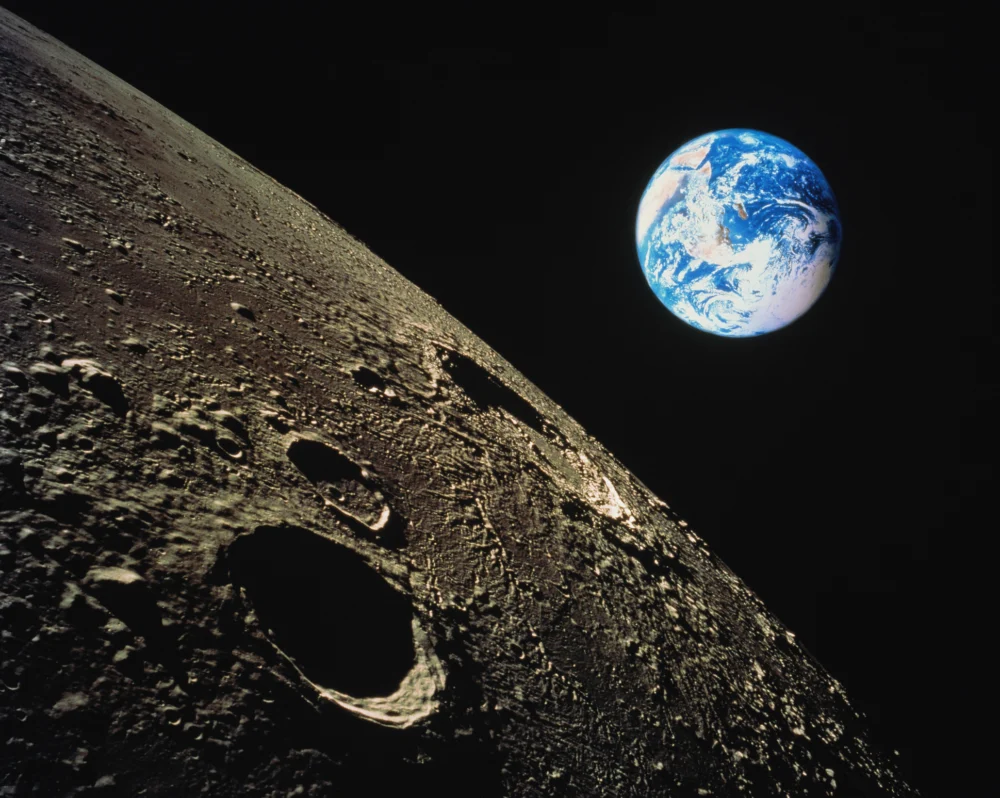
The timeline for permanent human presence beyond Earth is compressing rapidly, driven by competing visions from the titans of the commercial space industry. In a high-profile address last fall, Jeff Bezos, founder of Amazon and Blue Origin, articulated a near-future where millions inhabit orbital settlements within decades. His projection was notable for its emphasis on leisure and voluntary residence, underpinned by the assumption that robotics would render human labor in space obsolete for cost-effectiveness. Yet, only weeks later, a starkly contrasting prediction emerged from Will Bruey, CEO of space manufacturing firm Varda Space Industries, who suggested that within 15 to 20 years, the economic calculus would favor deploying a "working-class human" to orbit for manufacturing tasks over the substantial investment required to develop sufficiently sophisticated automated systems.
This ideological fissure—robots versus low-cost human labor—reveals a critical, under-examined tension at the heart of the burgeoning off-world economy. While the engineering challenges of rocketry and deep-space travel dominate headlines, the ethical and socioeconomic implications of extraterrestrial industrialization are accelerating into focus. Who will build and maintain this new celestial infrastructure, and under what conditions?
To dissect these foundational questions, professional attention must turn to the field of space ethics and governance. Dr. Mary-Jane Rubenstein, a professor of religion and science and technology studies at Wesleyan University and author specializing in the philosophy of the multiverse, offers a sobering assessment of the implications of Bruey’s prediction. The key issue, she posits, is the dramatic amplification of terrestrial power imbalances.
On Earth, workers negotiate precarious positions regarding wages, safety, and insurance. Transferring this dynamic to a closed-loop, extra-planetary environment fundamentally shifts the balance of control. In orbit or on a lunar outpost, dependence on the employer extends far beyond a simple paycheck or healthcare benefit; it encompasses the absolute necessities for biological survival: food, water, thermal regulation, and, most critically, breathable air. This total dependence transforms the employer into the ultimate arbiter of life support, creating a potential for exploitation rarely seen in modern terrestrial labor markets.
Rubenstein is keen to dismantle the romanticized view of space as a pristine, weightless frontier. The reality of the orbital or planetary workplace is profoundly hostile. Far from the tranquil vacuum often depicted in popular culture, space is a realm of ionizing radiation, microgravity degradation, extreme temperature differentials, and relentless mechanical jeopardy. As she notes, “It is not nice up there.” The lack of established international labor law, coupled with the difficulty of oversight and rescue in a remote, high-risk environment, means that any initial cohort of blue-collar space workers will face unprecedented vulnerabilities.
The Erosion of the Common Heritage Principle
Beyond the ethics of labor, the commercial space acceleration is fracturing the foundational legal framework governing the cosmos: the 1967 Outer Space Treaty (OST). The OST, a landmark achievement of the Cold War era, established the principle that celestial bodies—the Moon, Mars, and asteroids—are the common heritage of all humanity and explicitly forbids any nation from claiming sovereignty or "national appropriation."
However, this foundational consensus began to erode in 2015 when the U.S. Congress passed the Commercial Space Launch Competitiveness Act (CLSCA). This act created a significant regulatory bypass, asserting that while no U.S. entity could claim ownership of a celestial body itself, private companies could legally own, extract, and sell any resources recovered from it. This legislative move was immediately seized upon by the nascent space mining industry.
Rubenstein illustrates the problematic nature of this distinction with a sharp analogy: it is akin to forbidding ownership of a house but allowing the complete extraction of its structural elements—the beams, the floorboards, and the foundation material. Since the resources contained within a celestial body, such as lunar regolith or asteroidal metals, are intrinsically linked to the body itself, resource extraction effectively amounts to appropriation and depletion of a shared global inheritance.
Geopolitical Fragmentation and the Artemis Accords
The international reaction to the CLSCA was immediate and pointed. At the United Nations Committee on the Peaceful Uses of Outer Space (COPUOS) meetings in 2016, major space powers, including Russia, denounced the U.S. act as a unilateral violation of international law, raising concerns about future economic imbalances and the potential for conflict over finite resources.
In response to this growing legal uncertainty and geopolitical friction, the U.S. government established the Artemis Accords in 2020. This set of non-binding, bilateral agreements with allied nations aims to formalize American-led principles for lunar and deep-space exploration. While framed as commitments to transparency and safety, the Accords crucially reinforce the American interpretation of resource utilization, stating that extraction does not constitute the "national appropriation" prohibited by the OST.
This strategy, according to expert analysis, represents an attempt by the U.S. to establish a normative framework for the commercialization of space, compelling other nations to either align with the U.S. vision or risk exclusion from the emerging lunar economy. Currently, over 60 nations have signed the Accords, drawn by the promise of access and participation. Yet, the notable absence of Russia and China highlights a severe geopolitical fragmentation. The space domain is effectively dividing into two distinct regulatory and operational spheres, complicating issues of safety, communication, and resource stewardship.
The stakes are immense. Companies like AstroForge, focusing on asteroid mining, and Interlune, targeting Helium-3 extraction from the Moon, are positioning themselves to capitalize on this regulatory ambiguity. Helium-3, a non-renewable isotope prized for its potential use in fusion energy, exemplifies the zero-sum nature of this resource grab. If one nation or commercial entity successfully mines a substantial quantity, that resource is permanently unavailable to the rest of humanity, directly contradicting the spirit of collective benefit enshrined in the OST.
The Wolf Amendment and the Impediment to Global Governance
The prospects for unified, collaborative governance are further hampered by domestic U.S. legislation. The Wolf Amendment, passed in 2011, severely restricts NASA and other federal agencies from engaging in bilateral cooperation with China or Chinese-owned companies without stringent Congressional and FBI approvals.
Rubenstein argues that maintaining this legislative firewall, particularly as Congress considers making the amendment permanent, is deeply counterproductive to global space stability. The complex challenges of the coming decades—from managing orbital traffic to establishing sustainable lunar infrastructure—demand collaboration among all major space actors. Dismissing cooperation with China as technologically or politically impossible, she contends, is hypocritical in an industry that routinely promotes vastly more complex and physically impossible feats, such as colonizing Mars despite lethal radiation levels and lack of atmosphere, or housing thousands in orbital hotels. If the industry can dream of surviving boiling blood and falling faces on Mars, it can surely find a way for diplomats to communicate.
The current trajectory—dominated by the pursuit of profit and national strategic advantage—is pushing space development squarely into the "conquest" narrative, one of three major archetypes Rubenstein identifies within space-related science fiction.
The first, the Conquest Genre, treats space as the ultimate extension of national or corporate capital, a new frontier to be seized and exploited, mirroring the age of European colonial expansion. The second is Dystopian Science Fiction, which serves as a cautionary tale, illustrating the destructive outcomes of unchecked power and greed. Alarmingly, Rubenstein observes that modern tech entrepreneurs often seem to miss the warning embedded in these dystopian narratives, instead treating the fictional settings as blueprints for actualization. The third category, Speculative Fiction in a High-Tech Key, uses futuristic settings to explore alternative, more equitable forms of society and governance.
The dominance of the conquest model represents a profound philosophical failure—a missed opportunity to extend improved values of justice and sustainability into these new realms. Instead, humanity risks replicating and amplifying its worst terrestrial failures—worker exploitation, resource depletion, and geopolitical conflict—on a cosmic scale.
The Unifying Threat of Orbital Debris
While the ethical and legal hurdles appear insurmountable, a few pragmatic opportunities exist to force international collaboration, primarily driven by self-preservation. One such area is environmental regulation. The long-term effects of high-frequency rocket launches on the Earth’s ozone layer and upper atmosphere—including the deposition of soot and alumina particles from solid rocket boosters—are only beginning to be understood. Tightening environmental standards for all launch providers is a necessity, not a choice.
The most potent catalyst for multilateral action, however, is the escalating crisis of space debris. With over 40,000 trackable objects currently hurtling around Earth at speeds exceeding 17,000 miles per hour, the risk of the Kessler Syndrome is becoming acutely real. The Kessler effect describes a scenario where the density of objects in Low Earth Orbit (LEO) becomes so high that collisions generate cascading debris, rendering certain orbital regimes unusable for decades.
This is a threat that transcends national and commercial interests. Governments rely on LEO for security and communication; the private sector relies on it for multi-billion dollar satellite constellations. “Space garbage is bad for everybody,” Rubenstein emphasizes. The universality of this threat offers a rare, perfectly aligned incentive for the U.S., China, Russia, and private industry to collaborate on debris mitigation, tracking, and removal technologies.
In the face of intensifying fragmentation and exploitation, the academic community is attempting to foster dialogue. Rubenstein is actively developing a proposal for an annual international conference designed to bring together academics, NASA officials, and key industry stakeholders to discuss methods for approaching space “mindfully, ethically, and collaboratively.”
Yet, the clock is ticking. As governments remain entrenched in geopolitical rivalries, demonstrated by the continued legislative push to solidify restrictions like the Wolf Amendment, the commercial sector is moving at light speed. Startup founders project foundational changes in space capabilities within the next five to ten years. Companies are aggressively staking claims for resources on the Moon and asteroids. The unspoken question of orbital labor—who will shoulder the deadly risk, and for what cost—remains suspended in the vacuum, awaiting an answer that may define the moral character of humanity’s expansion into the stars. If the new space economy fails to establish comprehensive legal and ethical safeguards before operations scale, the future of space colonization risks being defined not by exploration and shared progress, but by the relentless pursuit of profit built upon the backs of the vulnerable.