

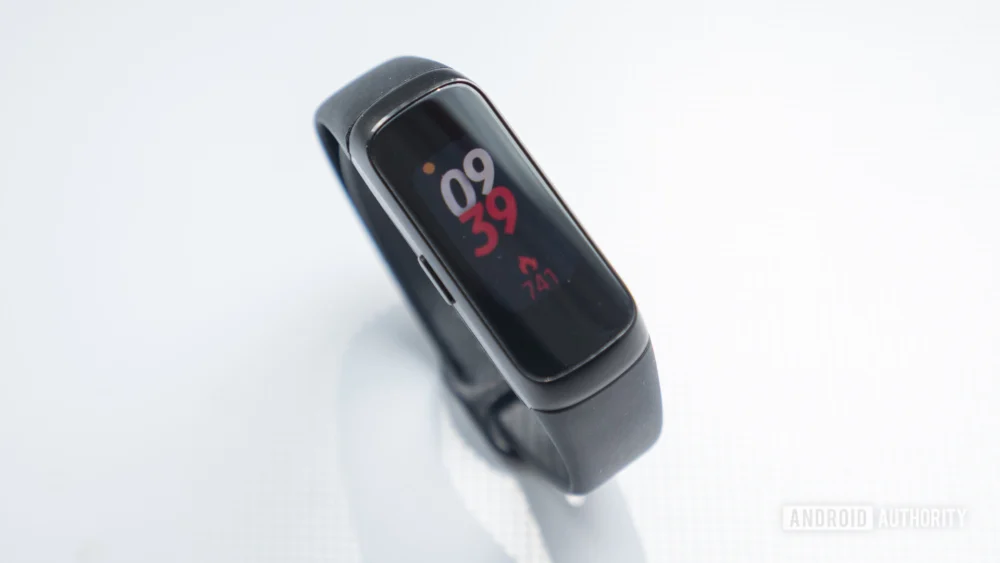
The digital ecosystem is in a perpetual state of flux, a relentless churn driven by hardware innovation and the necessity for streamlined software architecture. This dynamic is currently playing out within Samsung’s burgeoning wearable portfolio, as the company quietly prepares the ground for its latest generation of audio devices. A recent update to the Galaxy Wearable application, currently surfacing in regional rollouts, signals a significant, albeit expected, end-of-life for two foundational fitness trackers from the company’s past: the original Samsung Galaxy Fit and the more budget-oriented Galaxy Fit e. This software pivot coincides with a broader system overhaul, as the Wearable app simultaneously adopts the visual vernacular of the forthcoming One UI 8.5 and integrates preparatory code for the yet-to-be-announced Galaxy Buds 4 and Galaxy Buds 4 Pro.
The specific iteration driving this change, version 2.2.68.26010761 of the Galaxy Wearable app, represents more than just a cosmetic refresh or hardware compatibility update; it underscores a critical strategic decision regarding software maintenance overhead. In the realm of consumer electronics, particularly in the fast-moving segment of connected health and personal audio, maintaining legacy software support is a finite resource. When devices reach a certain age, the cost-benefit analysis invariably tips toward deprecation, freeing up developer attention for current and future product lines.
The initial Samsung Galaxy Fit and Galaxy Fit e debuted back in 2019. While they served as excellent entry points into Samsung’s fitness tracking ecosystem—the ‘e’ designation emphasizing an ‘essential’ feature set at a lower price point—they are now seven years removed from their launch window. From a technological lifecycle perspective, this longevity is commendable for mass-market hardware. However, in software terms, this represents a significant stretch, especially when considering the rapid evolution of Bluetooth standards, operating system dependencies (both Android and the underlying firmware of the trackers), and security protocols.
The discontinuation of support within the primary companion application—the Galaxy Wearable app, which acts as the central hub for managing Samsung watches, bands, and earbuds—is a definitive marker of obsolescence. While the physical devices may still function locally for basic activity logging, their ability to interface, synchronize data reliably, or receive any form of ancillary feature updates through official channels is effectively terminated with this software update. This action forces users who remain loyal to these vintage devices to navigate an increasingly narrow path: either deliberately forgo updating the critical Galaxy Wearable application or face the inevitable consequence of losing seamless integration.
The context for this sunsetting is highly significant, as it is bracketed by two major forthcoming events: the aesthetic transition to One UI 8.5 and the imminent launch of the Galaxy Buds 4 series. One UI 8.5, the next major iteration of Samsung’s custom Android overlay, is poised to bring substantial under-the-hood changes, potentially including revised connectivity stacks or enhanced security frameworks that the older, less sophisticated firmware of the 2019 Fit models cannot accommodate or certify against. Furthermore, the integration of support for the Galaxy Buds 4 line necessitates a clean slate, ensuring that the app infrastructure is optimized for newer Bluetooth LE profiles and potentially different power management protocols inherent in the next-generation audio hardware.
This pattern of lifecycle management is not unique to Samsung; it is a universal reality across the technology sector, yet it warrants scrutiny when applied to essential health tracking devices. For a user relying on a Galaxy Fit for daily step counts, sleep analysis, or basic workout tracking synced to Samsung Health, the immediate implication hinges on the dependency chain. While the Galaxy Wearable app manages the connection, the actual health data typically flows into the Samsung Health application. The critical unknown currently centers on whether this software cutoff strictly impacts the Wearable app’s management interface (settings, watch faces, updates) or if it severs the data pipeline entirely to Samsung Health. If the latter occurs, the device’s primary utility is severely diminished, transforming it into a standalone, non-syncing pedometer.
The progression of Samsung’s fitness band line provides a clear rationale for Samsung’s decision. The original Fit series was succeeded by the Galaxy Fit 2 (released in 2020), followed by the Galaxy Fit 3 in 2024. The Galaxy Fit 3, positioned aggressively as an affordable, capable tracker often retailing around the $60 mark, represents a compelling technological leap from the 2019 models. It offers superior display technology, likely better sensor accuracy, extended battery life, and crucially, modern connectivity support. From a corporate standpoint, Samsung is incentivizing migration to actively supported hardware where security patches and feature enhancements can be reliably deployed. Supporting three generations of wearables simultaneously—the very old, the moderately old, and the current—strains development resources disproportionately.
Industry Implications and Software Maintenance Overhead
The move by Samsung highlights a persistent challenge in the Internet of Things (IoT) and wearable technology sectors: the tension between product longevity and software agility. Unlike smartphones, which receive multi-year OS updates, dedicated fitness trackers often operate on constrained firmware with limited update headroom. Manufacturers typically promise two to three years of meaningful software support, after which security vulnerabilities or incompatibility with new host operating systems begin to emerge.
For the industry, this decision sets a precedent. When a major OEM pulls support for hardware that is seven years old, it implicitly reinforces the expected lifespan for such specialized devices. It signals to consumers that an investment in an entry-level fitness band should be viewed with a shorter lifecycle expectation than a flagship smartwatch, which benefits from more robust Wear OS integration or Tizen/Wear OS hybrid platforms that receive more consistent attention.
Expert analysis suggests that the cost of maintaining backward compatibility often involves significant engineering effort. Every legacy device added to the testing matrix for a major app update introduces potential regression bugs. If the Galaxy Fit and Fit e were still being used by hundreds of thousands of active users, the calculus might differ. However, given the availability of newer, superior models and the seven-year gap, the user base is likely small and geographically fragmented, making the investment in continued compatibility unjustifiable from an engineering ROI perspective. This proactive pruning of legacy code branches is essential for the stability and rapid deployment of software intended for cutting-edge devices like the expected Galaxy Buds 4.
The Road to Unpacked and Future Trends
The timing of this software announcement is strategically linked to Samsung’s upcoming hardware unveiling. The Galaxy Wearable update is dropping just ahead of a major Galaxy Unpacked event, where the Galaxy Buds 4 series is widely anticipated to debut. This pre-launch integration ensures that when the new audio products hit the market, the Galaxy Wearable app is already primed to recognize, configure, and manage them immediately upon unboxing. This seamless Day One experience is paramount for positive initial consumer reception.
The inclusion of One UI 8.5 elements in the Wearable app also offers a sneak peek into the broader software experience Samsung is crafting. This suggests that the UI changes will extend beyond the smartphone interface into the peripheral management software, potentially unifying the look and feel across the entire connected Samsung ecosystem—from phones and tablets down to the smallest accessory manager. Enhanced Smart Switch security mentioned in the release notes further suggests a hardening of data transfer protocols, a necessary step as users migrate from older devices to newer ones, ensuring personal data remains protected during these transitions.
Looking forward, the trajectory suggests that wearable support windows will continue to tighten. As wearables become more sophisticated—incorporating advanced biosensors, localized AI processing, and relying on increasingly complex Bluetooth specifications—the burden on the companion application to manage these features grows. We can anticipate that future iterations of the Galaxy Wearable app will likely drop support for the Galaxy Watch 3 or even earlier generations of Galaxy Buds as they approach the five-to-six-year mark.
For consumers currently holding onto the original Galaxy Fit or Fit e, the decision point is clear. While these trackers were budget-friendly innovators in their time, their functional existence is now tethered to an aging software branch. The upgrade path to the Galaxy Fit 3 is not merely a lateral move to a new model number; it represents a generational improvement in tracking capability, battery longevity, and—critically—software viability within the modern Samsung infrastructure. The company’s decision, while potentially disappointing for a small segment of long-term users, is a necessary administrative step to ensure the robustness and future-proofing of its contemporary and upcoming wearable ecosystem. The digital equivalent of clearing out old inventory allows the new, faster product lines to take center stage without the drag of supporting decades-old protocols. This strategic software divestment is a hallmark of a mature hardware platform actively seeking to define its future capabilities rather than perpetually managing its past achievements.