

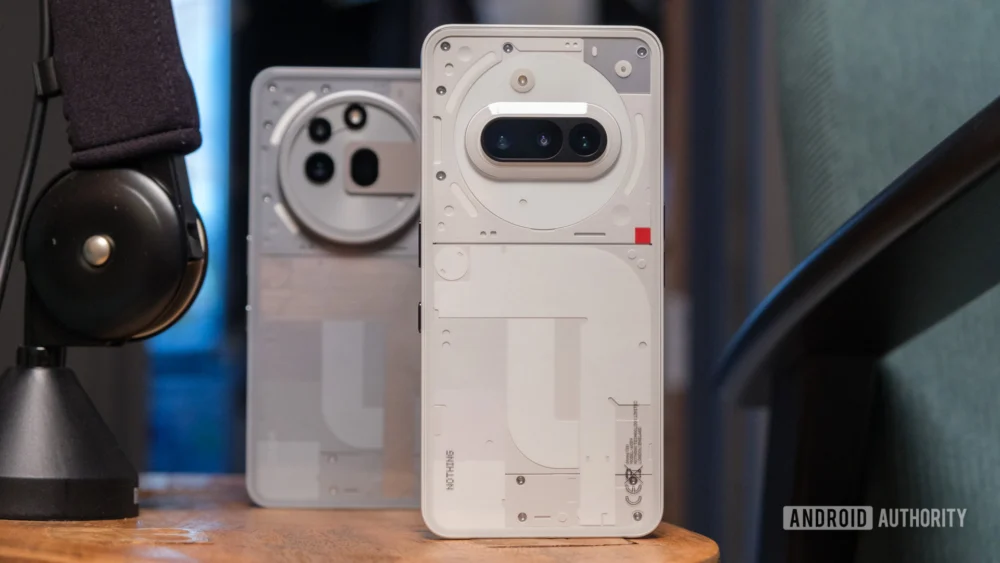
The trajectory of a burgeoning technology company is often defined not just by its ambitious innovations, but more critically, by its responsiveness to community feedback. Nothing, the enigmatic consumer electronics firm founded by Carl Pei, is currently navigating this critical juncture. Following the rollout of Nothing OS 4.0, based on the foundational code of Android 16, which commenced in November for its contemporary lineup—specifically the Nothing Phone 3a, 3a Pro, and the more budget-conscious 3a Lite—the company introduced "Lock Glimpse." This feature, designed to monetize the device’s lock screen through the display of targeted advertisements, immediately triggered a significant user backlash, compelling Nothing to issue a tactical retreat for its higher-tier "a" series models.
The controversy surrounding Lock Glimpse centers on a fundamental tension in the modern smartphone ecosystem: the balance between hardware innovation, software experience, and revenue generation. Nothing has cultivated a strong brand identity rooted in transparent design, minimal software intervention, and a commitment to user experience—qualities that starkly contrast with the inclusion of lock screen advertising. While the feature was technically presented as opt-out, meaning users could theoretically disable it within the Nothing OS 4.0 settings, the practical implementation proved problematic. Reports quickly surfaced indicating that even when purportedly deactivated, Lock Glimpse exhibited anomalous background processes, notably leading to measurable battery drain. This created a scenario where the very act of attempting to avoid the ads compromised the device’s fundamental utility, turning a software setting into a persistent hardware annoyance.
The official response, communicated through Nothing’s community channels, confirms the removal of Lock Glimpse from the Nothing Phone 3a and 3a Pro via the December update to Nothing OS 4.0. This move signifies a significant concession to the vocal consumer base, demonstrating an acute awareness of how integrated advertising within a premium or near-premium user interface can rapidly erode brand equity built through careful marketing and aesthetic execution. For devices positioned to compete against established players, alienating early adopters over monetization strategies that feel intrusive is a high-risk proposition.
Beyond the immediate issue of Lock Glimpse, the December update addresses another significant area of user friction: the integration of Meta software components. A persistent critique of the Android ecosystem, particularly in devices manufactured outside of Google’s direct purview, is the unwanted inclusion of third-party applications, often referred to as "bloatware." Nothing has proactively targeted this by empowering users to surgically remove Meta’s presence. Specifically, the update allows users to disable the Meta App Installer, Meta App Manager, or Meta Service. The critical detail here is the operational mechanism: disabling these components triggers a system reboot, resulting in the complete excision of all associated Meta services from the device’s system partition. This level of control over pre-installed applications sets a new, potentially high benchmark for OEM transparency in the Android space.
Furthermore, recognizing that software features can often migrate from being useful tools to unwanted distractions, Nothing has incorporated an off-switch for the newly introduced app recommendation feature within the same December package. This feature, likely intended to drive engagement or potentially generate partnership revenue, can now be neutralized by deactivating the ‘App Services’ system application. This iterative refinement of the OS suggests a development philosophy that prioritizes usability over feature density, a welcome attribute for enthusiasts who value a clean, responsive software environment.
However, the narrative of universal remediation is incomplete when examining the Nothing Phone 3a Lite. As the most accessible and price-sensitive offering in the 3a lineup, this device is subject to what Nothing terms "certain trade-offs" necessary to maintain its "more accessible price point." Consequently, Lock Glimpse remains integrated into the 3a Lite’s software build. While the feature is deactivated by default in the current rollout, ensuring that initial user experience is untainted, the permanent ability to uninstall it is deferred to a future update. This staggered approach highlights the economic realities of hardware manufacturing, where feature concessions often accompany cost reduction. The Lite model serves as a microcosm of the broader industry dilemma: how far can a company push revenue-generating software features before compromising the core promise of the product, particularly in the fiercely competitive budget segment?
Industry Implications: The Shifting Sands of Software Monetization
The Nothing saga offers a compelling case study for the entire smartphone industry, particularly for brands striving to carve out a unique niche against giants like Samsung and Apple. The initial implementation of Lock Glimpse suggests a clear intent by Nothing to explore alternative revenue streams beyond direct hardware sales, a strategy increasingly adopted by manufacturers facing margin compression. However, the swift and decisive user rejection underscores a crucial market dynamic: consumers purchasing mid-to-high-tier Android devices are generally unwilling to tolerate overt advertising on their primary interface unless the cost savings are substantial and explicitly communicated upfront.
For competitors, this event serves as a potent warning against adopting similar strategies. While Xiaomi, for instance, has long navigated the inclusion of ads in its MIUI (now HyperOS) system apps in specific regions, that tolerance often hinges on lower device pricing or region-specific consumer expectations. Nothing’s European and Western-centric market positioning demands a different contract with the consumer—one emphasizing design purity and software minimalism. The brand’s reversal validates the power of community sentiment in shaping product roadmaps, suggesting that for companies built on a strong aesthetic or philosophical foundation, brand integrity trumps short-term monetization opportunities derived from intrusive software.
The successful removal of Meta bloatware also carries significant weight. In an era of increasing scrutiny over data privacy and digital well-being, the ability for users to completely purge proprietary services from the system partition is a powerful differentiator. This move positions Nothing closer to the ideals of open-source advocates and users demanding granular control over their operating systems, potentially attracting a segment of the market disillusioned with the increasingly locked-down nature of mainstream Android skins.
Expert Analysis: Decoding the Software Strategy
From a technical standpoint, the battery drain issue associated with Lock Glimpse, even when toggled off, points toward poor integration or inadequate system-level flags controlling the feature’s lifecycle. In Android development, correctly suspending or terminating background services related to UI elements like the lock screen requires meticulous coding to ensure zero resource utilization when deactivated. The fact that users observed drain suggests that the "off" state was merely a visual state change, not a true suspension of the underlying service framework, a technical oversight that speaks volumes about the feature’s hurried introduction.
The differentiation between the 3a and 3a Lite in this rollout is a calculated risk rooted in product tiering. Nothing is essentially segmenting its user base based on perceived willingness to tolerate friction for value. The 3a and 3a Pro users are treated as brand evangelists whose loyalty warrants an uncompromised experience. The 3a Lite user, conversely, is positioned as a value-seeker where cost savings justify a temporary compromise in feature parity. While economically sound for margin protection, this dichotomy risks creating a two-tiered software experience, potentially diminishing the perceived quality of the entry-level product over time.
Future Impact and Emerging Trends
The immediate consequence of this pivot is likely a reinforcement of Nothing’s reputation as a user-centric challenger brand. By swiftly addressing the most egregious complaint, the company mitigates long-term damage and refocuses the conversation on its core strengths: distinctive hardware design and clean software architecture.
Looking ahead, this situation informs several emerging trends in the smartphone sector:
-
The Advertising Arms Race: As hardware margins shrink globally, more manufacturers will explore lock screen or notification-based advertising. However, Nothing’s experience suggests that the threshold for user acceptance is much lower than many executives might assume, particularly for brands that market themselves on design and user experience. Future successful implementations will require either drastically deeper cost reductions to justify the intrusion or a complete invisibility until explicitly summoned.
-
The Demand for System Control: The enthusiastic adoption of the Meta bloatware removal tool signals a growing user demand for root-level control without requiring rooting. Future successful OEM software skins will likely need to provide comprehensive, system-level uninstall options for all non-essential pre-installed applications, extending beyond just third-party apps to include proprietary services the user deems unnecessary.
-
Software Update Cadence and Communication: Nothing’s transparency regarding the December update schedule and the specific remediation steps for both Lock Glimpse and Meta services sets a high standard for communication during the critical post-launch software phase. Maintaining this clear, proactive dialogue will be crucial for Nothing as its device portfolio expands and faces greater scrutiny. The promise of a future update for the 3a Lite indicates a commitment to eventual feature parity, provided the company can find a way to absorb the cost or shift the monetization elsewhere without upsetting the user base.
In conclusion, Nothing’s decision to excise Lock Glimpse from its primary mid-range offerings is a strategic victory for consumer advocacy and a powerful lesson in brand preservation. While the budget 3a Lite model remains temporarily tethered to the feature, the overall message is clear: in the modern smartphone landscape, an innovative design philosophy must be meticulously supported by an equally thoughtful and non-intrusive software experience. The evolution of Nothing OS 4.0 demonstrates a capacity for rapid course correction, a necessary attribute for any company aiming to disrupt established market dynamics.