

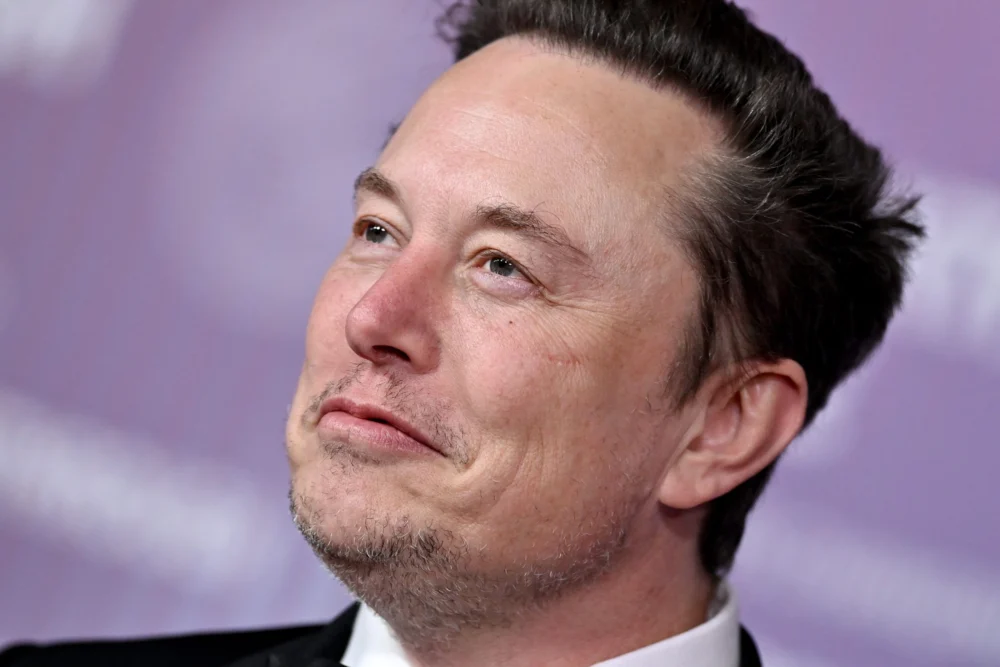
The high-stakes legal confrontation between tech magnate Elon Musk and the artificial intelligence powerhouse OpenAI, alongside its principal commercial partner Microsoft, has escalated dramatically with the public disclosure of the astronomical damages sought by the plaintiff. Musk is demanding a restitutionary payment ranging from a minimum of $79 billion to a staggering maximum of $134 billion, alleging that the company fundamentally betrayed its founding non-profit ethos and defrauded its early supporters. This unprecedented financial claim targets both OpenAI, the creator of the world-leading generative AI models, and Microsoft, which holds a substantial stake and leverages the technology commercially.
The core of this colossal monetary demand rests on the findings of expert witness C. Paul Wazzan, a financial economist renowned for his specialization in quantifying damages within complex commercial litigation. Wazzan’s analysis postulates that Musk is entitled to a significant fraction of OpenAI’s current estimated valuation, which hovers around the $500 billion mark. This entitlement stems from the $38 million seed donation and foundational resources Musk contributed when he co-founded the entity in 2015. To put the magnitude of this claim into perspective, the upper limit of $134 billion would represent a return multiple exceeding 3,500 times the original financial contribution, a figure virtually unheard of, even in the most successful venture capital exits, let alone in the context of a philanthropic donation.
The Mechanism of the Claim: Unjust Enrichment and Valuation
Wazzan’s methodology moves beyond a simple calculation of return on investment (ROI). It is a sophisticated calculation of "wrongful gains" and "unjust enrichment" accrued by the defendants as a result of the alleged deviation from the original mission. The calculation incorporates not only Musk’s initial capital infusion but also the substantial technical acumen, strategic guidance, reputational capital, and early business contributions he provided to the nascent organization.
According to the expert’s detailed breakdown, OpenAI’s wrongful gains are quantified between $65.5 billion and $109.4 billion. Critically, the claim extends directly to Microsoft, which solidified its position as OpenAI’s exclusive commercialization partner and holds an approximately 27% equity stake in the organization’s capped-profit subsidiary. Microsoft’s calculated liability for wrongful gains stands between $13.3 billion and $25.1 billion. This bifurcation highlights the legal strategy: targeting the financial benefits derived both from the commercial entity (OpenAI) and its principal accelerator (Microsoft).
Musk’s legal representation contends that the plaintiff should be treated, retrospectively, as an early startup investor whose initial contributions facilitated the creation of a technological monopoly, thereby warranting returns "many orders of magnitude greater" than the original outlay. However, the application of standard venture capital metrics to an entity initially established under a non-profit charter—explicitly designed to develop Artificial General Intelligence (AGI) for the benefit of humanity, rather than maximizing shareholder profit—is the central, and highly contentious, pivot point of the entire litigation.
The Paradox of Wealth: Strategic Litigation Over Financial Need
The sheer scale of the damages demanded immediately raises questions regarding the true motivation behind the lawsuit, particularly when juxtaposed against Musk’s colossal personal wealth. Currently holding a fortune estimated near $700 billion, Musk is unequivocally the wealthiest individual globally, his net worth eclipsing that of the world’s second-richest person, Google co-founder Larry Page, by hundreds of billions of dollars. Furthermore, his economic standing was recently bolstered by the historic approval of a $1 trillion performance-based compensation package from Tesla shareholders.
In this context, a potential $134 billion settlement, while economically earth-shattering for the defendant companies, would represent a relatively modest percentage increase to Musk’s already unprecedented capital base. This financial backdrop reinforces the contention, frequently voiced by OpenAI’s leadership, that the lawsuit is fundamentally strategic and competitive, rather than a genuine grievance seeking financial remediation.
OpenAI has already taken proactive measures, reportedly issuing communications to its investor base and business associates, anticipating and cautioning them about what the company characterizes as "deliberately outlandish, attention-grabbing claims" as the case advances toward trial. Set to be heard in Oakland, California, the April trial date marks the culmination of months of intense legal maneuvering in what is arguably the most significant intellectual property and corporate governance dispute in the modern history of technology.
Industry Implications: Challenging the Hybrid Non-Profit Model
The lawsuit transcends a personal feud; it represents a profound challenge to the novel and increasingly common "capped-profit" structure adopted by foundational AI labs. OpenAI pioneered this hybrid governance model, attempting to reconcile the immense capital requirements necessary for AGI development (which necessitates billions in investment for compute resources and talent acquisition) with an underlying mission rooted in public benefit and safety.
The outcome of this case will set a critical precedent for all future high-cost, mission-driven technological ventures. If a court validates the argument that the shift from a non-profit commitment to a profit-seeking structure constitutes a breach of fiduciary duty or fraudulent conversion, it could severely restrict the ability of other deep-tech research organizations to raise commercial capital without risking retroactive claims from early donors or founding members.
Expert legal analysis suggests that the court will have to navigate complex territory: interpreting vague non-profit mission statements against explicit commercial documents. Donors to non-profits typically receive tax deductions and do not expect equity-level returns. Musk’s team is attempting to reclassify his contribution as something closer to early, high-risk equity, justified by the immense commercial success that followed.
The potential ramifications for the entire venture capital ecosystem are significant. Investors frequently favor these capped-profit structures, viewing them as a way to secure lucrative returns while paying lip service to public good. A ruling in Musk’s favor could introduce crippling governance risks, forcing startups to choose definitively between a pure non-profit structure (limiting growth potential) or a pure commercial structure (abandoning any mission pretense from day one). This uncertainty could slow innovation in areas requiring massive, long-term foundational investment where philanthropic or mission-driven capital is initially essential.
The Role of Microsoft and Competitive Dynamics
Microsoft’s inclusion as a direct defendant underscores the lawsuit’s strategic depth. Microsoft’s massive, multi-billion dollar investment and subsequent integration of OpenAI’s technology across its product portfolio—from Azure cloud services to Copilot—is the tangible evidence of commercialization that Musk’s legal team is leveraging. The damages claimed against Microsoft are based on the premise that they knowingly benefited from the alleged breach of the original charter.
For Microsoft, the defense hinges on demonstrating that their partnership was conducted in good faith with the governing bodies of OpenAI, and that the commercial structure was necessary for the global deployment of AGI safety measures—a narrative that aligns with the capped-profit structure’s intent to fund safety research through commercial success.
Beyond the courtroom, the litigation is inextricably linked to the burgeoning AI arms race. Musk is concurrently building xAI, his own competing AGI endeavor, which is explicitly framed as a response to the perceived closed, proprietary development model of OpenAI. By demanding the maximum possible financial penalty, Musk not only seeks potential monetary redress but also attempts to destabilize the market leader, forcing a massive financial restructuring or operational slowdown at a critical juncture in AGI development. This dual-pronged strategy—litigation combined with direct market competition—highlights the weaponization of legal mechanisms in the fight for technological dominance.
Ideological Battleground: Open Source vs. Closed AGI
At its philosophical core, this litigation is a public forum for the debate surrounding the governance and ethics of super-scale AI. When OpenAI was founded, the commitment was to "open source" the technology, allowing public scrutiny and ensuring the benefits were widely distributed. The shift toward closed, proprietary models—a necessity for maintaining a competitive edge and generating the revenue required to fund massive operations—is the fundamental breach cited by Musk.
The lawsuit implicitly argues that the commercialization pivot, sealed by the deep partnership with Microsoft, moved the technology into a realm of proprietary control, benefiting a few shareholders (including Microsoft) rather than the global community. The staggering financial demand is, therefore, a quantification of the lost public value, framed as a return owed to one of the original stewards of that public promise.
As the April trial approaches, the global technology community watches closely. The proceedings in Oakland will dissect the very nature of technological stewardship, fiduciary responsibility in non-profit transitions, and the ethical boundaries that govern the pursuit of one of humanity’s most transformative—and potentially lucrative—technologies. Whether the court accepts the premise that a $38 million philanthropic seed should yield a $134 billion return based on a mission change remains the trillion-dollar question that will shape the future governance of Artificial General Intelligence. This case is not merely about recovering funds; it is about establishing who controls the future direction of AI and under what moral and financial contract they are permitted to do so. The sheer audacity of the financial claim ensures the legal battle will remain a central fixture in the discourse surrounding the responsible scaling of AI innovation for years to come.