

The landscape of the interactive entertainment industry in 2025 has been defined by a remarkable synthesis of archival preservation and avant-garde experimentation. While the global market often finds itself preoccupied with the homogenizing pressures of triple-A blockbusters, the Japanese development scene has spent the last year refining a distinct counter-narrative. This narrative is built upon the pillars of "Neo-Classicism"—a design philosophy that treats the aesthetics and mechanics of the 16-bit and 32-bit eras not as relics to be discarded, but as robust foundations for modern innovation. The result is a year of software that demands attention not merely for its nostalgia, but for its uncompromising dedication to genre-specific excellence.
At the forefront of this movement is the long-awaited Western emergence of "Assault Suits Leynos 2" via the Saturn Tribute series. For decades, the Sega Saturn has remained a "black box" of sorts for international audiences, particularly regarding its library of high-fidelity 2D action titles. "Leynos 2," the sequel to the game known in North America as "Target Earth," was historically confined to Japanese hardware due to the Saturn’s notoriously complex dual-CPU architecture, which made localization and porting a Herculean task for smaller publishers. Its release in 2025 marks a significant victory for video game preservation. As a mecha-action title, "Leynos 2" represents the pinnacle of the "Assault Suits" lineage, offering a level of customization and tactical weight that was arguably ahead of its time in the mid-90s. The localization allows a new generation to appreciate the game’s sophisticated "heavy" physics—a stark contrast to the floaty, arcade-style movement found in many contemporary side-scrollers. This release serves as a reminder that the evolution of the mecha genre was not a straight line, but a series of divergent paths, many of which are only now being fully explored by Western players.
The tactical role-playing game (TRPG) sector has also seen a seismic shift, most notably with the release of "Super Robot Wars Y." This title is of particular interest to industry analysts because it represents the first major entry in the venerable franchise following the departure of long-time series producer Takanobu Terada from the primary "driving seat." For over thirty years, Terada was the architect of the series’ intricate crossover narratives and its rigid, yet beloved, turn-based systems. "Super Robot Wars Y" had the unenviable task of modernizing a legacy brand without alienating a fiercely loyal veteran fanbase. The developers succeeded by leaning into a "newcomer-friendly" philosophy, streamlining the often-impenetrable menu systems and upgrade paths that have historically acted as a barrier to entry. The inclusion of cult-classic properties like "The Big O" in the DLC further cements the game’s status as a premier digital museum of mecha history. The success of "Super Robot Wars Y" suggests that legacy franchises can survive—and indeed thrive—through generational leadership changes, provided they maintain the core soul of the intellectual property.
Parallel to the success of "Super Robot Wars" is the definitive remastering of "Final Fantasy Tactics: The Ivalice Chronicles." If the original 1997 PlayStation release was the blueprint for the modern tactical RPG, "The Ivalice Chronicles" is the polished monument. The industry implications here are twofold. First, it demonstrates Square Enix’s commitment to its "Ivalice" sub-setting, a world that offers a more mature, politically charged tone than the mainline "Final Fantasy" entries. Second, and perhaps more importantly, the remaster honors the mechanical purity of the original. By allowing players to experience the game in its classic PlayStation iteration alongside modernized options, the developers have acknowledged a growing trend in the industry: the "Best Version" movement. Players are no longer satisfied with remasters that "fix" things that weren’t broken; they want the original experience preserved with modern clarity. "The Ivalice Chronicles" sets a new gold standard for how publishers should handle their most sacred back-catalog titles.

While remasters and long-running series provide a sense of stability, the "boutique" development scene in 2025 has produced what is perhaps the most technically impressive feat of the year: "Earthion." Developed for the Sega Genesis/Mega Drive hardware but released to modern platforms in 2025, "Earthion" is a masterclass in "retro-coding." It is not merely a game that looks like a 16-bit title; it is a game built within the strict technical constraints of 1988 hardware, utilizing the Motorola 68000 processor to its absolute limits. The involvement of legendary composer Yuzo Koshiro—famed for his work on "Streets of Rage" and "Revenge of Shinobi"—elevates the project from a technical curiosity to a legitimate piece of art. The game’s deep power-up system and intricate parallax scrolling demonstrate that there is still untapped potential in 16-bit architecture. "Earthion" represents a burgeoning trend where developers reject the "infinite" resources of modern engines in favor of the creative friction provided by limited hardware, proving that constraints are often the primary driver of innovation.
In the realm of 3D action, "Daemon X Machina: Titanic Scion" has emerged as the year’s most fascinating underdog. Following the 2019 original, which was a spiritual successor to the "Armored Core" series, "Titanic Scion" takes a radical departure by shifting its focus toward power armor and an expansive open-world structure. This transition was a gamble. Most mecha games thrive on tight, mission-based structures; moving to an open world risks diluting the tension of combat. However, the developers leaned into a "hardcore" design philosophy that refuses to hold the player’s hand. The game’s refusal to explain its deeper systems is not a flaw, but a deliberate design choice that encourages community engagement and experimental play. In an era of "ubiquitous tutorials," "Titanic Scion" feels like a breath of fresh air—a game that respects the player’s intelligence and rewards persistence. Its success points toward a future where "niche" genres can adopt open-world elements without losing their identity, provided they maintain a clear mechanical focus.
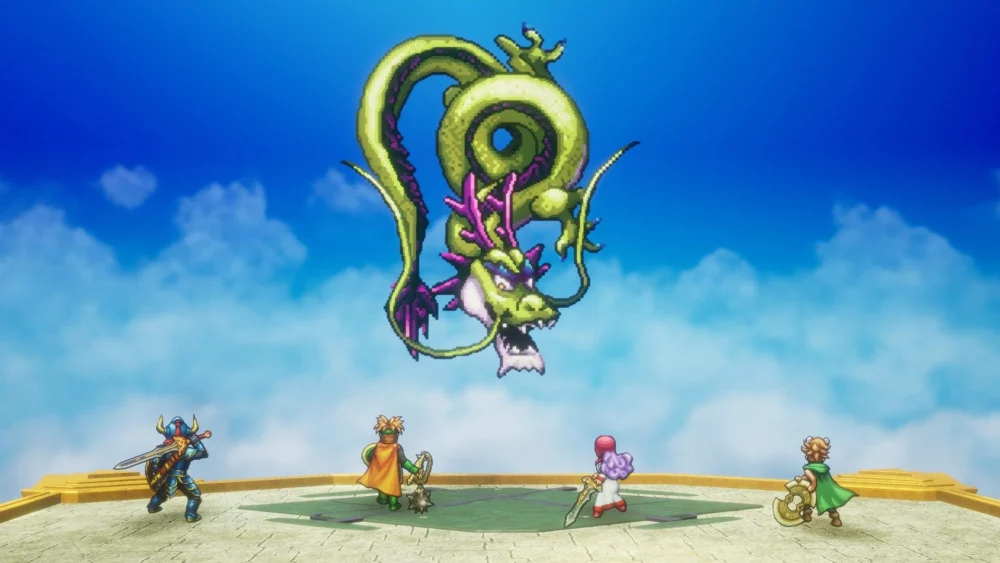
Perhaps no title better encapsulates the 2025 zeitgeist than the "Dragon Quest I & II HD-2D Remake." Following the astronomical success of "Dragon Quest III HD-2D Remake" in 2024, this release completes the "Erdrick Trilogy" in a way that fundamentally recontextualizes the series’ history. Under the guidance of producer Masaaki Hayasaka, the team utilized the HD-2D engine—a proprietary aesthetic that blends high-resolution sprites with 3D environments and modern lighting effects—to breathe new life into games that are nearly forty years old. The brilliance of this release lies in its narrative structure. While "Dragon Quest I & II" were the first games released in the 1980s, they are chronologically sequels to "Dragon Quest III." By releasing the remakes in this specific order, Square Enix has allowed modern players to experience the "Erdrick" saga as a continuous, coherent epic. This approach to remaking classics—prioritizing narrative flow over original release dates—is an expert-level maneuver that other publishers would do well to study. It transforms a simple nostalgia trip into a vital, contemporary RPG experience.
Finally, an honorable mention must be afforded to "Metroid Prime 4: Beyond." While "Metroid" is a franchise with deep Western roots via Retro Studios, "Beyond" was a significant co-production with Nintendo’s Japanese internal teams. This collaboration represents the perfect marriage of Eastern and Western design philosophies. The game manages to retain the atmosphere and isolation of the original "Prime" trilogy while incorporating the fluid, kinetic action that has defined recent Japanese-led "Metroid" titles like "Metroid Dread." The high level of polish and the inclusion of hidden unlocks for 100% completionists highlight a return to "completionist culture," where the value of a game is measured by the depth of its secrets rather than the length of its cutscenes. "Metroid Prime 4: Beyond" serves as a definitive rebuttal to the cynical view that long-delayed projects are destined for mediocrity.
Looking toward the future, the trends established in 2025 suggest a Japanese gaming industry that is more confident than ever in its own heritage. We are moving away from an era where Japanese developers felt the need to mimic Western "cinematic" trends to achieve global success. Instead, the success of titles like "Dragon Quest I & II" and "Earthion" proves that there is a massive, global appetite for games that embrace their "gaminess"—their systems, their difficulty, and their unique aesthetic identities. As we move into the latter half of the decade, expect to see more "boutique" hardware releases, more sophisticated remasters that prioritize historical accuracy, and a continued blurring of the lines between "retro" and "modern" design. The Japanese games of 2025 were not just a collection of hits; they were a manifesto for the enduring power of specialized, craft-focused game development.