

On January 22, the landscape of international diplomacy and global biosafety underwent a seismic shift as the Trump administration officially finalized the United States’ withdrawal from the World Health Organization (WHO). This move, the culmination of a year-long process initiated by an Executive Order in early 2025, represents more than just a budgetary pivot; it is a fundamental decoupling of the world’s largest economy from the primary apparatus of international health coordination. The departure was not marked by the diplomatic niceties often found in international transitions. Instead, it was characterized by a sharp exchange of accusations, with Washington painting the Geneva-based agency as a failed institution and the WHO leadership responding with unprecedentedly direct rebuttals, labeling the administration’s justifications as demonstrably false.
The administration’s rationale for the exit centers on a narrative of systemic failure and compromised integrity. According to official statements, the withdrawal is a direct consequence of what the White House terms “WHO failures during the COVID-19 pandemic.” Specifically, the administration alleges that the agency obstructed the timely sharing of critical data and actively concealed procedural lapses that exacerbated the global crisis. This rhetoric reflects a broader ideological shift within the current U.S. leadership, which views international organizations not as essential forums for collaboration, but as bureaucratic impediments to national sovereignty.
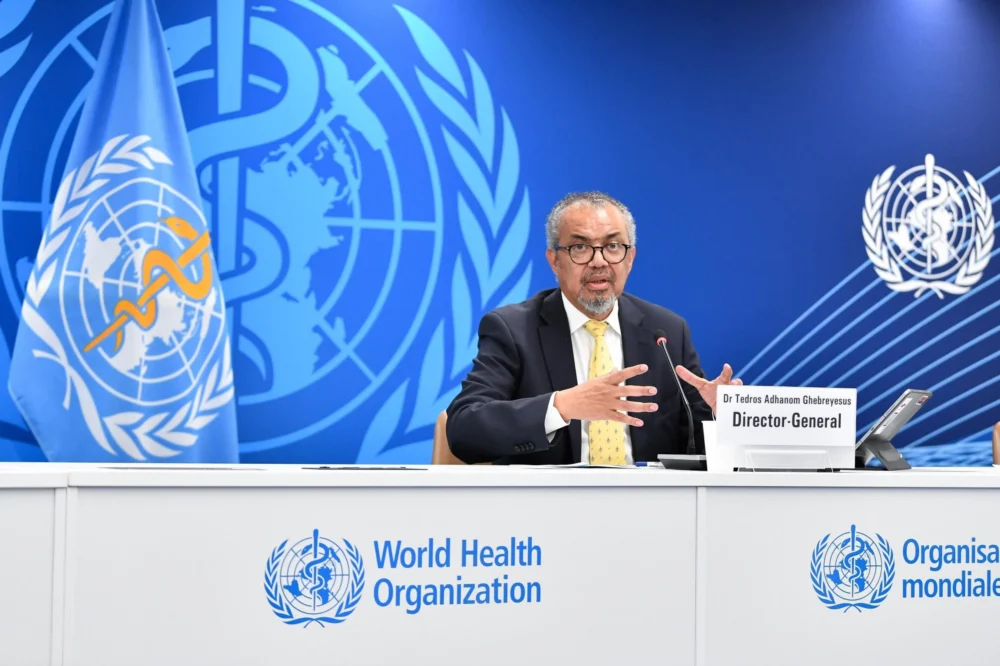
However, the WHO has moved from a stance of quiet solicitation to one of active defense. For years, the organization attempted to maintain a neutral posture, avoiding direct criticism of the U.S. response to the 2020 pandemic—a response that many domestic and international public health experts viewed as chaotic. But with the withdrawal now a legal reality, the gloves have come off. Dr. Tedros Adhanom Ghebreyesus, the WHO Director-General, took to social media to challenge the administration’s claims point-by-point. He asserted that the reasons cited for the withdrawal are “untrue,” warning that the notification of departure makes both the United States and the global community significantly less safe.
The conflict has become particularly pointed between Dr. Tedros and Robert F. Kennedy Jr., the Secretary of the U.S. Department of Health and Human Services (HHS). Secretary Kennedy has framed the withdrawal as a triumph of American independence, suggesting that the move reclaims public health policy from foreign influence and places it back in the hands of the American people. In a series of public statements and videos, Kennedy implied that the WHO had overstepped its bounds by forcing the U.S. to comply with specific mandates during previous health crises.
Dr. Tedros countered this by clarifying the legal and operational limits of the WHO’s authority. He noted that while the agency provided technical guidance on masks, social distancing, and vaccines based on evolving scientific evidence, it never possessed the power to mandate lockdowns or specific policies within sovereign nations. The WHO’s role, as Dr. Tedros emphasized, is to provide a menu of evidence-based recommendations; the responsibility for the implementation and enforcement of those policies rests solely with individual national governments. In essence, the WHO is arguing that the U.S. administration is attempting to scapegoat an international advisory body for domestic policy decisions made during the height of the 2020 pandemic.
The tension escalated further with contributions from Jim O’Neill, the Deputy Secretary of HHS and acting director of the Centers for Disease Control and Prevention (CDC). O’Neill, whose background in venture capital and hedge fund management informs a more transactional view of global health, referred to the agency as the “so-called World Health Organization.” He reiterated claims that the WHO ignored early warnings from Taiwan in late 2019 and prioritized the interests of “Eurocrats in Geneva” over rigorous science.
These claims were met with a swift rebuttal from Dr. Maria Van Kerkhove, the WHO’s technical lead for COVID-19. Dr. Van Kerkhove provided a chronological correction, stating that the WHO detected the initial signal from Wuhan on December 31, 2019, and that Taiwan had not issued a warning but had actually requested information on that same day. She maintained that the agency has never ignored Taiwan’s technical expertise, nor has it ever recommended the specific lockdown measures that have become a central grievance for the current U.S. administration.
Industry Implications and the Erosion of Global Health Security
The implications of this withdrawal extend far beyond the war of words on social media. For the global healthcare and pharmaceutical industries, the U.S. exit creates a fragmented regulatory and informational environment. The WHO serves as the central clearinghouse for influenza vaccine strain selection, the classification of diseases (ICD codes), and the setting of international standards for biological products. By removing itself from this ecosystem, the U.S. risks creating a "standards gap" that could complicate the international distribution of American-made medical technologies and pharmaceuticals.

Furthermore, the U.S. CDC and FDA have historically worked in tandem with the WHO to monitor emerging pathogens. This collaboration allowed for the rapid sharing of genomic sequences and clinical data. Without a formal seat at the table, U.S. scientists may find themselves on the outside of critical information-sharing networks. Public health experts, such as Dr. Kelly Henning of Bloomberg Philanthropies, have noted that the WHO is often the first to hear of new viral or bacterial threats. Losing access to this early-warning system could delay the American response to the next pandemic, potentially leading to a repeat of the delays seen in early 2020.
The Sovereignty Argument vs. Scientific Reality
The administration’s focus on "sovereignty" suggests a belief that the U.S. can operate a parallel, superior global health surveillance system unilaterally. Secretary Kennedy has claimed that the U.S. will establish its own infectious disease monitoring network. However, industry analysts are skeptical. Building a global network requires the cooperation of nearly 200 countries, many of whom may be reluctant to share sensitive health data with a single foreign power rather than a neutral UN agency.
The technical hurdles are equally daunting. The WHO’s Global Outbreak Alert and Response Network (GOARN) relies on decades of built-up trust and diplomatic protocols. Replicating this infrastructure would require not just massive financial investment, but a level of diplomatic engagement that the current administration’s "America First" policy seems to eschew.
Expert Analysis: A Hindsight Deficit
Looking back at the events of 2020, the administration’s current stance appears to be an attempt to rewrite the history of the initial COVID-19 response. During the early months of 2020, the U.S. executive branch repeatedly downplayed the severity of the virus, even as the WHO declared a Public Health Emergency of International Concern. The subsequent failure to implement a robust national testing strategy led to a reliance on third-party data sources, such as Johns Hopkins University, rather than a centralized federal system.
By blaming the WHO for "promoting lockdowns," the administration ignores the fact that many U.S. states implemented such measures in the absence of federal guidance, and that the administration itself initially supported "flattening the curve" through social restrictions. The current pivot toward total withdrawal suggests a refusal to acknowledge domestic operational failures, choosing instead to dismantle the international framework that provides the data necessary for national defense against biological threats.
Future Trends: A Bifurcated World of Health
As the U.S. moves forward as a non-member, the world is likely to see a bifurcation of health governance. We may see the emergence of a "Geneva bloc" continuing to follow WHO protocols, while the U.S. attempts to lead a smaller coalition of allied nations. This fragmentation is inherently dangerous in the context of infectious diseases, which do not recognize borders or political affiliations.
In the tech sector, this split could lead to divergent data standards for health informatics and AI-driven diagnostic tools. If American health tech is developed in a silo, it may lack the diverse global datasets required to be effective in different populations, potentially ceding the global market to competitors who remain integrated with the WHO’s data-sharing hubs.
The finality of this withdrawal marks the end of an era in which the United States was the primary architect and funder of global health initiatives. While the administration frames this as a reclaim of independence, the scientific community views it as a retreat into isolationism at a time when the biological threats facing humanity are becoming more complex. The "untrue" reasons cited by the WHO leadership suggest that the rift is not based on a disagreement over science, but on a fundamental difference in how the value of international cooperation is calculated in the 21st century. As the U.S. attempts to go it alone, the world watches to see if a single nation can truly protect its citizens from global threats by severing ties with the rest of the world’s defenders.