

The professional wrestling landscape is currently navigating a period of unprecedented transition, marked by shifting broadcast loyalties and the aggressive expansion of digital streaming dominance. At the epicenter of this evolution is the return of a legacy brand that once defined the "Golden Era" of sports entertainment: Saturday Night’s Main Event. As the WWE prepares to descend upon the Bell Centre in Montreal, Quebec, on January 24, 2026, the event represents more than just a high-profile stop on the road to the Royal Rumble; it serves as a litmus test for the company’s dual-platform distribution strategy and a showcase for a roster that is currently balancing nostalgia with a ruthless push toward the future.
The finalization of the card, solidified during the most recent episode of Friday Night SmackDown, brings into focus a narrative architecture that leverages veteran expertise to elevate high-stakes storytelling. The addition of a "Phenomenal" rematch between AJ Styles and Shinsuke Nakamura has transformed the event from a supplementary special into a "must-watch" tactical prelude for the upcoming Royal Rumble. However, the true significance of this Montreal showcase lies in its subtext—the potential for industry-shaking returns and the intricate maneuvering of the industry’s most dominant factions.
The Phenomenal Sunset: AJ Styles and the Nakamura Factor
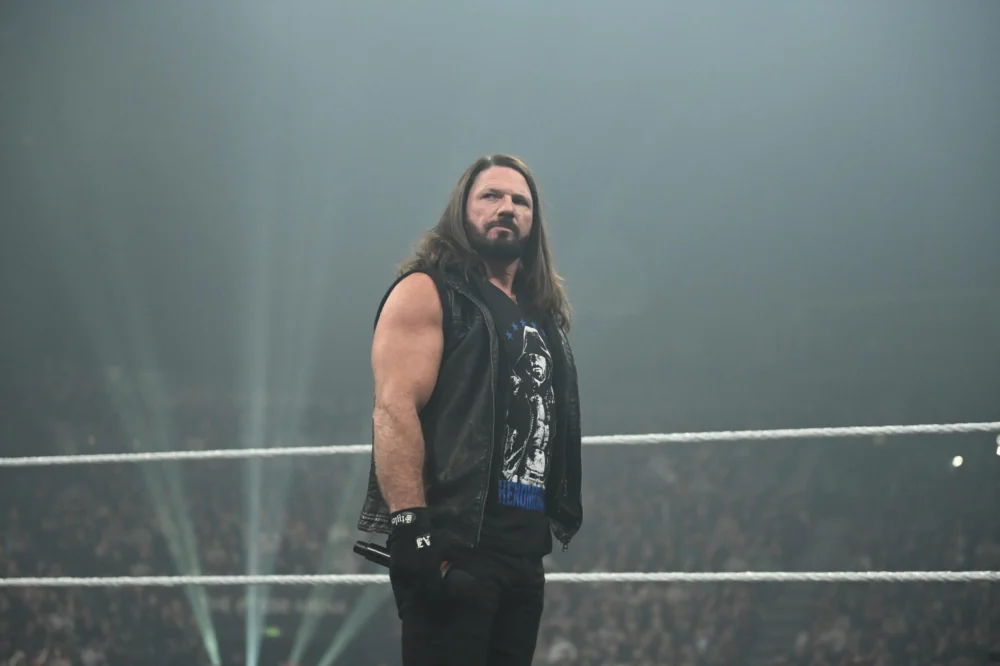
One of the most compelling narratives heading into the Bell Centre is the trajectory of AJ Styles. Currently embroiled in what has been framed as his final year as an active competitor, Styles finds himself in a position of forced excellence. His career-threatening stakes against the World Heavyweight Champion, GUNTHER, at the Royal Rumble have cast a long shadow over his recent performances. By booking Styles against Shinsuke Nakamura in Montreal, WWE management is tapping into a deep well of international wrestling history.
This is a rivalry that transcends the WWE banner, tracing its roots back to the legendary clashes in New Japan Pro-Wrestling, most notably their encounter at Wrestle Kingdom 10. While their subsequent WrestleMania 34 match in 2018 received mixed reviews due to the immense weight of expectation, the 2026 iteration of this feud carries a different kind of gravity. Nakamura, acting as the antagonistic "King of Strong Style," is no longer just a rival; he is a gatekeeper. By challenging Styles to prove he is still "Phenomenal" before his career-on-the-line showdown with GUNTHER, Nakamura is testing Styles’ physical and psychological readiness. For the WWE audience, this match serves as a high-workrate anchor for the Saturday Night’s Main Event card, ensuring that the broadcast maintains the technical prestige associated with the Montreal wrestling tradition.
The Bloodline’s Shadow and the Cody Rhodes Dilemma
While the Styles-Nakamura clash provides the technical foundation, the emotional and narrative core of the evening centers on the ongoing volatility within the Bloodline and its impact on Undisputed WWE Champion Cody Rhodes. The scheduled confrontation between Rhodes and Jacob Fatu—often described as the "Samoan Werewolf" and the most physically imposing member of the new-look Bloodline—is a collision of styles and philosophies.
Rhodes, the quintessential "American Nightmare" and the face of the company’s modern era, is facing a threat that cannot be reasoned with or easily outmaneuvered. Jacob Fatu represents the raw, unbridled aggression of the Anoa’i family tree, and a victory for Fatu in Montreal would fundamentally destabilize Rhodes’ championship reign just days before the Royal Rumble. The strategic question looming over this match is the involvement of Roman Reigns. The "Original Tribal Chief" has been a phantom presence in recent weeks, and a re-emergence in Montreal could signal a pivot in his relationship with Rhodes. Analysts suggest that a temporary, uneasy alliance between Reigns and Rhodes against the rogue elements of the Bloodline could be the spark needed to ignite the road to WrestleMania. Conversely, a betrayal by Randy Orton—whose influence over the finish of the Rhodes-Fatu match remains a high-probability variable—could send the championship picture into a state of absolute chaos.
The "Forbidden" Return: The Chris Jericho Speculation
In the digital age of professional wrestling, rumors often travel faster than official press releases. Perhaps the most electrifying prospect of Saturday Night’s Main Event is the whispered return of Chris Jericho. As a native son of Canada and a performer whose history is inextricably linked to the Montreal crowd, Jericho’s presence would be a seismic event for the industry.

For years, Jericho has been the cornerstone of All Elite Wrestling (AEW), serving as its inaugural champion and a primary creative force. However, the cyclical nature of the business and the expiration of contracts often lead to "full circle" moments. If Jericho were to appear at the Bell Centre, it would signify a major shift in the "Forbidden Door" era of wrestling, potentially marking the return of one of the greatest "sports entertainers" to his original home. Whether it is a one-off appearance to bolster the Montreal gate or a long-term return to the WWE fold, the "Le Champion" factor adds an element of unpredictability that is essential for a high-profile broadcast like Saturday Night’s Main Event.
Technical and Global Implications: The Netflix and Peacock Hybrid
From a business and technology perspective, the January 24 event is a landmark moment in the "Streaming Wars." Following WWE’s massive deal with Netflix, the distribution of Saturday Night’s Main Event represents a unique hybrid model. In the United States, the event remains a cornerstone of the Peacock/NBCUniversal partnership, while internationally, it serves as a flagship offering for Netflix.
This dual-distribution strategy allows WWE to maximize its reach across different demographics and technological infrastructures. For Netflix, the event is a crucial test of its live-streaming capabilities in the sports and entertainment vertical. As the platform prepares to become the exclusive home of Monday Night Raw and all Premium Live Events (PLEs) in various territories, the technical execution in Montreal—latency, stream stability, and user interface integration—will be scrutinized by industry analysts. WWE is no longer just a content creator; it is a vital partner in the technological evolution of how live sports are consumed globally.
The Montreal Atmosphere: A "Bizarro World" Advantage
The choice of the Bell Centre is not incidental. Montreal has long been regarded as one of the most passionate and unpredictable markets in the wrestling world—a city famously dubbed "Bizarro World" by commentators due to the fans’ tendency to cheer for villains and boo traditional heroes. This atmosphere provides a unique backdrop for Saturday Night’s Main Event.
A Montreal crowd can elevate a standard match into an epic encounter through sheer vocal energy. For performers like AJ Styles and Jacob Fatu, the reaction of the Bell Centre will dictate the rhythm of their matches. Furthermore, the historical weight of Montreal—ranging from the infamous "Montreal Screwjob" of 1997 to the recent emotional peaks of Sami Zayn’s hometown heroics—ensures that any major narrative turn occurring this Saturday will be etched into the permanent lore of the company.
Looking Ahead: The Road to the Royal Rumble and Beyond
As the final major stop before the Royal Rumble, Saturday Night’s Main Event serves as the ultimate narrative "go-home" show. The results in Montreal will directly influence the betting odds and fan expectations for the Rumble matches. If AJ Styles falters against Nakamura, the narrative of his "declining" powers will reach a fever pitch before he faces GUNTHER. If Cody Rhodes is left decimated by the Bloodline, his path to defending his title becomes significantly more perilous.
Moreover, the potential appearance of The Rock—the "Final Boss"—remains the ultimate wild card. While his schedule is notoriously tight, a brief appearance or a recorded message targeting Rhodes or Reigns could set the stage for a WrestleMania main event that would shatter box office records.
In conclusion, Saturday Night’s Main Event in Montreal is a microcosm of the modern WWE: a blend of high-octane physical performance, complex long-term storytelling, and cutting-edge global distribution. With only four matches officially announced, the brevity of the card suggests that WWE is leaving ample room for the "unscripted" moments that define the medium. Whether it is the return of a legend like Chris Jericho, the tactical interference of Roman Reigns, or the sheer technical brilliance of AJ Styles’ final run, the Bell Centre is poised to host a night that will resonate far beyond the borders of Quebec. For fans and industry observers alike, the 8 p.m. ET start time on January 24 marks the beginning of the most critical stretch in the professional wrestling calendar.