

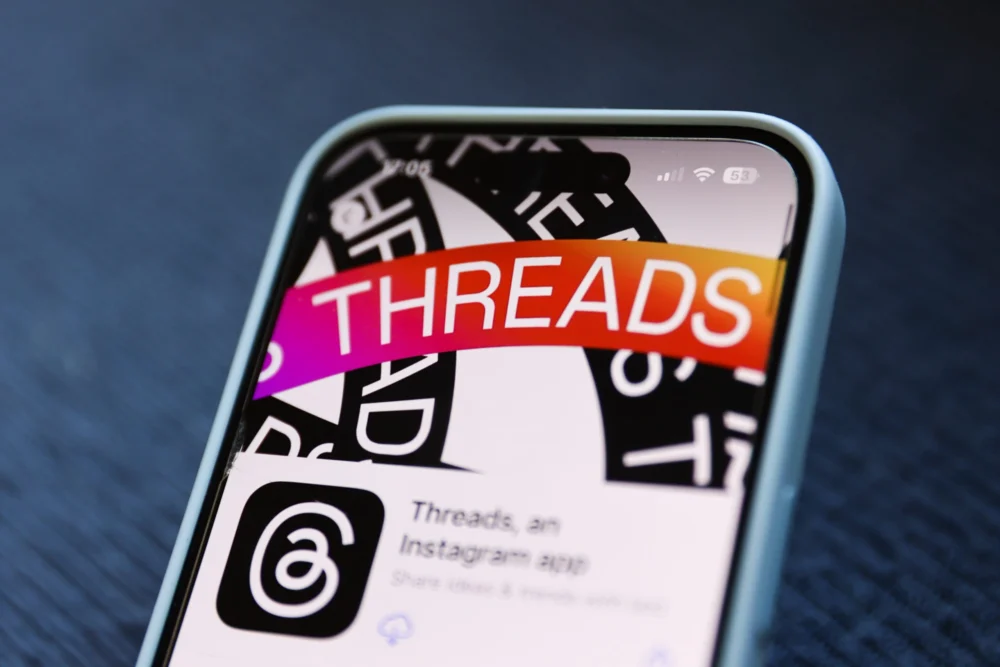
The global digital advertising landscape is poised for a significant shift as Meta formally pivots its microblogging platform, Threads, from a purely growth-focused utility to a primary revenue driver. The company announced Wednesday, January 21, 2026, the imminent expansion of advertising capabilities to all users worldwide, signaling a crucial maturation phase for the rival to X (formerly Twitter). This comprehensive rollout, slated to commence next week, will be implemented gradually over several months, ensuring platform stability and providing Meta time to fine-tune its ad delivery algorithms across diverse international markets.
This move is less a tentative step and more a definitive declaration of Threads’ permanent place within Meta’s quad-platform ecosystem, which already includes Facebook, Instagram, and WhatsApp. For months, Meta CEO Mark Zuckerberg has championed Threads as the organization’s "next big hit," consistently highlighting its potential to achieve monumental scale. That potential now appears realized, with the platform boasting a formidable user base exceeding 400 million monthly active users (MAUs). This growth trajectory, which has far outpaced most recent major social media launches, supports Zuckerberg’s ambitious public forecast, made shortly after the app’s initial debut, that Threads possessed a robust chance of scaling to over one billion users within the next few years.
The Velocity of Virality: Threads’ Unprecedented Growth Curve
The rapid ascension of Threads provides the essential context for this accelerated monetization push. Launched in July 2023, the application leveraged Instagram’s existing user graph and infrastructural stability to achieve instant critical mass. The initial influx of users was staggering, establishing records for platform adoption speed. By mid-2024, the MAU count had surpassed 200 million. This momentum carried through the subsequent quarters: the user base expanded to 320 million by January 2025 and added another 30 million by April 2025, culminating in the current 400 million-plus milestone. This consistent, geometric growth validates Meta’s strategic timing for the global ad expansion. Monetization at this scale allows Meta to capitalize on network effects while the platform’s novelty and competitive advantages remain strong.
The path to global monetization has been methodical, not sudden. The company initiated preliminary advertising tests roughly a year ago, beginning with limited pilots in high-value markets such as the United States and Japan. By April of last year, the platform had progressed sufficiently to open its doors to a broader array of global advertisers, allowing brands to experiment with placements even before the full-scale user rollout was confirmed. This structured, phased approach contrasts sharply with the often chaotic introduction of new features on rival platforms, demonstrating Meta’s commitment to ensuring a stable, brand-safe environment before unleashing the full force of its advertising machinery.
Seamless Integration and the Advantage+ Ecosystem
One of the most compelling aspects of this global expansion is the complete integration of Threads into the established Meta advertising infrastructure. Unlike nascent platforms that require specialized ad creation tools or distinct campaign management dashboards, Meta has prioritized minimizing friction for its tens of millions of existing advertisers. Brands can now effortlessly extend their reach to include the Threads audience through Meta’s proprietary automated system, Advantage+, or via traditional manual campaign setups.
This strategy ensures that the platform is immediately attractive to advertisers seeking scale without complexity. By treating Threads as another placement option—analogous to Facebook Feed, Instagram Stories, or Reels—Meta facilitates cross-platform budget allocation and optimization. Advertisers manage their Threads campaigns directly within the familiar Business Settings interface, simplifying the logistical burden associated with multi-platform ad deployment.
The supported creative formats reflect the platform’s evolving content diversity. Initially focusing on standard image and video advertisements, the expansion now fully supports the 4:5 aspect ratio—a popular format derived from the Instagram feed—as well as highly engaging carousel ads. This versatility ensures that advertisers are not constrained by platform-specific creative limitations, allowing for cohesive brand storytelling across Meta’s entire suite of applications. The technical simplicity of integrating Threads placements means that Meta can instantaneously tap into the massive existing advertising budgets already allocated to its ecosystem, providing an immediate revenue uplift without the long lead time usually required for platform adoption.
Brand Safety as a Competitive Differentiator
Perhaps the most critical strategic element underpinning this global rollout is Meta’s proactive emphasis on brand safety and suitability—a feature explicitly designed to exploit the weaknesses of its primary competitors. Meta has extended its established third-party verification protocols, already standard across Facebook and Instagram (including feed and Reels content), directly into the Threads environment.
Through partnerships with Meta Business Partners, advertisers receive independent verification that their campaigns are running alongside appropriate content, mitigating risks related to brand association with unsuitable or harmful material. This robust safety net is an invaluable asset, particularly when considering the instability and content moderation challenges currently plaguing the microblogging space.
The necessity of this feature is highlighted by the ongoing struggles faced by Threads’ nearest rival, X. That platform has contended with repeated, high-profile crises involving content moderation failures, including severe issues related to the proliferation of illegal deepfakes, non-consensual imagery, and overtly toxic discourse. These issues have led to significant advertiser boycotts and a tangible reduction in ad spend confidence.
By offering verified brand safety from day one of the global rollout, Threads positions itself not merely as an alternative, but as a premium, reliable environment for institutional advertising spend. For Chief Marketing Officers (CMOs) operating with stringent brand protection mandates, the proven safety mechanisms offered by Meta represent a compelling reason to shift budgets away from less stable platforms and into Threads, even if the user base is currently smaller than the billion-user goal.
Economic Modeling and the Strategy of Scarcity
While the platform is now open for global business, Meta has been deliberately cagey regarding the precise ad load—the frequency with which users will encounter advertisements in their feed. The company has stated that ad delivery will remain "low" initially as the feature scales globally. This strategic restraint is a calculated move designed to optimize long-term growth and maintain a positive user experience (UX).
In the early stages of monetization, platforms must carefully balance revenue generation against user retention. Excessive ad saturation can quickly erode user loyalty, especially in a competitive environment where alternatives exist. By starting with a low ad load, Meta prioritizes data collection and optimization. This initial period allows the algorithms to gather vast amounts of targeting data across new geographies and demographics, ensuring that when the ad load eventually increases, the advertisements are highly relevant, thereby maximizing click-through rates (CTRs) and minimizing user annoyance.
From an economic perspective, this monetization signals the transition to optimizing Average Revenue Per User (ARPU). Analysts estimate that based on the current 400 million MAUs, even a moderate ARPU—perhaps half of what Instagram currently generates—could translate into billions of dollars in new annual revenue for Meta within 18 to 24 months. If Threads successfully converts a significant portion of its traffic into habitual usage, comparable to the engagement levels seen on Instagram’s main feed, the platform could realistically approach or exceed a $10 billion annual revenue run rate within three years. This projection assumes a stable geopolitical environment and continued strong advertiser confidence in the platform’s brand safety assurances.
Industry Implications and Competitive Dynamics
The global advertising rollout on Threads represents a pivotal moment for the microblogging industry, effectively formalizing the competitive threat to X. For years, X maintained a near-monopoly on real-time text-based public conversation. Threads’ success demonstrates that a well-funded, technologically robust competitor can rapidly siphon both users and, crucially, advertiser budgets.
The expansion forces existing platforms to re-evaluate their own monetization strategies. X, already struggling with operational costs and declining ad revenue, will face increased pressure to either stabilize its content environment or accelerate its pivot toward subscription-based revenue models. Meanwhile, other text-centric platforms, or even news aggregators, must contend with a newly invigorated competitor backed by Meta’s formidable resources in AI targeting and global infrastructure.
Furthermore, the introduction of third-party verification on Threads sets a new industry standard for accountability in the text-based social space. This emphasis on external validation of brand safety shifts the burden of trust away from internal platform assurances and onto independent auditors, a requirement that major global brands now increasingly demand following years of platform governance issues across the social media landscape. This move accelerates the trend toward "premium walled gardens" where high standards of safety justify premium advertising rates.
Future Trajectories and Long-Term Impact
Looking ahead, the successful monetization of Threads unlocks several potential future developments that will shape its long-term impact on the digital economy.
First, Creator Economy Integration: As advertising revenue stabilizes, Meta will inevitably shift focus to bolstering creator monetization tools. To retain the most engaging content producers, Threads must offer robust mechanisms for creators to earn revenue, likely through a combination of ad revenue sharing, subscription tiers (similar to Instagram/Facebook badging), and direct tipping. This is essential to prevent a brain drain of talent to platforms offering better financial incentives.
Second, E-commerce Capabilities: Given its deep integration with Instagram—a platform already heavily reliant on direct-response advertising and shopping features—Threads is highly likely to evolve into a significant e-commerce channel. The introduction of shoppable posts or direct integration with Meta’s Shops feature will leverage the platform’s high engagement rates for transactional purposes. This integration would solidify Threads’ position as a full-funnel marketing tool, moving beyond simple brand awareness.
Third, Geographic Nuances and Localization: While the rollout is global, the gradual pace suggests careful localization efforts. Meta will need to tailor its content moderation and advertising policies to comply with increasingly fragmented global regulations, particularly in the European Union, India, and emerging markets. The success of the global expansion will heavily depend on Meta’s ability to navigate these regulatory complexities without compromising the user experience or the brand safety promise.
Ultimately, the global ad rollout on Threads marks the end of its incubation phase. It is no longer an experimental project but a mature, scaled asset expected to contribute meaningfully to Meta’s financial performance. The challenge now transitions from achieving scale to maintaining equilibrium: balancing the imperative to generate significant revenue for shareholders with the necessity of preserving the platform’s community spirit and high engagement rates. For the technology world, January 2026 will be remembered as the moment the new contender for text-based communication officially entered the ring for the global advertising heavyweight title.