

The modern digital music landscape is overwhelmingly dominated by subscription streaming services, offering unparalleled access to vast catalogs. This convenience, however, often comes at the cost of genuine musical discovery, replaced instead by algorithmic homogeneity. For dedicated audiophiles and long-time digital collectors, the proprietary recommendation engines of platforms like Spotify and Apple Music frequently devolve into predictable feedback loops. Daily mixes recycle the same handful of familiar tracks, while "smart" features often prioritize trending, commercially pushed content over nuanced, user-specific moods or deep cuts. This perceived stagnation has driven many back to the archival comfort of local media libraries, often managed via solutions like Plex.
Plex, while excellent for media organization and playback, traditionally functions as a highly sophisticated but fundamentally passive player—it serves what it is explicitly told to play. It lacks the intrinsic, semantic understanding of mood or context that makes generative AI compelling. When a user desires a playlist titled "Neon Pulse Riot," they are requesting an aesthetic or a feeling, not merely a collection of tracks tagged "Synthwave" or "80s Dance." Prior attempts to bridge this gap within Plex have often proven rudimentary or functionally defunct, leaving the enthusiast with a powerful collection but limited automated curation tools.
This technological bottleneck, which separates massive local libraries from modern AI interpretation, has been decisively addressed by the emergence of open-source middleware designed to inject genuine intelligence into owned media. Specifically, the integration of advanced Large Language Models (LLMs) like Google’s Gemini with existing media server infrastructures marks a pivotal shift toward truly personalized music experience.
The Semantic Leap: Moving Beyond Rigid Metadata
The core deficiency of legacy music recommendation systems—whether built into streaming platforms or older local server software—lies in their reliance on rigid, shallow metadata. A traditional "smart playlist" filters by objective criteria: genre, year, artist, or BPM. This fails when a user seeks something defined by intangible qualities. For instance, seeding a radio station on a major platform with a niche 2000s indie-dance track often yields a broad, uninspired collection of 2000s indie rock, missing the specific, high-tempo, dance-focused energy that made the seed track compelling.
The breakthrough demonstrated by tools like MediaSage lies in semantic understanding. By routing the library’s metadata—and crucially, the LLM’s vast external knowledge about musical context, mood, and cultural impact—through a sophisticated model, the system gains the ability to interpret abstract human requests. An enthusiast can now request "high-octane cyberpunk chase music" or "fast-paced heavy metal tracks that conspicuously avoid ballads and radio hits," and the AI can map these complex, subjective concepts onto the user’s specific collection. This capability transcends simple tag matching; it embodies true contextual interpretation.
MediaSage: The Open-Source Bridge to Intelligent Curation
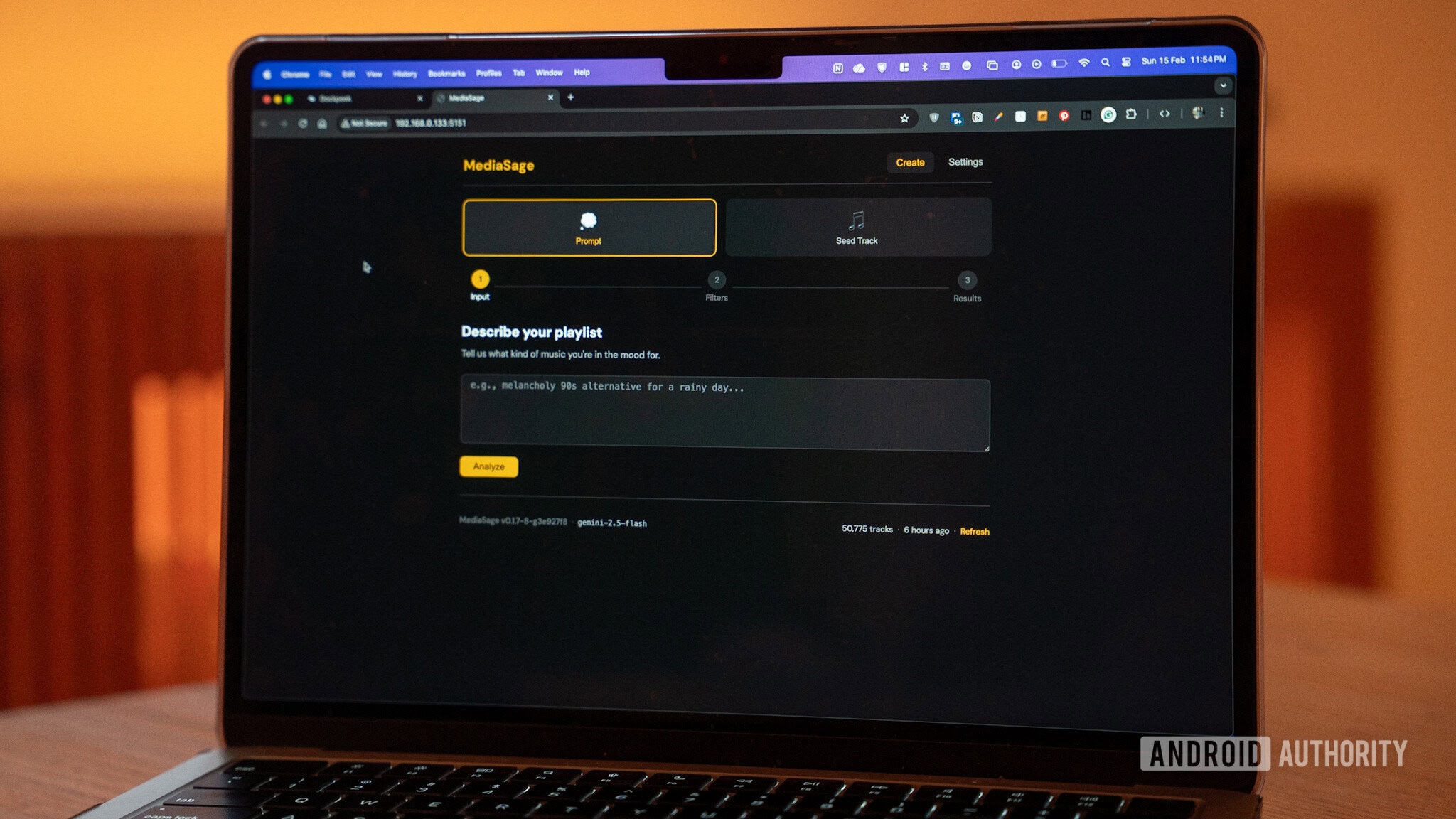
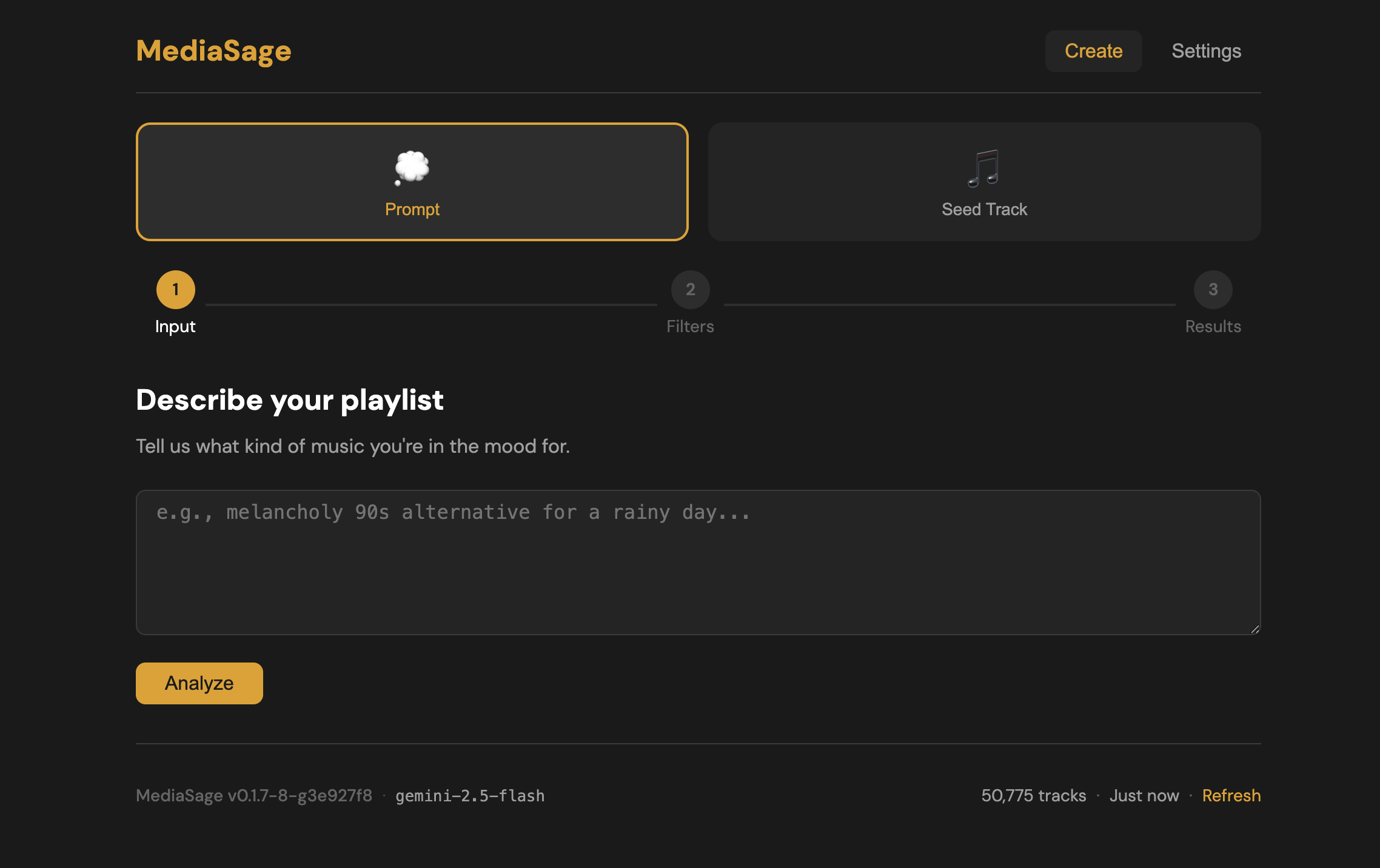
MediaSage functions as an intelligent abstraction layer sitting atop the Plex music index. It operates by extracting relevant track metadata from the local server, packaging these parameters, and querying a chosen external or local LLM. This architecture is crucial, as it democratizes sophisticated playlist generation by decoupling the computational intelligence (the LLM) from the storage and serving mechanism (Plex).
The setup, while not trivially simple—requiring comfort with containerization technologies like Docker and the management of API keys for external models—is presented as an accessible weekend project for existing self-hosters. The tool supports integration with leading commercial models (Gemini, OpenAI, Claude), offering flexibility based on latency preference, cost tolerance, and privacy concerns.
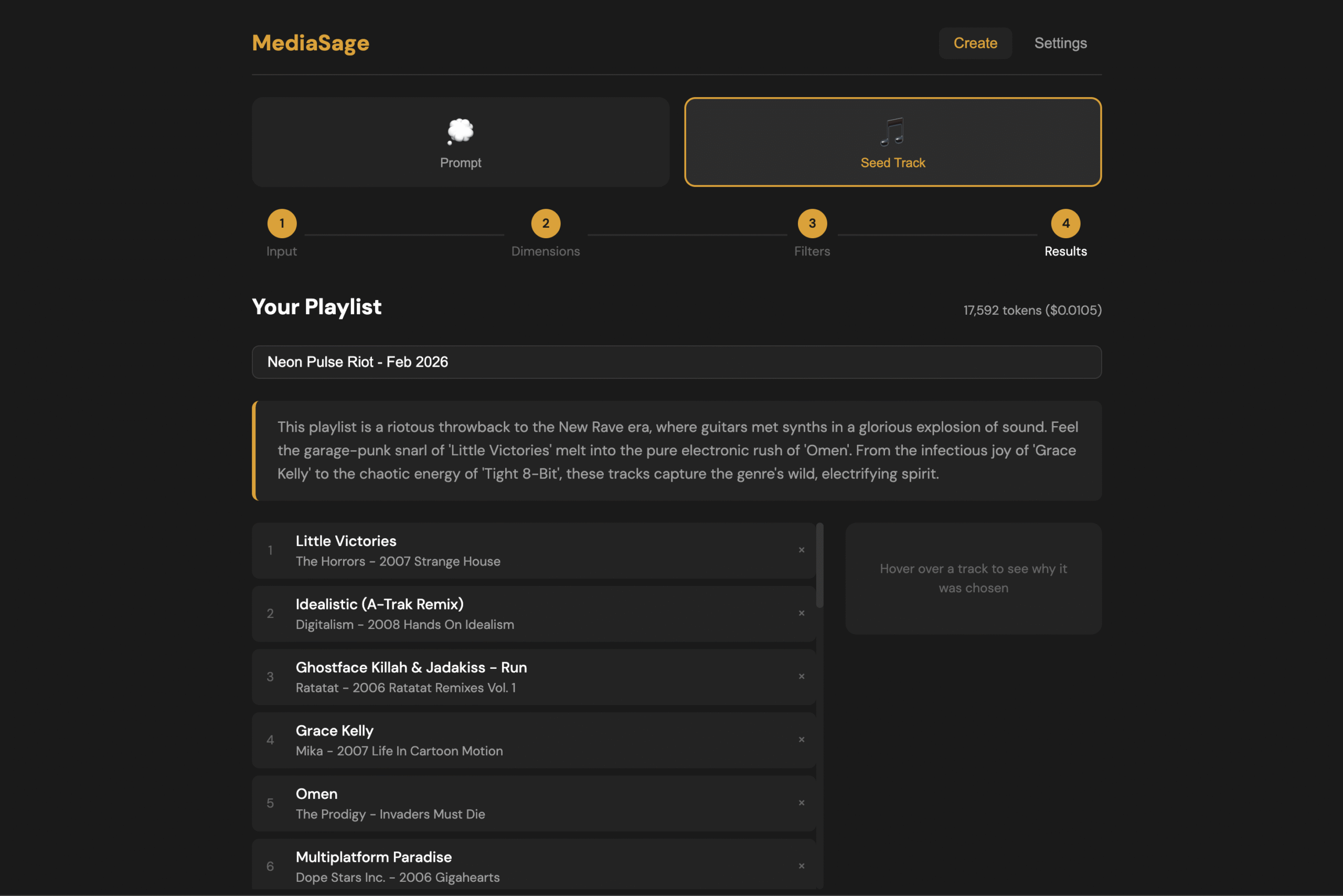
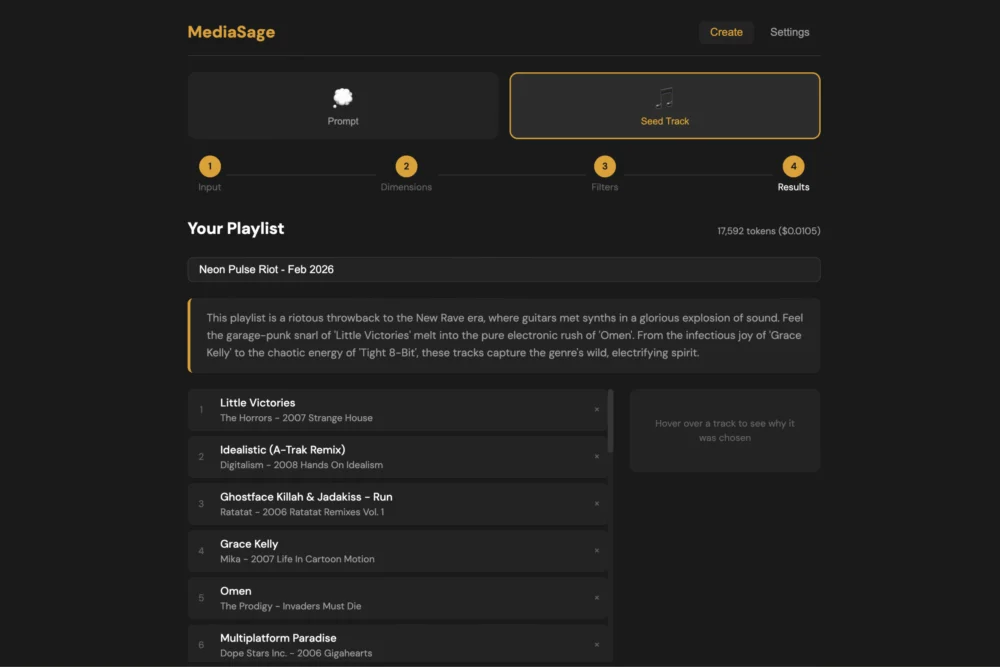
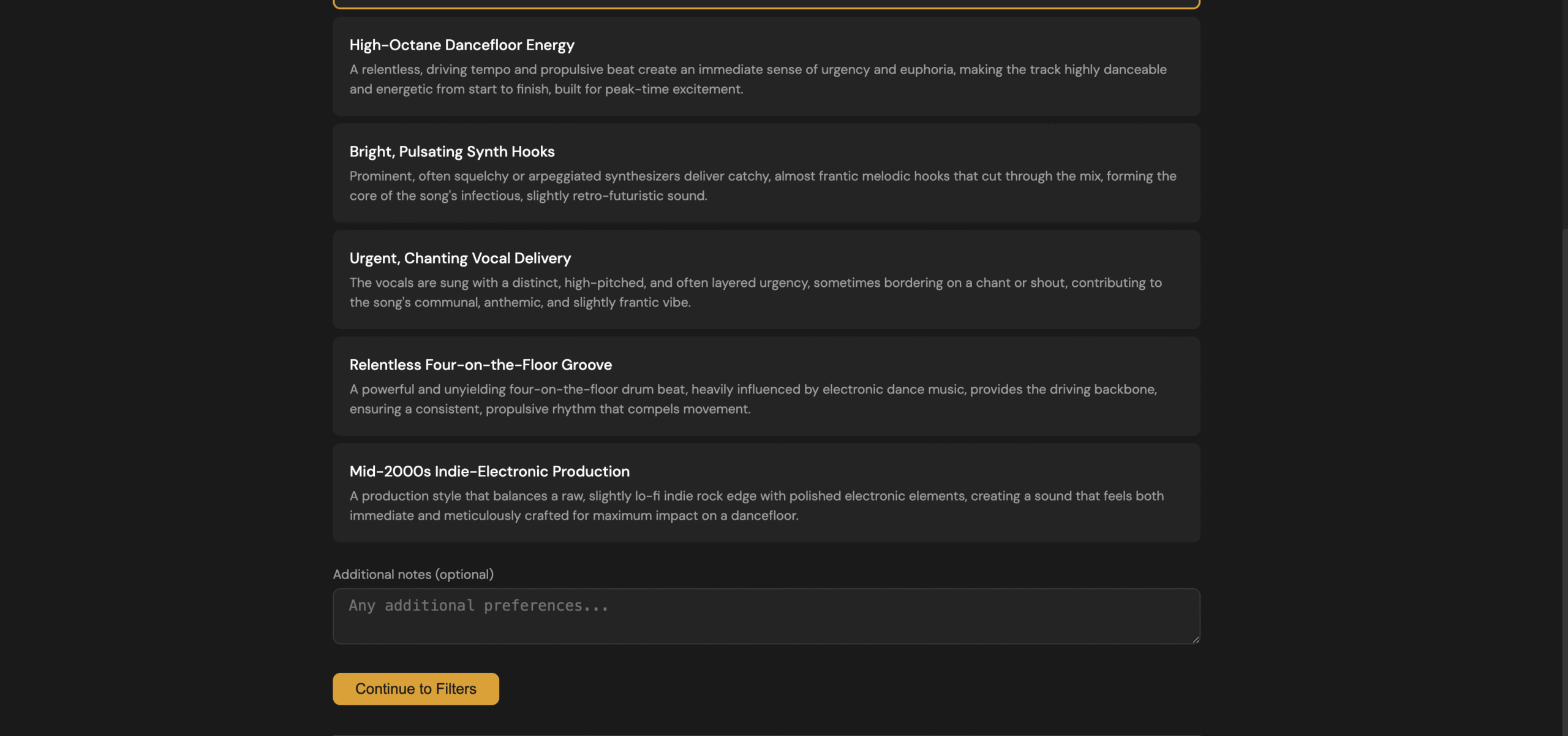
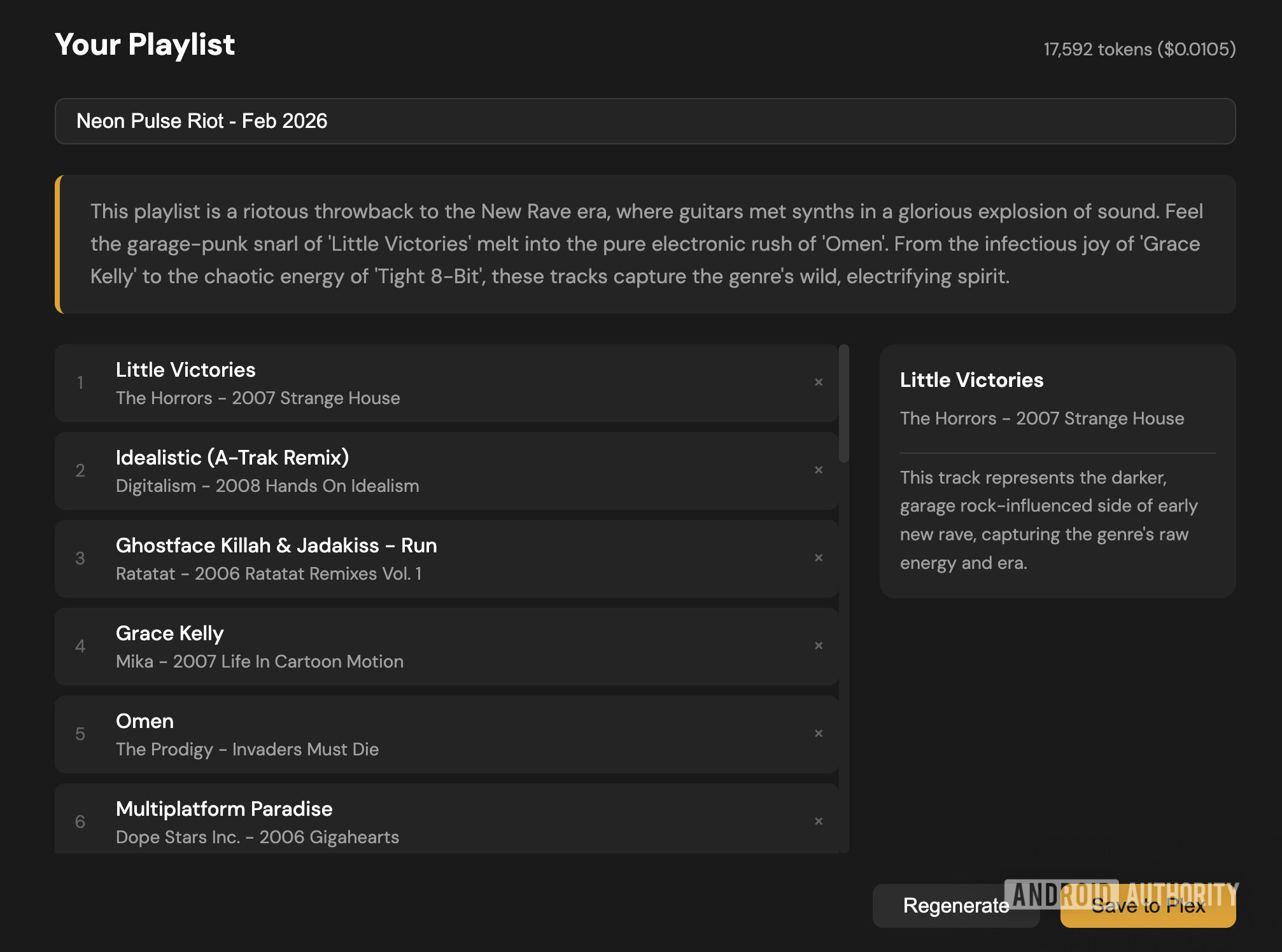
The immediate efficacy of this approach is most evident in the "Seed Track" generation feature. When using a track like Golden Skans by The Klaxons as a starting point, streaming services offer a generic historical context. MediaSage, leveraging the LLM, analyzes the seed track’s intrinsic properties—tempo, dynamic range, instrumentation—and proposes divergent interpretations of that song’s essence. The user is not presented with a single, algorithmically decided playlist but rather multiple, semantically distinct listening pathways: one focusing on genre fusion ("The Defining New Rave Sound"), another on pure kinetic energy ("High-Octane Dancefloor Energy"), and a third on specific sonic elements ("Bright, Pulsating Synth Hooks"). This granularity returns control and exploratory depth to the user, allowing them to curate the why behind the playlist, not just the what. The resulting playlist, even when incorporating tracks from disparate genres like The Prodigy alongside indie-rock contemporaries, achieves a cohesive flow dictated by the requested mood, not just database categorization.
Industry Implications: The Decentralization of Discovery
The success of this localized, AI-enhanced curation presents significant implications for the streaming industry, which has built its entire business model on controlling the discovery pipeline.
1. Erosion of Vendor Lock-in: Streaming platforms thrive on their opaque recommendation algorithms being the only viable path to discovery. Tools like MediaSage prove that high-quality, context-aware discovery can be decoupled from the subscription service, provided the user has invested in owning their media. This empowers the user to leverage their existing investment (purchased music files) in ways the platforms actively discourage.
2. Metadata Supremacy: In the streaming paradigm, metadata is standardized and immutable, subject to licensing agreements and platform decisions. In the self-hosted, LLM-augmented environment, metadata becomes a malleable asset. Users can correct erroneous tags, apply personalized taxonomies (e.g., tagging a folder as "Dark Jazz Rock"), and the LLM respects these custom structures. This ownership of data fidelity is a foundational advantage that streaming rental models cannot replicate.
3. The Economics of Curation: The cost analysis reveals a stark contrast. A complex playlist generation request via Gemini 2.5 Flash costs fractions of a cent (e.g., $0.0082). This infinitesimal operational expense completely undercuts the implicit cost built into premium streaming subscriptions, which are primarily justified by access and curation services. For the cost of one month of premium streaming, a dedicated user could generate tens of thousands of bespoke playlists.
4. Latency vs. Quality Trade-off: While streaming services offer near-instantaneous playback initiation, the trade-off is often low-quality, predictable output. MediaSage introduces a necessary processing latency (10–20 seconds) while the model interprets the request and scans the library subset. This slower pace is indicative of deeper computation, prioritizing relevance over immediacy—a trade-off acceptable to the enthusiast seeking genuine novelty.
The Privacy and Autonomy Dividend: Local LLMs
Perhaps the most compelling aspect for the technically inclined community is the option to bypass external cloud-based LLMs entirely. MediaSage’s compatibility with Ollama allows users to deploy powerful, open-weight models like Llama 3 or Mistral locally on their home servers, provided they possess adequate computational resources (specifically, a capable GPU).
This transition to local LLMs transforms the system into a completely sovereign entity: an offline, semantic playlist generator that operates without sending user metadata or prompts to third-party servers. This is the apex of the self-hosting ethos—a personalized AI assistant operating entirely within the user’s perimeter, free from concerns about data harvesting or reliance on corporate API access. This feature set starkly contrasts with the walled gardens of major tech companies, where AI features are engineered primarily for platform retention and data monetization.
The Limits of Ownership in the AI Era
It is critical to acknowledge the inherent constraints of this architecture. MediaSage, no matter how intelligent the LLM powering it, is fundamentally constrained by the contents of the local library. If a user has no Turkish funk in their 120,000-track collection, the AI cannot conjure it from thin air. In the face of a prompt like "positive Turkish funk," the system intelligently pivots, delivering the closest adjacent vibe available within its known data set (e.g., positive funk staples from Stevie Wonder or Earth, Wind & Fire).
While this fidelity to ownership means MediaSage cannot compete with streaming services on sheer breadth of new releases, it excels at maximizing the value of existing assets. For collectors, the challenge is often not a lack of music, but an inability to contextually navigate the depth of their archives. MediaSage acts as a rediscovery engine, surfacing tracks dormant for years by connecting them through novel semantic pathways.
Future Trajectories: Personal AI vs. Corporate AI
The development trajectory exemplified by MediaSage suggests a bifurcation in the future of AI application: the corporate model versus the personal model. Corporate AI, exemplified by features embedded within Spotify or YouTube Music, is optimized for platform metrics: maximizing listening time, encouraging specific monetization pathways (like new releases or promoted tracks), and data aggregation.
Personal AI, as demonstrated here, is optimized solely for the individual user’s stated goal, regardless of commercial implications. It is modular, allowing the user to select the processing engine (Gemini, Llama, etc.), and it prioritizes data sovereignty. This modularity ensures longevity and adaptability; as superior local models emerge, the user can seamlessly upgrade the "brain" of their music curation without changing their library or their fundamental interface.
This shift is more than just a technical curiosity; it represents a philosophical stance on data control. In an increasingly subscription-dependent world where music access is rented rather than owned, tools that re-empower the user to interact intelligently with their purchased digital assets are vital. MediaSage transforms a sprawling collection of digital files from a static archive into a dynamic, semantically searchable resource, effectively providing a personalized, high-fidelity DJ service that respects the user’s investment and privacy in equal measure. For the self-hosting community and serious music collectors, this integration proves that the next evolution of music discovery may not be found on the mainstream streaming charts, but within the carefully curated depths of one’s own digital domain.