

The landscape of mobile gaming hardware has undergone a significant transformation over the past several years. Once a relatively crowded segment, the market for dedicated Android gaming tablets has contracted sharply, overshadowed by the rise of ultra-powerful flagship smartphones capable of handling demanding titles and the proliferation of highly specialized, often niche, PC-adjacent handheld emulation devices. In this environment, Lenovo’s sustained commitment to the compact gaming tablet category, specifically embodied by the Legion Y700 series, represents a strategic divergence from mainstream trends. Recent official teasers, coupled with granular leaks, confirm that the successor—tentatively dubbed the Lenovo AI Tablet Legion Y700—is not merely an iterative update but a calculated refinement aimed squarely at a dedicated segment of performance-oriented Android users who prioritize portability without sacrificing true flagship processing capability.
Lenovo’s renewed focus, showcased through promotional materials disseminated via Chinese social media platform Weibo, provides the first substantial glimpse of the forthcoming device’s aesthetic direction. The presentation highlights dual colorways—a classic black and a clean white variant—suggesting a broad appeal beyond purely aggressive gaming aesthetics. Crucially, the naming convention itself—the “Lenovo AI Tablet Legion Y700”—signals adherence to contemporary marketing imperatives, even if the integration of "AI" features remains abstract in the early announcements. From a design perspective, the device appears to maintain the slim profile that defined its predecessors, featuring a streamlined rear panel anchored by a singular camera module. The most distinct gaming-oriented feature teased is the reintroduction of a circular RGB illumination ring situated beneath the camera housing, a deliberate visual cue meant to immediately identify the device’s performance pedigree within Lenovo’s broader tablet ecosystem.
While Lenovo’s official announcements were deliberately sparse on core specifications, the void has been filled by credible industry sources, most notably the established leaker Digital Chat Station. These reports paint a picture of a device engineered specifically for high-refresh-rate mobile gaming in a highly manageable form factor. The cornerstone of the experience is expected to be an 8.8-inch LCD panel. In the world of compact tablets, screen real estate is a balancing act; 8.8 inches offers significantly more immersion than a standard smartphone without reaching the unwieldy dimensions of 10-inch or larger productivity slates. This size is paired with two critical specifications for modern gaming: a 3K resolution, promising exceptional visual fidelity, and an exceptionally fluid 165Hz refresh rate. A 165Hz display is a premium feature, typically reserved for top-tier gaming laptops or specialized monitors, and its inclusion here underscores the device’s uncompromising commitment to visual smoothness, vital for competitive mobile titles.
The true heart of this compact powerhouse, according to these detailed leaks, resides in its silicon. The expected chipset is Qualcomm’s Snapdragon 8 Elite Gen 5. If accurate, this positions the Y700 squarely at the apex of Android processing power available at the time of its launch. The "Elite" designation in Qualcomm’s nomenclature typically signifies the highest-binned, most optimized version of their flagship silicon, engineered for sustained high performance under heavy thermal loads—a non-negotiable requirement for a device specifically marketed for intensive gaming. This choice of processor is more telling than any aesthetic flourish; it suggests Lenovo is targeting users who demand desktop-level frame rates and complex graphical settings, a demographic underserved by mid-range tablets or non-gaming smartphones.
Further bolstering the argument for endurance and consistent performance is the rumored 9,000mAh battery capacity. For an 8.8-inch device, this represents a substantial power reserve, necessary to drive a high-resolution, high-refresh-rate display and a top-tier SoC without requiring constant tethering to a power outlet. Complementing the performance focus is a purported 50MP main rear camera sensor. While photography is rarely the primary metric for gaming-focused hardware, a high-resolution sensor ensures the device is not completely hobbled in general utility, providing competent stills when needed, though the true camera focus remains the integration of the signature RGB ring.
The projected timeline, pegged by Digital Chat Station for a March debut, initially appears oriented toward the domestic Chinese market. This pattern is familiar for Lenovo’s Legion hardware, which often debuts in China before a potential, and often delayed, global rollout. The uncertainty surrounding international availability remains a significant hurdle for Western consumers, especially given the historical difficulty some specialized Chinese hardware faces in achieving broad global distribution or official carrier partnerships.
This emerging profile aligns closely with hints dropped by Lenovo as recently as the previous April, when the company teased a next-generation Y700 featuring a thinner, lighter build, the familiar 8.8-inch screen, and a "new Snapdragon" chip. The current stream of information strongly suggests that those earlier conceptual teasers are now coalescing into a concrete product roadmap, shedding the vagueness of early speculation for hard specifications centered on the latest flagship architecture.
Industry Implications: Carving Out a Niche in a Fragmented Market
Lenovo’s continued investment in the compact gaming tablet category speaks volumes about the viability of niche hardware segments in a consolidating tech industry. The primary challenge for any dedicated gaming tablet is justifying its existence against two formidable competitors: high-end smartphones and dedicated PC handhelds like the Steam Deck or ASUS ROG Ally.
Smartphones, like the Samsung Galaxy S series or specialized gaming phones from Black Shark or ROG Phone, offer unparalleled portability and often possess proprietary cooling solutions and trigger mechanisms. However, they are fundamentally limited by screen size, which impacts multitasking and overall visual immersion. Conversely, PC handhelds offer unmatched graphical fidelity by running full desktop operating systems, but they sacrifice the native Android ecosystem, leading to compatibility issues with many popular mobile-only titles and significantly increasing bulk and price.
The Legion Y700 targets the strategic middle ground—the “Goldilocks Zone” for many serious mobile gamers. At 8.8 inches, it is small enough to be easily held for extended sessions, unlike 11-inch tablets, yet large enough to offer a genuine ergonomic advantage over a 6.7-inch smartphone screen. This form factor is ideal for high-fidelity emulation, controller-based console ports, and demanding native Android titles where the added screen real estate enhances map visibility and HUD management.
For Lenovo, establishing dominance in this niche is a defensive and offensive strategy. Defensively, it maintains brand presence in the highly visible gaming sector outside of the saturated PC and smartphone arenas. Offensively, it cultivates a fiercely loyal user base—the "cult following" mentioned previously—who value the specific engineering trade-offs Lenovo makes. This user base is often willing to overlook regional launch limitations in favor of superior hardware specifications for their primary use case: gaming.
Expert Analysis: The Significance of the 165Hz/3K Combination
The technical specifications teased for the next-gen Y700 are not merely incremental improvements; they represent a deliberate effort to future-proof the device against upcoming software demands. The pairing of a 3K resolution with a 165Hz refresh rate on an 8.8-inch panel is technically demanding.
From a display engineering standpoint, maintaining a high pixel density (which 3K resolution on 8.8 inches guarantees) while simultaneously pushing frame rates above the standard 120Hz threshold requires sophisticated display driver integration and stringent panel quality control. Many manufacturers sacrifice resolution for refresh rate, or vice versa, at this size. Lenovo’s commitment here suggests they are leveraging a high-end panel supplier capable of delivering performance comparable to specialized gaming monitors.
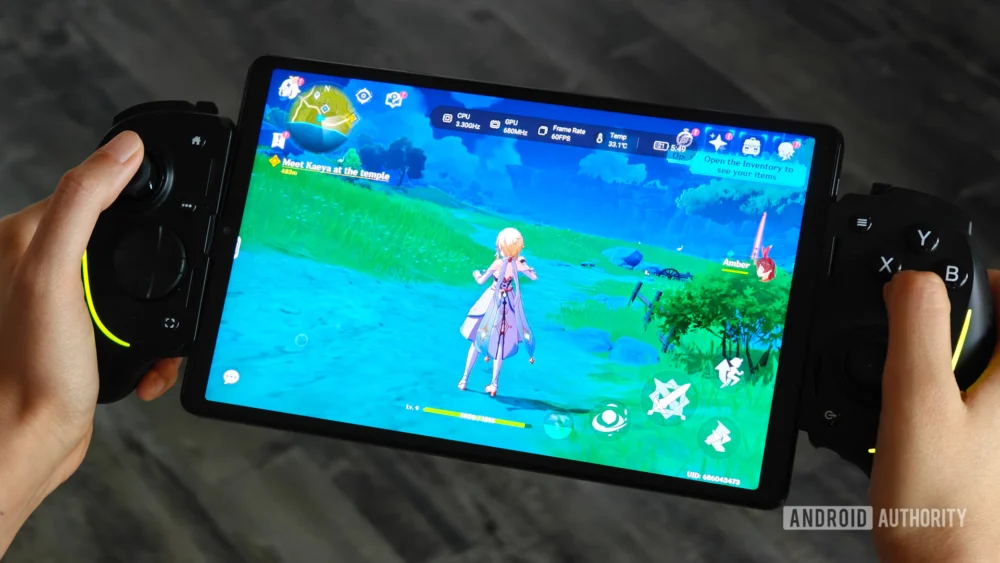
Furthermore, the choice of the rumored Snapdragon 8 Elite Gen 5 chipset is critical. Flagship SoCs often throttle performance under sustained load due to thermal constraints, particularly in thin tablet chassis. The success of the Y700 hinges less on the raw benchmark score and more on Lenovo’s thermal management engineering. The previous generations were praised for their effective cooling systems, which allowed the powerful chipsets to run closer to peak potential for longer periods. If the new Y700 can sustain 120fps or higher in demanding titles like Genshin Impact or Call of Duty: Mobile without severe dips, it will validate its premium positioning. The integration of AI features, while often nebulous, could theoretically be leveraged for dynamic frame rate prediction or intelligent thermal throttling algorithms, optimizing the gaming experience based on real-time usage patterns.
Future Impact and Trends: The Battle for Mobile Ecosystem Control
The release of the Legion Y700 is more than just a product launch; it’s a data point reflecting the broader industry’s ongoing calibration of the Android ecosystem. As Google continues to refine Android for larger form factors (like foldables and tablets), dedicated gaming hardware serves as a crucial testing ground for performance and thermal handling.
If the Y700 proves successful, particularly in driving adoption of high-refresh-rate content across the Android gaming sphere, it could encourage other OEMs to reconsider their retreat from specialized, compact Android hardware. The market is currently polarized: consumers either settle for a productivity tablet with gaming capabilities or invest heavily in dedicated handhelds that often require sideloading or cloud streaming. A successful, powerful, and relatively affordable compact gaming tablet provides a compelling, unified alternative.
Moreover, the Y700’s success will be intrinsically linked to the evolution of mobile game development. As game engines become more sophisticated, the demand for hardware that can fully exploit these engines—specifically memory bandwidth and GPU headroom—will only increase. Lenovo is betting that a core group of users will pay a premium for hardware engineered specifically for this peak experience, rather than waiting for high-end smartphone releases that inevitably divert resources to camera arrays and productivity enhancements.
The global availability question remains the elephant in the room. If Lenovo restricts the Y700 to China, it solidifies its role as a powerful, albeit inaccessible, champion of Android gaming innovation. If, however, the device receives a robust international launch—perhaps leveraging the Legion brand recognition established in PC gaming—it could trigger a much-needed competitive injection into the premium Android tablet segment, forcing competitors to recognize the latent demand for ultra-portable, uncompromised gaming power. For enthusiasts awaiting a true heir to the compact gaming mantle, the upcoming debut of the Legion Y700 represents the most tangible sign yet that this coveted category is poised for a meaningful resurgence.