

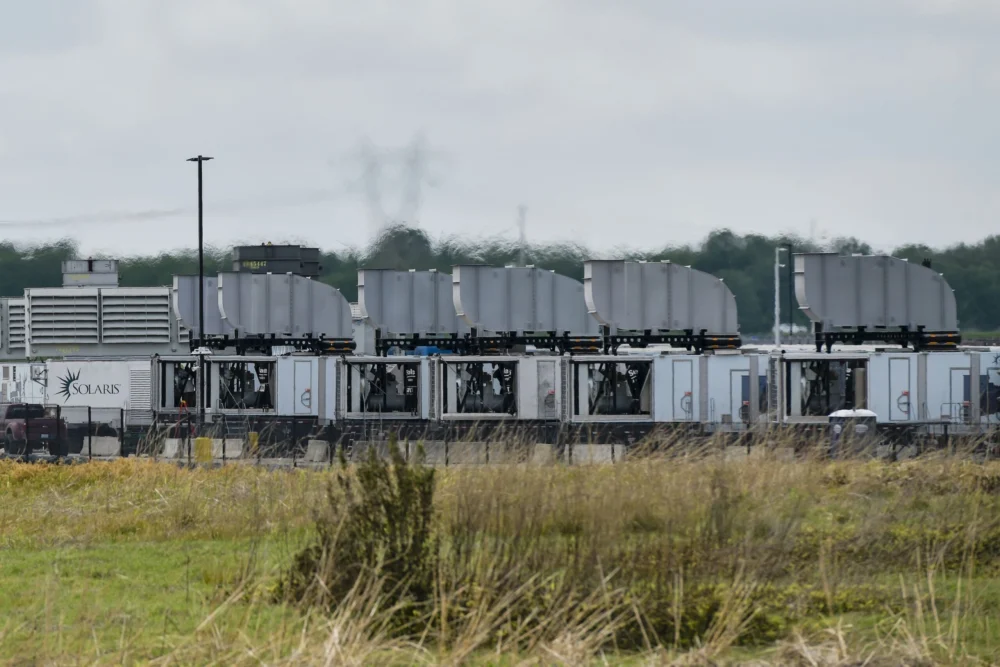
The proliferation of digital infrastructure across the United States, driven overwhelmingly by the exponential demands of artificial intelligence, has collided with state-level environmental and economic concerns, culminating in a legislative push in New York to halt the industry’s rapid expansion. New York state lawmakers have formally introduced a stringent bill that proposes an immediate moratorium lasting a minimum of three years on all permits related to the construction and operation of new data centers. This move positions New York as the latest and perhaps most influential state to grapple publicly with the environmental externalities and grid stresses imposed by the burgeoning hyperscale sector.
The proposed legislation, introduced by State Senator Liz Krueger and Assemblymember Anna Kelles, both prominent Democrats, aims to provide a crucial "breathing room" for the state to develop comprehensive regulatory frameworks. The bill, designated S9144, reflects a growing, bipartisan unease regarding the immense energy consumption and resource utilization inherent in modern compute infrastructure. While the path to passage remains complex and uncertain, New York’s consideration of such a sweeping pause underscores a significant shift in the national dialogue surrounding technology development, moving from uncritical acceptance to cautious regulation.
The AI Power Paradox and Infrastructure Strain
The impetus behind this regulatory intervention is inextricably linked to the ongoing, massive capital expenditure (CapEx) race among technology behemoths. Companies like Amazon, Google, Microsoft, and emerging AI firms are committing unprecedented financial resources—often totaling hundreds of billions of dollars collectively—to build out the specialized infrastructure required to train and run complex Large Language Models (LLMs) and other generative AI systems. This new generation of AI demands significantly higher compute intensity than previous cloud workloads, translating directly into staggering energy requirements.
Data centers, particularly hyperscale facilities, are already notorious for their substantial draw on local power grids and regional water supplies (used for cooling). The AI acceleration further exacerbates this issue. Studies and municipal reports across various jurisdictions have begun linking the commissioning of new, large data center loads directly to noticeable increases in residential and commercial electricity bills. As these facilities often operate 24/7 at peak capacity, the demand spike forces utility providers to activate less efficient, often fossil-fuel-dependent peaker plants, driving up wholesale energy costs that are ultimately passed down to ratepayers.
Senator Krueger articulated the state’s alarm, noting that New York is “completely unprepared” for the wave of “massive data centers” that are aggressively “gunning for New York.” Her concern is centered on avoiding a scenario where the state gets “caught in a bubble that will burst and leave New York utility customers footing a huge bill.” This sentiment reflects a fear that the economic promises of hosting tech infrastructure—often low-employment, highly automated facilities—do not outweigh the severe infrastructure and ratepayer risks.
A Coalition of Concern: Bipartisan and Environmental Consensus
What makes the current regulatory trend particularly noteworthy is the broad, non-traditional coalition of critics. The debate over data center expansion has transcended typical ideological boundaries, attracting opposition from across the political spectrum.
On the progressive side, influential figures like Senator Bernie Sanders have called for a sweeping national moratorium, arguing that the unchecked growth of these energy-intensive facilities undermines climate goals and places undue burden on public utilities. Conversely, conservative leaders, such as Florida Governor Ron DeSantis, have voiced similar skepticism, though framing their critique around different societal concerns. DeSantis publicly linked the energy consumption to frivolous applications, arguing that the infrastructure leads to “higher energy bills just so some chatbot can corrupt some 13-year-old kid online.” This rare alignment between high-profile progressive and conservative voices underscores the perceived magnitude of the economic and social disruption caused by rapid hyperscale expansion.
Furthermore, the environmental community has mobilized decisively. Over 230 environmental organizations, including prominent groups such as Food & Water Watch, Friends of the Earth, and Greenpeace, recently co-signed an open letter to Congress demanding a national moratorium on new data center construction. Eric Weltman of Food & Water Watch confirmed that the New York bill originated from advocacy efforts, calling it "our idea." This sustained, coordinated pressure highlights the perception that the technology sector’s growth is outpacing regulatory oversight and environmental sustainability commitments.
New York is not operating in isolation. This legislative effort marks the state as at least the sixth nationally to consider imposing a construction pause. Data center moratorium proposals have seen legislative activity driven by Democrats in states including Georgia, Vermont, and Virginia—the latter being the global capital of data center infrastructure—while Republicans have sponsored similar regulatory measures in states like Maryland and Oklahoma. This widespread, geographically diverse legislative activity indicates that the infrastructural and ratepayer pressures of the AI boom are now a dominant national policy concern.
Expert Analysis: The Economic and Grid Vulnerability
From an engineering and regulatory perspective, the immediate concern is the ability of New York’s aging power infrastructure to absorb multi-gigawatt loads in concentrated areas without significant system failure or massive investment burdens. Data centers represent a unique challenge for grid operators (like NYISO, the New York Independent System Operator) because they are non-dispatchable, constant, and rapidly increasing loads.
A three-year moratorium, while controversial, offers the utility sector time to conduct necessary system impact studies and potentially accelerate grid modernization projects. The current process for integrating new large loads often relies on developers funding interconnection upgrades, but the cumulative effect of dozens of such facilities can require fundamental, costly overhauls of transmission lines, substations, and local distribution networks.
If data centers are allowed to connect without sufficient systemic planning, the financial risk shifts overwhelmingly to the state’s ratepayers. The concept of "rate base" requires utilities to spread infrastructure costs across their entire customer base. When a facility demands a disproportionate amount of power, the resulting upgrades inflate the utility’s rate base, leading to the increased home electricity bills already observed in other markets. The moratorium is essentially a proactive attempt to decouple this risk, forcing a strategic planning period where the costs and benefits can be properly quantified and allocated.
Critics of the pause, primarily industry trade groups and economic development agencies, argue that freezing construction is a blunt instrument that will inevitably push investment and associated high-tech jobs—even if few—out of state. They warn that capital investment is highly mobile, and a regulatory freeze in New York will simply accelerate the growth of hyperscale corridors in neighboring, less regulated states. This migration could ultimately undermine New York’s status as a key hub for digital commerce and cloud computing.
Industry Implications and Strategic Adaptation
The potential New York moratorium serves as a stark warning signal to the technology industry: the era of "build first, ask questions later" regarding digital infrastructure is ending. If major markets like New York and Virginia continue to impose or consider restrictions, the industry will be forced to undergo significant strategic adaptation.
One immediate implication is the accelerated shift toward optimization and efficiency within existing facilities. Data center operators will intensify efforts to lower their Power Usage Effectiveness (PUE) ratios, employing advanced technologies like liquid immersion cooling, which can drastically reduce cooling-related energy consumption compared to traditional air-cooling methods. Furthermore, the push for smaller, decentralized edge computing facilities may increase, allowing companies to meet latency demands without relying solely on monolithic hyperscale campuses that strain regional grids.
The moratorium also forces greater scrutiny on energy sourcing. Tech companies have long touted their commitment to renewable energy, primarily through Power Purchase Agreements (PPAs) for solar and wind farms. However, critics point out that these PPAs often represent new renewable capacity elsewhere, while the data center itself still draws power from the local grid mix, which may be heavily reliant on natural gas or other legacy sources during peak demand. The moratorium provides an opportunity for policymakers to implement stricter standards requiring data centers to demonstrate 24/7 carbon-free energy matching—meaning the power consumed at any given hour must be sourced from local, verifiable clean energy resources.
New York’s Regulatory Counter-Proposal
Recognizing the need to address the crisis without necessarily stifling all technological progress, New York Governor Kathy Hochul has introduced a parallel regulatory framework designed to manage large energy users proactively. Last month, Governor Hochul unveiled the "Energize NY Development" initiative.
This plan is framed as a balanced approach intended to modernize how large energy users, explicitly referencing data centers, connect to the state’s grid. Crucially, the initiative seeks to hold these corporate entities accountable by requiring them to "pay their fair share" of the infrastructure costs their operations incur. This plan aims to streamline grid connection processes while simultaneously ensuring that the financial burden of necessary utility upgrades does not fall disproportionately on residential and small business customers.
The Energize NY Development initiative represents a market-based alternative to the moratorium. Instead of a hard halt, it proposes a set of strict financial and technical requirements. This bifurcated legislative landscape—a proposed regulatory freeze versus an administrative modernization plan—sets the stage for a significant policy battle in Albany, determining whether New York chooses to hit the pause button completely or attempt to rapidly regulate and monetize the incoming AI infrastructure boom.
The Future Trajectory of Compute Infrastructure
Looking ahead, the New York situation exemplifies a broader national trend where digital demand is outpacing physical and regulatory capacity. The long-term future of compute infrastructure will likely be defined by mandatory efficiency metrics and a radical shift in energy sourcing.
If moratoriums become normalized across several key states, it will dramatically alter site selection strategies, potentially favoring regions with abundant, underutilized hydroelectric power (like parts of the Pacific Northwest or Northern New York itself, which benefits from the Niagara region) or those with integrated nuclear capacity. Furthermore, the regulatory pressure will accelerate research and development into next-generation energy solutions, such as small modular reactors (SMRs) or large-scale green hydrogen projects, to serve these energy-hungry industrial loads directly.
The three-year pause proposed by New York lawmakers is not merely a local political maneuver; it is a critical bellwether for how U.S. states intend to manage the unprecedented energy demands of the Artificial Intelligence revolution. It signals a fundamental regulatory reckoning, challenging the tech sector to prioritize sustainable development and fair cost allocation over unchecked expansion, thereby ensuring that the digital future does not bankrupt the local ratepayer or compromise critical climate objectives. The outcome in New York will likely establish a powerful precedent for other states currently struggling to balance economic development with infrastructural reality.