

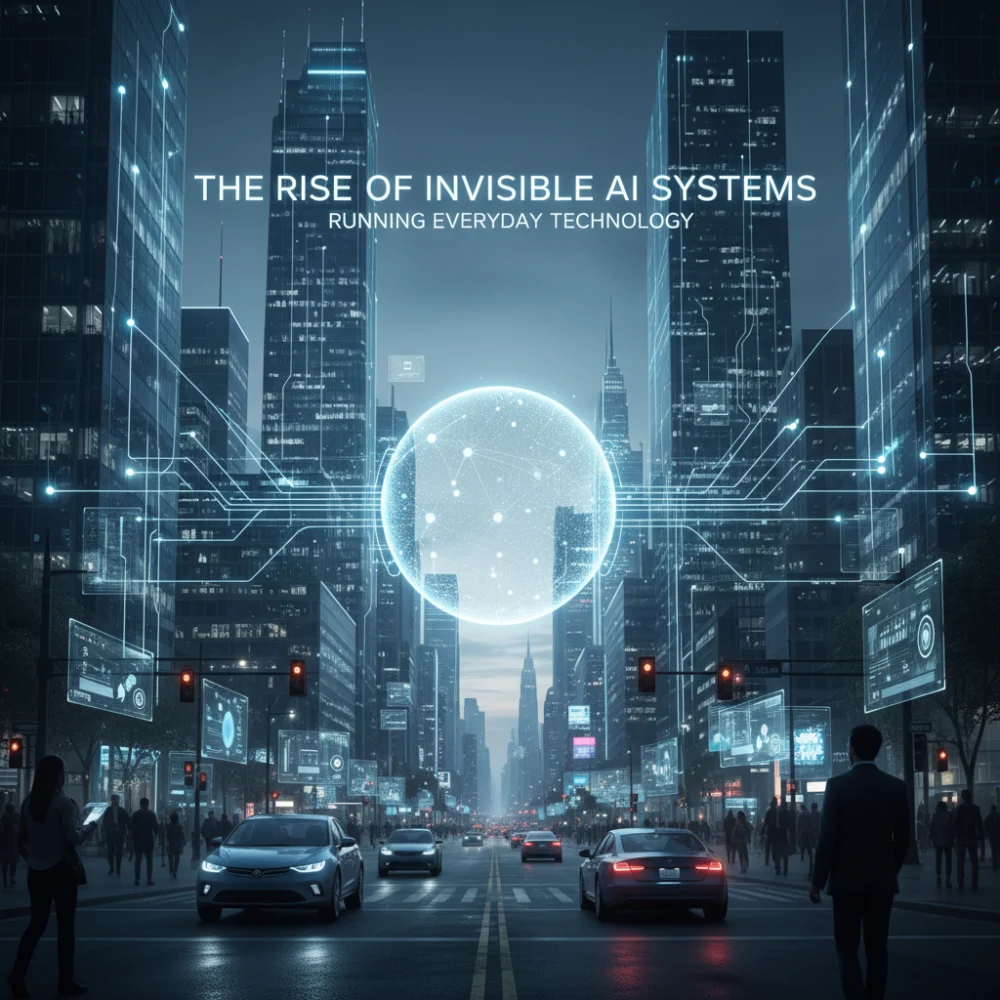
Introduction: The Silent Revolution of AI
Artificial intelligence is no longer confined to the realms of science fiction or specialized technological applications. It has quietly infiltrated our daily lives, powering a multitude of technologies we use without even realizing it. This phenomenon, often referred to as ‘invisible AI,’ represents a profound shift in how we interact with machines and the world around us. These systems operate seamlessly in the background, enhancing functionality, predicting needs, and optimizing performance across a wide spectrum of applications.
Defining Invisible AI: Beyond the Hype
Invisible AI refers to artificial intelligence systems that function autonomously and unobtrusively, without requiring explicit user input or awareness. Unlike chatbots or virtual assistants that demand direct interaction, these AI systems are embedded within existing technologies, working silently to improve efficiency, personalize experiences, and automate tasks. The key characteristic is their seamless integration, making their presence virtually undetectable to the end-user.
Examples of Invisible AI in Everyday Life
The pervasiveness of invisible AI is astonishing. Consider the following examples:
- Spam Filters: AI algorithms analyze incoming emails, identifying and filtering out spam with remarkable accuracy.
- Recommendation Systems: Platforms like Netflix and Amazon use AI to suggest movies, shows, and products based on your viewing and purchasing history.
- Smart Thermostats: Devices like Nest learn your heating and cooling preferences, automatically adjusting the temperature to optimize comfort and energy efficiency.
- Adaptive Cruise Control: Modern cars use AI-powered systems to maintain a safe distance from other vehicles and even automatically brake in emergency situations.
- Fraud Detection: Banks and credit card companies employ AI algorithms to detect and prevent fraudulent transactions.
The Technology Behind the Curtain: Machine Learning and Neural Networks
At the heart of invisible AI lies sophisticated machine learning algorithms, particularly neural networks. These algorithms are trained on vast datasets, enabling them to recognize patterns, make predictions, and learn from experience. For example, a spam filter is trained on millions of emails, learning to identify the characteristics of spam messages. Similarly, a recommendation system analyzes user behavior data to identify patterns and predict what products or content a user is likely to be interested in.
Enhancing User Experience: Personalization and Efficiency
One of the primary benefits of invisible AI is its ability to enhance user experience through personalization and increased efficiency. By learning user preferences and behaviors, AI systems can tailor experiences to individual needs, making interactions more relevant and engaging. For instance, a news aggregator might use AI to prioritize articles based on your reading history, ensuring that you see the stories that are most likely to interest you. Furthermore, AI can automate mundane tasks, freeing up users to focus on more important activities.
The Role of Data: Fueling the AI Engine
Data is the lifeblood of invisible AI. The more data an AI system has access to, the better it can learn and perform. This reliance on data raises important questions about privacy and security. Companies that collect and use data for AI purposes have a responsibility to protect user data and ensure that it is used ethically and responsibly.
Ethical Considerations: Bias and Transparency
While invisible AI offers many benefits, it also raises ethical concerns. One major concern is the potential for bias. If the data used to train an AI system is biased, the system will likely perpetuate those biases, leading to unfair or discriminatory outcomes. For example, facial recognition systems have been shown to be less accurate at identifying people of color, due to biases in the training data. Another concern is the lack of transparency. It can be difficult to understand how an AI system makes its decisions, which can make it challenging to identify and correct biases or errors.
The Future of Invisible AI: Expanding Horizons
The future of invisible AI is bright, with potential applications in virtually every industry. As AI technology continues to advance, we can expect to see even more sophisticated and seamless integrations into our daily lives. Some potential future applications include:
- Personalized Healthcare: AI could be used to monitor patients’ health, predict potential health problems, and personalize treatment plans.
- Smart Cities: AI could be used to optimize traffic flow, reduce energy consumption, and improve public safety.
- Automated Education: AI could be used to personalize learning experiences and provide students with individualized feedback.
Challenges and Opportunities: Navigating the AI Landscape
The rise of invisible AI presents both challenges and opportunities. One of the biggest challenges is ensuring that AI systems are developed and used ethically and responsibly. This requires careful consideration of issues such as bias, transparency, and privacy. However, the potential benefits of invisible AI are enormous. By harnessing the power of AI, we can create a more efficient, personalized, and convenient world.
The Impact on Jobs and the Economy
The increasing prevalence of invisible AI will undoubtedly have a significant impact on the job market and the broader economy. While some fear widespread job displacement due to automation, others argue that AI will create new jobs and opportunities. The reality is likely to be a combination of both. Some jobs will be automated, while others will be transformed by AI. It is crucial to invest in education and training programs to prepare workers for the jobs of the future.
Security Implications: Protecting Against AI-Powered Threats
As AI becomes more integrated into our lives, it also creates new security vulnerabilities. AI systems can be vulnerable to hacking and manipulation, potentially leading to serious consequences. For example, a self-driving car could be hacked and controlled remotely, or a fraud detection system could be tricked into approving fraudulent transactions. It is essential to develop robust security measures to protect against AI-powered threats.
Regulation and Governance: Shaping the Future of AI
The rapid development of AI has raised questions about the need for regulation and governance. Some argue that AI should be regulated to ensure that it is used ethically and responsibly, while others believe that regulation could stifle innovation. Striking the right balance between fostering innovation and protecting society is a complex challenge.
The Importance of Human Oversight
Even as AI systems become more sophisticated, it is crucial to maintain human oversight. AI should be seen as a tool to augment human capabilities, not replace them entirely. Human judgment and ethical considerations are essential for ensuring that AI is used for the benefit of society.
Demystifying AI: Education and Awareness
One of the biggest obstacles to the widespread adoption of AI is a lack of understanding. Many people are intimidated by AI and do not understand how it works. It is important to demystify AI and educate the public about its potential benefits and risks. Increased awareness will help to foster trust and encourage responsible innovation.
Conclusion: Embracing the Age of Invisible AI
Invisible AI is transforming the world around us in profound ways. By understanding its potential and addressing its challenges, we can harness the power of AI to create a better future for all. As AI becomes even more pervasive, it is crucial to engage in open and informed discussions about its ethical, social, and economic implications. Embracing the age of invisible AI requires a commitment to responsible innovation, ethical development, and ongoing education.