


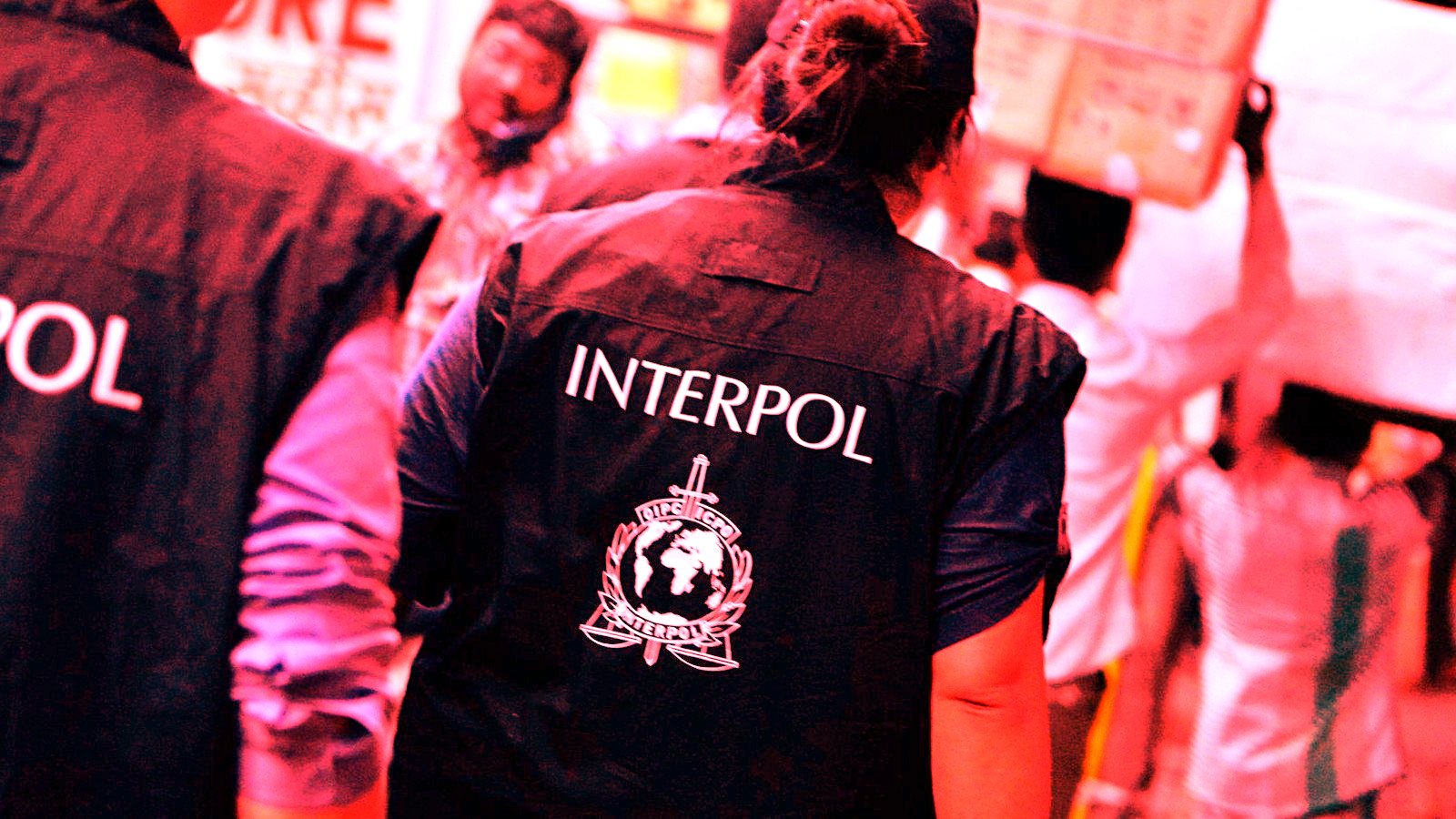
The global cybercrime landscape has witnessed a significant development as international law enforcement agencies, spearheaded by Europol and Interpol, have formally placed Oleg Evgenievich Nefedov, the alleged architect behind the notorious Black Basta Ransomware-as-a-Service (RaaS) operation, on their highest priority wanted lists. This action follows a concerted investigative effort involving Ukrainian and German authorities, culminating in the issuance of Interpol’s "Red Notice" and inclusion on Europol’s "Most Wanted" roster for the 35-year-old Russian national. The move signals an escalation in transnational efforts to dismantle high-value cybercriminal syndicates operating with impunity across borders.
The collaborative operation, which appears to have been coordinated across multiple jurisdictions, not only targeted the leadership structure but also netted ancillary operatives. Ukrainian police forces, working in tandem with their German counterparts from the Federal Criminal Police Office (BKA), successfully executed raids across two key locations within Ukraine’s Ivano-Frankivsk and Lviv regions. These raids were directed at two individuals purportedly integral to the initial infiltration stages of Black Basta’s attack chain. Law enforcement statements indicate these suspects possessed specialized technical proficiencies crucial for gaining footholds within highly protected corporate networks.
Deconstructing the Initial Access Vector
The specialized role attributed to these apprehended suspects offers critical insight into Black Basta’s operational methodology. According to official reports from Ukraine’s cyberpolice, the detained individuals acted as "hash crackers." This designation refers to cybercriminals adept at utilizing specialized computational techniques and software to rapidly extract or "crack" password hashes from compromised systems. In the context of a sophisticated RaaS operation like Black Basta, this capability is foundational. Gaining initial, low-level access is often the most resource-intensive phase; by outsourcing or specializing in credential compromise—specifically through hash cracking—Black Basta streamlined its initial entry point.
Once these compromised credentials, belonging to legitimate company employees, were acquired, the suspects reportedly executed the subsequent privilege escalation phase. This often involves exploiting known vulnerabilities or abusing misconfigurations to transition from a standard user account to an administrator or domain-level access. This meticulous, multi-stage approach—from hash cracking to privilege escalation—is characteristic of mature, professional cybercrime enterprises aiming for deep network penetration before deploying the final ransomware payload. The seizures made during the raids—including digital storage media and substantial cryptocurrency assets—are expected to yield further intelligence regarding the group’s command structure, victimology, and financial laundering pipelines.
The Shadow of Conti: Nefedov’s Provenance
Oleg Evgenievich Nefedov’s placement on international watch lists is not an isolated event but rather the formal validation of intelligence that has been circulating within cybersecurity circles for some time. Nefedov, known across various dark web forums and encrypted communication channels by a plethora of aliases including ‘tramp,’ ‘gg,’ ‘kurva,’ ‘Washingt0n,’ and ‘S.Jimmi,’ has been heavily implicated in Black Basta’s activities since at least February of the preceding year. This timeline corresponds closely with the public leak of over 200,000 internal chat logs from the Black Basta ecosystem, which provided unprecedented visibility into the group’s internal dynamics and leadership.
Crucially, the evidence strongly suggests that Black Basta is not an entirely novel entity but rather a direct successor or sophisticated rebranding of the defunct Conti ransomware syndicate. Conti, which rose to prominence in 2020, itself was widely viewed as the ideological and technical heir to the infamous Ryuk ransomware group. When Conti abruptly announced its cessation of operations—a move widely speculated to be linked to geopolitical shifts following the invasion of Ukraine—its infrastructure, personnel, and operational playbooks did not vanish. Instead, they splintered into smaller, more agile cells that either infiltrated existing operations or established new banners. Black Basta is widely accepted by leading threat intelligence firms as one of the most significant inheritors of the Conti legacy.
The leaked chat data provided tangible links. Security researchers analyzing the trove, such as those at Trellix, uncovered communications between individuals identified as ‘GG’ and ‘Chuck’ discussing a substantial bounty—reportedly a $10 million reward offered by US authorities for information pertaining to key Conti members, specifically mentioning ‘tramp.’ Further corroboration came from internal dialogue where ‘GG’ was explicitly identified as ‘Tramp’ (the purported Conti leader) by ‘bio’ (also known as ‘pumba’), another established Conti affiliate. The fact that ‘Tramp’—Nefedov’s known alias—was associated with a major US bounty underscores the gravity with which intelligence agencies viewed his role even before the official confirmation. This lineage is vital because it connects Black Basta to a known, state-affiliated infrastructure capable of executing complex, high-impact attacks.
Industry Implications: The Resilience of RaaS
The official confirmation and subsequent international pursuit of Nefedov highlight a critical challenge in modern cybersecurity defense: the resilience and adaptability of the Ransomware-as-a-Service (RaaS) model. Black Basta emerged in April 2022, quickly establishing itself as a major player, responsible for an estimated 600 high-profile incidents globally, encompassing data theft, extortion, and system encryption targeting critical infrastructure and major corporations.
The implications of this organizational continuity—from Conti to Black Basta—are profound for risk management. It demonstrates that even when a major brand like Conti is publicly dismantled or suppressed, the underlying human capital, technical expertise, and operational blueprints persist. For victim organizations, this means that defenses designed against Conti-era tactics may still be relevant, but the adversary is evolving under a new flag, potentially leveraging refreshed tooling or updated encryption standards.

Black Basta’s victimology paints a picture of a group targeting sectors with high operational disruption potential and significant data value:
- Defense and Manufacturing: German defense contractor Rheinmetall.
- Automotive: Hyundai Motor Europe.
- Telecommunications/Services: BT Group.
- Healthcare: U.S. healthcare giant Ascension, where attacks led to ambulance diversion.
- Government Contracting: ABB.
- Professional Services: American Dental Association, Capita (UK tech outsourcing).
- Public Sector: Toronto Public Library and Yellow Pages Canada.
This broad target spectrum underscores the RaaS model’s effectiveness: affiliates are motivated by immediate financial gain and are provided with highly effective, pre-packaged attack tools and infrastructure by the core operators like Nefedov. The successful attribution and subsequent international manhunt represent a tactical win for law enforcement, but the structural threat posed by successor groups remains.
Expert Analysis: The Geopolitical Undercurrent
The continued operation of groups like Black Basta, often affiliated with actors operating from within or closely aligned with Russian territories, introduces a significant geopolitical layer to cybercrime enforcement. The fact that Nefedov was linked to Conti, a group whose internal chats suggested a willingness to align with Russian state interests following the 2022 invasion, adds a layer of state sponsorship or at least tacit acceptance to the group’s activities.
From an expert perspective, the effectiveness of Red Notices and Europol listings lies not only in immediate apprehension—which is often difficult given the actors’ likely location—but in global financial interdiction and travel restrictions. A Red Notice alerts member countries to the necessity of locating and provisionally arresting the individual pending extradition or prosecution. For Nefedov, this significantly constrains his ability to travel to allied nations or conduct business under his true identity. Furthermore, it provides a consolidated, legally recognized basis for financial institutions worldwide to flag and freeze any detected assets linked to him.
The collaboration between German and Ukrainian authorities is particularly noteworthy. Germany, as a major economic power and frequent target of high-profile ransomware attacks, has a vested interest in dismantling these networks. Ukraine’s role, especially in executing physical raids against operatives likely based within its borders, demonstrates an increasingly robust domestic capability and willingness to combat cybercrime originating from or leveraging regional instability, often in direct partnership with Western European agencies. This bilateral cooperation sets a precedent for future multinational takedowns targeting the technical and logistical nodes of RaaS operations.

Future Impact and Evolving Trends
The successful identification and flagging of Nefedov serve as a powerful deterrent signal to other high-ranking RaaS leaders. It reinforces the message that anonymity, while achievable for periods, is not absolute, particularly as forensic intelligence techniques improve and internal leaks become more common.
However, the future impact will likely be seen in how Black Basta, or its immediate descendants, adapt. We can anticipate several defensive and offensive shifts:
- Increased Operational Security (OpSec): Successor groups will likely adopt even more stringent communication protocols, potentially moving away from easily monitored platforms or utilizing advanced encryption that frustrates initial intelligence gathering, learning from the Conti/Black Basta chat leaks.
- Affiliate Diversification: To insulate leadership from direct law enforcement action, RaaS operators may further decentralize the relationship with their affiliates, making the chain of command fuzzier and more difficult to prove for legal prosecution.
- Focus on Obscure Victims: To avoid the high-profile scrutiny that attracts international police action, newer iterations might shift focus towards smaller, less security-mature organizations in emerging markets, which offer less resistance but still yield profit.
- Technological Refinement: The technical components—the ransomware payload and initial access tools—will undoubtedly be upgraded. Given the focus on hash cracking, expect continued investment in credential harvesting and lateral movement tools that bypass modern multi-factor authentication standards where possible.
Ultimately, the placement of Oleg Evgenievich Nefedov on the Red Notice list is a significant inflection point. It transitions a known threat actor from a shadowy online entity to a globally recognized fugitive, increasing the pressure on the entire Black Basta ecosystem. While the dismantling of the entire RaaS structure is a long-term endeavor dependent on continuous intelligence sharing and legal cooperation, this action represents a critical step in holding the architects of global digital extortion accountable. Security professionals worldwide will be watching to see if this disruption leads to the collapse of the Black Basta enterprise or merely forces another, more deeply buried, rebranding exercise.