

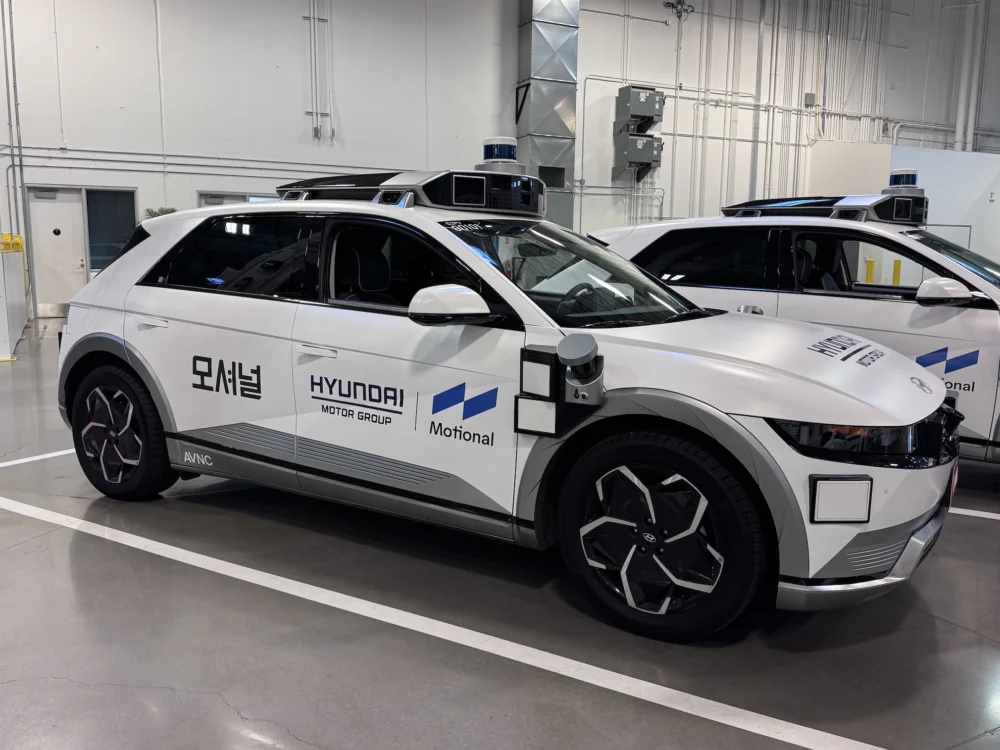
The trajectory of Motional, the ambitious autonomous vehicle (AV) joint venture initially forged between Hyundai Motor Group and Aptiv with a $4 billion valuation, recently reached a critical inflection point that demanded fundamental strategic realignment. Facing existential pressures rooted in missed commercial deadlines, significant financial restructuring, and the relentless advancement of artificial intelligence paradigms, the company chose to dismantle its established engineering architecture and rebuild its self-driving system (SDS) from the ground up, placing foundational AI models at its core. This dramatic pivot, characterized by a deliberate commercial slowdown, is designed to enable an exponential acceleration toward truly scalable, driverless operations, with a firm target set for launching a fully commercial service in Las Vegas by the close of 2026.
The necessity of this overhaul was underscored by Motional’s precarious position two years ago. The firm had already failed to meet its initial commitment to deploy a driverless robotaxi service with ride-hailing partner Lyft. Compounding these operational hurdles, it experienced a significant shift in its ownership structure when Aptiv divested its stake, leaving Hyundai Motor Group to inject nearly $1 billion in fresh capital to ensure the company’s survival. This financial triage coincided with massive internal restructuring, including a steep 40% reduction in its workforce—shedding approximately 550 employees from a peak headcount of 1,400. In an industry where technological stagnation is lethal, Motional realized its previous, safe but ultimately limited, approach could not bridge the gap between niche deployment and global commercial viability.
Motional President and CEO Laura Major articulated the rationale for this calculated retraction, explaining that while the existing system was safe, it lacked the two crucial components necessary for market dominance: affordability and generalizability. “We saw that there was tremendous potential with all the advancements that were happening within AI,” Major stated during a recent briefing at the company’s Las Vegas facilities. “And we also saw that while we had a safe, driverless system, there was a gap to getting to an affordable solution that could generalize and scale globally. We made the very hard decision to pause our commercial activities, to slow down in the near term so that we could speed up.”
This “pause to speed up” strategy is fundamentally a paradigm shift in autonomous vehicle software development. Motional’s legacy system utilized a classic robotics methodology, relying on a complex software stack where individual, modular machine learning (ML) models handled specific tasks—perception, tracking, and semantic reasoning—alongside extensive, hand-coded, rules-based programming to govern decision-making and planning. While effective for confined operational design domains (ODDs), this architecture created a brittle, complex, and resource-intensive software web. Any deviation from anticipated scenarios often required engineers to manually update specific rules or retrain isolated ML models, making scaling prohibitively expensive.
The new approach jettisons this modular complexity in favor of an integrated, end-to-end architecture built upon foundation models. This transition mirrors the explosive evolution seen in natural language processing (NLP) and generative AI, where the transformer architecture revolutionized how complex data is processed. These large, complex AI models, initially designed to manage the nuances of human language (as demonstrated by tools like ChatGPT), are now proving highly effective in processing multimodal sensor data (cameras, LiDAR, radar) for physical AI systems.
Motional is moving to combine its previously smaller, discrete ML models into a single, unified backbone. This integrated system allows the different layers of the self-driving stack—from sensing the environment to predicting behavior and executing maneuvers—to communicate and learn holistically, rather than relying on strict, segmented handoffs. The result is a system capable of far greater data efficiency and, critically, superior generalization.
Generalization is the holy grail of autonomous driving. In the old model, deploying the robotaxi service in a new city—say, moving from Boston to Las Vegas—might necessitate months of re-engineering specific rules related to local traffic light designs, unique signage, or regional driving habits. Major highlights the efficiency of the new foundation model: “This is really critical for two things: One is for generalizing more easily to new cities, new environments, new scenarios. And the other is to do this in a cost-optimized way. The traffic lights might be different in the next city you go to, but you don’t have to redevelop or re-analyze those. You just collect some data, train the model, and it’s capable of operating safely in that new city.”
This shift to a unified neural network backbone fundamentally alters the cost structure of scaling Level 4 autonomy. By reducing reliance on hyper-detailed, high-definition mapping and rules-based programming, the system becomes intrinsically more adaptable. It learns context and semantics—the intent behind actions—rather than just executing predefined rulesets. This efficiency is paramount, as the financial viability of a robotaxi service hinges on rapid expansion without linear cost increases per new operating area.

Motional’s renewed timeline reflects this aggressive technological confidence. The company has initiated a supervised robotaxi service for its employees in Las Vegas, utilizing its Hyundai Ioniq 5 vehicles with human safety operators. This will transition to a public service later this year with an as-yet-unnamed ride-hailing partner (Motional maintains relationships with both Lyft and Uber). The culminating goal—the full removal of the human safety operator and the commencement of true commercial driverless service—is set for the end of 2026.
Early demonstrations of this revised system in Las Vegas underscore the progress. Navigating the highly complex, chaotic environments of Las Vegas Boulevard and the hotel pickup/drop-off zones—areas previously deemed too challenging for full autonomous control and often requiring human intervention—showcased the SDS’s improved capability. For instance, the autonomous Ioniq 5 successfully managed the intricate dance of maneuvering through the bustling, often illegally congested, pickup area of the Aria Hotel. This involved patiently navigating around stopped taxis, unloading passengers, giant planters, and double-parked vehicles—all without a disengagement, meaning the human safety operator never had to take control.
While the system demonstrated a cautious, sometimes slow, approach—such as taking extended time to bypass a double-parked Amazon delivery van—the ability to handle these "edge cases" within high-density, dynamic urban environments marks a significant evolutionary leap. In previous iterations, these moments of severe congestion or unexpected obstacles would typically trigger an immediate handoff to the human operator. The current system’s capacity to process and respond to such complex, unscripted scenarios autonomously is a direct testament to the generalization benefits provided by the foundation model architecture.
The decision by Motional to fully embrace the transformer architecture is not isolated; it reflects a broader industry consensus that the previous generation of modular AV stacks has reached its performance ceiling. Major competitors, including both dedicated AV developers and vertically integrated automakers, are also heavily investing in large-scale neural network models. Motional’s distinction, however, lies in its deep and unwavering backing from Hyundai, a major global OEM. This relationship provides the essential ingredients for long-term success: massive manufacturing scale for hardware deployment and sustained financial resilience to withstand the multi-year development cycle required for Level 4 safety validation.
The financial commitment from Hyundai is crucial, setting Motional apart from many AV startups that are struggling with capital constraints. Autonomous driving remains a notoriously expensive venture, and the ability to spend nearly $1 billion to restructure and pursue a more ambitious technological path signals a long-term, strategic intent from the parent company that transcends short-term market pressures.
Furthermore, the integration of Level 4 technology into the OEM ecosystem is Motional’s ultimate strategic prize. While robotaxi services offer immediate, high-impact revenue opportunities, Major views them as the necessary first step toward a far larger market. “I think the real long-term vision, for all of this, is putting Level 4 on people’s personal cars,” Major observed, referencing the definition of full self-driving where the system handles all dynamic driving tasks without human expectation of intervention. “Robotaxis, that’s stop number one, and huge impact. But ultimately, I think any OEM would love to also integrate that into their cars.”
This vision implies a massive shift in consumer vehicle architecture. If Motional can perfect a cost-effective, generalized SDS through the rigors of robotaxi operations, it positions Hyundai to potentially leapfrog competitors in offering consumer-grade, fully autonomous capabilities. The economy of scale achieved by training a single foundation model that can adapt to different regulatory environments and driving conditions globally provides an enormous competitive advantage over regional or rules-based systems.
The coming years will serve as a crucial test for Motional’s AI-first strategy. The success of the 2026 Las Vegas deployment will not only validate the technical superiority of the foundation model approach in complex urban ODDs but will also determine whether the massive investment and painful organizational restructuring were worthwhile. Motional’s current trajectory confirms that in the high-stakes realm of autonomous vehicles, the path to commercial viability is no longer defined by incremental robotics improvements, but by the revolutionary power of integrated, generative artificial intelligence. The AV race has officially become an AI race, and Motional is betting its future on a foundation built upon neural networks.