

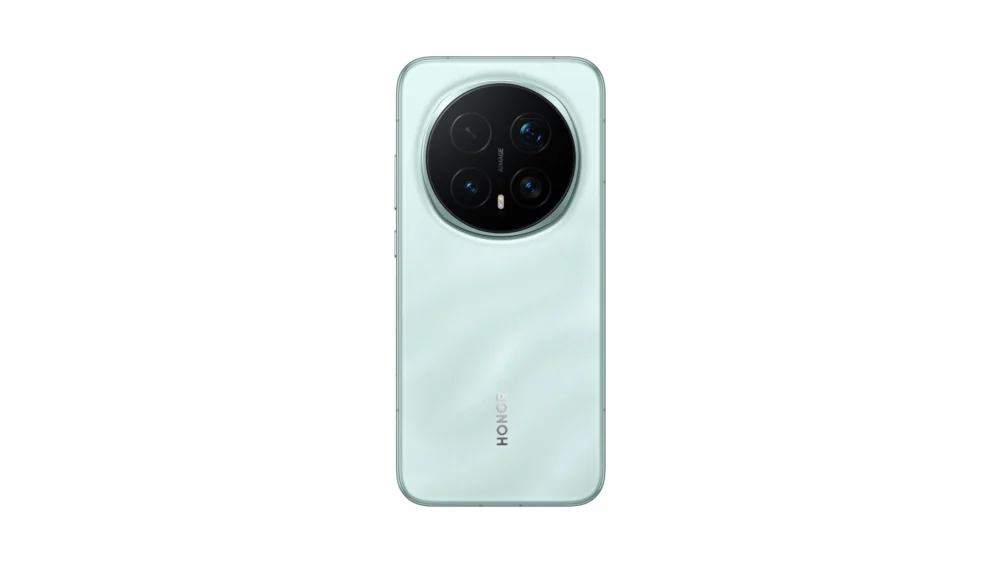
As the global technology community pivots its focus toward the sprawling announcements emanating from CES 2026, Chinese powerhouse HONOR has executed a strategic, high-impact market maneuver by debuting its flagship Magic 8 Pro, alongside its more accessible counterpart, the Magic 8 Lite, specifically targeting the United Kingdom market. This launch timing is far from accidental; it represents a calculated effort to capture mindshare during a period of peak industry distraction, asserting HONOR’s position not just as a competent hardware manufacturer, but as a serious innovator in the premium smartphone segment, particularly where computational photography and on-device artificial intelligence converge. The introduction of the Magic 8 Pro, in particular, signals an aggressive posture aimed squarely at established leaders in mobile imaging.
The Foundation of Power: Underpinnings of the Magic 8 Pro
At the core of the Magic 8 Pro resides the Snapdragon 8 Elite Gen System-on-a-Chip (SoC) from Qualcomm. This selection underscores HONOR’s commitment to deploying the bleeding edge of silicon performance. The generational leap provided by this processor is substantial, manifesting across three critical vectors: Central Processing Unit (CPU) efficiency, Graphics Processing Unit (GPU) rendering prowess, and, most pivotally, Neural Processing Unit (NPU) capabilities for advanced AI computations. This raw horsepower is leveraged directly into tangible user benefits, notably in the gaming domain. The device supports sophisticated rendering techniques like super-resolution and dynamic frame generation, effectively allowing the chipset to upscale and interpolate frames. This means that a graphically demanding title initially rendering at a lower resolution and 60 frames per second (fps) can be intelligently boosted to a smooth 120fps experience at a higher 1080p output, offering a significant competitive advantage for mobile gamers who demand uncompromising fluidity.
Beyond processing capabilities, the endurance package is equally impressive. The Magic 8 Pro is equipped with a substantial 6,270mAh silicon-carbon battery. This chemistry choice is indicative of a drive toward higher energy density and potentially better thermal management compared to traditional lithium-ion cells. To mitigate the necessary recharge time for such a large cell, HONOR has integrated ultra-rapid charging solutions: 100W wired fast charging and a robust 80W wireless charging standard. Such speeds place the device firmly in the upper echelon of charging technology, drastically reducing downtime for power users.
The visual interface is managed by a breathtaking 6.71-inch LTPO OLED panel. This display technology is the gold standard, offering granular control over power consumption via its adaptive refresh rate, which scales seamlessly from 1Hz for static content up to 120Hz for smooth motion. The specifications sheet boasts an astonishing peak brightness of 6,000 nits, which is crucial for maintaining visibility and HDR impact under direct sunlight—a key metric where flagship differentiation often occurs. Furthermore, HONOR has integrated several proprietary display enhancements aimed at user well-being and visual fidelity. These include an AI-powered defocus display (likely modulating focus planes for enhanced depth perception in content), dynamic dimming algorithms, and the "Circular Polarised Display 2.0," suggesting advancements in glare reduction and color consistency. Most notably, the "circadian night display" feature aims to intelligently adjust color temperature and blue light emission throughout the day to better emulate natural light cycles, a subtle but critical feature for extended use.
The Night Photography Mandate: Hardware Meets Computational Vision
The marketing narrative surrounding the Magic 8 Pro is heavily weighted toward its photographic capabilities, specifically in challenging low-light environments. This ambition is not mere hyperbole; it is backed by a meticulously engineered triple-lens array designed for maximum light capture and intelligent processing.
The headline sensor is a 200MP ultra-night telephoto camera. While the high megapixel count often garners attention, the supporting hardware is what truly matters in the dark. This sensor features a relatively large 1/1.4-inch physical size, which allows for superior light gathering. Paired with a wide f/2.6 aperture and Optical Image Stabilization (OIS), this module is designed for crisp, optically stabilized zoom shots even when ambient light is scarce. The 3.7x optical zoom ratio provides genuine reach without digital interpolation.
Complementing this is a 50MP ultra-night main camera, featuring an even wider f/1.6 aperture, also equipped with OIS. This combination of a large sensor and a very fast aperture is the traditional recipe for exceptional low-light performance, maximizing photon intake before the computational pipeline even begins. Rounding out the system is another 50MP sensor serving as the ultrawide lens, ensuring that the entire field of view benefits from high-resolution capture capabilities.
However, in the modern smartphone landscape, hardware is only half the equation. HONOR has heavily infused the camera experience with a suite of proprietary AI algorithms designed to elevate images beyond what the raw sensor data provides. While the specific list of AI features was not enumerated in detail, based on industry trends and the phone’s positioning, these likely encompass:
- Semantic Segmentation and Scene Recognition: Rapidly identifying elements like skin, foliage, sky, and architecture to apply nuanced, localized enhancements rather than uniform processing.
- Advanced Noise Reduction (NR) Stacking: Sophisticated algorithms that merge multiple short exposures into a single frame, selectively removing noise while preserving fine detail—a cornerstone of modern night mode photography.
- AI-Driven Exposure Bracketing: Intelligent selection of exposure levels for highlight preservation and shadow recovery, tailored specifically to the dynamic range of the captured scene.
- Portrait Lighting and Depth Refinement: Utilizing the AI engine to create more natural and precise bokeh effects, especially important when photographing subjects against complex, dark backgrounds.
The Dedicated AI Interface: A Physical Commitment
Perhaps the most concrete physical manifestation of HONOR’s AI focus is the inclusion of a dedicated physical AI button on the Magic 8 Pro chassis. This is a bold move in an era where manufacturers are increasingly relying solely on software triggers or voice commands for AI interaction. The implementation offers layered functionality:
- Double-Press Shortcut: This is contextually mapped for immediate access to the camera application, suggesting that HONOR views capturing spontaneous moments—often in varied lighting—as a primary AI use case.
- Long Press Access: This initiates a system-wide AI screen suggestion feature, allowing the user to query or act upon the content currently displayed on the screen without leaving the application.
- Customizable Gestures: The true flexibility lies in user customization, allowing the button to be mapped to deep-level features such as the primary HONOR AI assistant, a dedicated AI Settings Agent (for complex configuration tasks), or an AI Photos Agent dedicated to post-processing and organization.
This physical interface elevates the AI from a background utility to a foreground, accessible feature, signaling a shift in user interaction paradigms that warrants close observation.
The Dual-Engine AI Ecosystem
The software backbone driving these ambitious features is a hybrid architecture that combines on-device processing with cloud-based reasoning. For tasks requiring immediate response, privacy preservation, or those running on less complex models (such as basic scene classification or real-time UI adjustments), the HONOR AI engine leverages the NPU directly on the device. This ensures low latency and maintains user data sovereignty for sensitive operations.
For computationally intensive, large-scale reasoning tasks—such as advanced language understanding, complex data synthesis, or generative tasks—the system seamlessly interfaces with Google’s Gemini platform via the cloud. This partnership provides access to state-of-the-art large language models (LLMs) and multimodal capabilities. HONOR’s proprietary assistant is engineered to act as a sophisticated intermediary, capable of interpreting natural language commands and executing actions across the operating system and integrated applications.
The integration extends to cutting-edge security and creative tools. Features like AI Deepfake Detection and AI Voice Cloning Detection address growing concerns around digital authenticity, positioning the device as a tool for discerning reality in synthetic media. Furthermore, the inclusion of "Magic Portal" suggests advanced cross-application data transfer or interaction methods powered by AI. On the creative front, access to Google’s emerging generative tools, including Gemini Live for conversational interaction, Nano Banana (likely a localized or smaller-footprint model), and Veo 3 (suggesting advanced video generation or enhancement capabilities), positions the Magic 8 Pro at the forefront of consumer-facing generative AI.
Industry Implications and Market Positioning
The launch of the Magic 8 Pro, concurrent with the major industry gathering at CES, suggests that HONOR is prioritizing high-value flagship differentiation over simple spec-sheet competition. By heavily emphasizing the fusion of superior low-light imaging hardware (200MP telephoto with OIS, large sensors) and deep AI integration, HONOR is directly challenging the established imaging dominance of competitors. The commitment to a physical AI button is a significant strategic differentiator. While many manufacturers are pursuing "AI phones," HONOR is providing a tangible, tactile entry point, potentially setting a new hardware standard for AI interaction that other OEMs may eventually need to emulate.
The silicon choice—Snapdragon 8 Elite Gen—is a statement of intent regarding sustained performance and future-proofing, especially as mobile gaming continues to push graphical boundaries. The synergy between the advanced SoC, the massive battery, and the rapid charging technology positions the Magic 8 Pro as a device built for endurance under heavy load, a prerequisite for leveraging intensive AI features consistently.
UK Market Entry and Tiered Strategy
The concurrent release of the Magic 8 Pro (£1,099.99) and the significantly more accessible Magic 8 Lite (£399.99) in the UK demonstrates a dual-pronged market strategy. The Pro model is positioned to compete directly against the top-tier offerings from Samsung and Apple, leveraging premium materials (available in Sunset Gold, Black, and Sky Cyan) and cutting-edge technology to justify its flagship price point.
Conversely, the Lite model acts as a volume driver and brand-awareness builder. Priced attractively and available in distinct finishes (Forest Green, Midnight Black, and Reddish Brown), the Lite variant likely carries forward essential elements of the HONOR ecosystem—perhaps a capable main camera and a version of the AI software suite—but utilizes a less potent SoC and a slightly scaled-back display and charging configuration. This tiered approach allows HONOR to capture both the enthusiast segment willing to pay a premium for the absolute best and the mainstream consumer seeking strong value with flagship DNA.
Future Trajectory: AI as the Core Differentiator
The trajectory signaled by the Magic 8 Pro suggests that HONOR views the smartphone as evolving from a communication and media consumption device into a genuine, proactive computational partner. The heavy investment in on-device AI suggests a future where personalized computing becomes increasingly localized, fast, and context-aware, moving beyond simple cloud queries. The emphasis on night photography, while currently a key marketing hook, is merely the most visible application of this underlying computational vision. Future updates and subsequent hardware generations will likely see this sophisticated AI engine applied to real-time translation, advanced augmented reality overlays, and proactive system optimization that anticipates user needs before explicit commands are given. The dedicated AI button might eventually become a universal standard, much like the camera button once was, symbolizing the centrality of artificial intelligence in the next generation of personal technology. The global rollout, following this targeted UK debut, will be keenly watched to see if this blend of raw power, photographic excellence, and AI accessibility can successfully dethrone incumbent leaders in the highly competitive premium space.