

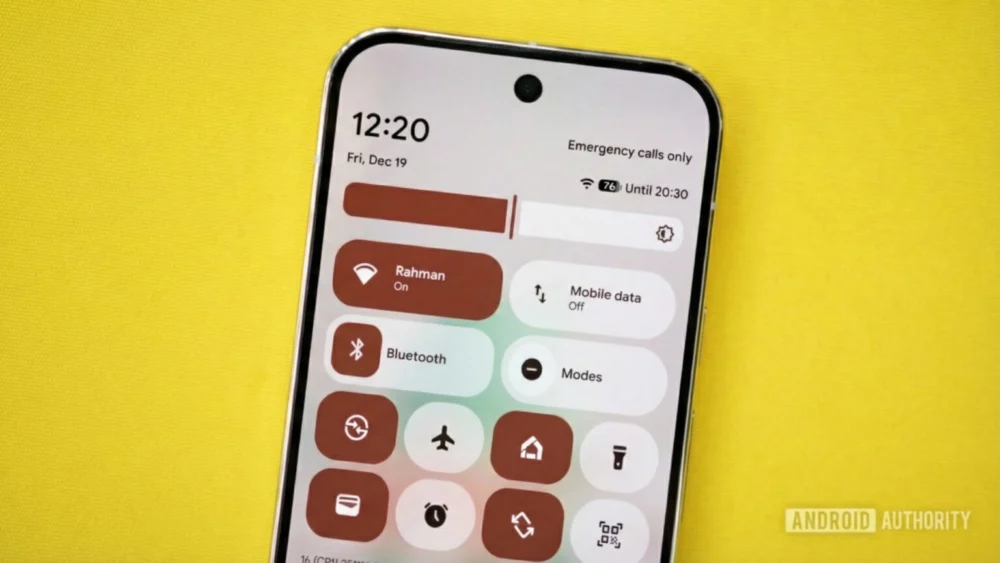
The perpetual tightrope walk for smartphone users—balancing instantaneous, high-speed connectivity with the imperative of all-day battery endurance—has long been a central tension in mobile device design. For Google’s Pixel line, this balancing act was historically managed by a blanket feature known as Adaptive Connectivity. This system, while conceptually sound, suffered from a critical flaw common to many opaque background optimizations: a lack of user visibility and direct control. Users were presented with a binary choice: enable the feature and trust the algorithm, or disable it and risk poor performance or rapid battery drain. However, recent developments within the Android 16 ecosystem, specifically manifesting in the latest Quarterly Platform Release (QPR3) Beta 2 rollout, signal a significant philosophical shift. Google is finally dismantling this monolithic approach, replacing it with a granular, user-empowering system that directly addresses years of connectivity frustration on Pixel hardware.
This evolution moves beyond mere cosmetic changes to the settings menu; it represents a fundamental refinement of how the operating system prioritizes network resources. Previously, Adaptive Connectivity operated as a "black box." When enabled, the system was tasked with dynamically managing Wi-Fi and cellular handoffs to optimize the overall user experience—a mandate that often felt subjective and inconsistent across different usage scenarios. A user might experience the phone clinging to a weak, but free, Wi-Fi signal, leading to frustratingly slow data rates, or conversely, see the device unnecessarily jump to a power-hungry 5G connection when a solid Wi-Fi network was available just around the corner. The lack of transparency meant troubleshooting connectivity issues often devolved into guesswork or simply toggling the main switch off entirely.
The unveiling in the QPR3 Beta 2 build introduces a crucial architectural separation of duties within the Adaptive Connectivity framework. Instead of the single, all-encompassing toggle, users are now presented with two distinct, independently controllable settings located under the established path: Settings > Network & internet > Adaptive Connectivity. These new options are "Auto-switch to mobile network" and "Optimize network for battery life." Both are enabled by default, suggesting Google’s initial aim is to retain the benefits of adaptive management while providing necessary opt-outs for specific user preferences.
The first new control, "Auto-switch to mobile network," directly targets connection reliability. This feature governs the system’s willingness to execute a handoff from a struggling Wi-Fi network to the cellular data pipeline. For users frequently moving between zones of varying signal strength—such as navigating large office buildings, utilizing patchy public Wi-Fi hotspots, or dealing with intermittent home network drops—this function is invaluable for maintaining session continuity. It ensures that video calls don’t stutter and downloads don’t stall, prioritizing throughput over data consumption awareness. The critical aspect here is user choice: a user concerned about exceeding cellular data caps, or one who is tethered to an unlimited Wi-Fi plan, can now explicitly disable this auto-switch. This grants power users the ability to mandate that the device remains connected to Wi-Fi, regardless of how poor the signal quality becomes, effectively trading real-time responsiveness for data conservation.
The second toggle, "Optimize network for battery life," addresses the power consumption aspect inherent in radio management. Maintaining multiple active connections (Wi-Fi scanning, cellular standby, Bluetooth) is a major drain on mobile power reserves. This setting empowers the OS to favor the connection path that requires the least power expenditure at any given moment. This could mean forcing a connection onto a strong, stable Wi-Fi network rather than allowing the modem to use more power to maintain a peak-performance 5G link, or conversely, choosing a more power-efficient cellular band over a distant, weak Wi-Fi access point. This granular control acknowledges that battery optimization is not synonymous with connection speed; sometimes, the most efficient path isn’t the fastest.
This segmentation is not a trivial interface refinement; it reflects a mature understanding of contemporary mobile usage patterns. In the early days of smartphones, the primary goal was simply being connected. Today, the user experience is defined by the quality and cost of that connection. Modern users navigate environments saturated with Wi-Fi signals, yet often rely on robust 5G or even 4G LTE for critical tasks. The monolithic Adaptive Connectivity feature failed because it treated the goal of reliability and the goal of efficiency as a single, inseparable objective. By splitting them, Google allows users to define their immediate priority.
The industry implications of this shift are noteworthy. For years, Android OEMs have struggled to match the perceived consistency of Apple’s connectivity management, where proprietary hardware and software integration often allowed for smoother transitions between networks. Google’s move towards explicit, labeled controls in Android 16 signals a strategic pivot: instead of merely hiding complexity behind sophisticated algorithms, they are exposing the levers of control, trusting the user to configure the system to their specific network environment and financial constraints. This transparency is vital for ecosystem maturity. If third-party Android manufacturers wish to maintain parity in user satisfaction, they will inevitably need to adopt similar dual-control paradigms, moving away from vague "smart network" features.
From an expert analysis perspective, this change likely leverages deeper integration with modem firmware and chipset capabilities, potentially relying on metrics beyond simple signal strength (RSSI). Advanced network optimization relies on factors like latency jitter, packet loss rates, and the thermal profile of the modem itself. The "Optimize network for battery life" setting, for instance, might instruct the modem to favor lower-power states or specific frequency bands that consume less energy, even if the resulting bandwidth is slightly lower. This suggests that the QPR3 beta is not just surfacing existing functionality but potentially enabling new, finer-grained control hooks into the radio management stack.
The future impact of this dual-control system extends into the realm of personalized computing environments. As devices become more context-aware, the network choices they make must also reflect that context. A user commuting on a train might prioritize the "Auto-switch to mobile network" setting to ensure unbroken streaming, whereas a user working from a coffee shop with known spotty Wi-Fi might switch to prioritizing "Optimize network for battery life," accepting brief connectivity pauses in exchange for not having their battery depleted by constant cellular searching. This level of nuanced customization aligns with the broader trend in Android towards hyper-personalization, where the OS adapts to the user’s intent, not just their location.
Furthermore, this refinement sets a higher bar for Pixel hardware performance perception. A key differentiator for Google’s proprietary devices has always been the promise of the purest, most optimized Android experience. Persistent connectivity frustration erodes that promise. By fixing this "headache," Google is directly attacking a known friction point that has historically hampered Pixel’s competitiveness against rivals known for rock-solid connectivity stability. The move alleviates the cognitive load on the user—they no longer have to wonder why their connection is behaving a certain way; they now have the option to dictate the trade-off parameters.
The rollout timing is also significant. As Android 16 nears its stable release, likely in March, incorporating these fundamental network control changes in QPR3 ensures robust testing across diverse hardware configurations before mass deployment. The beta channel serves as the proving ground where edge cases—such as interactions with specific carrier aggregation schemes or complex mesh Wi-Fi setups—can be identified and ironed out. The fact that both toggles are enabled by default suggests Google is confident in the baseline performance of the new architecture, intending for the majority of users to benefit from the improved, albeit now more transparent, automated management.
In summary, the introduction of discrete controls for mobile data switching and power optimization within Adaptive Connectivity in Android 16 marks a significant maturation of Google’s approach to network management. It acknowledges that connection quality is not a monolithic metric but a spectrum defined by user priorities in real-time. This move empowers the user, clarifies system behavior, and sets a new benchmark for network control granularity within the broader mobile operating system landscape, moving connectivity management from an abstract background process to a configurable user preference. This deliberate unbundling of reliability and efficiency represents a strategic win for the Pixel user base, promising fewer connectivity compromises moving forward. This shift is less about adding a feature and more about architecting clarity into a traditionally frustrating aspect of smartphone operation, a move that benefits power users and casual consumers alike by finally offering a meaningful dialogue with the device’s radio stack.