

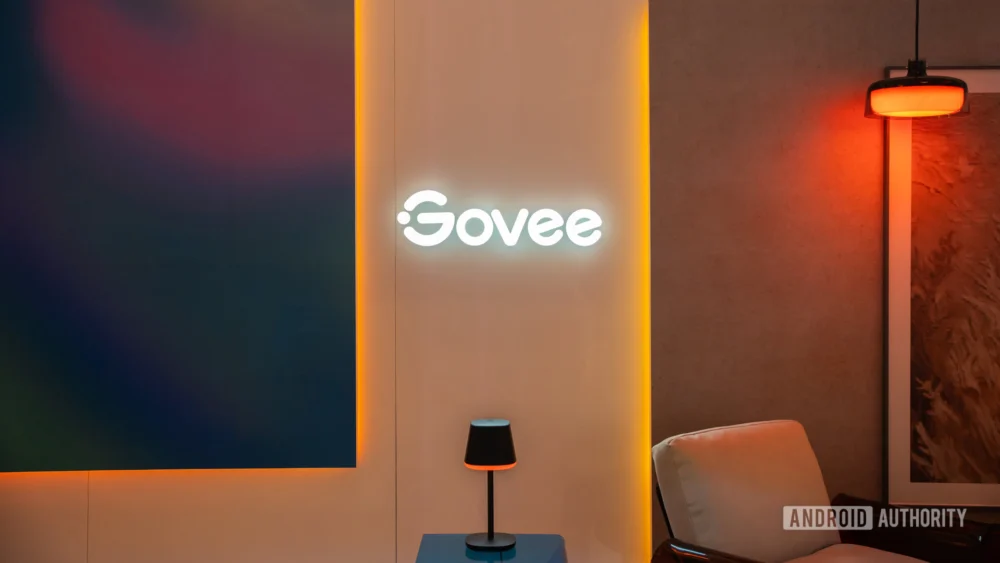
The landscape of consumer electronics, particularly within the smart home sector, has long operated under a ceiling of basic automation: scheduled on/off cycles, rudimentary color adjustments, and simple voice integration. For years, the promise of truly "intelligent" lighting remained tethered to these foundational commands. However, the recent unveiling at the Consumer Electronics Show (CES) 2026 by Govee suggests that this ceiling has not only been broken but shattered, ushering in an era where illumination is deeply interwoven with human experience and physiological well-being. Stepping onto the Govee exhibition floor felt less like viewing a product showcase and more like observing a preview of ambient computing’s next frontier—a dramatic, dynamic light show that hints at a profound shift in how we interact with our living spaces.
The core narrative emanating from the Govee presentation centers on leveraging sophisticated Artificial Intelligence not just for control, but for proactive, personalized environmental adaptation. This move transcends mere utility, positioning smart lighting as an active participant in the user’s emotional state, productivity, and even circadian health management. The company introduced a trifecta of foundational technologies—LuminBlend+, AI Lighting Bot 2.0, and DaySync—each addressing a critical limitation in legacy smart lighting systems: color fidelity, contextual interaction, and temporal synchronization.
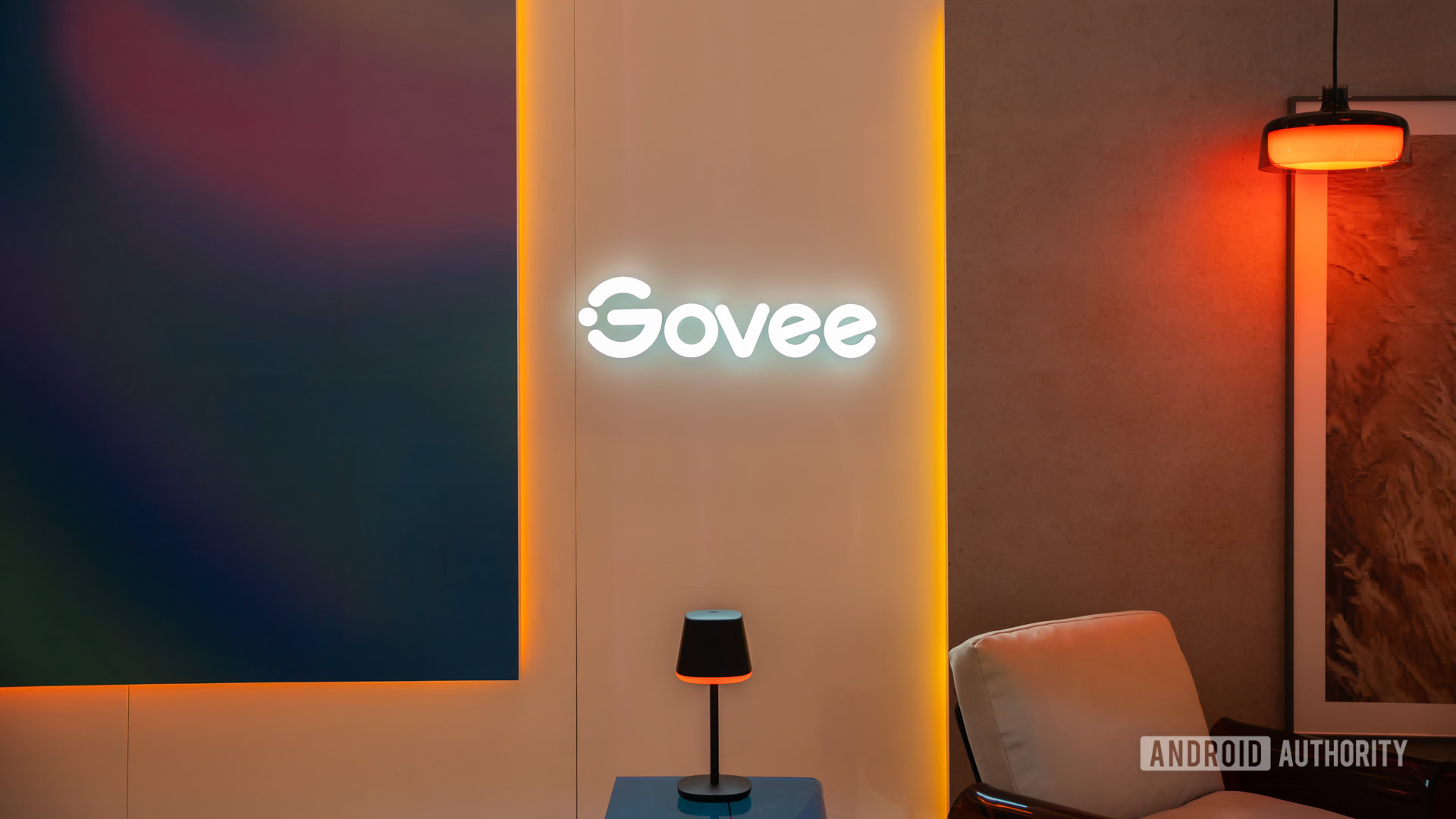
The Foundational Leap: Contextualizing Color and Light Quality
For the technology enthusiast, the most immediate and quantifiable breakthrough lies in LuminBlend+. Previous generations of RGB and tunable white lighting often struggled with color accuracy, especially when brightness levels fluctuated, leading to noticeable shifts in hue or an overall washed-out appearance. LuminBlend+ directly confronts this through the integration of a proprietary 16-bit precision control chip. This hardware upgrade allows for vastly finer modulation of the light output, resulting in the capability to render an astonishing 281 trillion distinct color variations. This represents a monumental step up from the typical 16 million colors often cited by competitors, moving the industry closer to photorealistic light simulation.
Furthermore, the expansion of color temperature range to an unprecedented 1,000K (ultra-warm amber) up to 10,000K (crisp daylight blue) is significant. This wide spectrum is crucial for advanced circadian rhythm applications, allowing users to precisely match indoor lighting to natural light conditions at any time of day, or even replicate specific historical lighting environments. Crucially, the inclusion of integrated gamma calibration ensures color consistency across the entire brightness curve. This means a deep crimson set at 10% brightness retains the intended chromatic signature, a persistent challenge that has plagued previous iterations of multi-chip RGBW systems. This focus on absolute color fidelity elevates lighting from a decorative feature to a tool for precise atmospheric engineering.
Industry Implications: The Shift from Reactive to Proactive Systems
Govee’s advancements signal a palpable inflection point in the smart home industry. For years, the market has been saturated with products that are inherently reactive—they wait for a user command, a sensor trigger, or a pre-set schedule. The introduction of AI-centric features like the AI Lighting Bot 2.0 and DaySync signals a pivot toward proactive and predictive environments.
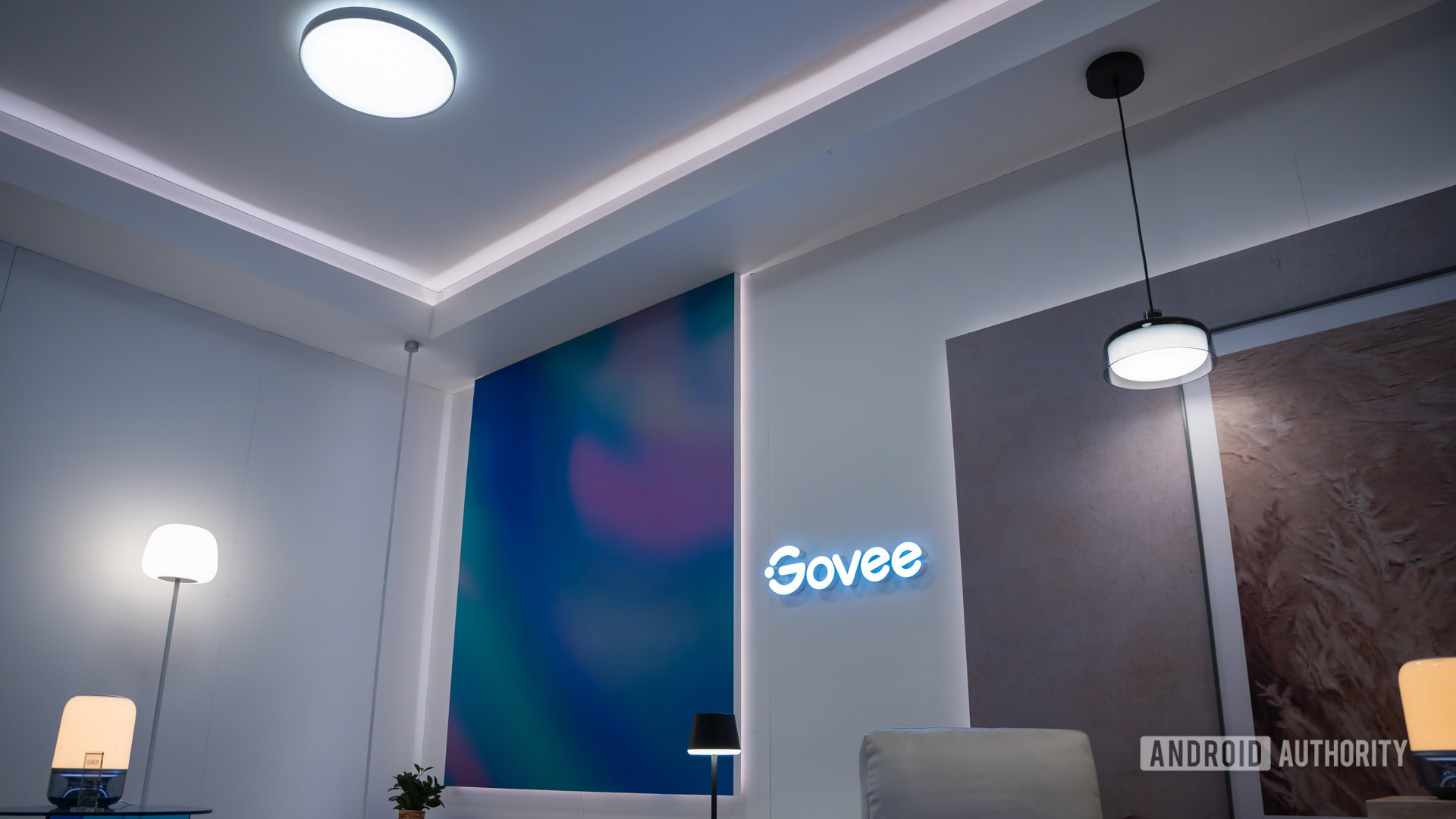
The implications for industry competitors are clear: parity in color depth and brightness is no longer sufficient for market leadership. The new benchmark is contextual intelligence. If lighting can now dynamically interpret mood or generate complex visuals based on abstract input, the standard smart bulb becomes an antique overnight. This forces established players to rapidly integrate advanced machine learning capabilities, moving beyond simple IF/THEN logic into genuine environmental interpretation.
AI Lighting Bot 2.0: The Interface Revolution
The AI Lighting Bot 2.0 is arguably the most ambitious feature, transforming the lighting system into a conversational, almost artistic partner. The ability for linear lighting fixtures to handle multi-turn, continuous conversations moves beyond the transactional nature of current voice assistants (e.g., "Set light to blue"). Instead, users can engage in descriptive dialogues: "Make the room feel energized, but use colors reminiscent of a summer sunset." The AI processes the nuance and translates it into real-time light sequencing.
For Govee’s graphical products—such as their curtain or pixel-based arrays—the capability to generate dynamic GIF animations from simple text or voice prompts ("Show me a subtle, slow-moving nebula") is a profound creative empowerment tool. This moves the hardware from being a display peripheral to a genuine generative media platform embedded in the architecture of the home. Expert analysis suggests this is the beginning of localized generative AI applications focused purely on ambiance and aesthetic output, independent of large language model services. It’s a dedicated AI agent for mood construction.

DaySync: Synchronizing Light with Human Biology
Perhaps the most impactful long-term innovation is DaySync, a system deeply rooted in chronobiology. By autonomously monitoring and integrating external data—local sunrise/sunset times, hyperlocal weather patterns, and, critically, user-defined activity profiles—DaySync automates lighting adjustments to align perfectly with the human circadian rhythm. This isn’t just dimming lights in the evening; it involves subtle, continuous shifts in color temperature and intensity throughout the day. For instance, it might subtly increase blue-spectrum light during peak mid-morning work hours to boost alertness, before gradually shifting toward warmer, melatonin-supportive tones as evening approaches.
The sophistication here lies in the AI’s ability to dynamically override presets based on real-time conditions. If an unexpected storm darkens the afternoon, DaySync compensates immediately, maintaining the prescribed spectral profile necessary for optimal cognitive function, rather than letting the room plunge into a dim, unproductive state. The integration of this bio-centric approach positions Govee not just as a lighting company, but as a wellness technology provider utilizing light as a primary therapeutic vector.
The New Hardware Manifestations: Engineering the Vision
These software advancements are being anchored by a new wave of hardware designed specifically to utilize the expanded capabilities: the Govee Floor Lamp 3, the Govee Ceiling Light Ultra, and the Govee Sky Ceiling Light.
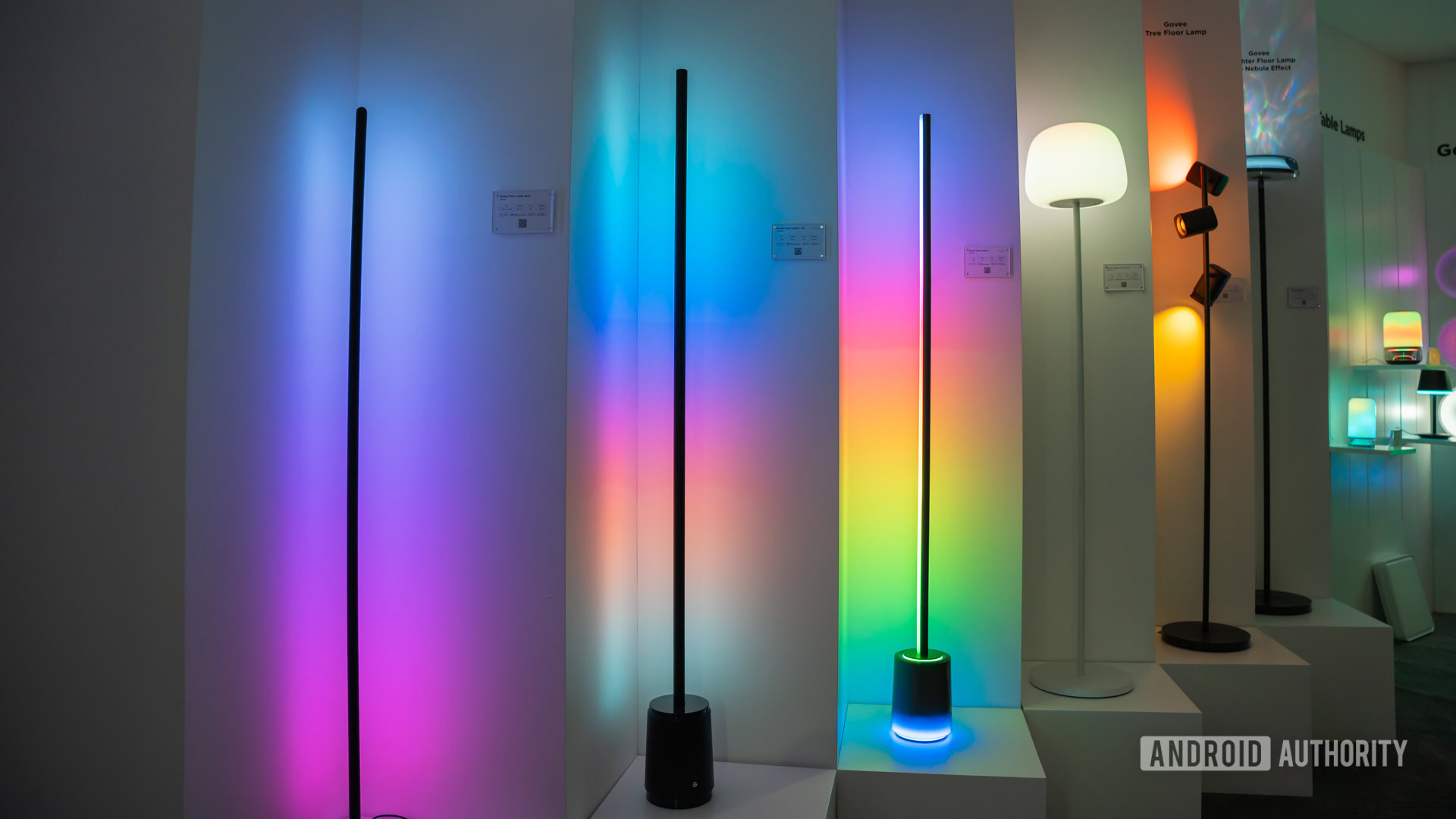
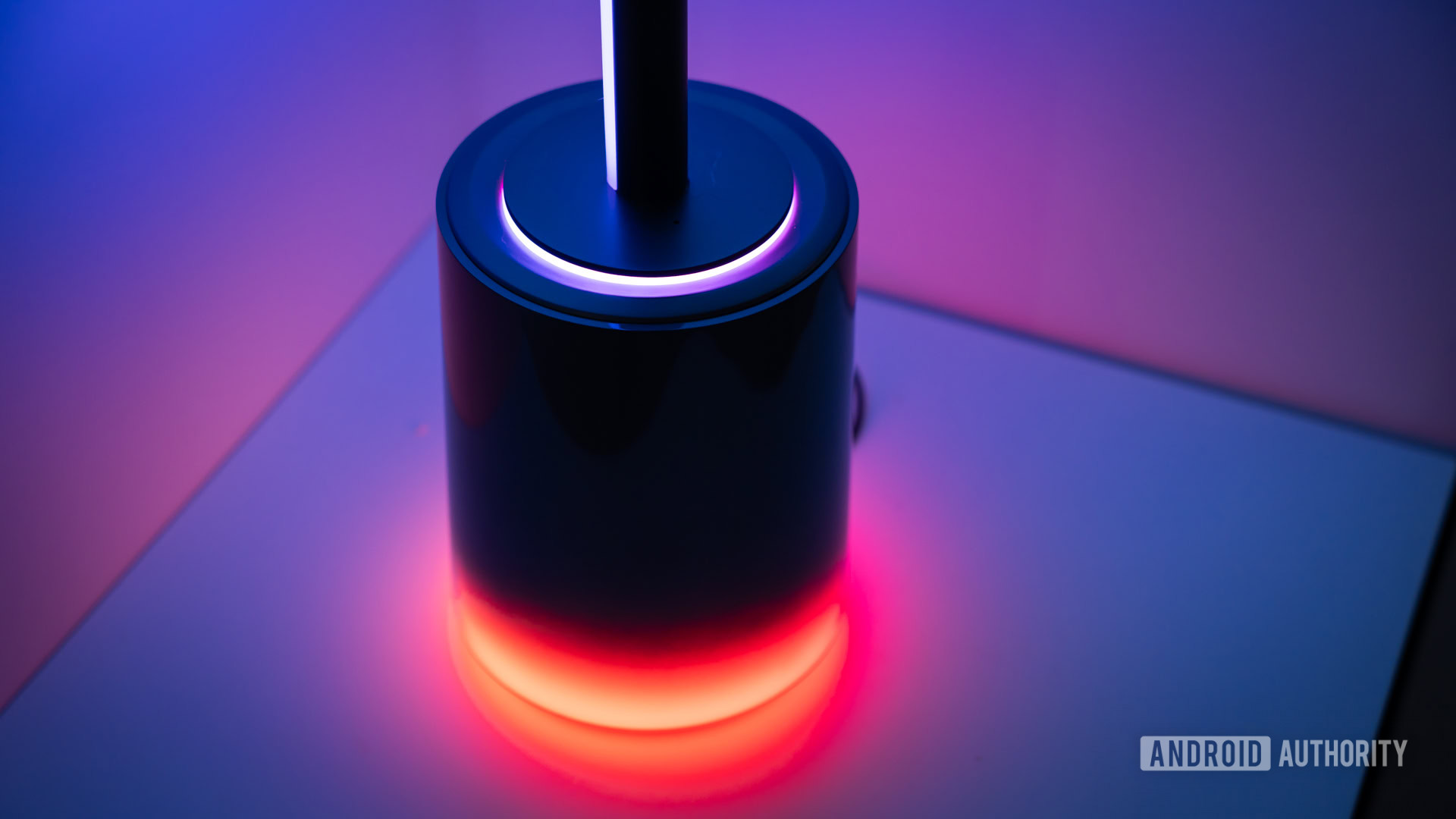
The Govee Floor Lamp 3 exemplifies the convergence of color fidelity and physical design. Moving beyond the traditional accent lighting role, this model emphasizes immersive, 360-degree illumination. The ability to project light both forward and backward from the fixture provides true volumetric lighting, eliminating shadowing inconsistencies common with rear-facing-only panels. Leveraging LuminBlend+, its 281 trillion color potential means the subjective experience of "warm white" can now be calibrated with near-perfect accuracy, whether the user desires the specific Kelvin temperature of a 19th-century gas lamp or the vibrant intensity of modern LED technology. Its integration with DaySync makes it a dynamic anchor for personal sleep/wake cycles.
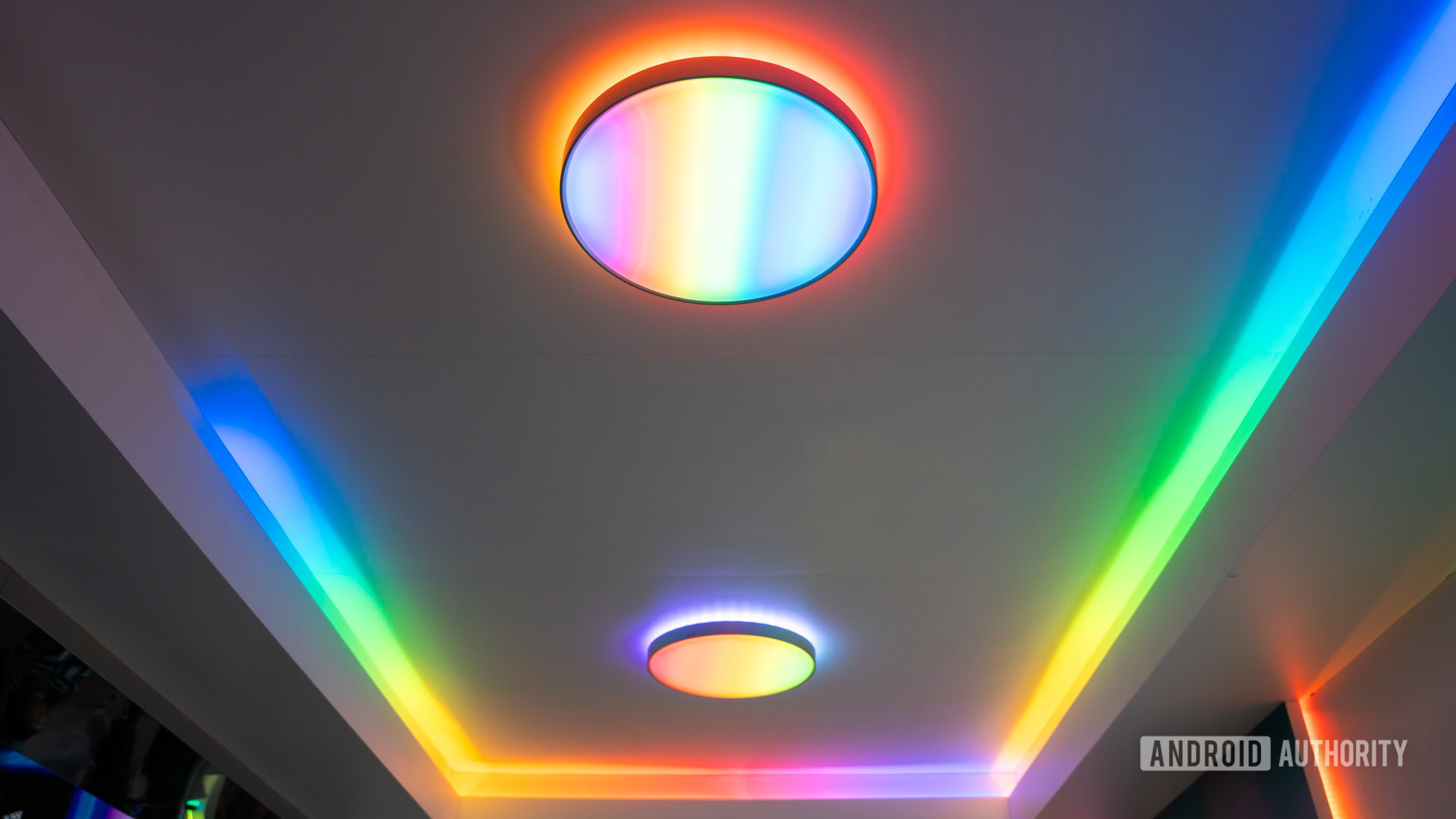
The Govee Ceiling Light Ultra targets functional, overhead illumination while embedding digital artistry. With a powerful 5,000-lumen output, it functions as a primary light source, but its defining feature is the integrated 616-pixel LED matrix. This turns a functional necessity into a high-resolution digital canvas. The ability to utilize the AI Lighting Bot 2.0 to render custom patterns or use the 8-layer DIY canvas for complex visual layering suggests a move toward sophisticated, digitally defined domestic aesthetics. This moves beyond reactive synchronization (like mirroring a TV screen) into proactive, user-defined digital wallpaper that changes based on context. The high Color Rendering Index (CRI 95) ensures that while the lighting can be dynamic, the perception of physical objects and human skin tones remains true-to-life when the artistic modes are paused.
Finally, the Govee Sky Ceiling Light appears designed to tackle the psychological impact of enclosed spaces. By directing light upwards, it simulates expansive overhead environments. Its primary utility is enhancing the DaySync experience by recreating the ambient tonality of the actual sky, offering a gradient effect that can make smaller rooms feel perceptibly larger and less claustrophobic. Capable of 5,200 lumens and featuring adjustable color temperature (2700K–6500K) suitable for illuminating spaces up to 300 square feet, it balances mood setting with practical, high-fidelity ambient light, ensuring that even the simulated sky adheres to biologically beneficial spectral standards.
Future Impact: The Sentient Home
Govee’s presentation at CES 2026 suggests that the next evolution of the smart home will be defined by seamless, anticipatory interactions rather than manual control interfaces. The trajectory points toward a lighting system that functions less like an appliance and more like a personalized, non-intrusive companion. If technology is truly intelligent, it should anticipate needs before they are articulated.
The emphasis on biological synchronization (DaySync) suggests a significant market opening for products that bridge digital technology with tangible health outcomes. As consumers become more aware of the impact of artificial light on sleep quality, mood regulation, and cognitive performance, demand for scientifically calibrated, dynamically adjusting lighting solutions will surge. This moves the purchase justification from "cool factor" to "essential wellness investment."
The integration of generative AI directly into light fixtures—allowing users to describe a mood and have the lighting hardware instantly render a complex visual or atmospheric effect—also sets a new standard for user engagement. It removes the steep learning curve associated with complex lighting software, democratizing advanced visual customization.
In conclusion, Govee’s demonstration was not merely a product launch; it was a blueprint for the future of ambient computing. By marrying extreme color precision (LuminBlend+), intuitive generative interaction (AI Lighting Bot 2.0), and physiological automation (DaySync), the company has established a compelling vision where the home environment actively supports and enhances human life with minimal conscious effort required from the occupant. The industry is now tasked with catching up to this demonstrably brighter, more nuanced future.