

The perennial anticipation surrounding Google’s mid-tier "a" series Pixel phones has reached a new inflection point, culminating in the official confirmation of the Pixel 10a’s launch date. In a calculated maneuver that leverages pre-event industry momentum, Google has transitioned from the usual cycle of controlled leaks to a direct, albeit subtle, announcement. This confirmation arrives hot on the heels of widespread speculation and preliminary visual reveals, signaling that the company is ready to cement the mid-range strategy for the upcoming fiscal cycle.
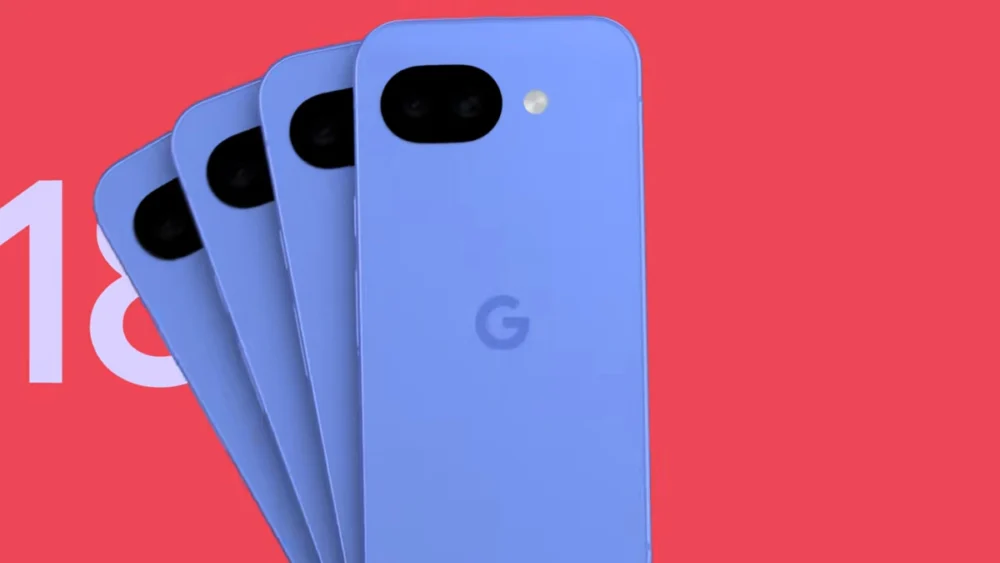
The definitive signal came via a newly released teaser video disseminated through the official Made by Google YouTube channel. While the clip itself is brief—a common characteristic of Google’s pre-launch marketing efforts for the "a" line—it serves a crucial function: establishing the debut timeline. Nestled within the video’s runtime, specifically around the halfway mark, the date February 18, 2026, was explicitly highlighted, marking the official unveiling event for the Pixel 10a. This timing places the device firmly within a highly strategic window in the mobile technology calendar.
This official confirmation follows an earlier, highly detailed leak attributed to noted industry observer Evan Blass, which showcased several high-fidelity marketing renders of the forthcoming device. The synergy between the leaked imagery and the visual assets presented in the subsequent official teaser is notable. Both sources suggest a design philosophy rooted in iteration rather than revolution, indicating that the Pixel 10a will carry forward the established aesthetic language of its predecessor, likely preserving key elements like the distinctive camera bar housing. The appearance of the device in a striking shade of blue within the teaser further provides an early glimpse into the color palette Google intends to push for this budget-conscious offering.
The Strategic Context of the Pixel "a" Series
To fully appreciate the significance of the February 18th unveiling, one must examine the historical role of the "a" series within Google’s broader hardware ecosystem. The Pixel "a" line—starting with the original Pixel 3a—was established not merely as a cheaper alternative, but as a strategic Trojan horse. Its primary directive has always been volume, bringing the core Google software experience, particularly computational photography prowess, to a wider, more price-sensitive demographic that might otherwise gravitate toward established budget players like Samsung’s ‘A’ series or various offerings from Chinese manufacturers.
Historically, these devices have served as crucial testbeds for Tensor chip iterations or refined software features before they trickle down to the flagship line, or conversely, they debut with slightly de-featured hardware that maintains a compelling price-to-performance ratio. The 10a, launching in early 2026, is expected to run on a variant of the Tensor G4 or potentially an optimized Tensor G5 chipset, depending on Google’s internal silicon roadmap alignment. If it utilizes the Tensor G4, it suggests Google is prioritizing cost optimization and stability for the mid-range, leveraging proven technology. If it introduces the G5, it signifies an aggressive push to bring bleeding-edge efficiency to the masses immediately.
Industry Implications: The Pre-Flagship Joust
The confirmed February launch date positions the Pixel 10a in direct proximity to one of the mobile industry’s most significant annual events: the launch of Samsung’s Galaxy S flagship series. Leaks suggest that the Galaxy S26 lineup is slated for release approximately one week following the Pixel 10a’s debut. This proximity is not accidental; it is a carefully calibrated competitive dance.
By launching just before Samsung’s main event, Google achieves several objectives. Firstly, it commands the tech news cycle momentarily, effectively diverting attention away from the immediate anticipation for the S26. Consumers researching new phones in mid-February will inevitably be forced to compare the compelling value proposition of the Pixel 10a against the premium offerings of Samsung. Secondly, the Pixel 10a sets a clear price anchor. When the Galaxy S26 is announced with its inevitable premium pricing, the affordability and feature set of the 10a become even more attractive as a foil. This tactic effectively allows Google to "steal thunder" by providing a high-quality, lower-cost alternative right before the market is saturated with top-tier flagship announcements.
The staggered timing forces reviewers and consumers alike to consider the trade-offs inherent in the market segmentation. While the S26 will undoubtedly showcase the pinnacle of mobile engineering—in terms of display technology, raw processing power, and perhaps advanced camera hardware—the Pixel 10a will counter with superior software support longevity and arguably the best point-and-shoot photography experience available at its price point, courtesy of Google’s specialized image processing algorithms.
Expert Analysis: Design Continuity and Software Commitment
The reported design continuity is perhaps the most telling aspect of the 10a’s impending release. In an industry often driven by yearly aesthetic overhauls, Google’s decision to retain the established form factor speaks volumes about resource allocation and user familiarity. For the mid-range buyer, consistency often trumps novelty. A design that is known, proven, and comfortable reduces perceived risk. It signals that Google’s investment in the 10a lies not in redesigning the chassis, but in refining the internal components—the Tensor chip efficiency, battery longevity, and crucially, the camera sensor tuning.
From a software perspective, the Pixel 10a is expected to launch with Android 15, receiving the same extended software support pipeline as the flagship Pixel 10 series. This commitment to prolonged operating system and security updates remains a core competitive differentiator against many Android rivals in the budget space, where update cycles are often shorter and less reliable. This longevity translates directly into higher residual value and a reduced total cost of ownership for the consumer, an increasingly important factor in value-driven purchasing decisions.
Future Impact and Trends: Cementing the Middle Ground
The Pixel 10a’s success is pivotal for Google’s long-term hardware strategy. If the 10a can successfully capture significant market share in emerging and price-sensitive established markets, it validates the investment in the Tensor chip architecture, even in its less expensive variants. A high volume of "a" series devices provides Google with invaluable real-world data for tuning the Tensor chips across diverse user loads and environmental conditions, data that is essential for refining future generations of silicon.
Furthermore, the market trend shows an increasing bifurcation. Consumers are either opting for ultra-premium devices with extended lifespans (the $1,000+ bracket) or aggressively seeking maximum value in the sub-$500 segment. The Pixel 10a aims to dominate the upper end of that value segment, typically priced between $450 and $500 USD before any carrier subsidies. Its ability to consistently punch above its weight class in photography allows it to create a perception of flagship quality at a mid-range price—a perception that underpins the entire value proposition of the Pixel brand.
The official teaser, however brief, also confirms the operational cadence Google is adopting for its entire 2026 portfolio. By setting the 10a launch in February, the company establishes a clear, early benchmark. The flagship Pixel 10 series will likely follow later in the year (typically October), building upon the foundation and user feedback gathered from the 10a’s initial market performance. This staggered release allows for rapid iteration and refinement between product cycles, a flexibility that legacy manufacturers sometimes struggle to match due to their more monolithic release schedules.
The Anticipated Availability Window
While the February 18, 2026, date locks in the announcement, the critical component for eager consumers is general availability. Current industry speculation, based on historical patterns, suggests that open sales for the Pixel 10a will commence shortly thereafter, potentially targeting March 5, 2026. This two-week gap between announcement and availability allows carriers and retail partners to finalize inventory staging and marketing materials, while also giving the initial wave of tech enthusiasts time to digest reviews and pre-order decisions.
In summation, the subtle confirmation of the Pixel 10a’s debut date serves as more than just a calendar entry. It is a strategic signal that Google is aggressively positioning its mid-range offering to disrupt the market equilibrium just before the major flagship releases of the spring. By confirming a near-identical design language to its predecessor while promising updated internal efficiencies driven by the latest Tensor evolution, the Pixel 10a is shaping up to be less of an incremental update and more of a refined execution of Google’s established, highly successful mid-range formula. The coming weeks will be dedicated to filling in the remaining blanks—specific chipset details, definitive camera specifications, and, most importantly, the final retail pricing that will determine its true competitive edge against the rapidly evolving landscape of budget-friendly Android hardware.