

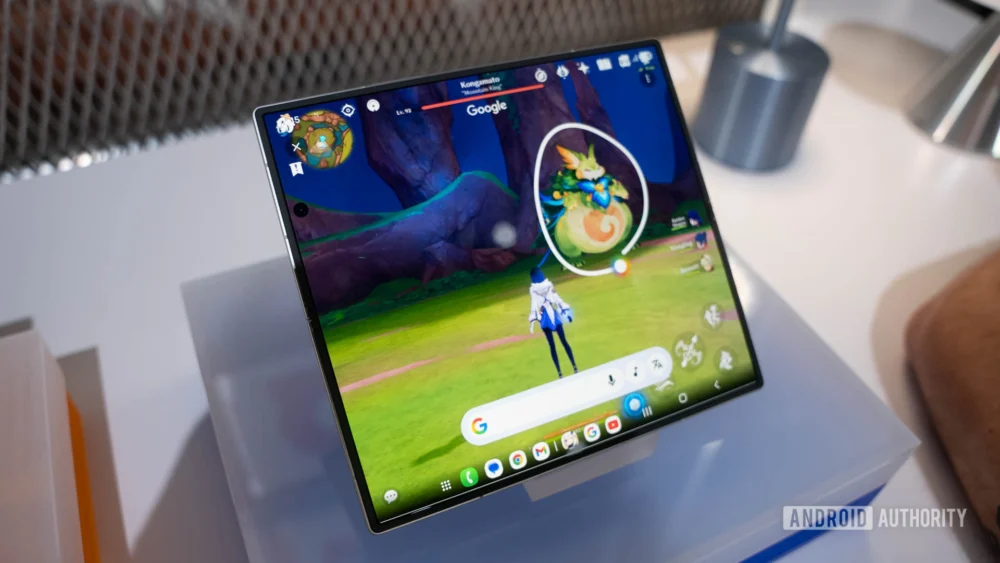
The utility of on-screen search functionalities has rapidly transformed from a niche convenience into a cornerstone of modern smartphone interaction. Among these innovations, Google’s Circle to Search stands out as a potent demonstration of ambient intelligence, allowing users to instantly query any visual element on their display without leaving their current application. This feature, initially launched with a standard set of search results—combining traditional links, visual matches, and introductory AI Overviews—appears to be undergoing a significant architectural shift. Deep dives into the beta code of the Google Android application suggest that the default response mechanism for Circle to Search is being primed to favor generative AI outputs, a move that signals a profound evolution in how users derive meaning and action from contextual visual data.
The Evolution of Ambient Search: Contextual Discovery
Circle to Search, which generally requires a long press on the navigation handle or home button followed by a screen-area selection (despite the name, a circle is rarely necessary), established a powerful precedent. It dissolved the friction inherent in switching apps, capturing a screenshot, and pasting that image into a dedicated search application. The initial implementation treated the highlighted content like any standard Google query, presenting a familiar results card populated with a mix of Search Generative Experience (SGE) summaries, shopping links, and traditional web page listings. This baseline functionality provided immediate gratification for simple identification tasks—identifying a plant, finding a product, or translating text within an image.
However, the roadmap for mobile intelligence clearly points toward synthesis over simple aggregation. The latest preliminary findings, extracted from the internal workings of the Google app version 17.3.59.sa.arm64 beta, reveal Google is building the infrastructure to fundamentally change this default presentation. When this latent change is activated, the initial results card presented after a selection will no longer default to the standard mixed results format. Instead, it will load directly into what Google terms "AI Mode."
This is not merely a cosmetic change; it represents a strategic realignment of user expectation. By defaulting to AI Mode, Google is signaling that for contextual visual queries, the immediate expectation is a synthesized, conversational answer derived from its large language models, rather than a list of links that the user must then parse. For instance, if a user circles a complex diagram in a technical manual or a scene in a video game like Genshin Impact (as demonstrated in preparatory imagery), the desired output shifts from "where can I buy this item?" to "what is this item and how does it function in this context?"
Industry Implications: The AI-First Mobile Interface
This potential shift has substantial implications across the mobile ecosystem. First, it cements the primacy of generative AI in the immediate user interface layer. If Google can successfully integrate deep, instant AI synthesis directly into the operating system’s interaction layer (via the home screen or navigation gestures), it sets a high bar for competitors.
For manufacturers like Samsung, who have heavily invested in embedding AI features across their hardware lineup, a natively AI-prioritized Circle to Search enhances the perceived value of their device software stack. It moves the device beyond being a passive display conduit and transforms it into an active, interpreting agent. This deepening integration suggests that future iterations of Android experiences, potentially across Google Pixel devices and other flagship Android hardware, will see less emphasis on traditional search result browsing and more on immediate, distilled knowledge retrieval directly from the visual field.
Furthermore, this change pressures the entire search results ecosystem. If users consistently receive high-quality, synthesized answers instantly, the click-through rate (CTR) on traditional "ten blue links" for contextual queries will inevitably decline further. This forces content creators and SEO specialists to adapt their strategies to optimize not just for ranking, but for accurate ingestion and summarization by large language models powering these in-context tools. Optimization will shift toward clarity, structured data presentation, and verifiable source attribution within the AI-generated summaries.
Expert Analysis: The Frictionless Knowledge Graph
From an expert perspective, prioritizing AI Mode in Circle to Search addresses the core challenge of multimodal information retrieval: reducing cognitive load. Traditional search demands that the user interpret the query, select the best link, and then mentally synthesize the information from that external page. When Circle to Search defaults to AI Mode, the system attempts to complete those intermediary steps.
The ability to seamlessly switch back to traditional results or visual matches remains crucial, however. The genius of the current iteration is the flexibility inherent in the results bar—the user is not locked into a single mode. The proposed change simply optimizes the first presentation layer based on the highest probability of user intent when interacting with dynamic, visual content.
Consider the implications for troubleshooting or learning. A user encountering an unfamiliar symbol in a complex software interface can now instantly get an explanation without breaking their workflow. If the system defaults to a direct explanation (AI Mode), the user gains efficiency. If the AI misinterprets the context, the one-tap switch back to standard results provides an immediate fallback. This layered approach mitigates the risk associated with relying solely on potentially hallucinating or contextually incomplete generative models.
The technical groundwork being laid suggests robust backend adjustments. The system must now quickly categorize the highlighted content (e.g., "Is this text? Is this a product? Is this a scene from a media file?") and pre-fetch the appropriate large language model pipeline to generate the initial response, all while maintaining the latency expectations set by the original, faster traditional search path.
Future Impact and Trends: Contextual Agents
Looking ahead, this development is a stepping stone toward fully autonomous contextual agents embedded within the operating system. The current iteration of Circle to Search is a query tool; the next iteration, enabled by this AI default, begins to feel like a consultation tool.
Deeper Multimodality: We can anticipate future iterations evolving beyond simple visual identification. If the tool can identify an object in a video stream, the next logical step is to allow users to ask follow-up questions about that object without re-selecting it. For instance, circling an ingredient in a cooking video and asking, "What is a substitute for this?" This requires persistent contextual memory across the search session.
Proactive Assistance: The evolution of Circle to Search hints at a move toward proactive, rather than reactive, assistance. If the system detects a user frequently circling elements related to a specific complex task (e.g., navigating a new video game map), the OS might eventually suggest initiating a search query before the user even performs the gesture.
Integration with On-Device AI: As mobile hardware incorporates more powerful Neural Processing Units (NPUs), the reliance on cloud-based LLMs for initial context recognition might decrease. This could lead to Circle to Search providing instantaneous draft AI summaries using on-device models, reserving cloud processing only for highly complex or knowledge-graph-dependent queries. This hybrid approach would dramatically improve responsiveness, which is paramount for a feature initiated via a quick gesture.
Standardization Across Ecosystems: While currently prominent on high-end Android devices, the success of an AI-defaulted contextual search will invariably push platform holders toward universal adoption. Apple’s competitive response, likely involving enhancements to Spotlight or contextual menus within iOS, will be heavily scrutinized. The industry trend is clearly toward making the immediate screen context the primary vector for knowledge access, effectively treating the entire display as a searchable, understandable surface.
In conclusion, the quiet code changes within the Google app beta suggest that Circle to Search is graduating from a novel utility to a fundamental, AI-centric mode of interaction. By defaulting to generative responses, Google is streamlining the path from visual perception to synthesized understanding, a crucial step in realizing a truly intelligent mobile operating system experience. While the feature remains under wraps and subject to A/B testing variances, the direction of travel is clear: the future of mobile searching will be instantaneous, synthesized, and deeply contextual.