


The landscape of spatial computing is poised for a transformative shift, catalyzed by the integration of sophisticated on-device artificial intelligence previously reserved for flagship smartphones. During a recent, exclusive demonstration at Mobile World Congress (MWC) 2026, this evolution was strikingly apparent. Engineers from Google showcased a refined prototype of their Android Extended Reality (XR) glasses, integrating a breakthrough feature directly mirroring the capabilities introduced with the Pixel 10 series: advanced, real-time voice translation that retains the speaker’s unique vocal timbre and cadence. This convergence signals a critical maturation point for the nascent XR ecosystem, moving it from niche novelty toward essential utility.
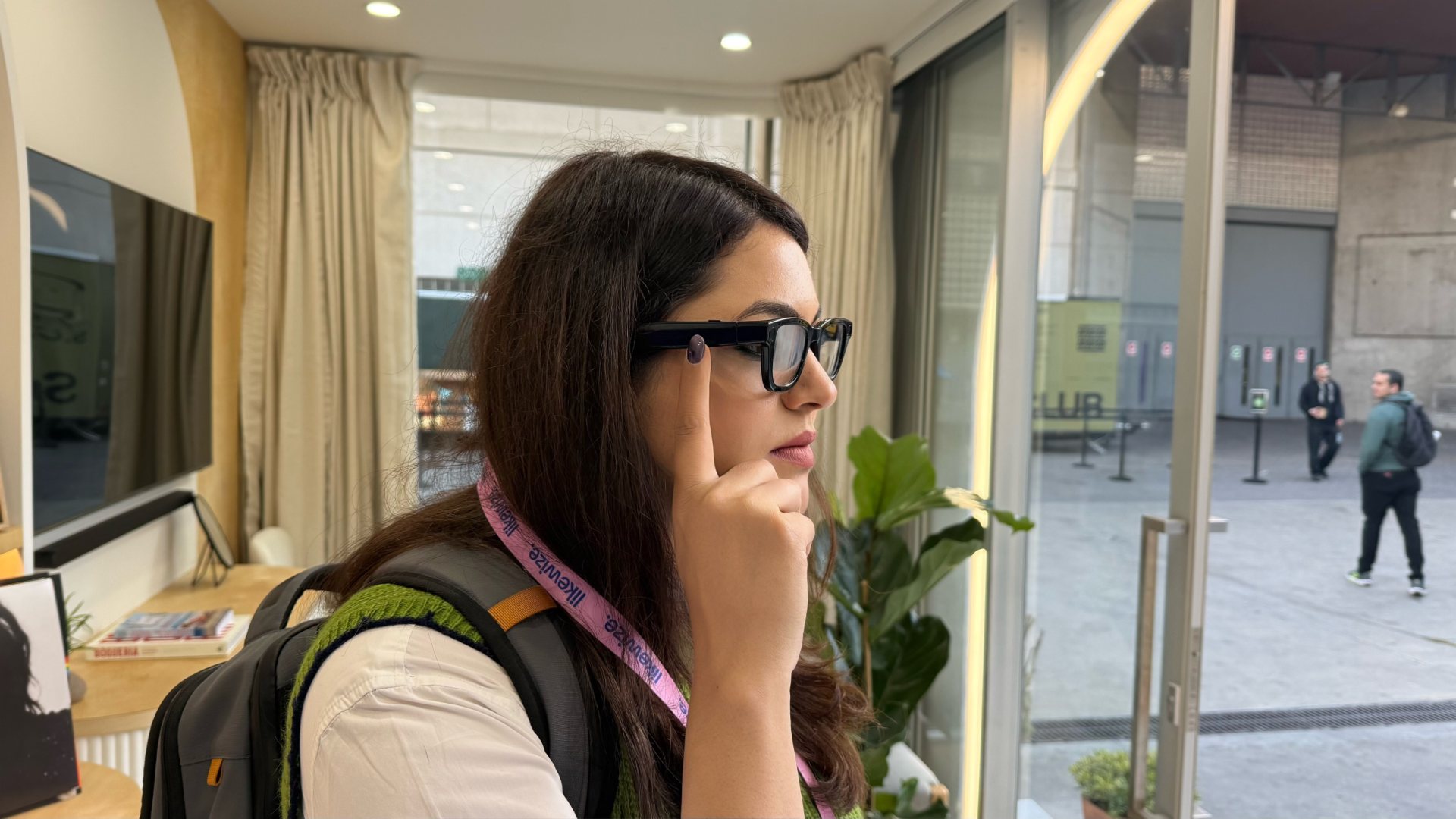
For those tracking the slow but steady march toward mainstream augmented reality adoption, Google’s prototype glasses are a familiar sight, having appeared in various developmental stages over the past few years. However, the MWC 2026 unveiling focused less on the hardware—which remains sleekly iterative—and entirely on software capability. The core demonstration centered on the Google Translate application operating within the XR environment. Previously, in earlier demonstrations (such as the one conducted at last year’s Google I/O), the Live Translate function offered functional, yet jarring, text subtitles projected into the user’s field of view as a foreign speaker conversed. While functional for comprehension, this method inherently preserved the awkward barrier of reading rather than truly listening.
The novel element showcased in Barcelona fundamentally alters this dynamic. Google representatives confirmed that the next iteration of Android XR’s Live Translate capability will incorporate the "Voice Translate" engine, the same technology underpinning the Pixel 10’s groundbreaking conversational translation feature. In practice, this means the glasses do not merely generate subtitles; they synthesize the incoming foreign speech into the wearer’s native language, outputting the translation audibly through integrated micro-speakers, but crucially, retaining the original speaker’s voice.
This achievement is not trivial. It represents a significant leap beyond simple machine translation. Traditional translation relies on deep learning models to convert semantic meaning, but true immersion requires capturing the speaker’s emotional texture, pitch, and speaking rhythm—the very essence of their vocal identity. The successful implementation of this voice-cloning translation within the XR context suggests that the necessary computational power, likely driven by next-generation Tensor Processing Units (TPUs) or highly optimized mobile NPUs, is now sufficiently miniaturized and energy-efficient to run complex generative audio models locally, or at least with near-zero latency over advanced 6G connectivity inherent to a modern MWC environment.
During the hands-on session, the difference was palpable. When a demonstrator spoke rapid-fire Japanese, the auditory experience for the journalist was not a robotic, synthesized voice reading the translation, but rather the speaker’s voice, smoothly delivering the English equivalent. Furthermore, the system exhibited remarkable resilience to linguistic shifts. When the original speaker naturally transitioned between two languages mid-sentence—a common occurrence in multilingual environments—the XR glasses seamlessly adjusted the source language detection and continued to render the output in the target language, all while preserving the speaker’s unique vocal signature. This fluidity is the key differentiator that elevates the experience from a translation tool to a true communication bridge.
Contextualizing the Technological Leap
To appreciate the significance of this development, one must understand the evolution of cross-lingual communication technology. For decades, real-time translation relied heavily on cloud processing, introducing noticeable latency that destroyed conversational flow. The introduction of on-device large language models (LLMs) and specialized AI accelerators in recent smartphone generations, epitomized by the Pixel 10’s rumored capabilities, began addressing the latency issue for phone calls and short audio snippets.
However, translating an ongoing, dynamic, face-to-face conversation requires handling multiple complex streams simultaneously: high-fidelity audio capture, precise speaker diarization (identifying who is speaking), real-time transcription, semantic translation, and then, the resource-intensive step of voice synthesis and spatial audio rendering. Doing this within a constrained, passively cooled form factor like XR glasses, without requiring a tethered high-end PC or constant, high-bandwidth cloud connection, is a testament to significant silicon and software optimization. This move toward ‘ambient intelligence’—where the technology works invisibly in the background to enhance interaction—is Google’s stated long-term goal for Android XR.
Industry Implications: Setting the Bar for Spatial Computing
The integration of Pixel 10-level voice cloning into Android XR has immediate and profound implications for the broader spatial computing market. It immediately establishes a high watermark for essential utility features.
Firstly, it solidifies Google’s strategic direction for Android XR. Unlike competitors who might initially focus on gaming or enterprise visualization, Google appears determined to position its platform as the ultimate personal communication device. Seamless, universal communication bypasses language as a barrier to entry for global adoption, a necessity if XR is ever to achieve the ubiquity once enjoyed by smartphones.
Secondly, it places immense pressure on rivals. Samsung, confirmed to be launching its own Android XR smart glasses later this year, must now contend with the expectation that their initial hardware will offer comparable, if not superior, real-time translation capabilities. If Samsung’s debut offering relies solely on slower cloud processing or lacks voice cloning, it risks being perceived as technologically behind before it even hits shelves. The same applies to nascent players in the AR space who have yet to fully commit to the Android XR standard.
From a competitive standpoint, this feature weaponizes Google’s ecosystem advantage. The ability to leverage foundational AI research developed for the flagship smartphone line (Pixel) and deploy it directly into the next-generation wearable platform (Android XR) creates a virtuous cycle. It incentivizes users to remain within the Google hardware ecosystem to access the most advanced, integrated experiences.
Expert Analysis: The Role of Edge Computing and Ethical Considerations
The feasibility of this technology relies heavily on advancements in edge computing. Running a sophisticated voice cloning model that maintains fidelity requires significant parameter processing. If the glasses are indeed operating wirelessly in a standalone manner, it suggests either: a) highly efficient, quantized models running directly on specialized silicon within the headset; or b) an ultra-low latency 6G connection to a localized mobile edge compute node (perhaps the paired smartphone or a nearby 6G access point) that handles the heavy lifting momentarily. Given the promise of true independence in future AR glasses, the former—on-device processing—is the more revolutionary interpretation.
From a technical analysis perspective, the fidelity of the voice cloning is paramount. Early voice synthesis often introduced artifacts, or the voice sounded distinctly synthetic, breaking the illusion. If Google has managed to achieve voice preservation at the level suggested by the Pixel 10 demonstrations—capturing subtle elements like breath sounds, vocal fry, and regional inflections—it suggests a mastery over generative adversarial networks (GANs) or diffusion models specifically tuned for low-resource, real-time audio generation.
However, such powerful technology introduces significant ethical and privacy considerations. The ability to perfectly clone and synthesize an individual’s voice, even for benign translation purposes, is a double-edged sword. While the immediate application is beneficial, the underlying model architecture could potentially be misused for deepfakes or identity impersonation if the technology were ever compromised or extracted. As these glasses become more commonplace, regulatory bodies and user trust will hinge on the robustness of the system’s security protocols and clear demarcation of when the AI is synthesizing a voice versus simply relaying transcription. Users must have absolute control and transparency over who is hearing what, and in what form.
Future Impact and Trajectories for XR Adoption
The successful deployment of voice-cloning translation in Android XR glasses signals a pivotal moment for user adoption. Language barriers are among the most significant friction points in global travel, international business, and cross-cultural interaction. By dissolving this barrier in the most natural way possible—by hearing the person speak in your own language, but sounding like themselves—Google is addressing a universal pain point that traditional software solutions could only approximate.
This feature transforms the utility proposition of XR hardware. It shifts the focus from complex spatial interfaces (which still require significant user training) to immediate, tangible benefits. Imagine business negotiations where immediate, nuanced translation is inherent to the environment, or tourism where navigating complex local interactions becomes effortless. This utility drives demand beyond early adopters interested in technology for technology’s sake.
Looking forward, this capability sets the stage for further integration of ambient AI into wearables. If voice translation is handled this smoothly, the next logical step is real-time contextual information overlay. For instance, if the translated conversation references a specific landmark visible in the periphery, the glasses could subtly overlay historical data or navigation cues, all while maintaining the integrity of the ongoing dialogue. This integrated approach—communication enhancement paired with spatial context—is the true promise of ubiquitous augmented reality. The Pixel 10’s AI engine, now ported to Android XR, is not just a translation tool; it is the foundational layer for a truly interconnected, context-aware reality. The race is now on for the entire ecosystem to build applications on this newly established bedrock of seamless, human-centric communication.