


Google has swiftly deployed out-of-band security updates to address a critical vulnerability within the Chrome browser that adversaries were actively weaponizing in real-world attacks. This incident marks the first confirmed zero-day exploitation targeting the widely used browser since the calendar flipped to the current year, underscoring the relentless pressure faced by browser vendors to maintain the integrity of their massive codebases against sophisticated threats.
The urgency surrounding this patch is explicitly detailed in a security advisory released by Google on a recent Friday. The advisory confirmed the existence of an active exploit targeting the flaw, officially cataloged as CVE-2026-2441. This designation immediately flags the issue as a significant priority for security teams globally, as "in the wild" exploitation confirms that threat actors have already developed and deployed working attack vectors before a public defense was available.
Technical Deep Dive into the Flaw
Analysis of the Chromium commit history reveals the technical nature of this security hole. CVE-2026-2441 is classified as a use-after-free (UAF) vulnerability, a notoriously dangerous class of memory corruption bugs. This specific instance was traced back to an iterator invalidation error residing within the CSSFontFeatureValuesMap component of Chrome—the browser’s internal implementation governing the handling of advanced CSS font features.
A use-after-free occurs when a program attempts to utilize memory after it has been deallocated or freed. In the context of a complex application like a modern web browser, successful exploitation of such a bug grants an attacker significant control. The consequences of leveraging this vulnerability are severe: potential outcomes range from complete browser crashes, leading to denial-of-service conditions for the user, to subtle but damaging rendering artifacts, corruption of sensitive in-memory data, or, most critically, the execution of arbitrary code within the context of the user’s browsing session. The complexity of modern rendering engines means that even seemingly benign visual glitches can mask sophisticated memory manipulation designed for persistence or data exfiltration.
The initial report of this vulnerability is credited to security researcher Shaheen Fazim, highlighting the crucial role that independent security researchers play in fortifying the digital ecosystem. However, the narrative surrounding the fix suggests a complex, ongoing battle. The commit message accompanying the patch provided a subtle but telling caveat: while the update addresses the "immediate problem," tracking bug 483936078 indicates that "remaining work" is necessary. This strongly suggests that the immediate patch might be a surgical fix targeting the specific exploitation vector currently observed, rather than a complete remediation of the underlying architectural weakness in the CSS feature map handling. Security professionals must treat this as a critical, yet potentially temporary, containment measure.

The Significance of Rapid Backporting
The methodology used to deploy this fix further emphasizes its severity. The patch was explicitly marked as "cherry-picked"—meaning it was backported across various development branches—to be included immediately in the stable release channel. In standard software development cycles, fixes often wait for the next scheduled major version release. Bypassing this cadence and forcing an emergency update into the stable build signals that Google assessed the risk of widespread, ongoing exploitation as outweighing the stability concerns of introducing an unscheduled patch. This rapid deployment strategy is the hallmark response to an active zero-day scenario.
Google, while confirming the in-the-wild exploitation, has prudently withheld granular details regarding the specific nature or targets of the attacks. This restraint is a standard industry practice, designed to prevent potential copycat attacks or provide threat actors with a roadmap for bypassing the newly deployed mitigation. The advisory stated that access to detailed bug reports and associated links would remain restricted until the vast majority of the global user base had successfully applied the update. Furthermore, Google maintains restrictions if the underlying flaw touches a third-party library upon which other major software projects depend, illustrating the interconnectedness and dependency risk within the software supply chain.
Deployment and User Action
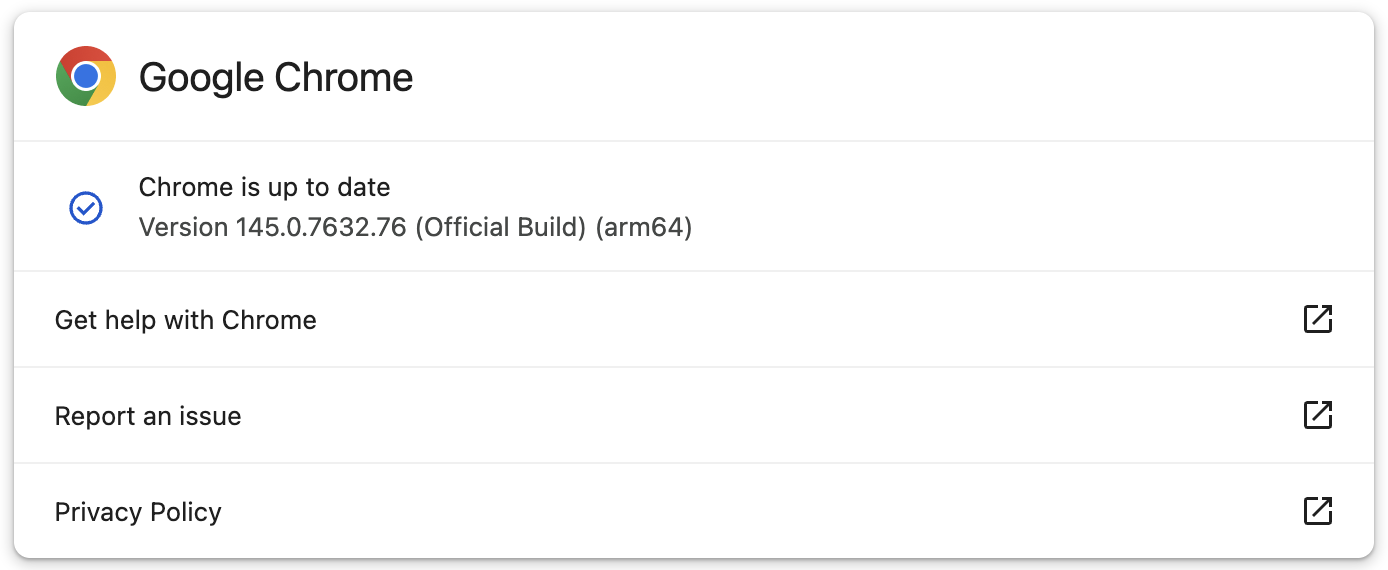
The immediate focus is on securing users across all major desktop platforms. Google is rolling out the necessary security increments to the Stable Desktop channel. Windows and macOS users are slated to receive updates bringing their versions to 145.0.7632.75 or 145.0.7632.76, while Linux users will see the fix in version 144.0.7559.75. While these updates will propagate globally over the coming days and weeks, users are strongly advised against complacency. The recommended best practice remains immediate manual checking for updates via the browser’s settings menu, rather than relying solely on the asynchronous automatic update mechanism, which typically installs the patch only upon the browser’s next launch.
Contextualizing the Threat Landscape
While this incident registers as the first actively exploited Chrome zero-day in the current year, the context provided by historical data shows that this level of activity is becoming increasingly common. For comparison, the preceding year saw Google address a total of eight zero-day vulnerabilities that were confirmed to be abused by threat actors in live environments. Many of these previous discoveries were attributed to Google’s own Threat Analysis Group (TAG), an elite unit renowned for its deep-dive tracking of state-sponsored actors and sophisticated spyware campaigns, particularly those targeting journalists, activists, and high-value political figures.
The consistent cadence of these high-severity, actively exploited vulnerabilities raises significant questions about the security posture of modern, complex software platforms.
Industry Implications and Architectural Weaknesses
The exploitation of a vulnerability tied to CSS font features speaks volumes about the expanding attack surface within web rendering engines. Historically, zero-days often targeted JavaScript engines (like V8 in Chrome) or network stacks. However, modern browser security focuses heavily on isolating complex components, including those responsible for layout, styling, and rendering. Flaws in these seemingly non-critical areas—like CSS handling—can be just as catastrophic as memory corruption in the core execution environment.

For web developers and enterprise IT security professionals, this incident reinforces several immutable truths about browser security:
- Complexity Breeds Vulnerability: The sheer volume of code required to support the modern, feature-rich web—including complex standards like CSS font variations and advanced layout algorithms—inevitably introduces bugs that escape traditional testing methodologies.
- The Value of Memory Safety: The persistence of use-after-free bugs, even in an environment where Google has heavily invested in memory-safe languages and mitigation techniques (like sandboxing and Control-Flow Integrity), underscores that memory corruption remains the primary avenue for sophisticated attackers.
- Supply Chain Scrutiny: The acknowledgment of "remaining work" tied to an external bug tracker suggests that the underlying issue might originate from shared components or complex interactions within the larger Chromium project, highlighting the need for thorough auditing across the entire open-source dependency chain.
Expert Analysis: The Arms Race Intensifies
Security experts view these near-daily vulnerabilities not as failures of detection, but as an inherent cost of securing a globally adopted, constantly evolving software product under persistent, well-funded adversary pressure. Dr. Elena Vargas, a distinguished fellow specializing in application security architectures, commented that the speed of patching is now the most critical metric, often superseding prevention. "When an exploit is active, the game shifts from prevention to damage control. Google’s ability to rapidly identify the exploit vector, craft a precise patch, and push it across three operating systems simultaneously—and in an unscheduled release—is a testament to their operational maturity in incident response. However, the fact that we are seeing this occur in February [or early in the year] suggests that threat actors are already well-rehearsed for the year’s offensive cycle."
The motivation behind these early-year exploits is often strategic. Threat actors want to establish initial footholds before organizations fully ramp up their security operations post-holiday season or fiscal year change. Gaining control over a user’s primary web browser provides a foundational pivot point for lateral movement within a network or for targeted surveillance.
Future Impact and Mitigation Trends
The ongoing saga of Chrome zero-days shapes the trajectory of web security technology. We can anticipate several key trends emerging from incidents like CVE-2026-2441:
1. Enhanced Fuzzing and Sanitization in Rendering Pipelines: Google will likely intensify its fuzzing efforts specifically targeting the CSS processing and font rendering modules. Fuzzing tools, which bombard software with randomized, malformed inputs, are crucial for discovering unexpected behavior in complex parsing logic like that found in CSS implementations.
2. Increased Reliance on Hardware Security: As software mitigations become incrementally harder to maintain against novel exploits, the industry will continue pushing for reliance on hardware-backed security features. Features like memory tagging extensions (MTE) on ARM architectures or enhanced virtualization environments in CPUs offer a stronger, less software-dependent layer of defense against memory corruption, irrespective of the specific vulnerability type.
3. Accelerated Adoption of Alternative Browsers: For organizations with stringent security requirements, the continuous stream of zero-days, even if patched quickly, often necessitates a policy review of default browser usage. Organizations might accelerate migration to browsers that employ different rendering architectures or utilize more aggressively memory-safe languages for core components, although Chrome’s dominance makes complete avoidance challenging.
4. Proactive Intelligence Sharing: The industry needs faster, more standardized mechanisms for sharing indicators of compromise related to zero-day exploitation, even if the vulnerability details themselves must remain obscured initially. Faster telemetry sharing allows security vendors to deploy behavioral detection rules across endpoint detection and response (EDR) platforms before the patch fully propagates.
In conclusion, the swift remediation of CVE-2026-2441 serves as a stark reminder that the digital front line remains volatile. While Google has successfully contained the immediate threat posed by this specific CSS bug, the underlying architectural complexities and the sustained adversarial focus on the browser ensure that the cycle of discovery, exploitation, and emergency patching will continue defining the cybersecurity landscape for the foreseeable future. Users and enterprises alike must prioritize automated patching and maintain vigilance, recognizing that even the most seemingly benign web features can become vectors for high-severity compromise.