

The quiet revolution within Google’s Pixel ecosystem continues as one of its most lauded, almost magical features—Now Playing—has been formally decoupled from its long-time hosting environment, Android System Intelligence, and released as a dedicated, standalone application on the Google Play Store. This move signals a significant strategic shift in how Google manages and iterates upon its proprietary software features, transforming a background utility into a user-facing, feature-rich application.
For years, Now Playing has served as a benchmark for ambient computing, offering Pixel owners the uncanny ability to passively identify music playing in their immediate vicinity without requiring any user interaction. This low-power, always-on identification capability, running locally on the device’s Tensor chip, was deeply embedded within the core operating system framework, specifically under the umbrella of Android System Intelligence (ASI). ASI handles a host of on-device machine learning tasks, from contextual smart replies to enhanced call screening, making Now Playing a critical, yet often invisible, component of the Pixel experience.
The transition to a standalone app, hinted at through developer teardowns and Play Store metadata changes in recent months, represents more than just a change in installation package. It provides Google with a new velocity for feature development and deployment, untethered from the broader, often slower, cadence of major Android OS updates. This modularization strategy mirrors broader industry trends where critical services are containerized to allow for rapid A/B testing and iterative improvements.
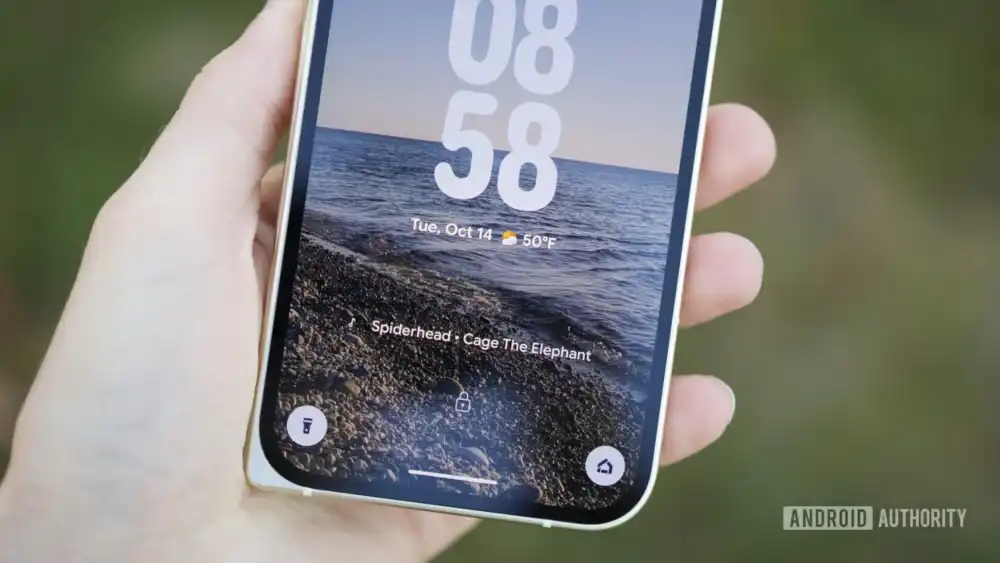
The newly launched application, accessible via its specific Play Store identifier, maintains the core functionality that users rely upon: passive, real-time music identification displayed discreetly on the lock screen. However, the application itself appears to serve as a dedicated control hub, moving beyond mere passive listening. Early reports and shared visual evidence suggest the app presents a central interface, likely featuring a prominent icon that users can tap for immediate identification queries—a secondary method of invoking the recognition engine when the ambient function is perhaps temporarily disabled or when a user actively seeks a current identification.
Crucially, the standalone nature unlocks a persistent history log. Previously, accessing past identified tracks often required navigating deeper into system settings or relying on ancillary notifications. The new Now Playing application centralizes this data, creating a comprehensive, searchable archive of every song recognized by the device. This history section is reported to be robust, including advanced filtering capabilities based on the date and time of identification. This depth of archival access transforms the feature from a momentary utility into a personal music discovery journal.
Furthermore, the integration with external streaming services appears to be a key enhancement. The ability to link identified tracks in the history directly to preferred music platforms—be it YouTube Music, Spotify, or others—streamlines the pathway from discovery to consumption. This closes the loop on the user experience, eliminating the friction traditionally associated with manually searching for a song identified moments earlier.
The rollout, however, has not been entirely seamless, indicative of the complexities involved in migrating deeply integrated system features. Initial reports from early access users indicated a temporary hurdle: a dialog box demanding an "automatic update" before full access could be granted, suggesting a dependency on background service provisioning that had not yet fully propagated across all user devices. This temporary gatekeeping, advising users to "Check back in a few hours," highlights the layered dependencies still present, even in a supposedly standalone package. Despite this initial access issue, deeper elements of the application, such as the settings interface, were reportedly accessible, offering a glimpse into the granular controls now potentially available to the user.
Industry Implications and Strategic Context
The elevation of Now Playing from a system service to a dedicated app has significant implications for Google’s hardware and software strategy. Firstly, it reinforces the concept of the Pixel as a platform for differentiated, high-value, on-device intelligence. By isolating this AI feature, Google can market its machine learning prowess more explicitly, leveraging the feature’s success as a key differentiator against competitors whose ambient audio recognition capabilities often require cloud processing or third-party applications.
Secondly, this modularity is essential for the evolution of AI on mobile devices. As on-device models become larger and more capable—driven by advancements in neural processing units (NPUs) within the Tensor chips—Google gains flexibility. They can push substantial updates to the recognition model, potentially improving accuracy, expanding the music database offline, or even adding new capabilities (like genre tagging or mood analysis) through the Play Store, independent of the next major Android release cycle. This agility is vital in the rapidly evolving landscape of mobile AI.
For the broader Android ecosystem, this move sets a precedent. While third-party developers have long offered music recognition apps, Google is asserting control over its premium, integrated experiences. By taking a core feature and packaging it for direct distribution, Google solidifies the link between its hardware and its differentiated software stack, a strategy that Apple employs effectively with features like Siri and Photos integration. It subtly raises the barrier to entry for other hardware manufacturers attempting to match the Pixel’s out-of-the-box intelligence quotient.
Expert Analysis: The Economics of Ambient Intelligence
From an engineering and economic perspective, decoupling services like Now Playing is a pragmatic decision. The maintenance burden for a deeply embedded system feature often involves coordinating across multiple system components. A dedicated app streamlines development pipelines, allowing a smaller, focused team to manage the entire lifecycle of the feature—from model training to user interface refinement.
The technical success of Now Playing relies heavily on efficient, low-latency audio processing using specialized hardware accelerators. By keeping the core recognition engine running within the secure, optimized environment of ASI but exposing management and history features via the app layer, Google achieves a balance between core functionality and user accessibility. The challenge lies in ensuring that the application layer does not introduce latency or unnecessary power drain when querying the underlying, always-listening service. The fact that the history feature allows for time/date filtering suggests sophisticated metadata tagging is occurring during recognition, a process now managed centrally within this new application container.
This approach also opens avenues for monetization or service integration, though Google has historically avoided monetizing core utility features. If, for instance, Google were to integrate deeper contextual awareness—such as identifying background noise patterns or environmental soundscapes alongside music—a standalone app provides the perfect vehicle for incremental feature rollouts that might eventually tie into broader subscription services or advertising ecosystems, albeit subtly.
Future Impact and Emerging Trends
The deployment of the Now Playing app is likely the first of several system features Google intends to liberate from the main OS structure. We can anticipate similar architectural shifts for other highly valued, ML-dependent Pixel exclusives, such as specific elements of Call Screening or Magic Eraser functionality, allowing these tools to evolve more rapidly.
The future impact hinges on adoption and perceived value. If users actively download and engage with the Now Playing app—not just using its ambient function but utilizing the history and linking features—it validates Google’s strategy of feature modularity. This successful separation paves the way for more complex, modular AI agents to inhabit the Pixel experience.
Furthermore, this development offers insights into the future of cross-platform integration. While Now Playing is currently Pixel-exclusive due to its deep integration with the Tensor chip’s specialized processing capabilities, packaging it as an app theoretically simplifies the process of porting or adapting a stripped-down version to other Android devices in the future, should Google choose to broaden its reach. For now, however, it remains a powerful testament to the unique computational advantages baked into the Google hardware line. The transition elevates Now Playing from a beloved gimmick to a recognized, standalone software product within the Google ecosystem, signaling a maturation of their approach to delivering intelligent, ambient user experiences. The ability to retroactively manage and explore one’s sonic environment solidifies its status not just as a listening aid, but as a core component of the digital memory offered by the device.