

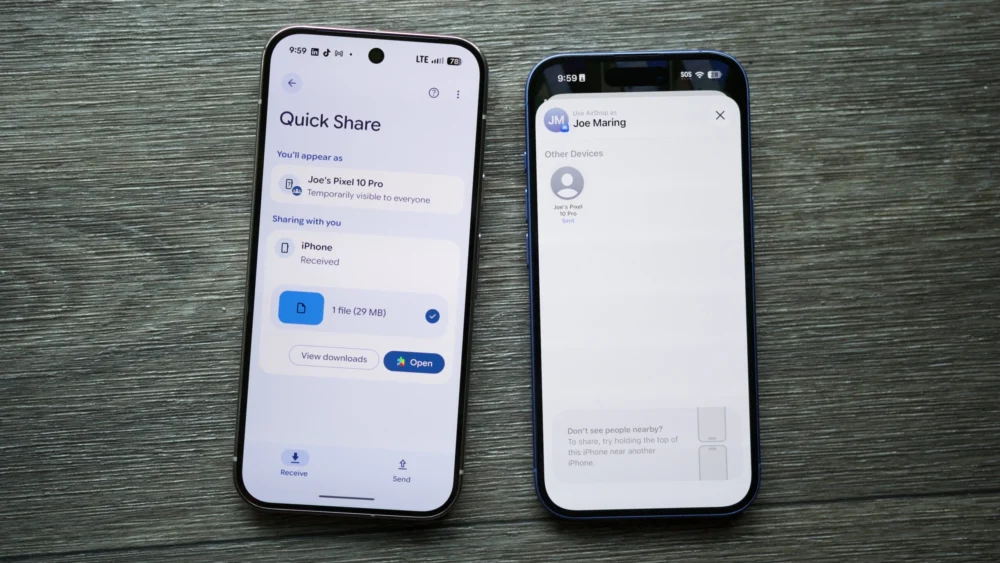
The digital chasm separating the Android and Apple ecosystems, long defined by proprietary communication protocols, is finally showing significant signs of erosion. A pivotal development, long anticipated by power users frustrated by the friction of cross-platform data exchange, has been officially confirmed: the interoperability between Android’s Quick Share and Apple’s AirDrop is graduating from a Pixel-exclusive novelty to a mainstream Android feature. This strategic move, underscored by recent high-level comments from Google engineering leadership, signifies a major shift in platform strategy, aiming squarely at dismantling one of Apple’s most enduring competitive advantages: seamless proximity sharing.
When Google first introduced the compatibility layer—allowing Android devices running Quick Share to communicate directly with iPhones, iPads, and MacBooks utilizing AirDrop—it was met with both astonishment and skepticism. Launched with limited fanfare and initially tethered exclusively to the latest Pixel hardware generation, the feature’s debut felt more like a proof of concept than a comprehensive rollout. For months, the broader Android user base was left in limbo, wondering if this groundbreaking feature would remain a curated experience for Google’s flagship line or if it represented the future of unified local file transfer.
The technical architecture underpinning this integration provided the earliest clues to its eventual expansion. Rather than embedding the AirDrop connectivity logic deep within a protected, Pixel-specific operating system layer, Google strategically decoupled it. They upgraded the Quick Share Extension from a minimal placeholder—a system app stub—into a fully deployable Application Package Kit (APK) accessible via the Google Play Store. This architectural decision was crucial; it immediately framed AirDrop compatibility as a feature of Quick Share itself, rather than a hardware dependency of the Pixel line. This structural separation strongly implied that the functionality was engineered for scalability across the entire Android landscape, requiring only the updated APK to function, independent of specific OEM customizations or chipset mandates.
The recent confirmation, delivered directly from Eric Kay, Vice President of Engineering for the Android platform, during a media briefing at Google’s Taipei offices, provides the necessary assurance. Kay explicitly stated that following the successful validation period on initial devices, the scope is widening dramatically. "Last year, we launched AirDrop interoperability," Kay noted. "In 2026, we’re going to be expanding it to a lot more devices." This timeline confirms that the development phase is complete, and the focus is now shifting to broad deployment across the vast Android OEM network.
Kay further elaborated on the technical diligence required, emphasizing the cross-compatibility achieved: "We spent a lot of time and energy to make sure that we could build something that was compatible not only with iPhone but iPads and MacBooks. Now that we’ve proven it out, we’re working with our partners to expand it into the rest of the ecosystem, and you should see some exciting announcements coming very soon." The phrasing "working with our partners" is key, signaling active engagement with major hardware manufacturers—Samsung, Xiaomi, OnePlus, and others—to integrate this standardized protocol layer into their respective software skins and device releases.
Industry Implications: Cracking the Walled Garden
The expansion of Quick Share/AirDrop interoperability is far more than a convenience feature; it represents a significant strategic maneuver in the ongoing platform wars. For years, Apple has leveraged AirDrop as a powerful, almost invisible piece of ecosystem lock-in. The sheer ease and reliability of sending large files between Apple devices—photos, videos, documents—created a high barrier to entry for users considering switching to Android, as they risked losing this essential daily utility.
By making this functionality ubiquitous across the Android ecosystem, Google effectively neutralizes one of the primary practical benefits of owning an exclusively Apple setup. This move forces a re-evaluation of the perceived utility of remaining entirely within the Apple walled garden. If the friction of cross-platform sharing is removed, the calculus for consumers deciding between iOS and Android changes fundamentally.
The implications for hardware manufacturers are equally profound. For OEMs, this standardized protocol provides a compelling, native feature that directly addresses a common consumer pain point without requiring proprietary development efforts. It standardizes a crucial aspect of the modern smartphone experience, allowing Android devices to compete on a more level playing field regarding short-range wireless transfer speeds and reliability—areas where Apple has historically held a substantial lead. The initial commitment shown by niche players like Nothing, which had already confirmed integration efforts, now appears to be the precursor to a massive industry-wide adoption wave, potentially driven by Google’s foundational work and validation. Furthermore, the hint provided by Qualcomm regarding Snapdragon chipsets suggests that the necessary low-level hardware support is being baked into the silicon foundation of many forthcoming Android devices, ensuring robust and efficient performance once the software update rolls out.
Expert Analysis: The Protocolization of Proximity Sharing
The technical success here lies in the adoption of open standards where possible, or at least, the creation of a highly functional bridge protocol. While the underlying technologies differ (AirDrop historically relied on a combination of Bluetooth and Wi-Fi Direct, whereas Quick Share is built on Google’s proprietary foundation), the interoperability layer abstracts this complexity away from the end-user. The focus is on establishing a common handshake and data pipeline.
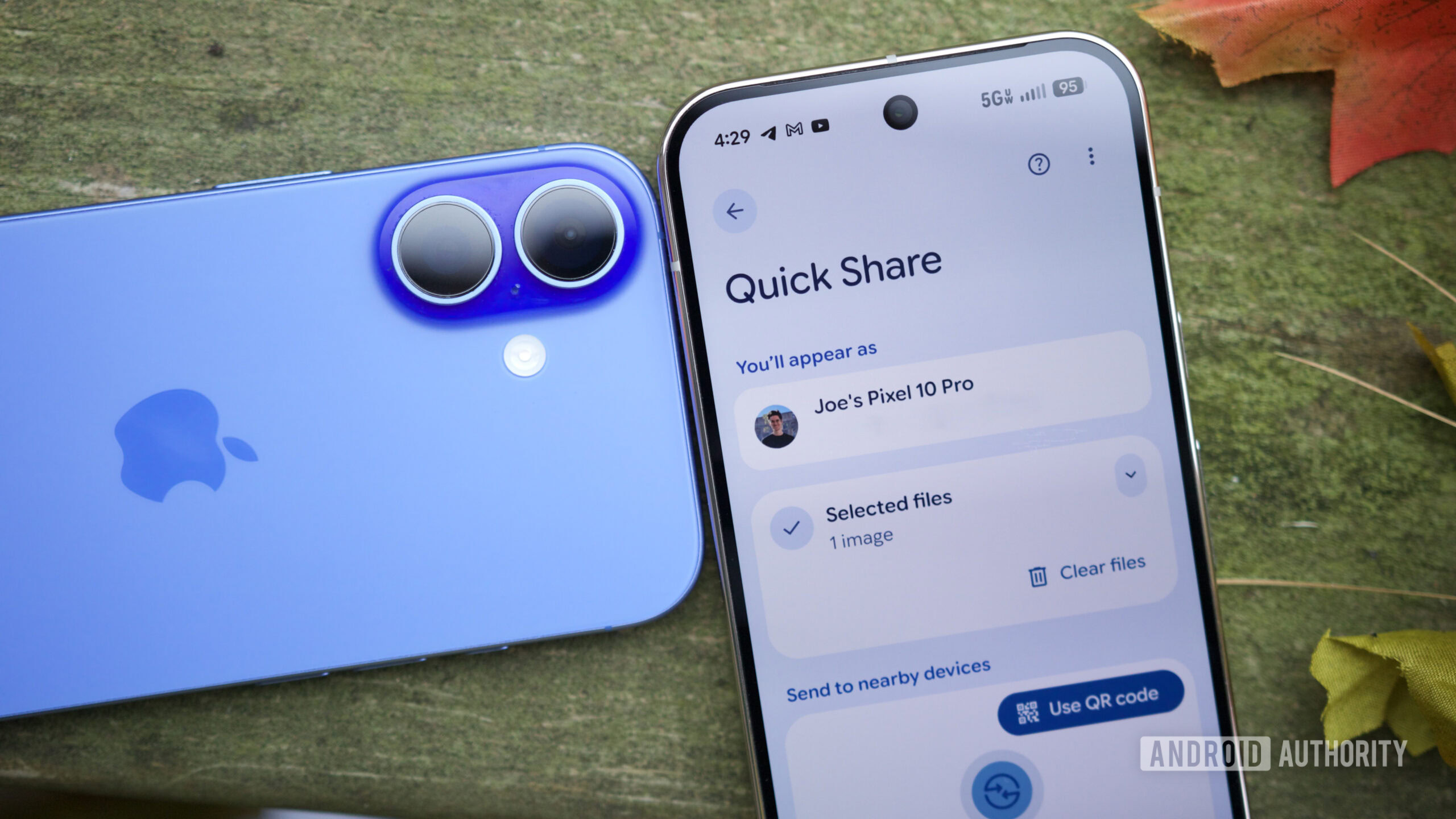
The decision to push this via the Play Store APK, rather than baking it exclusively into the core Android OS build, demonstrates agility. It allows Google to iterate, patch security vulnerabilities, and push updates to this crucial feature independently of the often-slower OEM update cycles for major Android versions. This contrasts sharply with Apple’s tightly controlled rollout of AirDrop, which is inextricably linked to iOS updates. This flexibility gives the Android side an advantage in rapid deployment and refinement.
From a user experience perspective, this standardization is critical. In a world saturated with near-field communication (NFC) and Bluetooth-based sharing tools, the superior speed and directional awareness of the AirDrop/Quick Share mechanism—often leveraging Wi-Fi for high-throughput transfers once the connection is established—set a high bar. By meeting this bar universally, Android elevates the baseline expectation for all users regarding data portability.
Beyond File Transfer: Ecosystem Bridging
Eric Kay’s comments extended beyond the immediate satisfaction of cross-platform file sharing, touching upon the broader goal of making the transition to Android less daunting for existing iPhone users. This is the secondary, yet equally strategic, component of Google’s current focus on ecosystem friction reduction.
"We’re also going to be working to make it easy for people who do decide to switch to transfer their data and make sure they’ve got everything they had from their old phone," Kay stated, confirming that significant engineering resources are being dedicated to streamlining the migration path from iOS.
This initiative is not occurring in a vacuum. In December, both Google and Apple confirmed a joint effort to overhaul the migration process. This collaboration—a rare instance of direct, high-level cooperation between the two tech titans on core platform functionality—suggests a mutual acknowledgment that the current migration tools are inadequate for a truly seamless transition. The goal is clearly to facilitate the transfer of a wider spectrum of personal data beyond the basics typically covered (contacts, photos). This could encompass crucial elements like application data states, complex messaging histories, and potentially even specific configuration settings that currently force users to manually recreate aspects of their digital lives on a new platform.
The synergy between expanding Quick Share interoperability and improving data migration is clear: remove the roadblocks on both the entry point (switching) and the daily usage (sharing). If a potential switcher knows they can easily move their data and maintain functional parity with their friends’ Apple devices post-switch, the psychological hurdle to making the move drops substantially.
Future Trends: The Unbundling of Ecosystems
The trajectory set by these announcements points toward a future where the "ecosystem lock-in" strategy becomes progressively less effective. We are witnessing a trend where core utilities, once proprietary differentiators, are being commoditized or standardized through cross-platform bridges.
This approach forces both Google and Apple to compete more intensely on areas that are inherently harder to duplicate: software optimization, application quality, AI integration, and hardware innovation specific to their unique silicon roadmaps. If simple file transfer is no longer a differentiator, Apple must rely more heavily on services like iMessage (which remains a significant barrier) or the deep integration of its proprietary hardware accessories (like AirPods or Apple Watch), while Google must focus on delivering superior performance and features across the diverse spectrum of its Android partners.
The expectation of "exciting announcements coming very soon" suggests that the rollout will be phased, perhaps beginning with flagship OEM updates coinciding with new hardware launches, followed by broader distribution through the Play Store mechanism. The success of this rollout will be measured not just by the number of devices supported, but by the reliability and speed parity achieved when transferring data between a Pixel, a Samsung Galaxy, and an iPhone 16.
This era of forced interoperability, often spurred by regulatory pressure (as seen in discussions around digital markets acts in various jurisdictions) but now actively driven by strategic engineering decisions, is reshaping the competitive landscape. Google is demonstrating that it can, and will, build bridges where necessary to liberate the Android user base from platform fragmentation, transforming a perceived weakness (fragmentation) into a potential strength (ubiquitous connectivity). For the Android enthusiast who has long yearned for a universal standard for local sharing, this confirmed expansion signals the arrival of a long-awaited technological détente. The age of mandatory platform allegiance for basic functionality appears to be drawing to a close, ushering in an era where user convenience, rather than corporate loyalty, dictates hardware choice.