

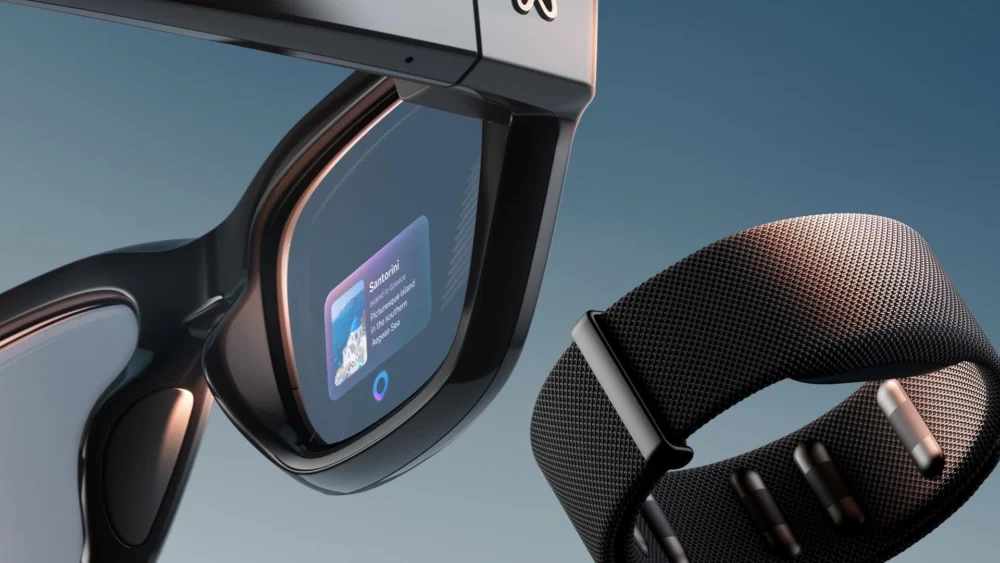
The trajectory of wearable technology often follows a predictable arc of hype, launch, and iterative refinement, but Meta’s latest foray into high-end augmented reality has encountered a significant logistical hurdle. On January 6, the technology giant confirmed a substantial shift in its distribution strategy for the Meta Ray-Ban Display smart glasses, announcing that the much-anticipated international rollout has been indefinitely paused. Consumers in the United Kingdom, France, Italy, and Canada, who had been bracing for an early 2026 release, will now have to wait as the company grapples with what it describes as "unprecedented demand" and "extremely limited inventory."
This decision marks a pivotal moment for Meta’s Reality Labs division. While the company has seen success with its screenless smart glasses, the "Display" model represents a quantum leap in technical complexity. By integrating a visual interface directly into the lens of a classic form factor, Meta moved from simple audio-and-camera peripherals into the realm of true heads-up displays (HUDs). However, the sophistication of this hardware appears to have outpaced the company’s current manufacturing capacity, leading to a bottleneck that has seen domestic waitlists in the United States stretch well into late 2026.
The Anatomy of a Supply Chain Bottleneck
The Meta Ray-Ban Display is not merely an incremental update to the previous Ray-Ban Meta or Oakley Meta collections. Priced at $799, it sits at a premium tier, reflecting the high cost of its specialized components. Unlike its predecessors, which relied on audio feedback and haptic signals, the Display model utilizes a miniaturized projection system to overlay digital information onto the user’s field of vision.
Industry analysts suggest that the "limited inventory" cited by Meta is likely a result of the low yield rates associated with these micro-displays and the intricate assembly required to maintain the aesthetic profile of traditional Ray-Ban frames. Integrating a battery, a processor, cameras, and a display engine into a frame that remains wearable and stylish is a feat of engineering that leaves very little margin for error. When demand exceeds these fragile production scales, the first casualty is almost always international expansion. By focusing exclusively on the U.S. market, Meta is attempting to stabilize its fulfillment pipeline and satisfy its earliest adopters before navigating the additional complexities of international shipping, regional compliance, and localized support.
A New Paradigm of Interaction: Teleprompters and Neural Bands
Despite the news of the delay, Meta has continued to push the envelope regarding the device’s software capabilities. The company recently unveiled a suite of features designed to justify the $799 price tag and differentiate the product from lower-cost competitors. Chief among these is the "Teleprompter" mode. This feature allows users to view scripts, notes, or speech outlines directly in their eyeline—a tool with massive implications for public speakers, content creators, and professionals who frequently engage in video conferencing.
To navigate these visual interfaces without the awkwardness of touching the frames or using voice commands in public, Meta is leaning heavily into its Neural Band accessory. This wrist-worn peripheral uses electromyography (EMG) to detect subtle muscle movements in the arm, translating them into digital commands. Users can scroll through their teleprompter cards or dismiss notifications with a flick of a finger or a clench of the wrist, effectively turning the human body into the primary input device for the glasses. This "neural interface" is a cornerstone of Meta’s long-term vision for spatial computing, moving away from the "gorilla arm" fatigue associated with reaching out to touch virtual objects.
Further expanding the utility of the hardware is the new "Handwriting" feature. This software update allows the glasses to track a user’s finger as they "write" on any flat surface—be it a cafe table or a notebook. The AI onboard the glasses transcribes these physical gestures into digital text in real-time, allowing messages to be sent via WhatsApp or Messenger without ever pulling a phone from a pocket. It is a glimpse into a "post-smartphone" world where the digital and physical environments are seamlessly intertwined.
The Strategic Retreat from Global Markets
The decision to pause the rollout in the UK, Canada, and the European Union is a calculated risk. On one hand, it prevents the brand erosion that occurs when customers are met with perpetual "out of stock" messages. On the other hand, it cedes ground to competitors in these regions who may be looking to fill the vacuum.
However, the delay may also be influenced by the shifting regulatory landscape in Europe. The European Union’s AI Act and stringent privacy laws regarding data collection through wearable cameras present a unique set of challenges for Meta. By delaying the launch, Meta buys itself time to ensure that its multimodal AI features—which process what the user sees and hears—are fully compliant with regional data protection mandates. The "US-first" approach allows Meta to refine its privacy frameworks in a more familiar regulatory environment before exporting them to the more scrutinized European theater.

Navigation and the Urban AR Experience
Parallel to the hardware news, Meta is doubling down on its "Pedestrian Navigation" features. The company announced that four additional U.S. cities—Denver, Las Vegas, Portland, and Salt Lake City—are now receiving specialized AR navigation support, bringing the total to 32 cities.
This feature is perhaps the most practical application of the "Display" technology. Rather than glancing down at a phone while walking through a crowded city, users see directional arrows and street names overlaid on the real world. This "eyes-up" navigation is not just a convenience; it is a safety feature that keeps pedestrians aware of their surroundings. The expansion of this service suggests that while international hardware availability is stalled, the infrastructure for a global AR ecosystem is still being built behind the scenes.
The Competitive Landscape: Meta vs. the Field
Meta’s struggle to meet demand occurs in a market that is becoming increasingly crowded. While Apple’s Vision Pro targets the ultra-high-end "spatial computer" niche, Meta is aiming for the "everyday wearable" market. The Ray-Ban partnership is critical here; the glasses look like glasses, not a scuba mask.
However, companies like Xreal and Viture are already shipping AR glasses that offer similar display capabilities, albeit often requiring a wired connection to a phone or a dedicated compute pack. Meta’s advantage lies in its "all-in-one" wireless design and its deep integration with a social ecosystem (Instagram, WhatsApp, Facebook). The delay in international shipping gives these smaller players a window of opportunity to capture the early-adopter market in Europe and Canada. If Meta cannot resolve its inventory issues by late 2026, it risks losing the "cool factor" that the Ray-Ban brand currently provides.
Expert Analysis: Is Scarcity a Strategy?
In the tech world, "overwhelming demand" is often a double-edged sword. While it signals a successful product-market fit, it can also be a symptom of "prototype-to-production" friction. Some industry experts argue that Meta’s "limited inventory" admission is a way to maintain the product’s aura of exclusivity while Reality Labs works to lower the cost of goods sold.
The Ray-Ban Display glasses are essentially a public beta for Meta’s even more ambitious projects, such as the "Orion" true-AR glasses showcased in late 2024. By keeping the Display model in short supply and limited to the U.S., Meta can gather high-quality data from a controlled user base. This feedback loop is essential for training the "Meta AI" that powers the glasses, ensuring that when the product finally does go global, it is more than just a novelty—it is a reliable tool.
Looking Ahead: The Future of the Waitlist
For consumers in London, Paris, and Toronto, the wait continues. Meta’s statement that they are "re-evaluating our approach to international availability" is vague, leaving the door open for a potential 2027 launch or a pivot to a "Gen 2" version of the Display glasses for the global market.
The broader implication for the tech industry is clear: the era of the smart glasses is here, but the manufacturing of these devices remains one of the most difficult challenges in consumer electronics. To fit a high-resolution display, a neural interface receiver, a high-end camera, and a battery into a 50-gram frame is to dance on the edge of what is physically possible with current materials science.
As Meta focuses on fulfilling its domestic backlog, the tech world will be watching to see if they can scale this "one-of-a-kind" product into a mass-market reality. For now, the Meta Ray-Ban Display remains a tantalizing glimpse of the future—one that, for most of the world, remains just out of reach. The company’s focus on the U.S. market is a retreat into a stronghold, a move designed to protect a fledgling product line until the supply chain can catch up with the vision of a hands-free, heads-up world.