

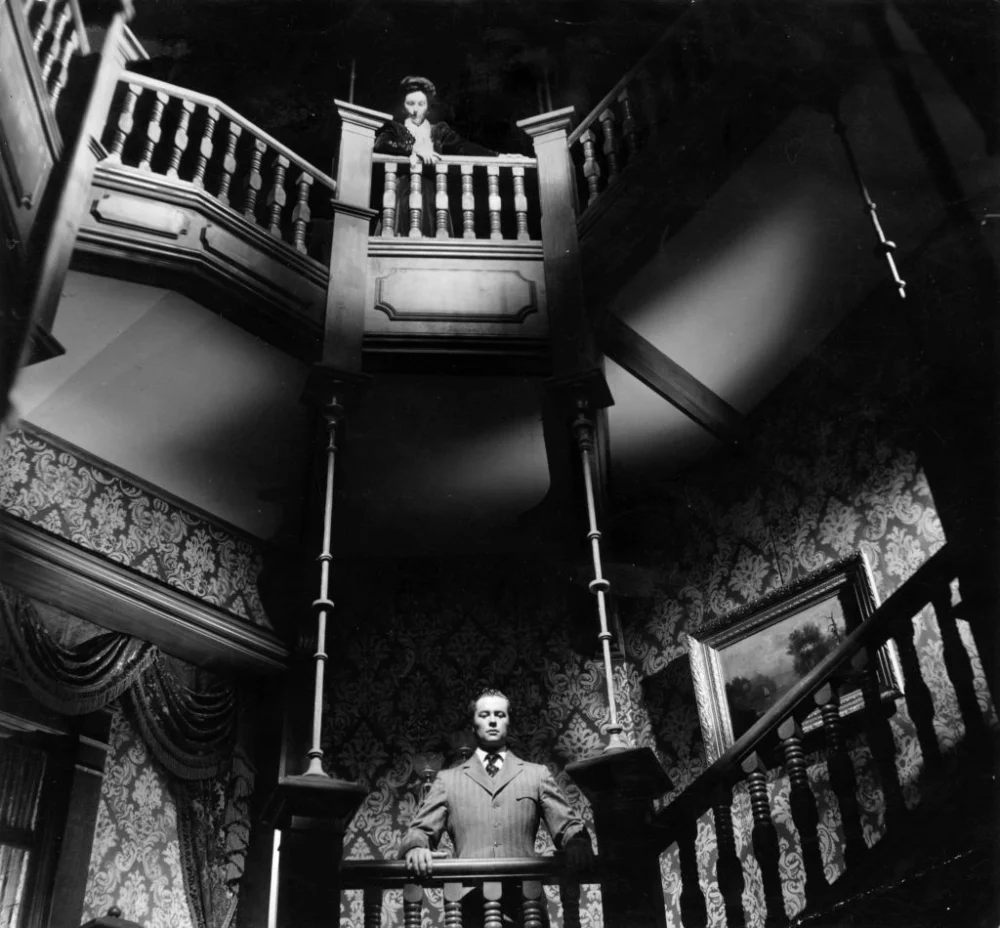
The announcement last fall that a technology startup intended to utilize generative Artificial Intelligence to reconstruct the lost 43 minutes of Orson Welles’s cinematic tragedy, The Magnificent Ambersons, was met with immediate, polarized reactions. For many film historians and purists, the concept bordered on sacrilege, a technological intrusion into one of cinema’s most famous unresolved wounds. The prevalent skepticism centered not only on the feasibility of the technical undertaking but also on the ethical presumptions involved in using deepfake technology to complete the work of a deceased master. This ambition, which initially struck many observers as an expensive, cinephile-baiting stunt with dubious commercial returns, has gained unexpected nuance following recent detailed coverage of the project’s motivations and methodology.
The startup, Fable, led by founder Edward Saatchi, appears driven less by immediate market capitalization and more by a profound reverence for Welles and the historical narrative surrounding his 1942 film. Saatchi, who grew up immersed in film culture, views the missing footage of Ambersons not merely as an archival gap but as "the holy grail of lost cinema." This personal mission to "undo what had happened" frames the endeavor not as pure technological exploitation but as a sophisticated, well-funded form of cinematic devotion.
To appreciate the gravity of this project, one must understand the unique tragedy of The Magnificent Ambersons. Released after Welles’s groundbreaking debut, Citizen Kane, the film was intended by Welles to be a more mature, elegiac portrait of American decline. Welles himself reportedly considered it a superior achievement to Kane. However, during Welles’s absence in South America, RKO Pictures, terrified by a disastrous preview screening and seeking a commercially viable runtime, drastically intervened. The studio removed approximately 43 minutes of footage, including a crucial, darker ending, replacing it with a hastily shot, unconvincing sequence designed to provide saccharine closure. Crucially, the studio later destroyed the excised reels to reclaim storage space, rendering the original version permanently lost. This act of corporate vandalism cemented Ambersons as the definitive example of a cinematic masterpiece mutilated by studio interference.
Fable’s proposal aims to reverse this irreversible loss using contemporary generative AI models. The technical pipeline is complex, involving filming new live-action scenes based on the original script, Welles’s known notes, and production photographs. These new scenes then serve as the foundation onto which AI overlays are applied—specifically, digital recreations of the original actors, such as Joseph Cotten and Anne Baxter, complete with synthesized voices derived from period audio.
This approach represents a significant leap beyond previous attempts to visualize the lost edit. For years, Welles enthusiasts, including filmmaker Brian Rose, have attempted to reconstruct the missing segments using animation and storyboards. While those efforts were admirable acts of fan scholarship, they failed to achieve the visual or emotional fidelity of live-action cinema. Fable’s method, in collaboration with Rose, is essentially a technologically advanced iteration of that restorative impulse, offering the tantalizing promise of synthetic authenticity.
Industry Implications and the Ethics of Digital Necromancy
The utilization of generative AI in this context forces a confrontation with several critical industry implications, particularly regarding intellectual property, digital likeness, and the definition of restoration versus creation.
On the technical front, Fable is navigating unprecedented challenges inherent to deepfaking historical material. Replicating the physical appearance of 1940s actors is only the first hurdle; the more demanding task lies in recreating the subjective artistry of Welles’s vision. Welles and cinematographer Stanley Cortez employed deep-focus techniques and complex shadow play, elements that defined the film’s atmosphere. Replicating this aesthetic requires the AI not just to generate convincing faces but to understand and reproduce the subtle, atmospheric qualities of classic Hollywood lighting and composition. Edward Saatchi has openly discussed the difficulties, citing early errors such as generating "a two-headed version of the actor Joseph Cotten" or encountering the "happiness problem," where the AI defaulted to giving female characters inappropriately cheerful expressions, betraying the melancholic tone required by the script. These glitches highlight a fundamental limitation of current generative models: the struggle to consistently replicate nuanced artistic intent and subjective emotional states.
The legal and ethical dimensions are equally fraught. The initial public announcement of the project was criticized for preceding any formal consultation with the stakeholders. Saatchi acknowledged this oversight as "a total mistake." Since then, Fable has been engaged in the delicate process of securing acceptance from both Warner Bros. (the current rights holder via the RKO catalog) and the Orson Welles estate. Securing the cooperation of the estate is paramount, especially regarding the use of Welles’s artistic legacy and the digital likenesses of the cast.
Encouragingly, there has been movement toward acceptance. Beatrice Welles, Orson Welles’s daughter, initially expressed deep skepticism but has reportedly been swayed by Fable’s demonstrably respectful approach. She now acknowledges that the team approaches the project "with enormous respect toward my father and this beautiful movie." Furthermore, the endorsement of figures like the actor and Welles biographer Simon Callow lends significant cultural legitimacy to the endeavor. Callow, who is working on the fourth volume of his definitive Welles biography, has agreed to advise the project, calling it a "great idea."
However, this growing acceptance is far from universal. The project remains a flashpoint for a broader debate on artistic purism. Melissa Galt, daughter of actress Anne Baxter (who starred in Ambersons), articulated a powerful counterpoint, stating that her mother, a purist, would "not have agreed with that at all." Galt’s argument cuts to the heart of the matter: "It’s not the truth. It’s a creation of someone else’s truth. But it’s not the original."
This sentiment underscores the core philosophical challenge posed by AI restoration: when does reconstruction cease to be preservation and become unauthorized collaborative fiction?
The Philosophical Weight of Loss and Limitation
At its deepest level, the Ambersons AI project is a meditation on mortality and the finality of artistic creation. It embodies a technological drive to conquer loss, a refusal to accept the permanence of absence. The underlying ethos of Saatchi’s quest—the insistence that there must be "some way to undo what had happened"—runs counter to the traditional understanding of art, which is often defined by its limitations and the knowledge of its eventual conclusion.
In his critical analysis of AI and artistic creation, writer Aaron Bady argued that the very possibility of profound art hinges on the knowledge of mortality and limitations. Art is defined by its boundaries: "There is no work of art without an ending, without the point at which the work ends." If generative AI offers the capacity to indefinitely prolong, modify, or resurrect past works, it risks eroding the essential tension between the creator’s finite life and the work’s infinite interpretation.
The attempt to digitally resurrect Ambersons is, therefore, an experiment in synthetic memory. Even if Fable succeeds in generating visually perfect footage that adheres meticulously to the script and Welles’s notes, the resulting film will still be an interpolation—a high-fidelity ghost of what might have been. It will never possess the inherent authenticity of the original celluloid, nor the direct, unmediated artistic choices made by Welles on the set in 1941. It will remain a novelty, an incredibly detailed "dream of what the movie might have been," rather than the definitive work itself.
This push against limitation aligns the Fable project with broader technological trends seeking to mitigate the painful realities of human experience—whether it is a startup attempting to make grief obsolete by creating "deadbots" that mimic deceased loved ones, or a studio executive demanding a happy ending for a tragedy. Both are manifestations of an uncomfortable modern desire to smooth over rough edges, erase mistakes, and deny the artistic power of irretrievable loss.
Future Trends: AI in Archival and Creative Intervention
Regardless of the eventual release status of Fable’s footage—which remains contingent on securing final agreements with Warner Bros. and the estate—the project has already set a powerful precedent for the film industry. It heralds a future where AI shifts from being a tool for simple restoration (cleaning up scratches, improving frame rates) to an engine for creative intervention.
The success, or even the attempt, of the Ambersons reconstruction highlights several emerging trends:
-
Synthetic Archival Completion: AI will increasingly be deployed to fill significant gaps in historical media, moving beyond simple data interpolation to reconstruct complex visual and narrative elements based on sparse primary sources. This will be invaluable for projects where physical media is truly lost but extensive documentation (scripts, stills, audio) remains.
-
Digital Rights and Likeness Management: The controversy surrounding Fable’s initial lack of consultation accelerates the need for clear legal frameworks regarding the use of deceased artists’ and actors’ digital likenesses. Estates and rights holders will need robust licensing models and ethical guidelines to govern AI-driven resurrection projects, preventing unauthorized "digital necromancy."
-
The Rise of the "Alternate Canon": If Fable releases its version, it creates an "alternate canon"—a legitimate, high-quality, but non-original iteration of a historical work. This opens the door for other famously incomplete or compromised works (e.g., Erich von Stroheim’s Greed) to be synthetically completed, forcing audiences and critics to grapple with the authenticity of AI-generated masterpieces.
-
Proof-of-Concept for Generative Filmmaking: Ultimately, the Ambersons project serves as a high-profile proof-of-concept for Fable’s generative AI technology. Successfully recreating a period piece, matching the styles of legendary actors and directors, demonstrates the potential for these models to move into mainstream content creation, potentially lowering the barrier to entry for complex historical or visually demanding productions.
In conclusion, while the initial knee-jerk reaction to Fable’s venture was one of outrage at the perceived hubris of Silicon Valley intersecting with classical cinema, the deeper investigation reveals a mission rooted in genuine, albeit perhaps naive, passion. Edward Saatchi’s quest is a highly technical, twenty-first-century attempt to satisfy an age-old cinematic yearning. Yet, even with the involvement of respected authorities like Simon Callow and the cautious blessing of the Welles estate, the output will remain a contested artifact. It is a powerful demonstration of technology’s ability to conjure ghosts, but it cannot resurrect the soul or the certainty of the original artistic intent. The definitive, complete Magnificent Ambersons is gone, and the digital dream created by Fable, however compelling, will forever underscore the profound truth that some losses, even in the age of limitless generative AI, remain absolute.