

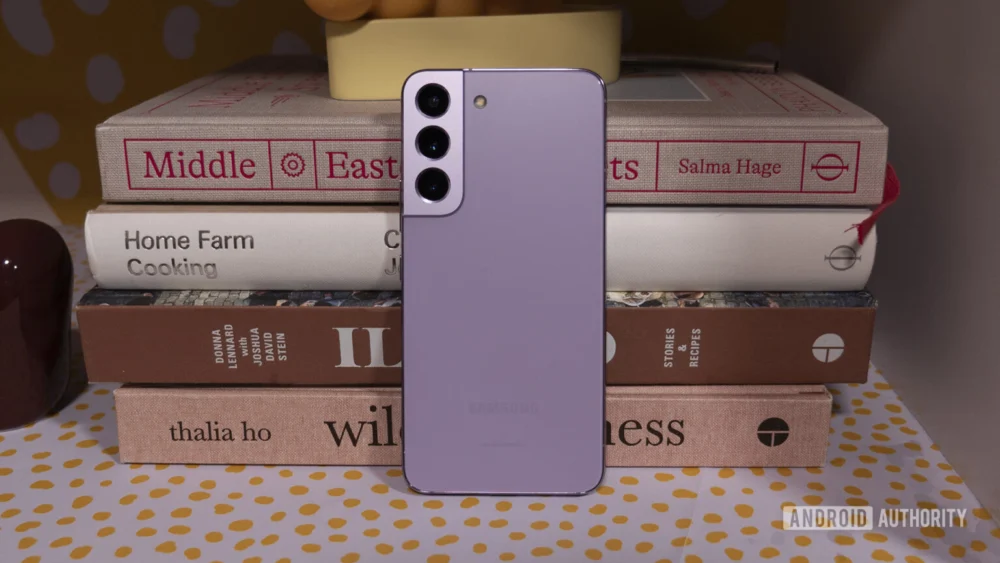
The foundation of the modern smartphone experience rests precariously on the seamless execution of routine software updates. These patches, ostensibly designed to bolster security and introduce incremental performance enhancements, have instead become vectors for significant operational disruption for a segment of the Samsung Galaxy S22 user base. Reports emerging from various community forums detail a troubling trend: the recent February security update appears to be triggering persistent, often catastrophic, boot loop conditions across the S22, S22+, and S22 Ultra models. This is not merely an inconvenience; for many, it represents a complete loss of device functionality, pushing the issue beyond typical software bugs and into the realm of critical product integrity failure.
The initial wave of complaints surfaced shortly after the over-the-air (OTA) deployment of the February security package. Users described devices that, rather than completing the standard reboot sequence following installation, would cycle endlessly through the Samsung logo, failing to reach the Android home screen. This behavior suggests a deep-seated conflict introduced by the new binaries, potentially involving kernel-level drivers, system services, or the interaction between the new security module and the customized One UI environment. Anecdotal evidence further suggests ancillary issues accompanying the boot loops, including reports of sudden, extreme thermal events and complete system freezes immediately preceding the failure cascade.
Contextualizing the Crisis: A Troubling Recurrence
What elevates this current incident from a singular software glitch to a pattern of concern is the precedent set by the Galaxy S22 series previously. Approximately eighteen months prior, the rollout of the One UI 6.1.1 update unleashed a nearly identical crisis. That earlier patch also resulted in widespread, non-recoverable boot loops, leading Samsung to issue an unprecedented, albeit temporary, halt on the distribution of that specific software version. The reverberations of that 2024 event are still being felt, most notably in ongoing class-action litigation in the United States, where consumers allege that the faulty update permanently "bricked" their hardware, leading to significant financial damages and loss of property.
This historical context casts a long shadow over the current February 2026 patch. For a premium line of devices, which command flagship pricing and rely heavily on a perception of robust, long-term software support, such repeated, fundamental stability failures erode consumer trust rapidly. When the same critical failure mode—the boot loop—reoccurs following a subsequent, seemingly unrelated security patch, it raises serious questions regarding Samsung’s internal Quality Assurance (QA) and validation protocols, particularly concerning hardware-software regression testing across their extensive device portfolio.
Technical Deep Dive: Analyzing the Boot Loop Mechanism
A boot loop, technically speaking, signifies an endless cycle where the operating system fails to pass a critical checkpoint during initialization. In Android devices, this often happens when system partitions are corrupted, necessary boot services fail to load essential dependencies, or a newly installed driver conflicts irreconcilably with existing hardware abstraction layers (HALs).
In the case of the S22 series, the fact that the issue affects both the standard model and the Ultra variant, despite potential differences in storage configurations or specialized camera modules, points toward a common element in the software update that touches the core operating system framework or the bootloader sequence itself. Given that the patch is primarily security-focused, there is speculation that changes within the Verified Boot process or the implementation of new security policies (perhaps related to Knox security features) could be improperly initialized, leading the system to repeatedly attempt and fail the integrity check required to proceed to the user interface.
User troubleshooting efforts have provided fragmented clues. Some users report momentary success by force-updating the One UI Home application, suggesting that the conflict might reside within the launcher environment rather than the deepest kernel layer. However, this temporary fix often fails if the device enters a deeper state of instability. More drastic measures, such as manually entering recovery mode to perform a cache partition wipe or utilizing advanced PC tools like Odin to reflash the entire firmware stack, have yielded mixed results. The fact that even a full factory reset fails for some users indicates that the corruption might be occurring at a lower, more persistent level, possibly affecting the primary system partition’s mounting sequence or critical firmware components that survive a standard user-data wipe.
Industry Implications and OEM Responsibility
For Samsung, the world’s largest smartphone manufacturer, these recurring stability crises carry significant weight beyond immediate customer service overhead. The immediate implication is a tangible impact on brand perception, particularly against intensifying competition in the high-end sector. Consumers increasingly view software support longevity and reliability as core components of the value proposition, often prioritizing it over incremental hardware improvements.
From an industry perspective, this highlights the inherent complexity and fragility of modern mobile operating systems. Android, with its vast ecosystem of custom hardware accelerators, proprietary security enclaves, and multi-layered customizations (like One UI), presents a far more challenging update environment than stock operating systems. When a major OEM fails to contain a critical bug within a rollout, it affects the perception of the entire Android ecosystem’s maturity. Competitors are quick to point to such incidents as evidence of Android’s inherent update instability compared to more tightly controlled environments.
Furthermore, the existence of active litigation stemming from a previous, identical failure significantly raises the stakes. This moves the issue from a mere customer relations problem to a potential long-term financial liability. Legal scrutiny focuses on whether the company exercised due diligence in testing patches known to affect mission-critical functions. If evidence suggests that the QA process overlooked known failure vectors from prior updates, the legal and regulatory repercussions could be severe, potentially leading to mandated software review processes or greater consumer protection oversight.
Expert Analysis: The Update Cadence Dilemma
A central tension in modern smartphone maintenance is the trade-off between rapid security patching and thorough stability testing. Samsung operates on an aggressive update schedule, often striving to push monthly security updates out globally across dozens of models and regional variants simultaneously. While this commitment to prompt security is laudable—especially in defending against zero-day exploits—it inherently strains the resources available for comprehensive, long-duration regression testing.
Expert analysis suggests that the S22 series, now several years into its lifecycle, might be disproportionately affected by changes intended for newer hardware architectures or newer Android feature releases that are being backported. As the hardware ages, the interaction between legacy drivers and newly compiled kernel modules or security frameworks can become unpredictable. A security update might correctly patch a vulnerability in the Exynos or Snapdragon modem firmware, but if that patch subtly alters memory allocation or timing that the older S22 chipset can no longer handle gracefully, the result is system instability manifesting as a boot loop.
The failure to immediately identify and halt the rollout of a patch capable of bricking devices suggests a potential gap in "canary testing" or phased rollouts that monitor device telemetry for critical errors (like repeated kernel panics or excessive crash reports) before pushing the update to 100% of the user base. For a company of Samsung’s scale, automated monitoring should flag these anomalies almost instantly, leading to an immediate suspension of the deployment.
Future Impact and Mitigative Trends
The ongoing plight of the Galaxy S22 owners serves as a cautionary tale that will influence future OEM strategies. In response to such high-profile failures, we anticipate several shifts:
- Enhanced Phased Rollouts: OEMs will likely increase the granularity and duration of initial update phases, using smaller user groups to hunt for "long-tail" bugs that only appear after several days of continuous use, rather than just immediate post-install checks.
- Greater Reliance on Developer Community Feedback: While community reports are currently the primary signal, companies may formalize channels to ingest structured bug reports from power users and developers before mass deployment, especially for devices nearing the end of their primary software support window.
- Focus on Modular Security Updates: There may be a strategic shift towards pushing security fixes via more isolated, modular updates that are less intertwined with major OS feature components (like One UI Home or core framework services). This limits the blast radius if a specific module fails validation.
- Legal Precedent Setting: The outcome of the existing lawsuit regarding the 2024 update failure will heavily dictate future liability models. If successful, it could force manufacturers to allocate significantly more budget and time toward pre-release validation to mitigate future class-action risk.
For the current affected users, the immediate path forward remains frustratingly narrow. While workarounds like clearing the cache partition offer a glimmer of hope, they are unreliable. The most responsible course of action, pending an official statement or a targeted hotfix from Samsung, remains a deliberate pause on installing the February security update. Until the manufacturer acknowledges the scope of the instability and provides a validated, low-risk remediation path, the S22 series remains in a precarious position where the pursuit of enhanced security ironically threatens the device’s core usability. The silence from the corporate level on this significant disruption is itself a factor exacerbating user anxiety, demanding a swift and transparent response reflective of their position at the apex of the mobile industry.