

The architecture of the digital economy is undergoing a fundamental structural shift, moving away from the fragile reliance on advertising dollars toward a more robust model of vertical integration and sovereign technological development. For over a decade, the "creator economy" was synonymous with a precarious dependency on platform-driven ad revenue—a model where creators were essentially digital sharecroppers, harvesting attention for platforms like YouTube and Instagram in exchange for a fraction of the marketing spend. However, a new paradigm is emerging. Today’s top-tier digital entrepreneurs are no longer content with being the product; they are becoming the owners, leveraging their massive distribution networks to build, buy, and scale traditional business empires that often eclipse the media arms that birthed them.
This evolution is mirrored on the geopolitical stage by India’s aggressive pivot toward artificial intelligence. Just as creators are seeking independence from the whims of platform algorithms, nations like India are striving for "sovereign AI"—an infrastructure that ensures technological autonomy and economic resilience in an era dominated by a handful of global tech giants. The intersection of these two trends reveals a broader global movement: the pursuit of self-sufficiency in an increasingly volatile digital landscape.
The limitations of the ad-supported model have become increasingly apparent as the creator economy matures. While the YouTube Partner Program and similar monetization schemes provided the initial spark for the industry, they are inherently limited by the volatility of Cost Per Mille (CPM) rates, advertiser sensitivities, and the constant threat of "demonetization." For the elite echelon of creators, ad revenue has transitioned from being the primary income stream to a secondary, or even tertiary, source of capital. The strategic focus has shifted toward Customer Acquisition Cost (CAC). In a traditional business, acquiring a customer is an expensive endeavor involving targeted ads and complex marketing funnels. For a creator with an audience of tens of millions, the CAC is effectively zero.
The most prominent example of this "new playbook" is the meteoric rise of the MrBeast brand, which has transcended the boundaries of entertainment to become a diversified holding company. The recent acquisition of the Gen Z-focused fintech startup Step by MrBeast’s parent company marks a watershed moment for the industry. This was not a simple sponsorship deal; it was a strategic move into the financial services sector. By integrating a fintech platform into his ecosystem, the creator isn’t just promoting a product—il is owning the infrastructure of his audience’s financial lives. This follows the success of his consumer packaged goods (CPG) ventures, such as Feastables. Reports indicate that the chocolate business is now generating revenue that significantly outpaces the earnings from his primary media production. This illustrates a profound shift: the media content has become a marketing expense for the physical and digital products that drive real enterprise value.
However, this transition to a conglomerate model raises critical questions about the scalability of the creator economy. While the top 1% of creators—the "mega-influencers"—possess the capital and reach to acquire startups and launch international product lines, the "middle-class" creator remains trapped in the ad-revenue cycle. The barrier to entry for building a business empire is high, requiring not just a massive audience, but also sophisticated legal, operational, and financial infrastructure. There is a growing concern that the creator economy is mirroring the wealth inequality of the broader global economy, where a few dominant players capture the vast majority of the value while the long tail of creators struggles for sustainability.
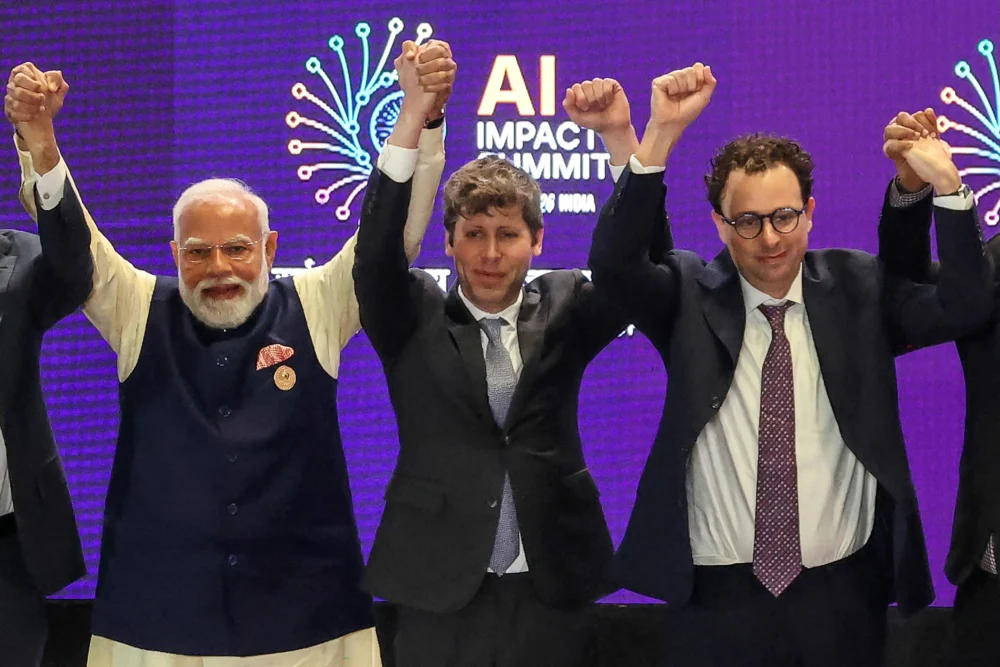
As digital entrepreneurs look to diversify their holdings, the underlying technology that powers the internet is also facing a reckoning. The recent AI Impact Summit in India highlighted the nation’s ambitious strategy to become a global leader in artificial intelligence. India is not merely looking to adopt AI; it is looking to build it from the ground up. This "sovereign AI" approach is born out of a necessity to ensure that the benefits of AI are distributed across its diverse population and that its digital future is not entirely dependent on Western or Chinese technology stacks.
India’s AI ambitions are supported by a unique combination of factors: a massive pool of engineering talent, a burgeoning startup ecosystem, and a government that views AI as a critical pillar of national security and economic growth. The "IndiaAI" mission, backed by a significant financial commitment of over $1.2 billion, aims to build high-end compute capacity and foster the development of indigenous large language models (LLMs). The focus is on "AI for All," an initiative designed to apply artificial intelligence to solve pressing social challenges in healthcare, agriculture, and education.
The geopolitical implications of India’s AI push are significant. By investing in sovereign compute infrastructure and localized datasets, India is positioning itself as a "third way" in the global AI race. Unlike the closed ecosystem of China or the purely market-driven approach of the United States, India is attempting to create an open, inclusive, and regulated AI environment. This includes the development of the "Bhashini" project, which aims to provide AI-based translation and voice-to-voice services in multiple Indian languages, thereby bridging the digital divide in a country with dozens of official languages and hundreds of dialects.
The synergy between the evolution of the creator economy and the rise of sovereign AI is more than coincidental. Both represent a maturing of the digital age, where players at all levels—from individual creators to entire nations—are recognizing that true power lies in the ownership of platforms and infrastructure, not just in the participation within them. For creators, AI represents a double-edged sword. On one hand, generative AI tools are drastically lowering the cost of production, allowing smaller teams to create high-quality content that previously required massive budgets. On the other hand, the proliferation of AI-generated content threatens to saturate the market, making human-centric "authentic" brands even more valuable.
Looking ahead, we can expect to see a further professionalization of the creator economy. We are likely to see more creators hiring C-suite executives from traditional industries to manage their expanding portfolios. We may also see the rise of "creator-led venture capital" firms, where influencers use their platforms to identify and accelerate early-stage startups in exchange for equity. The acquisition of Step is likely the first of many such deals, as creators realize that their most valuable asset is not their content, but their relationship with their audience.
In India, the success of its AI ambitions will depend on its ability to navigate the complex challenges of data privacy, ethical AI development, and the global shortage of high-end GPUs. The government’s emphasis on "foundational models" tailored to the Indian context is a strategic move to ensure that the country is not just a consumer of AI but a creator of it. If India can successfully build its own AI infrastructure, it will provide a blueprint for other Global South nations looking to assert their digital sovereignty.
The current trajectory suggests that the digital landscape of 2030 will look vastly different from that of 2020. The era of the "platform-dependent" creator is waning, giving way to the era of the "creator-entrepreneur" who operates across multiple sectors. Simultaneously, the global tech map is being redrawn as India asserts its place as an AI superpower. These trends are interconnected by a common thread: the realization that in the digital economy, those who do not own their infrastructure are destined to be disrupted by those who do. The industrialization of influence and the quest for sovereign AI are two sides of the same coin—a global movement toward autonomy, resilience, and the long-term control of digital destiny.