

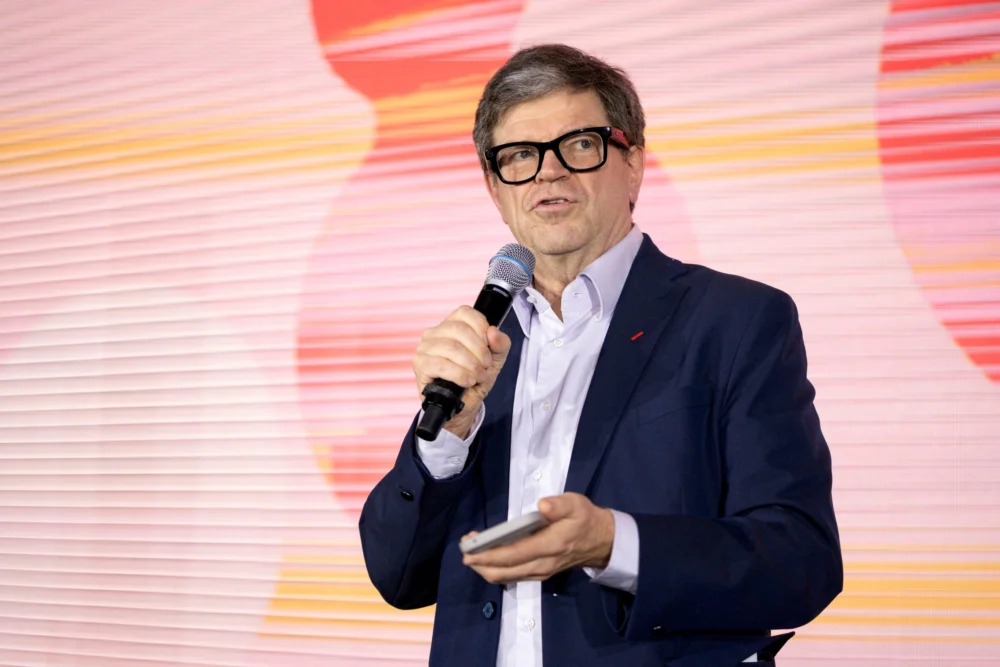
The highly anticipated unveiling of Advanced Machine Intelligence (AMI) Labs, the post-Meta venture founded by Turing Award laureate Yann LeCun, has immediately recalibrated the competitive landscape of foundational AI research. After months of speculation following the departure of one of the "Godfathers of AI" from Meta’s research division, the startup officially stepped out of stealth mode this week, confirming its singular, high-stakes objective: the development of AI "world models" designed to build intelligent systems that truly comprehend and interact with the physical, real world. This confirmation, while perhaps unsurprising given the acronym AMI itself hints at Advanced Machine Intelligence, instantly positions the company at the vanguard of the next theoretical revolution in AI, moving beyond the current dominance of large language models (LLMs).
The pursuit of a generalized world model represents a profound divergence from the prevailing paradigm centered on massive text-based prediction. LeCun and his team argue that true intelligence must be grounded in causal understanding, planning, and predictive simulation—capabilities inherently lacking in purely linguistic systems. World models aim to construct an internal representation of the environment, allowing an AI agent to predict future states based on actions, much like the human brain. This focus on embodied cognition and sensory input, rather than just sequential token prediction, is attracting not only elite scientific talent but also venture capital eager to back what is perceived as the logical next step toward artificial general intelligence (AGI).
The investment community has responded with immediate, intense interest. While AMI Labs has not officially announced a funding round, market whispers, substantiated by multiple reports, suggest the startup is actively seeking capital at a valuation potentially reaching $3.5 billion. This valuation, achieved pre-product in a highly specialized research field, underscores the immense confidence investors place in LeCun’s intellectual authority and the transformative potential of the world model architecture. Firms reportedly engaging in discussions include global players like Cathay Innovation, Greycroft, and Hiro Capital—a venture fund where LeCun already serves as an advisor, establishing a clear channel of potential support. The presence of European heavyweights like Bpifrance and Daphni also signals the deeply strategic importance of AMI Labs’ geographical footprint.
The Contest for Causal AI
AMI Labs is not entering an empty arena. The race to develop robust, scalable world models is already fiercely competitive, exemplified by the rapid rise of World Labs, founded by computer vision pioneer Fei-Fei Li. World Labs achieved unicorn status swiftly after its stealth exit, driven by its initial commercial product, Marble, a physically simulated 3D world generator. The market has validated this approach, with World Labs reportedly in negotiations for a new funding round that could push its valuation to a staggering $5 billion. This intense, high-valuation rivalry between two ventures led by two of the most respected figures in modern AI highlights the industry’s consensus that world models represent the fundamental shift required to move AI from sophisticated prediction engines to genuinely reasoning agents.
However, the architecture and execution strategy of AMI Labs reveal a distinct focus on commercial viability in high-stakes environments, immediately contrasting with the pure research origins of many peer startups. A crucial detail for investors is the deliberate structure of AMI’s leadership. Yann LeCun, the visionary and research luminary, occupies the role of Executive Chairman, setting the long-term scientific direction. The critical operational and commercial mandate falls to CEO Alex LeBrun.
LeBrun brings vital experience from the commercial application of specialized AI, having previously served as co-founder and CEO of Nabla, a successful health AI startup focused on clinical care assistants. This appointment is not accidental; it is the cornerstone of AMI Labs’ go-to-market strategy. LeBrun’s transition was formalized through an exclusive partnership announced last December between Nabla and AMI Labs. In exchange for privileged access to AMI’s foundational world models—a massive technological advantage for Nabla—the health startup’s board supported LeBrun’s move, recognizing the synergy between world models and the urgent need for reliable AI in medical contexts.
The Operational Strategy: Reliability Over Rhetoric
The synergy between LeBrun’s operational experience and LeCun’s research pedigree is further solidified by shared history and talent migration from Meta’s research arm, FAIR (Facebook AI Research). LeBrun previously worked under LeCun’s leadership at FAIR after the acquisition of his earlier venture, Wit.ai. This deep-seated professional familiarity ensures a unified vision for scaling the technology.
The Meta connection extends further with the reported addition of Laurent Solly, who recently stepped down as Meta’s Vice President for Europe. Solly’s experience in global business operations, policy, and scaling large organizations suggests that AMI Labs is building a robust corporate and regulatory framework from day one, preparing for rapid international expansion and high-level industrial licensing.
LeCun’s vision for AMI Labs is, in many respects, a philosophical counter-bet against the current Large Language Model (LLM) hegemony. While LLMs excel at generating coherent text, their fundamental reliance on correlation and next-token prediction leads to issues of non-determinism, lack of causality, and the persistent problem of "hallucinations." As LeBrun noted, the prospect of applying world models to healthcare—a field where reliability and accuracy are literally matters of life and death—was a primary motivation for accepting the CEO role.
AMI Labs’ mission statement directly attacks the linguistic bias of generative AI: “We share one belief: real intelligence does not start in language. It starts in the world.”
This philosophy translates into a commercial focus on applied fields demanding absolute trustworthiness and safety: industrial process control, complex automation, advanced robotics, wearable devices, and, critically, healthcare. Unlike generative models, which struggle with unpredictable, continuous sensor input and real-time physical interaction, AMI’s world models are promised to possess persistent memory, advanced reasoning and planning capabilities, and verifiable controllability. This reliability is the core differentiator the company plans to license to industry partners, offering a foundational technology layer suited for mission-critical applications where LLM failures are simply intolerable.
The Franco-Global AI Axis
The choice of corporate domicile is arguably as strategic as the technology itself. While LeCun, who maintains his professorship at NYU, remains based in New York, AMI Labs is establishing its global headquarters in Paris. This decision is a major coup for the French technology ecosystem and President Emmanuel Macron’s ambitious national AI strategy.
Macron publicly welcomed the decision, expressing national pride that a Turing Prize winner and a foundational figure in deep learning chose Paris over other global tech hubs. “We will do everything we can to ensure his success from France,” Macron affirmed, signaling high-level governmental support and potential strategic incentives.
The presence of AMI Labs significantly consolidates Paris’s status as a top-tier global AI capital, placing it alongside established local heavyweights like Mistral AI and specialized hubs like H, as well as Meta’s existing FAIR European laboratory. This concentration of world-class talent and research institutions creates a powerful gravitational center for AI innovation in Europe. The symbolism of the name, AMI, which is pronounced "a-mee"—the French word for "friend"—underscores this cultural rootedness while projecting a global ethos.
The company is structured as a truly international entity, with additional operational hubs planned for Montreal, New York, and Singapore. This multi-continent strategy ensures access to diverse talent pools, academic partnerships, and key industrial markets—from North American tech innovation to Asian manufacturing and robotics expertise.
Open Science and the Future of AGI
Beyond commercial licensing, AMI Labs has committed to engaging with the academic community through open publications and open-source contributions. This dedication to sharing research echoes LeCun’s long-standing advocacy for open science, a philosophy that underpinned much of Meta’s early AI strategy. By maintaining his teaching and supervisory roles at NYU, LeCun ensures a continuous feedback loop between pure academic research and the applied demands of the startup, ensuring AMI Labs remains at the cutting edge of theoretical developments.
This commitment to open research serves multiple strategic purposes. Firstly, it attracts the best PhDs and postdoctoral students, who are motivated by the ability to publish and contribute to the broader scientific discourse. Secondly, it accelerates the adoption of AMI’s foundational technology, creating an ecosystem around its models, similar to how PyTorch and other open frameworks solidified Meta’s influence in the deep learning community.
Ultimately, AMI Labs’ entry into the market is more than just a new startup launch; it represents a major inflection point in the technological trajectory of AI. The success of world models hinges on solving fundamental challenges in representation learning, causal inference, and efficient large-scale simulation. If AMI Labs can effectively translate LeCun’s theoretical frameworks into commercial-grade, reliable, and controllable systems—particularly in fields like robotics and healthcare—it will not only justify its multi-billion dollar valuation but also dictate the standards for the next generation of intelligent agents. The battle between the predictive prowess of linguistic models and the causal understanding of world models has formally begun, and the stakes could not be higher for the future of AGI.