

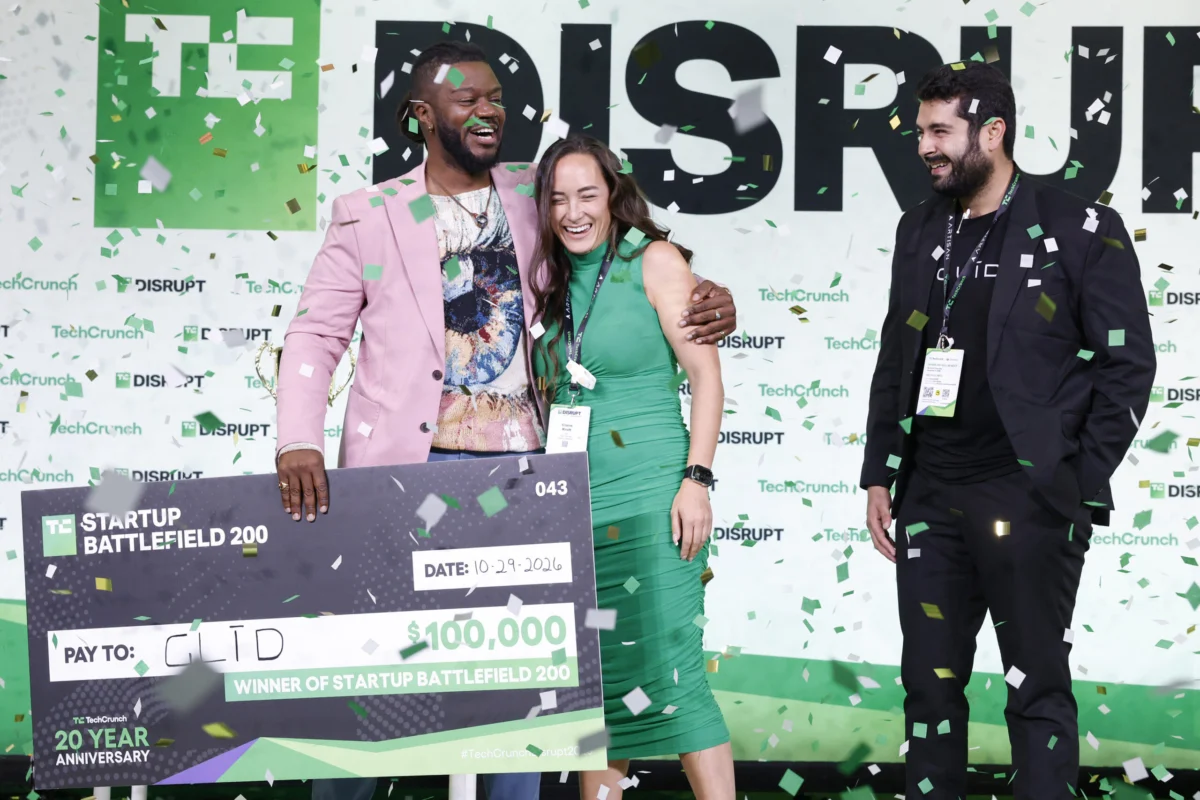
The global venture capital landscape is currently navigating a period of profound transformation, shifting away from the "growth at all costs" era toward a more disciplined, value-oriented paradigm. Within this evolving ecosystem, the search for the next generation of "category kings" has intensified, placing a premium on platforms that can effectively bridge the gap between raw ingenuity and institutional scale. One of the most significant milestones in this journey is the annual Startup Battlefield 200, an elite competition that serves as the centerpiece for the upcoming TechCrunch Disrupt 2026 in San Francisco. As the nomination window remains open through May 27, the tech community is witnessing a surge of interest from pre-Series A founders eager to secure a spot in what has historically been the most influential launchpad in the industry.
To understand the weight of this opportunity, one must look at the historical trajectory of the competition. Since its inception, the Battlefield has acted as a primary filter for the technology sector, identifying high-potential ventures long before they become household names. The alumni list reads like a "who’s who" of the digital age: Dropbox, which revolutionized cloud storage; Discord, which redefined community engagement; and Fitbit, which pioneered the wearable health movement. These companies did not just participate; they used the platform to demonstrate proof-of-concept to a global audience, attracting the necessary capital and talent to scale into multi-billion dollar enterprises. In 2026, the stakes are arguably higher, as the technological frontiers of Artificial Intelligence (AI), Climate Tech, and Biotech demand increasingly sophisticated levels of validation.
The 2026 cohort, known as the Battlefield 200, represents a curated selection of the world’s most promising early-stage startups. These companies are chosen through a rigorous vetting process that evaluates not only the technical feasibility of their products but also the resilience of their business models and the clarity of their vision. For the selected founders, the rewards extend far beyond the headline-grabbing $100,000 equity-free grand prize. While non-dilutive capital is a precious commodity in a tightening credit environment, the true value lies in the "signaling effect." Being named to the Battlefield 200 provides an immediate stamp of credibility that can shave months off a subsequent fundraising round.

The current economic climate of 2026 has created a unique set of challenges for pre-Series A founders. Interest rates, while stabilizing, remain higher than the historic lows of the previous decade, making venture capitalists more discerning. Investors are no longer satisfied with mere user growth; they are looking for "technological moats"—defensible advantages that protect a company from rapid commoditization. The Startup Battlefield provides the ideal arena for founders to showcase these moats. Whether it is a proprietary algorithm in the generative AI space, a breakthrough in carbon sequestration, or a novel fintech protocol for emerging markets, the competition demands that founders articulate their "unfair advantage" in front of a live audience and a panel of expert judges.
Analyzing the current trends within the nomination pool reveals a significant pivot toward "deep tech." While the software-as-a-service (SaaS) model remains a staple, we are seeing an influx of startups focused on the physical world. Climate technology, in particular, has moved from the periphery to the center of the innovation discourse. Founders are no longer just building ESG (Environmental, Social, and Governance) reporting tools; they are developing hardware for the circular economy, optimizing smart grids with machine learning, and exploring the frontiers of sustainable aviation. The Battlefield 200 offers these capital-intensive startups a rare opportunity to reach a concentrated group of specialized investors who understand the longer horizons and higher risks associated with hardware and infrastructure.
Artificial Intelligence, of course, continues to dominate the conversation, but the 2026 iteration of the competition reflects a move toward "Agentic AI." We are moving past the era of simple chatbots into an era where AI systems can autonomously execute complex workflows, manage supply chains, and conduct scientific research. The judges at Disrupt 2026 will likely be looking for startups that move beyond the "wrapper" phase—those that aren’t merely building interfaces on top of existing large language models but are instead creating vertical-specific solutions with proprietary data and specialized architectures.
Furthermore, the geographical diversity of the nominations highlights the "globalization of innovation." While San Francisco remains the spiritual and physical home of the event, the Battlefield 200 is increasingly representative of the entire world. We are seeing a surge in applications from Southeast Asia, Africa, and Latin America, where founders are solving localized problems with global scalability. This cross-pollination of ideas is essential for the health of the tech ecosystem, as it ensures that the solutions of tomorrow are not limited by the perspective of a single zip code.

For the founders who make the cut, the experience at Moscone Center in October will be a masterclass in high-stakes communication. The "Battlefield" is not a standard pitch session; it is a rigorous interrogation. Founders must be prepared to defend their unit economics, their go-to-market strategies, and their technical architectures under the scrutiny of world-class VCs. This "trial by fire" serves a dual purpose. For the startups, it is an opportunity to refine their narrative and gain invaluable feedback. For the audience—which includes thousands of potential partners, customers, and employees—it is a window into the future of the industry.
The perks associated with the Battlefield 200 are designed to maximize this exposure. Beyond the main stage, the selected startups receive dedicated space on the exhibition floor, access to exclusive workshops, and private networking sessions with institutional investors. In the modern tech world, where attention is the most valuable currency, these "concierge" services are transformative. They allow a small, under-the-radar team to compete for mindshare on an equal footing with established players.
As the May 27 deadline approaches, the advice from industry veterans is clear: do not wait. The strongest applications are those that demonstrate not just a great idea, but a great execution path. Investors are looking for founders who have a deep obsession with the problem they are solving and a clear-eyed understanding of the competitive landscape. In the context of 2026, this also means having a plan for "responsible innovation"—addressing the ethical implications of their technology from day one, whether that involves data privacy, algorithmic bias, or environmental impact.
Looking ahead, the impact of the Startup Battlefield 200 will be felt long after the final trophy is awarded in San Francisco. The companies that emerge from this crucible will go on to define the next decade of technological progress. They will be the ones hiring the next generation of engineers, disrupting legacy industries, and potentially solving some of the most pressing challenges facing humanity. The competition is more than just a contest; it is a vital organ of the tech economy, pumping fresh blood and ideas into a system that thrives on disruption.

In conclusion, the call for nominations for the 2026 Startup Battlefield 200 is a call to the visionaries, the risk-takers, and the builders who refuse to accept the status quo. In an era of uncertainty, the one constant is the power of a transformative idea backed by relentless execution. San Francisco in October will be the site where these ideas are tested and where the next titans of tech will likely take their first steps into the global spotlight. For the pre-Series A founder sitting on a breakthrough, the message is simple: the arena is ready, the VCs are waiting, and the deadline is looming. The future is being written now, and the Battlefield is where the ink meets the page.