

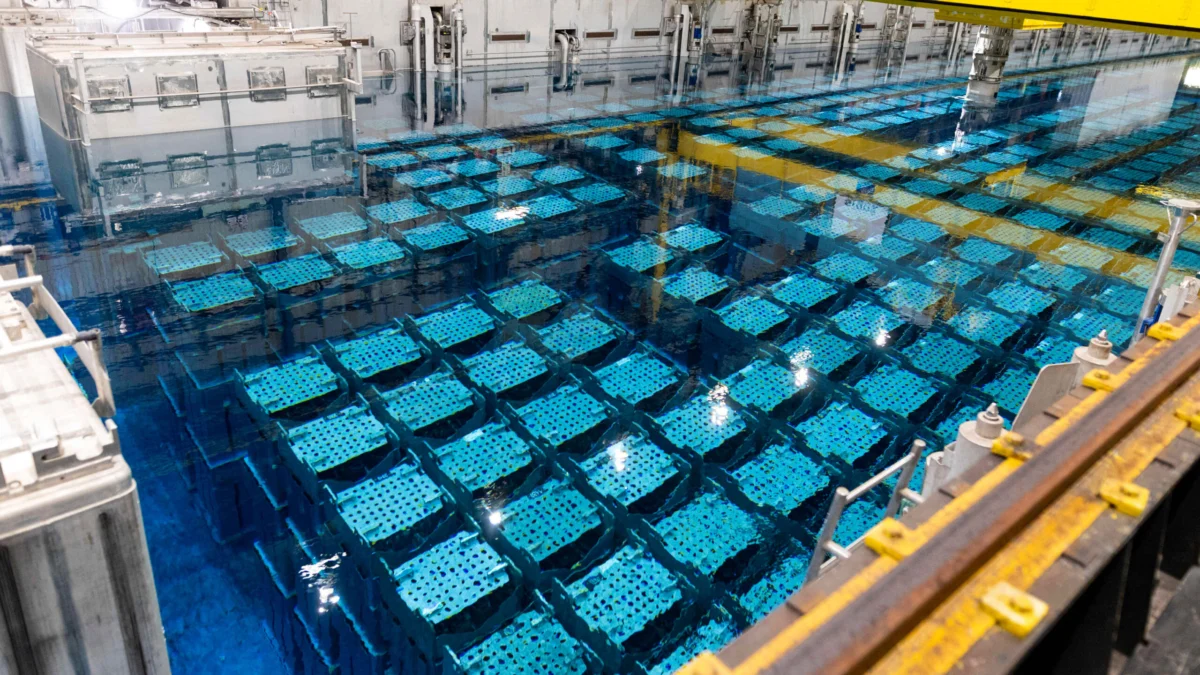
The concept of a circular economy is often framed through the lens of consumer goods—recycling lithium-ion batteries from electric vehicles or reclaiming silicon from aging solar panels. Yet, the most potent candidate for a closed-loop system remains one of the most controversial: spent nuclear fuel. For decades, the global energy sector has wrestled with a fundamental paradox. While "nuclear waste" is frequently characterized as a burden requiring millennia of isolation, it remains a dense reservoir of energy, with roughly 95% of its original potential still locked within the fuel rods after they are removed from a reactor. If the technology to unlock this energy exists, the question remains why the global community has largely opted for a "once-through" fuel cycle, effectively treating an energy-rich asset as a permanent liability.
The answer lies at the intersection of high-stakes geochemistry, the unforgiving economics of the global uranium market, and the delicate balance of international non-proliferation efforts. To understand why the world isn’t recycling more nuclear waste, one must first look at the sheer complexity of the material itself. When low-enriched uranium fuel is spent in a standard light-water reactor, it undergoes a transformation. The uranium-235 atoms fission, releasing energy, but the process also creates a cocktail of fission products and transuranic elements, including plutonium. In a standard disposal scenario, this entire assembly is treated as high-level waste. However, through a process known as reprocessing, these elements can be chemically disentangled.
France currently stands as the global standard-bearer for this industrial-scale recycling. The La Hague site, situated on the Cotentin Peninsula, represents the pinnacle of existing reprocessing technology. Here, the Orano-operated facility utilizes the PUREX (Plutonium Uranium Reduction Extraction) process. The spent fuel is sheared, dissolved in nitric acid, and subjected to a series of chemical separations. The goal is to isolate the uranium and plutonium from the highly radioactive fission products. The recovered plutonium is then blended with depleted uranium to create Mixed Oxide (MOX) fuel, which currently powers about 10% of the French nuclear fleet.
From a resource-efficiency standpoint, the French model appears to be an unmitigated success. By recycling spent fuel, France reduces the volume of high-level waste by nearly 75% and significantly lowers the demand for fresh natural uranium. For a nation with no domestic uranium mines, this is not merely an environmental choice; it is a matter of national sovereignty. Paul Dickman, a former official at the U.S. Nuclear Regulatory Commission (NRC) and the Department of Energy, notes that France is essentially paying a "national security premium." By maintaining a reprocessing loop, they insulate their grid from the volatility of the global uranium trade.
However, the French success story has not been easy to replicate, and it faces technical headwinds that complicate the "loop" narrative. Allison Macfarlane, a former chair of the NRC and current director of the School of Public Policy and Global Affairs at the University of British Columbia, points out a critical thermodynamic hurdle: the heat load. In the world of deep geological repositories (DGRs), the limiting factor for storage isn’t always physical volume—it is heat. Spent MOX fuel is significantly "hotter" in a thermal sense than conventional spent fuel. Because radioactive decay generates heat, and that heat must be dissipated into the surrounding rock of a repository to prevent structural failure, the "recycled" waste may actually require more spacing in an underground facility than the original material. Consequently, while reprocessing reduces the volume of waste, it does not necessarily reduce the physical footprint of the eventual burial site.
Furthermore, the "loop" is currently more of a "spiral." The uranium recovered from the PUREX process is often contaminated with isotopes like uranium-236, which act as "neutron poisons" and make the fuel less efficient if re-inserted into a reactor without significant, and expensive, re-enrichment. Today, much of this recovered uranium is simply stockpiled as a strategic reserve rather than being immediately cycled back into the core. As it stands, most conventional reactors can only use MOX fuel once. After its second life, the fuel becomes technically difficult and economically prohibitive to reprocess further, meaning that even in the best-case scenario, we are currently looking at a two-stage use rather than infinite recycling.
Beyond the thermodynamics of heat and isotopes, the most significant barrier to global nuclear recycling is economic. In the United States and much of the Western world, the "once-through" cycle remains the dominant strategy because uranium is currently abundant and relatively inexpensive to mine. Reprocessing is a capital-intensive chemical industrial process that requires massive infrastructure, high-level security, and complex regulatory oversight. As long as the price of "yellowcake" uranium remains low, the market offers no incentive for private utilities to invest in the multibillion-dollar facilities required to close the fuel cycle.
This economic reality is compounded by the shadow of nuclear proliferation. The PUREX process results in the separation of pure plutonium, a material that can be diverted for the production of nuclear weapons. This risk has dictated U.S. policy since the Carter administration, which halted domestic reprocessing in the 1970s to set a global example for non-proliferation. While France manages this risk through high-security protocols and a "just-in-time" manufacturing approach—where plutonium is converted into MOX fuel almost immediately after separation—the international community remains wary. Edwin Lyman, director of nuclear power safety at the Union of Concerned Scientists, emphasizes that any process involving the separation of plutonium increases the "breakout" risk, where a nation could theoretically pivot from a civilian power program to a military one with greater speed.
Despite these challenges, the conversation around nuclear recycling is entering a new phase, driven by the emergence of "Advanced" or Generation IV reactors. Companies like TerraPower, Oklo, and X-energy are designing reactors that depart from the traditional light-water model. Some of these designs, such as fast-spectrum reactors, are specifically intended to "burn" the long-lived transuranic elements found in spent fuel. In theory, a fast reactor could utilize the plutonium and "minor actinides" that are currently treated as waste, converting them into shorter-lived isotopes while generating electricity.
This shift has prompted renewed interest in alternative reprocessing methods, such as pyroprocessing. Unlike the liquid-acid PUREX method, pyroprocessing uses molten salts and electricity to separate metals. Crucially, pyroprocessing does not separate pure plutonium; instead, the plutonium remains mixed with other highly radioactive elements. This makes the resulting material less attractive for weapons diversion while remaining suitable for use as fuel in fast reactors. The Department of Energy has continued to fund research into these advanced separation technologies, eyeing a future where the waste from today’s reactors becomes the fuel for tomorrow’s.
The global landscape is also shifting. While Japan’s Rokkasho reprocessing plant has faced decades of delays and cost overruns—with its startup date pushed from 1997 to a projected 2027—other nations are forging ahead. Russia has made significant strides with its BN-800 fast reactor, which is designed to test the feasibility of a closed fuel cycle on a commercial scale. China is also rapidly expanding its reprocessing capabilities as part of its massive nuclear build-out, viewing fuel recycling as a cornerstone of its long-term energy independence.
However, even the most optimistic proponents of nuclear recycling admit that it is not a panacea for the waste problem. Regardless of how many times fuel is cycled through a reactor, there will always be a residual stream of fission products—such as cesium-137 and strontium-90—that cannot be further "burned" and must be isolated from the biosphere. As Edwin Lyman notes, no matter how efficient the recycling process becomes, a deep geological repository remains a non-negotiable requirement for any responsible nuclear nation.
The future of nuclear waste recycling will likely be determined by three factors: the price of uranium, the success of Generation IV reactor commercialization, and the political will to manage the long-term stewardship of radioactive materials. If uranium prices spike due to supply chain disruptions or increased global demand, the "national security premium" paid by France may start to look like a bargain. Similarly, if advanced reactors can prove their ability to transmute waste into energy safely and economically, the narrative of nuclear waste as a "problem" may finally shift toward it being a "resource."
For now, the world remains in a state of suspended animation. The technology to recycle nuclear waste exists, but the economic and geopolitical conditions required to deploy it globally have not yet aligned. We are left with a landscape where most of the world’s spent fuel sits in concrete dry casks at power plant sites—safe for the moment, but representing a massive, untapped battery waiting for a more sophisticated era of energy management to finally close the loop. As the world pushes for deep decarbonization, the pressure to utilize every available carbon-free energy source may eventually force a reckoning with our "once-through" philosophy, transforming the way we view the back end of the atomic age.