

The remarkable achievement of eradicating endemic measles transmission in the United States, officially declared in 2000, is now under severe threat. A confluence of factors—chief among them waning population immunity driven by vaccine hesitancy and the high transmissibility of the morbillivirus—has triggered an alarming resurgence. As of early 2025, confirmed cases of rubeola in the US have surpassed 2,500, a level not seen in decades. Simultaneously, the nation faces the real possibility of officially losing its elimination status, a devastating public health reversal that would symbolize a massive regression in global immunization efforts.
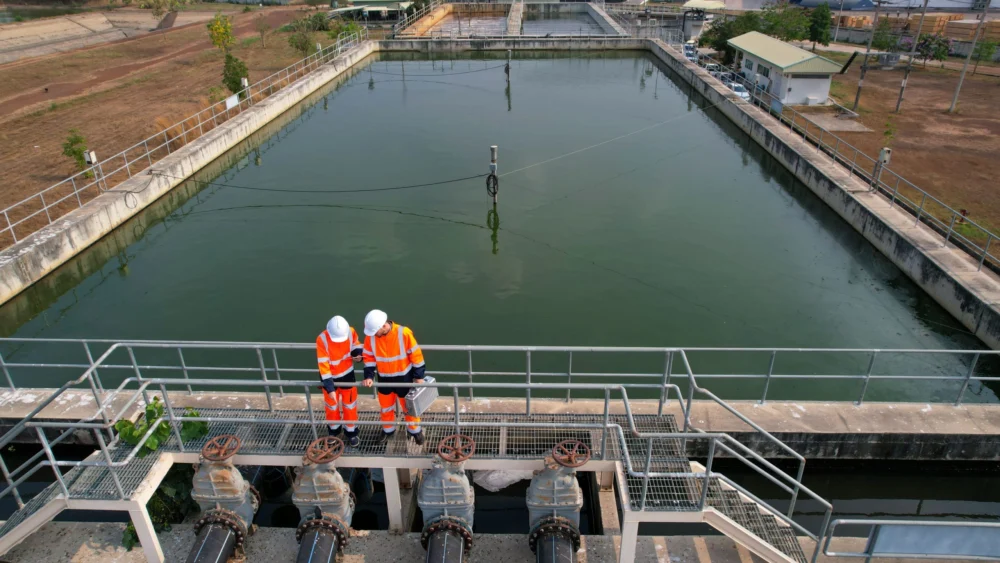
This escalating crisis has compelled infectious disease specialists and environmental engineers to look beyond traditional clinical surveillance methods. When routine health system monitoring is failing to capture the true scale of community spread, often due to asymptomatic or mildly symptomatic cases, fragmented reporting, or limited healthcare access in vulnerable populations, a technological pivot is required. The solution increasingly being embraced lies literally beneath our feet: wastewater surveillance.
The Return of a Highly Contagious Pathogen
Measles is one of the most contagious viruses known to science, possessing a basic reproduction number (R0) that can range from 12 to 18 in susceptible populations. This means a single infected individual can transmit the virus to a dozen or more people. To maintain population protection, the herd immunity threshold for measles must be exceptionally high—typically 93% to 95% vaccination coverage. When vaccination rates dip, even marginally, the virus finds pockets of vulnerability where it can propagate explosively.
The recent spread, which began with a significant outbreak in Texas approximately a year ago and rapidly crossed state lines, demonstrates the fragility of the US immunization shield. The situation mirrors the public health crisis that engulfed Canada, which officially lost its measles elimination status following a sustained period of high case counts—over 5,000 confirmed infections in just over a year. The implications are profound: once elimination status is lost, it signifies continuous, indigenous transmission of the virus, requiring immense resources to suppress and re-eliminate. Globally, the picture is equally grim. Despite successful vaccination campaigns saving nearly 59 million lives since 2000, according to the World Health Organization, measles deaths totaled an estimated 95,000 in 2024, disproportionately affecting young children, while cases surge across Europe, Southeast Asia, and the Eastern Mediterranean region.
In the face of this widespread threat, traditional methods—relying on reported clinical diagnoses, contact tracing, and reactive vaccination campaigns—are proving too slow. Measles can spread rapidly before the characteristic rash appears, making early, non-clinical detection a critical necessity.
The Foundation of Environmental Surveillance
The concept of using sewage to track community health is not new; it has historical roots in monitoring diseases like polio. However, the technology gained unprecedented sophistication and scale during the SARS-CoV-2 pandemic. Scientists realized that the coronavirus was shed in feces, turning municipal wastewater treatment plants into massive, aggregated testing sites for entire communities. This period served as a critical accelerator for environmental surveillance, proving its utility as a powerful, non-invasive epidemiological tool capable of providing real-time data on viral load prevalence.
The foundational work established during the pandemic laid the groundwork for expanding monitoring to other pathogens. Leading this charge is academic-led initiatives such as WastewaterSCAN, co-founded by researchers like Marlene Wolfe of Emory University and Alexandria Boehm of Stanford University. Their focus has shifted from COVID-19 to a broader spectrum of infectious agents, including measles.
Crucially, the measles virus (Rubeola) is known to be shed in urine, making it detectable in the vast biological matrix of wastewater, which is composed of saliva, urine, feces, and shed skin cells. Unlike clinical testing, which requires an individual to seek care, receive a diagnosis, and be reported to public health authorities—a sequence that introduces significant time lags and undercounting—wastewater analysis offers a population-level snapshot that is blind to individual patient behavior or access to healthcare.
Early Warning: The Texas and Ontario Case Studies
The efficacy of wastewater surveillance in detecting measles has recently moved from theoretical possibility to demonstrated reality through pioneering research in North America.
In Texas, researchers successfully developed and trialed a test capable of identifying measles RNA in sewage samples. Between late 2024 and mid-2025, they sampled wastewater two to three times weekly at two separate treatment plants within an affected area. The results, detailed in a recent preprint paper, were compelling: measles RNA was detected in 10.5% of samples collected. Most significantly, the initial detection of the virus in the communal effluent occurred a full week before the first official clinical case was confirmed in the corresponding geographic area. This seven-day lead time is a potential game-changer for public health officials, offering a crucial head start to implement targeted interventions, such as deploying mobile vaccination units or issuing specific health alerts, before an outbreak reaches exponential growth.
Across the border, Canadian researchers provided further validation while tackling the persistent challenge of quantifying the viral burden. Mike McKay and Ryland Corchis-Scott at the University of Windsor in Ontario undertook surveillance in Leamington, Ontario, monitoring a treatment facility serving over 30,000 residents during an active outbreak period in 2025.
The inherent limitation of wastewater monitoring is that it measures concentration (viral particles per liter) rather than individual counts. Researchers cannot definitively say who is infected or how many people are shedding the virus. To overcome this, McKay’s team employed an innovative calibration technique. They placed sampling devices—specifically, absorbent tampons—into the lateral sewer lines of a local hospital and compared the resulting measles RNA signal directly against the number of confirmed clinical cases within that facility. This meticulous comparison allowed them to estimate the viral "shedding rate" of infected individuals.
Applying this derived shedding rate to the data collected from the broader Leamington wastewater treatment facility yielded striking results. The estimated number of measles cases suggested by the sewage data was five to ten times higher than the official confirmed case count reported by health authorities. This divergence strongly implies that traditional clinical surveillance drastically underestimates the true prevalence of measles during an outbreak, capturing only the tip of the infection iceberg. This insight is invaluable for resource allocation, providing public health decision-makers with a more accurate assessment of the required scope for containment efforts.
Industry Implications and Operationalizing the Data
The transition of wastewater tracking from an academic novelty to a core public health informatics tool carries significant implications for technology and infrastructure sectors. This emerging field of environmental epidemiology requires specialized hardware, standardized sampling protocols, and sophisticated bioinformatics pipelines.
The industry surrounding wastewater surveillance is expanding rapidly, encompassing advanced molecular biology labs, specialized robotics for automated sample preparation, and cloud-based platforms for data interpretation and visualization. Standardization remains a key operational challenge. For this surveillance to be truly effective across diverse geographical regions, there must be uniformity in sampling frequency, concentration methods, RNA extraction techniques, and quantitative PCR assays. Academic consortia like WastewaterSCAN are currently providing this necessary backbone by ensuring consistent data quality across participating sites, and their findings are immediately shared with local public health departments.
The integration of this data into governmental public health architecture, such as the Centers for Disease Control and Prevention (CDC) systems, is paramount. Data must be translated quickly from technical concentration levels (e.g., gene copies per liter) into actionable epidemiological metrics (e.g., trend indicators, projected case counts). This necessitates a new cadre of public health professionals—bioinformatic epidemiologists—trained to bridge environmental engineering with clinical medicine.
Furthermore, the implementation raises ethical and policy considerations. While wastewater data is inherently aggregated and anonymous—offering protection against the individual privacy concerns associated with clinical testing—questions remain about linking high-resolution sewage data (e.g., from small neighborhood pump stations) to socioeconomic or demographic patterns. Transparent communication regarding the purpose and limits of the surveillance is essential to maintaining public trust, especially in communities already wary of public health mandates.
The Future of Environmental Genomics and Pandemic Preparedness
The success demonstrated in tracking measles and COVID-19 is merely the beginning of environmental genomics’ potential revolution in infectious disease management. The scalable nature of wastewater analysis makes it an ideal platform for comprehensive pathogen monitoring.
Future trends suggest an expansion into tracking other vaccine-preventable diseases that shed in waste, such as polio, as well as seasonal respiratory viruses like influenza and respiratory syncytial virus (RSV). More critically, wastewater is poised to become the most effective early warning system for antimicrobial resistance (AMR). By monitoring the prevalence of antibiotic-resistant genes in the community’s waste stream, public health officials can identify emerging resistance hotspots and guide antibiotic stewardship policies long before patients start failing treatment in clinics.
The ultimate vision is the establishment of a permanent, national "Pandemic Early Warning System." This system would operate continuously, monitoring thousands of wastewater catchment areas for hundreds of known and novel pathogens, leveraging machine learning algorithms to detect anomalies in viral signals that could indicate a novel zoonotic spillover event or the start of a pandemic wave.
For nations like the US and Canada, which have invested heavily in achieving and maintaining disease elimination statuses, sustained environmental surveillance offers a cost-effective, proactive defense mechanism. While clinical monitoring is reactive—confirming cases after they occur—wastewater monitoring is predictive. It provides the necessary situational awareness to mobilize resources effectively.
As researchers continue to refine the calculation of shedding rates and improve the sensitivity of assays, the predictive power of this tool will only grow. The initial evidence from Texas and Ontario provides a strong mandate for maintaining and scaling up these systems, even when outbreaks subside. As McKay noted regarding the Canadian effort, the goal is not merely to respond to an active crisis but to have a robust system ready to deploy the moment even a single new case is confirmed. This technological commitment is necessary to prevent the painful and costly loss of public health milestones like measles elimination status, ensuring that future generations do not have to contend with diseases the world had successfully confined to history. The sewers, once merely conduits for waste, are rapidly transforming into vital epidemiological sensors, providing the critical, real-time intelligence needed to safeguard global health security.